by Jonathan Eberle | Jun 4, 2025 | News
By Jonathan Eberle |
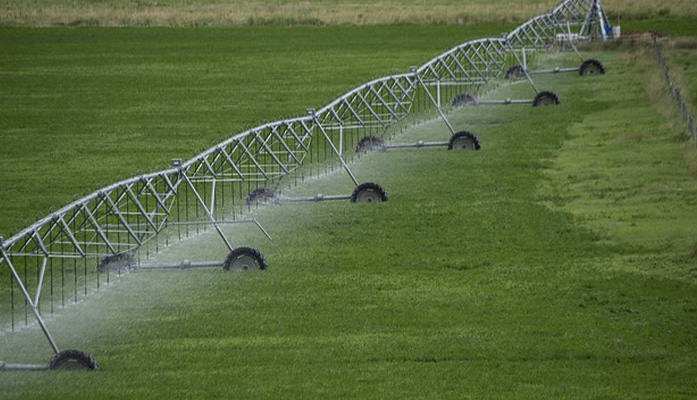
Governor Katie Hobbs has vetoed Senate Bill 1300, a Republican-backed measure that would have allowed residents of southeastern Arizona’s San Simon Valley sub-basin to vote on whether to establish an Irrigation Non-expansion Area (INA) — a designation intended to temporarily halt the expansion of agricultural groundwater use.
Supporters of the bill, including Representative Gail Griffin (R-LD19), argued the measure would have empowered local voters in Graham and Cochise counties to take the lead on managing their own groundwater resources in the face of ongoing depletion. The bill passed the Republican-controlled legislature earlier this session.
SB 1300 would have permitted county supervisors to place an INA designation question on the November 2026 ballot. Once that vote was scheduled, a temporary moratorium on new irrigation would have taken effect to prevent last-minute expansion and groundwater pumping ahead of the election. If voters approved the INA, the moratorium would have become permanent.
Griffin called the veto “a missed opportunity,” saying the temporary pause alone would have been a benefit to the aquifer. “Whether voted up or down, either outcome would have resulted in at least a six-month pause on new agricultural expansion,” she said in a statement.
Republican lawmakers have repeatedly pushed back on the AMA designation, arguing that it imposes regulations more appropriate for urban areas like Phoenix and Tucson and fails to account for the economic realities of rural Arizona.
Griffin and other Republicans argue these proposals disregard the will of local communities. “What the Governor wants in rural Arizona is to adopt regulations that are more stringent than urban areas,” Griffin said. “These extreme expectations are simply not achievable for rural Arizona.”
While the Governor’s office has framed her groundwater proposals as necessary responses to decades of overuse and aquifer decline, Republican legislators insist they are advancing more flexible, community-driven solutions. These include efforts to promote stormwater recharge and local decision-making to stabilize groundwater levels without heavy-handed mandates.
No immediate alternative to SB 1300 has been announced, but Republican leaders say they plan to continue engaging with stakeholders on rural water policy. “We stand by our rural communities and the principles of local control, property rights, and strong local economies,” Griffin said.
Water experts and advocacy groups are closely watching the legislative standoff as Arizona grapples with worsening drought conditions, declining aquifers, and in and intensifying debate over how best to balance agriculture, conservation, and rural livelihoods.
Jonathan Eberle is a reporter for AZ Free News. You can send him news tips using this link.
by Jonathan Eberle | May 23, 2025 | News
By Jonathan Eberle |
Arizona Governor Katie Hobbs has vetoed legislation that would have allowed residents in voter-established Active Management Areas (AMAs), including the newly created Douglas AMA, to revisit their groundwater management designation after ten years.
The bill, HB 2089, was sponsored by Representative Gail Griffin (R–LD19), who argued that the measure was about preserving local control and ensuring that rural communities retain a voice in long-term water policy decisions.
“This bill simply would have allowed voters to revisit a decision they made ten years earlier. It respected the voice of the people — not silenced it,” Griffin said in a statement responding to the veto. “The Governor’s action undermines the ability of rural communities to self-govern and respond to future conditions.”
Under current Arizona law, AMAs are designated areas where groundwater is heavily regulated in an effort to manage overdraft and promote sustainable use. The Douglas AMA was approved by voters in 2022 in response to growing concerns over aquifer depletion in southeastern Arizona. The law established that AMA did not include an option for voters to re-evaluate the decision in the future — a gap HB 2089 sought to address.
Rep. Griffin and other rural lawmakers have expressed concern over what they describe as heavy-handed regulation from Phoenix that may not reflect the economic realities of agricultural communities. In a press release, the Arizona House Republican Caucus also criticized the Governor’s broader approach to groundwater management, particularly in the Willcox Basin, where the administration is reportedly pursuing a 50% reduction in groundwater overdraft by 2075.
The veto is the latest flashpoint in an ongoing debate between state leadership and rural lawmakers over how best to balance groundwater conservation with agricultural and economic needs. It remains unclear whether supporters of the measure will seek to reintroduce similar legislation in future sessions.
Jonathan Eberle is a reporter for AZ Free News. You can send him news tips using this link.
by Jonathan Eberle | May 18, 2025 | News
By Jonathan Eberle |
Governor Katie Hobbs has vetoed SB 1268, a Republican-sponsored measure that aimed to increase transparency around the costs of providing healthcare to illegal immigrants in Arizona’s hospital system. The move drew swift criticism from State Senator Wendy Rogers (R-LD7), who accused the governor of obstructing efforts to ensure fiscal responsibility and protect taxpayer dollars.
The bill, sponsored by Rogers and passed by the Republican-controlled Legislature, would have required Arizona hospitals to include a voluntary question on patient intake forms asking individuals to indicate whether they are lawfully present in the United States. According to the bill text, the response would have had no bearing on the care provided and would not have been shared with immigration enforcement agencies. The Arizona Department of Health Services (DHS) would then compile annual reports using the data, including the number of non-citizens receiving care through the Arizona Health Care Cost Containment System (AHCCCS), the state’s Medicaid program.
“Our hardworking, law-abiding citizens have a right to know how much of their money is going towards paying for the medical services of those who’ve willfully chosen to break our laws by entering our country illegally,” said Senator Rogers in a statement following the veto. “This legislation would have helped us obtain the data necessary to make informed decisions on how to tackle this problem.”
A 2023 Congressional Budget Office report cited by Rogers estimated that federal and state governments spent approximately $27 billion on Emergency Medicaid for illegal aliens between fiscal years 2017 and 2023.
Supporters of SB 1268 argue that Arizona taxpayers deserve to understand how much of the state’s healthcare budget is being used to treat non-citizens — especially as hospitals report growing strain and long wait times for patients. Rogers emphasized that the intent was not to deny care, but to gather data needed for long-term planning and resource allocation.
This marks the latest in a series of transparency and immigration-related proposals rejected by Hobbs. Her actions have drawn praise from progressive groups but sharp criticism from GOP lawmakers, who argue that the governor is ignoring the concerns of constituents struggling with a strained healthcare system.
“This veto is a slap in the face to Arizona taxpayers who are demanding accountability and transparency,” Rogers said. “Shame on Governor Hobbs.”
As the debate over immigration and healthcare access continues to shape Arizona politics, similar proposals may resurface in future legislative sessions — especially as state lawmakers prepare for the 2026 election cycle, where these issues are expected to be front and center.
Jonathan Eberle is a reporter for AZ Free News. You can send him news tips using this link.
by AZ Free Enterprise Club | May 14, 2025 | Opinion
By the Arizona Free Enterprise Club |
Since becoming Governor of Arizona in 2023, Katie Hobbs’ name has been synonymous with corruption. Now, one of her latest vetoes shows the lengths she is willing to go to protect her own schemes.
Buried on the afternoon of Friday, May 2, Hobbs vetoed SB 1612, along with 21 other bills. Sponsored by Arizona State Senator TJ Shope, SB 1612 would have required anyone applying for grants to various state agencies to disclose gifts, donations, or other support provided to the sitting governor. That sort of transparency should be something that every Arizonan can get behind—Republicans, Democrats, Independents, you name it—unless, of course, your agenda doesn’t involve the best interests of Arizona citizens, right Katie Hobbs?
This whole story starts at the very beginning of Hobbs’ tenure as governor. If you’ll recall, at the time, Hobbs set up a shady slush fund to provide donors with a conduit to buy political favor from her administration. While setting up and managing the fund, Hobbs illegally used public resources—like the state’s website—to solicit money for her inauguration. And she also tried to stop the disclosure of the names of those who donated to her inaugural fund.
But after immense political pressure and public records requests filed by groups like the Arizona Freedom Foundation (who operates AZ Free News), Hobbs finally released the names of the donors. One of the names of the groups on the list was Sunshine Residential Homes Inc., a for-profit company that contracts with the State of Arizona to provide some child welfare services. At the time, Sunshine Residential Homes made a donation of $100,000. But in June 2024, an eye-opening report revealed a deeper level of corruption—an alleged pay-to-play scheme between Hobbs and the group home…
>>> CONTINUE READING >>>
by Matthew Holloway | May 14, 2025 | News
By Matthew Holloway |
While states like Florida and Louisiana have forged ahead with crypto currency legislation, Governor Katie Hobbs, who has vetoed a total of 304 bills since taking office in 2023, vetoed three cryptocurrency bills in a matter of days.
Hobbs did sign HB2387, creating stricter regulations on Bitcoin ATMs. And she also signed HB2749 into law, allowing the state to hold cryptocurrency as unclaimed property. Hobbs vetoed SB1025 on May 3rd and then followed with vetoes against SB1024 and SB1373 on Monday.
The three bills would have respectively, allowed “the State Treasurer, the Arizona State Retirement System and the Public Safety Personnel Retirement System (public funds) to invest up to 10 percent of the public monies under its control in virtual currency holdings,” “authorize(d) a state agency to enter into an agreement with a cryptocurrency service provider to accept cryptocurrency as a payment method,” and “Establishe(d) the Digital Assets Strategic Reserve Fund (Fund), administered by the State Treasurer…consisting of monies appropriated by the Legislature and digital assets seized by the state.”
In the Governor’s letters to Senate President Warren Petersen explaining her vetoes, Hobbs repeatedly phrased the cryptocurrency-related laws as “risk(s),” “untested,” and suggested that her previous actions on cryptocurrency were “responsible.”
Senate Bill 1373: “Today, I vetoed Senate Bill 1373. Current volatility in cryptocurrency markets does not make a prudent fit for general fund dollars. I have already signed legislation this session which allows the state to utilize cryptocurrency without placing general fund dollars at risk, which is the responsible path to take.”
Senate Bill 1025: “Today, I vetoed Senate Bill 1025. The Arizona State Retirement System is one of the strongest in the nation because it makes sound and informed investments. Arizonans’ retirement funds are not the place for the state to try untested investments like virtual currency.”
Senate Bill 1024- “Today, I vetoed Senate Bill 1024. While this bill would allow State agencies to enter into agreements to protect the State from risks associated with cryptocurrency, legislators on both sides of the aisle acknowledged it still leaves the door open for too much risk.”
As previously reported by AZ Free News, HB2387, introduced by Rep. David Marshall (R-LD7), is designed to crack down on Crypto ATM fraud by imposing a $2,000 daily transaction limit on the devices, increased to $10,500 for return customers after ten days, requiring state operator licensing, and requiring refund policy options as well.
Matthew Holloway is a senior reporter for AZ Free News. Follow him on X for his latest stories, or email tips to Matthew@azfreenews.com.