by AZ Free Enterprise Club | May 4, 2026 | Opinion
By the Arizona Free Enterprise Club |
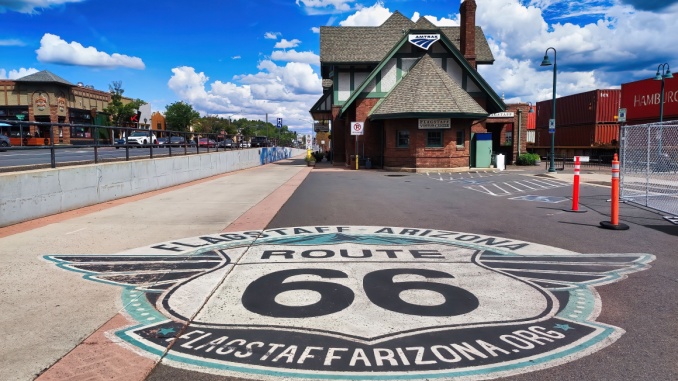
Flagstaff residents have until May 19th to vote on the Flagstaff Regional Land Use Plan 2045, a mail-in only election that will determine whether this becomes the city’s guiding blueprint through 2045. The plan will shape “growth, development, conservation, housing, transportation, and other long-term community priorities.” It is a roadmap for how city leaders want Flagstaff to grow, move, build, and live for the next two decades.
The main themes of this Regional Plan are Climate Action, Housing Attainability and Equity. Climate and equity, two of the left’s favorite virtue-signaling obsessions. The plan runs roughly 250 pages and buried inside the planning jargon is a much bigger agenda: a comprehensive restructuring of everyday life in Flagstaff.
The plan repeatedly sounds the alarm over the so-called “climate emergency,” declaring that “climate change, driven by human-induced GHG emissions, is intensifying global weather disruptions.” Translation: the climate is spiraling into chaos, and it’s your fault, therefore the city government now needs to center major policy decisions around climate activism.
The plan repeatedly references Flagstaff’s Carbon Neutrality Plan (CNP) that has the goal to “achieve carbon neutrality by 2030.” What is supposed to be a land use and regional planning document instead reads like an environmental manifesto. In city government’s attempt to “save the planet,” residents should expect pressure for more mandates, regulations, and costly transitions as officials target emissions from “buildings, transportation, waste, etc.” Their call for the “displacement of fossil fuel-based generation with zero-carbon sources such as wind, solar, and nuclear energy,” will inevitably drive-up costs – even in the areas, like housing affordability, they claim to be trying to reduce.
Transportation is another major target…
>>> CONTINUE READING >>>
by AZ Free Enterprise Club | Feb 20, 2026 | Opinion
By the Arizona Free Enterprise Club |
It feels like just about everywhere you turn, politicians are inventing new ways to yank more money out of your wallet. There are property taxes, gas taxes, grocery taxes, and more. We’ve even seen cities and towns push their own tax, utility rate, and “fee” increases. (How are those water bills treating you, Gilbert?) And now, some states—like California and Massachusetts—are pursuing a tax that would charge you a fee for every single mile you travel in your vehicle.
So much for affordability.
Earlier this month, California’s legislature advanced AB 1421. If passed and signed by Governor Newsom, this bill would create a “road user charge” pay-per-mile system for our neighbors to the west. It also includes studying how to capture out-of-state vehicles as well in case you thought your trip to Disneyland couldn’t get any more expensive.
If you don’t think such a tax is possible, think again…
>>> CONTINUE READING >>>
by AZ Free Enterprise Club | Aug 11, 2025 | Opinion
By the Arizona Free Enterprise Club |
Seven months into Trump’s return to office, the wreckage of the Biden administration continues to surface—especially in America’s transportation infrastructure. Previously, we highlighted the troubling impact of Pete Buttigieg’s tenure as Secretary of Transportation. His legacy of failure is becoming increasingly clear and public as new coverage reveals how his ideological grant programs, neglect of core responsibilities, and blatant mismanagement have damaged our economy, harmed communities, and sabotaged our personal freedoms.
As covered by the New York Post, Buttigieg, who was charged for four years to oversee the world’s most significant infrastructure network, instead made it his mission to “reimagine” the entire system, framing it as irredeemably racist and in need of dismantling as he famously told Al Sharpton in his “roads are racist” interview. Buttigieg funded his radical agenda through a series of state and local grants. Programs like “Reconnecting Communities” funded the removal of functional highways based on the claim they were originally designed to displace minority neighborhoods, even though those highways are used today by people of all races.
These weren’t transportation programs—they were anti-transportation programs. They prioritized “road diets,” bike lanes, and leveling roads in the name of equity while Americans sat in traffic and airports collapsed under system failures.
The AZ Free Enterprise Club was one of the only organizations sounding the alarm about the ideological hijacking of the USDOT which even despite mainstream knowledge of the corrosive teachings of critical race theory in k-12 education brought to light after COVID, seemed far-fetched to many. We documented how seemingly harmless programs like Vision Zero and the Safe Systems Approach—heavily funded through federal transportation grants—were actually vehicles for social engineering.
Now it is clear how thoroughly he indoctrinated the administration…
>>> CONTINUE READING >>>
by Jonathan Eberle | Jul 10, 2025 | News
By Jonathan Eberle |
Sixteen months before the 2026 General Election, Arizona voters already know at least three ballot measures they’ll be weighing come November. Referred to the ballot by state lawmakers during the most recent legislative session, the proposals span issues of taxation, public safety, and individual privacy.
If passed, each measure would amend the Arizona Constitution — changes that can only be undone by future statewide votes. And these early additions may just be the beginning of what’s shaping up to be another crowded ballot.
In 2024, the number of voter questions was so high that some Arizona counties resorted to printing two-sheet ballots, prompting widespread voter complaints about ballot length. With dozens of potential referrals still under consideration, the 2026 ballot may once again test voters’ patience and attention spans.
Here’s a closer look at the three measures already set for the 2026 ballot:
1. Local Food Taxes Face New Restrictions
Sponsored by Rep. Leo Biasiucci (R–LD30), House Concurrent Resolution 2021 seeks to limit the ability of local governments to impose taxes on groceries.
If approved, the measure would require cities, towns, or counties to obtain voter approval before creating or increasing a tax on food. Currently, local governments can make that decision without direct input from the electorate.
The measure would also impose a temporary moratorium on any food tax hikes until June 30, 2027.
Proponents argue the change would make groceries more affordable during a time of rising costs. Local officials, however, warn it could impact critical revenue for municipal services.
The proposal passed with bipartisan support.
2. Ban on Mileage-Based Vehicle Taxes
Senate Concurrent Resolution 1004, sponsored by Sen. Jake Hoffman (R–LD15), would preemptively ban any tax or fee based on the number of miles a vehicle travels on Arizona roadways.
While Arizona does not currently impose such a tax, Hoffman and supporters argue the measure is necessary to protect personal freedom and prevent government overreach.
“There is nothing more insidious than the government trying to limit or control their citizens’ freedom,” Hoffman said earlier this year.
Mileage-based taxes have been explored in other states, like Oregon and Utah, as a way to replace declining fuel tax revenues and reduce pollution. Environmental advocates in Arizona, including the Sierra Club, support such measures as a means of curbing emissions and promoting sustainable transportation.
The resolution passed along party lines, with Republicans in favor and most Democrats opposed or absent.
3. Designating Cartels as Terrorist Organizations
In one of the final acts of the 2025 legislative session, lawmakers approved House Concurrent Resolution 2055, which seeks to classify drug cartels as terrorist organizations under Arizona law.
Introduced by House Speaker Steve Montenegro (R–LD29), the measure would direct the state’s Department of Homeland Security to take all possible actions within its authority to counteract cartel activity.
Supporters say it complements Proposition 314, a 2024 ballot measure that authorized Arizona to enforce its own border security measures — though that law remains on hold pending the outcome of a related Texas lawsuit.
These early measures may just scratch the surface. Dozens of proposed ballot referrals were introduced during this year’s session, and lawmakers still have the 2026 legislative calendar to revive stalled proposals or introduce new ones.
As Arizona continues its tradition of robust direct democracy, election officials may once again find themselves preparing for a complex and lengthy ballot — and voters will need to prepare for an equally complex decision-making process at the polls.
Jonathan Eberle is a reporter for AZ Free News. You can send him news tips using this link.
by Jonathan Eberle | Jun 23, 2025 | News
By Jonathan Eberle |
Arizona voters will weigh in next year on a proposed constitutional amendment that would bar the state and local governments from taxing drivers based on how many miles they travel, as well as from placing limits on an individual’s vehicle mileage.
The proposed amendment, which will be placed on the November 2026 ballot, would make Arizona the first state in the nation to constitutionally prohibit vehicle miles traveled (VMT) taxes and related mileage restrictions.
VMT taxes—also referred to as mileage-based user fees—charge drivers a per-mile fee for use of public roads. While proponents argue the system offers a fairer alternative to traditional gas taxes, especially as electric vehicles become more common, opponents have raised concerns about privacy, government overreach, and potential impacts on rural and suburban drivers.
Currently, 24 states are testing or have launched VMT programs, according to the Tax Foundation. Most are voluntary and focus on electric or hybrid vehicles. Only Hawaii has a mandatory VMT program scheduled to take effect in stages, beginning with electric vehicles by 2028 and light-duty vehicles by 2033. Oregon was the first to implement a voluntary VMT system in 2015.
Supporters of Arizona’s constitutional amendment say it’s a preemptive strike to protect driver freedom and block what they see as a growing trend of government intrusion.
“As we have seen in other states, governments left to their own devices will succumb to radical attempts to track, tax, or limit their citizens’ transportation miles,” said Scot Mussi, president of the Arizona Free Enterprise Club, which has long opposed VMTs. “The Arizona Free Enterprise Club has been fighting for the Freedom to Move Act since 2023,” Mussi added. “We are thrilled that our Republican-majority legislature chose to give voters the ability to protect their way of life by preserving our freedom to travel by personal vehicle in our state.”
SCR 1004 marks the legislature’s second attempt to advance such a measure. A similar proposal—House Concurrent Resolution 2018—passed the House in 2024 but failed in the Senate in a 15–15 tie. Under Arizona law, constitutional amendments approved by the legislature do not require the governor’s signature to go to the ballot.
SCR 1004 is the first measure officially certified for the 2026 ballot. Lawmakers are still considering 20 other proposals—eight constitutional amendments and 12 referred statutes—that could also appear before voters next year. If voters approve SCR 1004, Arizona would become the first state to embed a ban on VMT taxes and mileage limits into its constitution—setting a potentially influential precedent in the national transportation policy debate.
Jonathan Eberle is a reporter for AZ Free News. You can send him news tips using this link.