by AZ Free Enterprise Club | Sep 10, 2025 | Opinion
By the Arizona Free Enterprise Club |
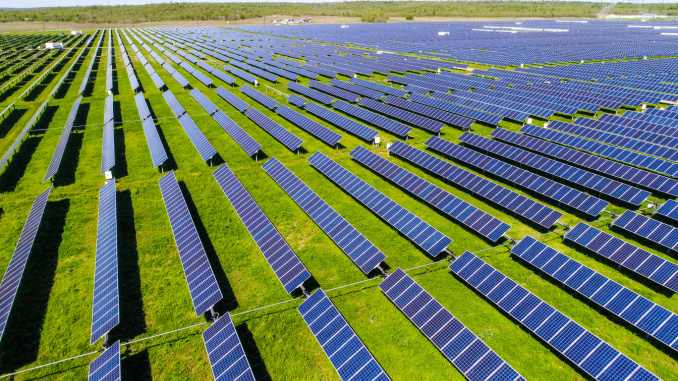
It was Biden’s biggest “accomplishment.” The so-called Inflation Reduction Act, which he later admitted had nothing to do with inflation (it actually did, just not in the direction the name suggested) but was really about dumping billions (really trillions) into subsidizing the green new scam. It was the biggest acceleration towards the “Net Zero” climate scam resulting in utilities across the country, especially here in Arizona, spamming the grid with unreliable energy generation such as solar, wind, and battery storage, driving up rates for utility customers while shattering reliability.
And President Trump promised on the campaign trail that he would terminate it on day one, instead committing to unleash American energy dominance, “drill, baby, drill”, and slash harmful regulations standing in the way of building affordable baseload generation. The recently passed “One Big Beautiful Bill” was the avenue to do the first.
What finally made it through Congress and was signed into law on July 4th terminated tax credits for electric vehicles, “energy efficient” home improvements, and residential solar this year. As for the much larger credits, those subsidizing grid scale solar and wind farms, it’s much more complicated.
>>> CONTINUE READING >>>
by AZ Free Enterprise Club | Aug 20, 2025 | Opinion
By the Arizona Free Enterprise Club |
In 2020, Arizona’s largest monopoly utility announced a voluntary commitment to one of the most extreme clean energy goals in the world: to go 100% carbon free by 2050. Five years later, they’re rolling that commitment back. Sort of.
When they first announced their original Clean Energy Commitment in 2020, APS boasted about their plans to decarbonize. According to their own release, they weren’t doing what they described as the “easy thing” other utilities were doing–developing resource plans that still allow you to produce some carbon emissions, so long as you offset them elsewhere. No, they were committing to go “carbon free,” which means shutting down every single source of baseload power beside nuclear and replacing it entirely with solar, wind, and battery storage.
But late last week, APS announced a modification to their climate commitment. Instead of going carbon free, APS is switching to carbon neutral by 2050.
How is the new commitment different than the old one? For ratepayers worried about skyrocketing utility bills, it doesn’t change much…
>>> CONTINUE READING >>>
by AZ Free Enterprise Club | Jun 9, 2025 | Opinion
By the Arizona Free Enterprise Club |
Heading into November’s election, the Democratic Party felt good. They thought they had the presidency locked up. And here locally, they were convinced that they would gain control of Arizona’s legislature after outspending Republicans in every single race.
Then, a massacre happened. President Trump was handed a mandate by the American people, and Democrats actually lost ground in our state legislature. That had to feel like rock bottom for the Left, and yet, as we’ve seen so far in 2025, it wasn’t.
On the heels of their historic defeat, the Arizona Democratic Party (ADP) faced accusations of financial wrongdoing from one of its leaders, just days before its convention and officer elections in January. Then, in April, the ADP saw even more infighting between party leadership and the state’s top Democratic elected officials: Governor Katie Hobbs, Secretary of State Adrian Fontes, Attorney General Kris Mayes, U.S. Senator Mark Kelly, and U.S. Senator Ruben Gallego. Now, the latest news shows that, according to its own leadership, the Arizona Democratic Party will actually go broke by the end of this year.
That’s a lot of dysfunction in just a few short months, which is usually the domain for Republicans. But now it appears the Dems have become the standard bearer of political chaos…
>>> CONTINUE READING >>>
by Jonathan Eberle | Apr 2, 2025 | News
By Jonathan Eberle |
Arizona Governor Katie Hobbs has vetoed SB1119, a piece of bipartisan legislation aimed at prioritizing affordable and reliable utility services for Arizonans. The bill, sponsored by Senator Tim Dunn (R-LD25), sought to direct the Residential Utility Consumer Office (RUCO) to focus exclusively on minimizing utility rates rather than considering environmental policies that could contribute to higher costs.
In a press release following the veto, Senator Dunn criticized the decision, arguing that it would negatively impact consumers already struggling with rising costs. “SB 1119 would have required the Residential Utility Consumer Office to focus its efforts on fighting for the safest and most reliable utility service achievable at the lowest retail rate possible, instead of prioritizing any costly radical environmentalist agendas,” Dunn stated. He went on to say that the veto was “short-sighted” and would ultimately burden Arizona residents.
Utility costs have been a growing concern for Arizona residents, particularly in the wake of inflation and increased energy demand. The state’s energy policies have often been a point of contention, with debates centering around balancing affordability with sustainability. RUCO, an independent agency that represents residential utility customers, currently considers multiple factors when making policy recommendations.
Supporters of SB 1119 argued that the bill would have strengthened consumer protections by ensuring that RUCO prioritized affordability above all else. The veto is expected to spark further discussions among lawmakers and stakeholders on how to bring more affordable utility rates to Arizonans. As the state continues to grapple with rising utility costs, future legislative efforts may seek to address the concerns raised by both proponents and critics of SB 1119.
Jonathan Eberle is a reporter for AZ Free News. You can send him news tips using this link.
by Matthew Holloway | Dec 7, 2024 | News
By Matthew Holloway |
The Arizona Free Enterprise Club released a statement on Wednesday severely criticizing the Arizona Corporation Commission (ACC). The statement came after the ACC, which is charged with protecting Arizonans from a non-competitive energy industry, voted to abdicate its duty by allowing formulaic rates that increase automatically year over year, as opposed to every increase being subject to public scrutiny and requiring approval.
The vote on Tuesday was carried 3-2 with commissioners Anna Tovar and Lea Márquez Peterson dissenting. According to the ACC, its policy statement “allows regulated utilities to propose formula rates in future rate cases. Under this approach, the ACC reviews and accepts as the rate a formula for calculating the utility’s cost of service, including clear definitions of inputs to that formula and a process for updating rates every year as the utility’s costs change.”
The commission claimed, “Formula rates will still be monitored closely to ensure that the utility does not over-earn relative to the cost of service for providing service (plus a reasonable return on invested capital), while continuing to provide service safely and reliably.”
The Arizona Free Enterprise Club responded in a statement saying:
“Following contentious double digit rate hikes being approved and ESG Resource Plans committed to going ‘Net Zero’ by 2050 being rubber stamped, the Commission has rushed through approving new rules masquerading as a mere ‘policy statement’ that could insulate utilities and the Commission from having to face ratepayers in future rate cases. The ‘policy statement’ would depart from traditional rate making and pursue ‘formula based rates’ offloading risk from investors to ratepayers and baking in automatic rate increases with little transparency or opportunity for ratepayer engagement.
“The only support for this ‘policy statement’ came from the utilities themselves. The Commission is charged to protect ratepayers by regulating the utilities, not the other way around. The Commission should pump the brakes, not rush through major rulemaking decisions in a lame duck session.
“The Arizona Free Enterprise Club is committed to protecting ratepayers, ensuring affordable and reliable energy in Arizona. We will continue to work to ensure utilities will not be able to force their captive ratepayers to foot the bill, especially through automatic rate hikes, for their costly goal to go ‘Net Zero’ by 2050 by shuttering reliable sources of energy generation to build out expensive and unreliable wind, solar, and battery storage projects.”
Attorney Dan Pozesfsky of Arizona’s Residential Utility Consumer Office (RUCO), expressed a similar view according to 12News saying, “Trying to implement formula rates through a policy statement rather than through rules is inappropriate, illegal and in this case denies due process.”
The outlet reported that the ACC, ignoring its own plans for the vote, rushed to schedule it noting that in a previous meeting Commission Chairman Jim O’Connor had told stakeholders, “Give us feedback. Bring us guardrails.” He added, “I eagerly look forward to that kind of input at our next workshop.” However, no workshop occurred and no published legal opinions were issued.
Diane Brown of the nonprofit Arizona PIRG Education Fund stressed that the vote was conducted with critical questions about the scheme remaining unanswered. She said, “This is precisely to me why it was so important to have the legal memo that this Commission said they would get. While there are statements that there will be increased transparency, I’m not seeing evidence of that. It is troubling to me that we haven’t heard from the ALJ (administrative law judge). We have not heard from Staff.”
Matthew Holloway is a senior reporter for AZ Free News. Follow him on X for his latest stories, or email tips to Matthew@azfreenews.com.