by Matthew Holloway | Jun 15, 2025 | Education, News
By Matthew Holloway |
Arizona Superintendent of Public Instruction Tom Horne announced that his office will report Scottsdale Unified School District (SUSD) to the federal government for violating the “No DEI” pledge signed by district Superintendent Scott Menzel. The announcement came after SUSD adopted a DEI-oriented curriculum, despite objections from parents.
Horne explained, “Today I’m announcing that I will report to the federal government that the Scottsdale School District has violated the statement they signed that they would not teach DEI. They adopted a DEI-oriented textbook, or more than one book actually, over parental objections.”
The superintendent was joined by Maricopa County Sheriff Jerry Sheridan who expressed major concerns regarding the objectively anti-police narrative that the text in question indoctrinates students with.
“At a time when law enforcement agencies are expanding their focus on community outreach and de-escalation of conflicts, it is counterproductive for schools to push a misguided and inaccurate narrative that will make students fearful or suspicious of their local law enforcement officers,” Sheridan said. “The men and women who wear the uniform in Arizona, are among the bravest and most noble public servants in this great state. Many are first responders, who put their lives on the line each day to keep our youth and our communities safe.”
Horne cited several examples of what he called the “unbalanced political propaganda” in the text: “U.S. History Interactive” by the Savvas Learning Company.
“At page 1033: ‘many people, including Black Lives Matter activists argued that these separate events as Well, as well as the death of many Black people in earlier years was the result of deeply embedded racism.’ Nothing was said about what other people may be saying. Other people do not believe that racism is deeply embedded in the United States.”
“On the same page referring to the 2020 riots: protest marches were generally peaceful Horne pointed out that ‘we’ve all seen the video on television of a reporter saying that surrounded by burning buildings and attacks on police cars.’”
“At page 1025, referring to the incident at Ferguson: ‘one witness claimed that before being shot, Brown had raised his hands and said ‘don’t shoot!’ Horne pointed out: ‘To his everlasting credit, Eric Holder, the first African American United States Attorney General in history, conducted an objective investigation, and concluded that officer Wilson shot Ferguson in self-defense. Limiting the discussion to what one witness said was extremely misleading.’”
“At page 1026: ‘a basic tenet of democracy is that power should belong to the people. But what can people try if they feel they’re not being heard or if they live under an authoritarian system? Civil resistance, encompasses a broad range of lawful and nonviolent action aimed at returning power to the people. Use this video as a brief introduction.’
Horne pointed out: “the United States is a Democratic Republic. We do not have a monarch. Officials are elected by a vote of the people. This gives everyone the opportunity, if they disagree with what the government is doing, to campaign for the election of someone else. That is the solution to disagree with government policy. Students are being encouraged by the video to engage in civil resistance to a democratically elected government. The suggestion in this quotation that the United States is an authority system is a woke lie.“
“From Page 167: ‘renovations and improvements conforming to middle-class preferences has driven up the demand for housing and the cost of living in these neighborhoods, making it difficult for less affluent more vulnerable LGBTQUI plus populations to live there’.” Horne replied: “I will not comment on what QUIA plus means, but the suggestion that LGBT people are financially oppressed is extremely misleading. Many LGBT People are quite prosperous. The median income for men in same-sex marriages is $149,900. The median income for men in opposite sex married couples is $124,900.”
Horne also cited issues with a human geography book also used by SUSD: “APHUG 5: Human Geography: A Spatial Perspective, Bednarz et al., Cengage, 2022”
The text states: “Republican lawmakers in some states have packed African-American voters into a single district or small number of districts thereby creating majority Republican districts in the rest of the state.’”
Horne’s response was incredulous: “This was a civil rights project of the Democratic Party. The goal was to assure minority representation in Congress. The Republican Party had nothing to do with it.”
According to AZFamily, Scottsdale Superintendent Scott Menzel rejected Horne’s assessment saying, “To label them woke without having ever read what was the 1,250 pages in the textbook is a problem from my perspective.” Horne replied to reporters that he had read all the passages he quoted. Menzel claimed that content experts reviewed the text and made an informed recommendation conforming to Arizona state standards.
“We would never adopt a curriculum that was anti-police,” Menzel told reporters. “We do have historically situations where some people argue that we should defund the police. Here in Arizona we had people who removed school resource officers. That’s not something that we would ever contemplate, but from a historical perspective our students should be able to wrestle with why someone might have made that argument.”
In a statement released SUSD said, “Horne’s claims of indoctrination and a so-called ‘leftist curriculum being imposed’ on students are simply untrue and unsupported by fact,” without refuting the examples cited by Horne.
Matthew Holloway is a senior reporter for AZ Free News. Follow him on X for his latest stories, or email tips to Matthew@azfreenews.com.
by Tamra Farah | Jun 10, 2025 | Opinion
By Tamra Farah |
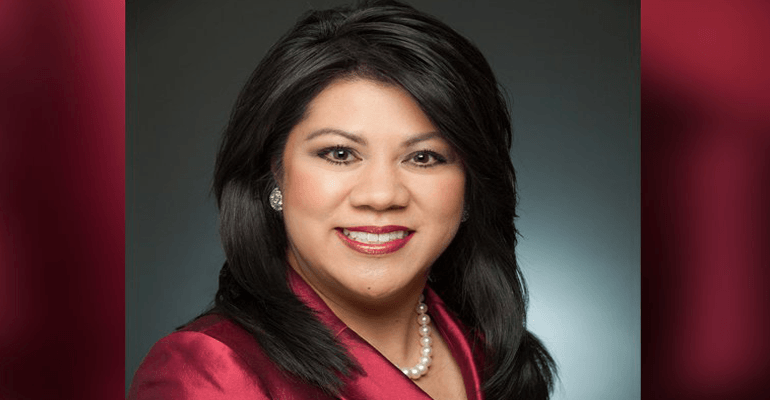
Arizona State Treasurer Kimberly Yee (51) has announced her candidacy for Arizona Superintendent of Public Instruction, challenging incumbent Tom Horne (80) in the 2026 primary election. Both candidates are Republicans. Both are statewide elected officials. Yee is term-limited as Arizona Treasurer. Voters will decide which candidate is best equipped to lead the Arizona Department of Education (ADE) and address the state’s K-12 educational challenges. Here are some notes on the job itself and the candidate’s positions.
The Role of the Superintendent
It is a big job. The superintendent oversees the ADE, manages education policy, administers state and federal funds, and ensures compliance with standards for approximately 1.1 million students across more than 200 districts, 400 charter school holders, and over 550 charter school campuses. The primary responsibilities fall into three categories: choice, policies, and academics.
The Empowerment Scholarship Account (ESA) is the banner issue on choice. Current policy issues include merit-based programs such as school report cards and cultural hot buttons such as Diversity, Equity, and Inclusion (DEI). Academics consist of all scholastic initiatives. The role demands collaboration with the State Board of Education, engagement with parents and administrators, and a focus on student well-being, school safety, and parental choice.
CHOICE: Empowerment Scholarship Accounts
Educational choice has long been an Arizona value. In fact, the Arizona legislature expanded the ESA program in 2022 to include all Arizona K-12 students. It has grown during Horne’s term, from 12,000 to approximately 85,000 students between January 2023 and mid-2024, or from 1.1% to 7.7% of Arizona’s 1.1 million K-12 students. However, the program faces scrutiny. A 2024 Heritage Foundation survey reported that 65% of parents struggle to contact ADE staff, and 63% have difficulty getting answers about ESA issues.
The survey revealed that nearly half (49%) of the respondents in the Heritage Foundation’s December 2024 survey experienced curriculum request denials due to insufficient curriculum documentation, attributed to Arizona Attorney General Kris Mayes’ (Democrat) July 2024 directive requiring ESA purchases to be tied to a specific curriculum. Superintendent Tom Horne criticized these requirements, stating, “We are supporting the Goldwater Institute in challenging it in court, and we’re hoping to get that overturned so that we won’t have that silly rule anymore,” referring to the September 2024 lawsuit (Aguirre v. State of Arizona), which argues that Mayes’ restrictions violate state law and the ESA handbook, which does not mandate such documentation for supplementary materials. Horne is not a plaintiff in the case.
In general, the poll found that 66% of ESA parents indicated dissatisfaction with the department’s “program administration” and found it cumbersome or difficult to tap into the benefits of the ESA. For example, reimbursement delays were frustrating parents and, in some cases, caused economic hardship. The 2023 transition from debit cards to ClassWallet and staffing shortages led to manual review backlogs. The Heritage survey found that 88% of respondents said they would prefer access to a debit card to make purchases using their child’s ESA funds rather than ClassWallet’s online payment system, or to pay out of pocket and submit a claim for reimbursement. In addition, 77% of parents experienced long wait times for approvals, and 86% for reimbursements.
In my interview with Horne, he addressed these issues, stating, “The complaint related to delays in reimbursements is valid, and I took it very seriously. Most of the requests are under $2,000. Requests over $2,000 get checked out before they’re paid. Requests under $2,000 are paid without checking them out, subject to later risk auditing. In addition, our parent user group sets amounts for specific requests that would be approved without question. Those two things solved the problem. The amounts have become controversial. The parent user group are fearful that if we lose, those delays will occur again.” I asked Horne how many or what percentage of the parent user group might allegedly fear delays under a new superintendent. His assertion, without data to back it up, is questionable.
In my interview with Yee, she positions herself as a longtime supporter of school choice, including as an Arizona State Senator. She states that she understands the intent of the ESA to provide parents with an easy-to-use mechanism for choosing the best education for their kids, explaining, “As a former member of the Arizona legislature, I sponsored and supported the Empowerment Scholarship Accounts to expand the school choice options for families in Arizona. Arizona has long been a national leader in parental rights and giving families various options for school choice that best fits their child’s unique educational needs.”
Yee added, “As the future superintendent and a longtime school choice advocate with a proven conservative track record, I will protect and preserve school choice in Arizona and ensure the ESA program is run efficiently and effectively and will work with the legislature to provide fiscal accountability at all levels of our education system that the taxpayers deserve.”
Yee believes that Horne has created unnecessary burdens for ESA families, stating, “Empowerment Scholarship Accounts were created by the legislature, and it is important that the functions of administering ESAs are strictly and only determined by the law—not by a rogue superintendent who continues to overreach his authority by creating arbitrary policies out of the Department of Education by unelected bureaucrats.”
POLICIES: Addressing DEI
Though policies include teacher certification, school safety programs, and a host of compliance issues, the hot button issue is DEI. Both candidates have addressed DEI policies in schools, particularly considering the federal mandate under President Trump requiring districts to eliminate DEI practices or risk losing funding. Horne said, “I’m working very hard to implement President Trump’s education action. I’ve told the schools if they don’t sign a statement that they’re not doing DEI, their funds will be cut off.”
Arizona Attorney General Kris Mayes publicly opposed Horne’s enforcement of the Trump administration’s April 3, 2025, U.S. Department of Education mandate requiring schools to eliminate DEI programs or risk losing approximately 11% of federal funding. Mayes argues that Trump lacks legal authority to withhold funds, as stated in her April 17, 2025, response to the Kyrene School District case. The mandate, rooted in a directive, cites Title VI, and the 2023 Students for Fair Admissions v. Harvard ruling was blocked by federal judges, supporting Horne’s reference here to a district court ruling: “I’m very satisfied as a former attorney general that [it] will be [confirmed] overall on appeal and while other superintendents in other states have objected to it, I have enthusiastically supported President Trump’s program.”
Horne relies on a parent hotline for DEI compliance monitoring, explaining, “I have a hotline that parents can contact me and let me know when schools that said they weren’t doing DEI are doing DEI. It’s not a formal follow-up or proof they’ve done it. It’s just random parents who may or may not call the hotline…and we do report when we get a message on the hotline; we report to the federal government so that they can take it into account and cut funds.” When later asked, Horne said the hotline call data indicated “572 [districts and charter schools] have signed and 23 have refused. Some of those who have signed are probably not honest about it, so we’ll be watching for that.”
Asking Yee what she would do as it relates to DEI, she highlighted her efforts against DEI as State Treasurer, stating, “I have a solid record on fighting back against radical DEI policies as the State Treasurer of Arizona. This legislative session, my office moved forward an anti-DEI bill in the legislature to ensure that DEI is not used in the hiring, promotion, or training of state employees in Arizona agencies. As the head of the Arizona Treasury, I hire based on a person’s individual skills, experience, and merit.” She pledged effective action as superintendent, adding, “I support President Trump’s requirement to remove federal funding from schools that continue to promote DEI in school administration and inside the classroom. As superintendent, my administration will not only clean up woke DEI policies from day one, but we will ensure funding is removed immediately from any schools that ignore this federal mandate because we must get back to the basics of focusing on reading, math, and student success in our classrooms.”
ACADEMICS: Scholastic Proficiency
Arizona has not performed with distinction academically since its public school systems were included in the National Rankings. Under Horne, academic proficiency has not improved; rather, it declined. According to the National Assessment of Educational Progress (NAEP), Arizona’s 4th-grade reading scores dropped from 215 (Basic) in 2022 to 208 in 2024, below the national average of 214 (a proficient score is 238). Data for 2023-2024 is not yet available on the ADE website, but further details can be found at nationsreportcard.gov.
Horne outlined his efforts, stating, “I have 15 initiatives [to help] the schools improve academic results. I’m personally involved in every one of those 15, so I’m quite busy, and I’ll give you a couple of examples. We have solutions teams to go out to the schools; these are highly qualified teachers and principals who go out to schools to help them.” He highlighted a program targeting the bottom 5% of schools, noting, “One of the projects they made was the bottom 5% of schools—90 some schools—and after they worked with them, 70% of those schools are no longer in the bottom 90% and that demonstrated in part that poor kids can learn as well as rich kids as long as they are properly taught. We adopted a school in a very poor area, and we sent people out every week from my department to work on fifth grade…showing the teachers how to teach them and doing some teaching themselves, and we increased their math courses by 27%.” Horne was unsure if the information he provided related to his “15 initiatives” is available for stakeholders to review on the ADE website, and at this writing, it cannot be confirmed through a search of other available sources.
Yee focused on foundational skills, drawing on her experience, saying, “My policy background in education began in the 1990s, where I helped develop academic content standards in reading and mathematics. It was important, even back then, to fight the woke educators who wanted to teach whole language reading with pictures only, because they thought that phonics would be too emotionally challenging for these young children. The result was illiterate children who were inappropriately being moved onto the next grade level, struggling with severe achievement issues because they never received basic, traditional skills in the classroom. We need to get back to the basics of reading and math in order for children to succeed.”
Candidates for Arizona Superintendent of Public Instruction
Yee’s and Horne’s campaign websites and other public sources provide background information about past experiences related to offices held and department leadership.
As Treasurer of Arizona since 2018, Kimberly Yee has increased total investment earnings to over $4.5 billion. She led the Treasury’s historic, record-high performance for earnings under the state land endowment, distributing over $2.43 billion to Arizona schools. In 2022, she was elected to her second term as State Treasurer of Arizona, garnering more votes than any other statewide elected official.
Bringing years of experience to public budgeting and executive agency management, Yee is a longtime financial education advocate and sponsored legislation to add financial literacy to the K-12 academic standards in schools. She has been the administrator of the statewide AZ529 Education Savings Plan for higher education since October 2020. In just 54 months, Arizona 529 accounts have increased by 54,178 new accounts, with $2.46 billion in assets under management, helping families save for higher education and workforce development.
In her early career, Yee focused on public policy in K-12 and higher education, emphasizing school choice as a senior research analyst for the Arizona Senate Education Committee. Also in the 1990s, she helped draft laws expanding open enrollment, charter schools, and homeschool protections. During two gubernatorial appointments under Republican governors, she worked on childcare, K-12 academic standards, and vocational education for career and college readiness. Elected to the Arizona Legislature in 2010, she was unanimously chosen as Senate Majority Leader, the second woman in that role after Sandra Day O’Connor. Congressional Quarterly’s Roll Call recognized her as one of the “25 Most Influential Women in State Politics.”
As the former Chairwoman of the Arizona Senate Education Committee, Yee sponsored legislation recognizing traditional district and charter schools and expanded eligibility for Arizona Empowerment Scholarship Accounts, particularly for low-income students. She has also earned numerous awards and recognitions, including as the recipient of the Friend of the Taxpayer Award, the Friend of the Family Award, the Golden Apple Award, and multiple School Choice Champion Awards. She was honored as one of the 48 Most Intriguing Women in Arizona in a book sponsored by the Arizona Centennial Legacy Project.
Tom Horne first served as Arizona’s Superintendent of Public Instruction from 2003 to 2011 and was re-elected in 2022. As Superintendent, he implemented Structured English Immersion, increasing English proficiency rates for English Language Learners from 4% to 31% in one year, stating, “At 31% in one year, within three or four years everyone becomes proficient.” Historical reports from Horne’s earlier tenure support similar improvements. No specific 2023–2025 ADE data confirms this exact figure. Horne states he was a key advocate for banning ethnic studies through Senate Bill 1069 (2010), arguing that public schools should “develop the student’s identity as Americans and as strong individuals” rather than “promote ethnic chauvinism.”
Horne implemented social studies standards annually, ensuring students “learn lessons in five areas, including American history, world history, geography, civics and government, and economics” from kindergarten through high school. Horne replaced bilingual education with Structured English Immersion, increasing English proficiency rates for English Language Learners from 4% to 31% in one year. He also worked with the State Board to require reading proficiency before third graders advance to fourth grade.
Horne’s campaign website currently refers to “appointing Christine Accurso to manage ‘educational choice to help shape and mold the futures of their precious children.’” However, Mrs. Accurso resigned from her position directing ESAs after seven months in 2023. Strangely, Horne’s campaign website has not been updated. Horne’s site also emphasizes accountability, which appears to be lacking in his performance, stating, “There are two kinds of accountability. There’s academic accountability; you want to see results for putting in more resources. And then there’s financial accountability; the money goes toward teachers’ salaries rather than administration because a school can be no better than the teachers in the classroom.”
Horne served on a school district board for 24 years and served as Arizona Attorney General from 2011 to 2015. During a campaign finance investigation in March 2012, the FBI observed a hit-and-run in a Phoenix parking garage. The FBI concluded Horne left the scene to hide an affair with Carmen Chenal, a subordinate earning $108,000 as an assistant attorney general. Horne was not criminally charged.
In his reeletion bid in 2014, Horne lost to Mark Brnovich in the Repbulican primary for Arizona Attorney General. Brnovich’s campaign highlighted ethical issues and scandals surrounding Horne, including the FBI investigation into alleged campaign finance violations from Horne’s 2010 campaign and the extramarital affair. Brnovich also brought attention to a whistleblower claim by former staffer Sarah Beattie that Horne used his Attorney General’s office staff for campaign work, violating state law.
Horne’s legal background includes graduating magna cum laude from Harvard College and with honors from Harvard Law School and serving as a Special Assistant Attorney General and Judge Pro-Tem.
Looking Ahead for the Arizona Department of Education
The 2026 primary election for Arizona Superintendent of Public Instruction, set for Tuesday, August 4, followed by the general election on November 3, will shape the future of the state’s education system.
As our state looks forward to the 2026 election, Arizonans should carefully research each candidate. If the ESA program can be administered effectively and efficiently, more families will likely benefit from it. It would be wise to ensure that the next superintendent can operate in a fiscally responsible manner while prioritizing improvements in student academic achievement. Arizona’s 1.1 million students and the state’s future deserve strong leadership at the Department of Education.
Tamra Farah leads AmericanStrategies.org, bringing twenty years of experience in public policy and politics as a journalist while focusing on protecting individual liberty and promoting limited government. She has engaged with ten local, state, and federal candidates and organizations, such as Americans for Prosperity, FreedomWorks, Moms for America, and Arizona Women of Action. Farah frequently appears on conservative radio, television, and in print media.
by Staff Reporter | Jun 9, 2025 | Education, News
By Staff Reporter |
The Arizona State Board for Charter Schools (ASBCS) revoked the charter for Primavera Online School, potentially affecting over 20,000 students enrolled.
ASBCS cited low academic results these past three years as the basis for their decision, unanimously made during Tuesday’s meeting.
Primavera’s founder and CEO, Damian Creamer, maintains ASBCS incorrectly redesignated Primavera in recent years as a traditional school rather than its historical designation as an alternative school. Grading as a traditional school resulted in Primavera receiving failing grades — rather than the adjusted passing grades Primavera would have gotten had it continued its designation as an alternative school.
Alternative schools serve at-risk students, a status requiring annual application.
ASBCS did acknowledge that Primavera could be classified as an alternative school. However, it was also discussed how Primavera officials hadn’t contacted state officials about its redesignation as a traditional school, let alone about the poor grades.
Creamer had this to say in response to ASBCS’s decision:
The Arizona State Charter School Board’s decision to uphold its plan to revoke Primavera’s charter is a grave injustice and a tremendous disservice to all of Arizona’s students, parents, and teachers. This reckless action threatens to dismantle a vital educational institution that has faithfully served our community, providing innovative, accessible, and high-quality education to hundreds of thousands of students since our inception. We are appalled that the Board denied our legal counsel an opportunity to address the allegations made or to address the multitude of factual inaccuracies on which the board members specifically said they were acting. They did not want to hear anything that was contrary to the factually incorrect narrative they created. This blatant disregard for due process is not only unfair but undermines the principles of transparency and accountability that the Board claims to uphold. The assumptions and conclusions reached by the Board are based on factually untrue and materially false information. These were obvious misrepresentations rather than data driven evidence. Primavera will not stand idly by while the educational futures of our students are jeopardized. We are prepared to take all necessary action to challenge this decision and protect the rights of our students, parents, and educators. The Board’s actions will not go unanswered, and we will fight tirelessly to ensure that Arizona families continue to have access to the exceptional education Primavera provides.
The state’s chief educational authority says he was powerless to stop the revocation process. Back in March, Arizona Superintendent of Public Instruction Tom Horne said he lacked authority to meddle with the ASBCS decision in response to appeals to intervene from the charter giant and its allies. Horne said Primavera would have to appeal and present evidence to an administrative law judge as their next steps. Primavera has hearings on the matter scheduled for September.
“The legislature chose to divide jurisdiction regarding charter schools between the Arizona Department of Education and the Charter Board,” said Horne. “The current issue is within the jurisdiction of the Charter Board. I have no power or influence over that. If I were to try to influence it, the Charter Board would resent the trespass on their turf, and it would do more harm than good.”
Horne also issued a statement supporting the ASBCS decision to seek charter revocation.
Primavera did receive approval for alternative status for the 2025 fiscal year, and has its application for alternative status for the 2026 fiscal year pending before the Arizona Department of Education.
AZ Free News is your #1 source for Arizona news and politics. You can send us news tips using this link.
by Staff Reporter | May 30, 2025 | Education, News
By Staff Reporter |
Continued Republican infighting over the state of school choice in Arizona has resulted in another candidate entering the 2026 race for superintendent of public instruction. The friction concerns to what extent the superintendent should restrict the reimbursement of school choice funds.
Arizona Treasurer Kimberly Yee formally announced her campaign on Wednesday with the Arizona Freedom Caucus. The caucus founder, Sen. Jake Hoffman, endorsed Yee at a press conference outside the state capitol. Hoffman believes the current superintendent, Tom Horne, limits school choice disbursements too much.
Hoffman justified Yee’s selection by alluding to “challenges” with the Empowerment Scholarship Account (ESA) Program, and reported “frustrations” experienced by parents navigating the program.
“We have identified an absolute all-star candidate; we have identified someone who has a proven track record uniting the Republican Party and winning elections at every level of government,” said Hoffman. “[Horne] is a better politician than he is a public servant.”
Yee said she would better partner with parents through a “student-first” system and pledged to create “a vocational pathway” for future leaders in the workforce. Yee also promised to strengthen school choice options for parents.
Yee accused Horne of committing “big government overreach” and “petty political games” in his administration of the office.
“We need a chief education officer in Arizona committed to delivering real, tangible results for Arizona children and families. Sadly, and for far too long, the leadership at the Arizona Department of Education has missed the mark, and our children and teachers are paying the price,” said Yee.
Yee avoided answering whether she would put limits on permitted ESA Program spending. She insisted current legislative “guardrails” sufficiently prevent inappropriate expenditures.
Hoffman announced his intent last month to replace Horne next year, claiming the superintendent hadn’t sufficiently protected the ESA Program from efforts to undermine it by Governor Katie Hobbs and Attorney General Kris Mayes. A significant source of contention is the extent to which the superintendent’s office has denied reimbursement requests.
Horne has put the kibosh on significant reimbursement requests fought to be secured by parents in the program. Of late, his office says he has prevented the approval of a $16,000 cello; a $5,000 Rolex watch; a $24,000 golf simulator; $64,000 for nail art and crystals; a $2,300 freeze dryer; $1,500 for 250 cubic feet of potting soil; and $65,000 for 100 laptops, computers, and tablets for a family with six children.
In the case of the cello, 12 News reported the family — identified as living in “an upscale Gilbert neighborhood — received $11,000 in ESA funds for a piano, commercial KitchenAid mixer, private fitness lessons, a kayak, and Chinese calligraphy and painting lessons. After receiving their reimbursements, the family put their child in a public school.
Horne has consistently doubled down on his position as “the main defender” of the ESA Program, citing his work as a lawmaker on the earliest forms of school choice conceived in the 1990s. The superintendent publicly challenged Hoffman to debate him on the matter.
“I brought school choice to Arizona in the 90s with my legislation. I’ve fought to protect school choice from a liberal Governor and Attorney General for the past two years,” said Horne. “I’m the only statewide candidate to beat an incumbent in the General Election in over 50 years. Let me know when and where you’d like to debate education policy.”
Yee’s platform focuses only on fiscal responsibility within the superintendent’s office. Contrary to Hoffman’s indication that the Arizona Freedom Caucus’s chosen candidate would lead their campaign with the ESA Program, there is no mention of school choice on her campaign website as of this report.
By comparison, Horne’s platform appears to be significantly more fleshed out with plans addressing the different areas of state education.
Yee previously considered running for governor in the crowded 2022 race that ultimately ended with the seat flipping from Republican to Democratic control.
Aside from Horne and Yee, the only other registered Republican to file a statement of interest in the race is Stephen Neal Jr., a school psychologist formerly with Legacy Traditional Schools.
Five Democratic candidates have also filed statements of interest: Michael Butts, a member of the Roosevelt Elementary School District governing board; Sam Huang, former member of the Chandler City Council and 2022 state legislative candidate; Joshua Levinski, an English teacher; Bret Newby, an associate professor with National University; and Teresa Ruiz, the former president of Glendale Community College.
AZ Free News is your #1 source for Arizona news and politics. You can send us news tips using this link.
by Rosemary McAtee | May 20, 2025 | Opinion
By Rosemary McAtee |
Secrecy, control, and parents without a voice. These factors apparently comprise the current motto of Superintendent Tom Horne and John Ward, head of the ESA department. As a six-year veteran parent in the ESA program, I know what I am talking about. Over the past two years, the changes I have seen have been nothing short of appalling, frustrating, and alarming. Instead of empowering parents with trust and the ability to make free choices in educating their students, the current Superintendent has done all he can to rob parents of the freedom granted in the lawmakers’ legislative intent in the historic bill that was passed in 2020.
I could spend hours sharing all the abuses that parents have experienced at the hands of Tom Horne. To save us all a bunch of heartache, I’ll leave it at one major concern: the ongoing development of the most recent edition of the parent handbook. As a longtime shareholder, I can tell you the current protocol of closed-door meetings and a handpicked handbook committee led by a non-ESA parent has never been the norm of this program. Even under former Superintendent Kathy Hoffman, a clear opponent to the program, parents were offered townhalls to make their voices heard.
This year, despite the State Board of Education’s President demanding that Superintendent Tom Horne offer a townhall, Superintendent Horne has remained silent for months. Instead, prior to the last State Board of Education meeting, Mr. Horne sent an email to parents, demanding they sit down and shut up.
I quote, “This email is particularly directed to ESA users who have been in disagreement with the proposed handbook: We received some concern from state legislators. We therefore agreed to postpone the vote on the handbook until the June meeting to give us a chance to sit down with the legislators and hopefully reach mutually acceptable agreements. We therefore respectfully request that those who have signed up to speak on this issue wait until the June meeting and not come to the meeting next Monday. The handbook will not be on the agenda, and once agreement is reached with legislators, any objections you have might be solved. It is best to come to the meeting when you know what the final proposal will be in June.”
Clearly Superintendent Horne has no interest in listening to the concerns of the parents.
Now, let us explore some major issues in the handbook itself. A large portion of the parental outcry has primarily been against the mandated caps in different spending categories. While the caps seem to be contrary to the law, I firmly believe they are merely a diversion from the real agenda of the ESA department. Take a moment to examine two critical footnotes.
For the second time in the last two years, we see a footnote that an acceptable expense category is as follows: “Any fees that may be levied by the Department to cover the costs of managing of the Empowerment Scholarship Account program” (pg 15, footnote 10). This means that the ESA department really wants to pull fees out of students’ accounts to cover administrative fees. Students already only receive 90% of the funding they would in public schools – and now the department wants to steal money from the kids to cover their own expenses?
Even more concerning is footnote 22 on page 52, which says: “The Department may ask for repayment of any items approved in error, if items are improper or unallowable under your ESA contract, state law, administrative rule, program policies, or this ESA parental handbook.”
For the first time in my experience as an ESA parent, Superintendent Horne and John Ward have approved auto approvals of expenses in the ESA program. Before this, every single purchase had to be approved, thus protecting tax dollars from being used improperly. However, because the current ESA department cannot be run efficiently or effectively (despite the program being handed over to Mr. Ward with turnaround times being 24-48 hours for every single order), they now want the buck to stop with the parents, not themselves as the lawful administrators of the program. This leaves parents in a position that if rules change or future ESA parent handbooks remove categories, the state can demand repayment. This has nothing to do with improper spending, but everything to do with bureaucratic inefficiency.
It is clear that Tom Horne is no advocate for school choice and no advocate for making the voices of parents heard. We parents have had enough. We will scream until our voices are hoarse, because we are the primary educators for our children and we should have a say in the proposed ESA parent handbook.
Rosemary McAtee is a home-educating parent of 7 students and a 6-year veteran of the ESA program.