by Corinne Murdock | Feb 29, 2024 | News
By Corinne Murdock |
State Rep. Alex Kolodin (R-LD03) is urging the Arizona Senate to do away with a bill allowing the export of the Valley’s emergency water reserve.
The bill, HB2201 sponsored by State Rep. Tim Dunn (R-LD25), passed the House with bipartisan support, 33-23, on Monday. Kolodin said that such a measure would inevitably raise utility bills.
“HB2201 allows part of Scottsdale’s emergency water supply to be transferred to out-of-county users, raising our utility bills,” said Kolodin. “I voted no. Needs to die in the Senate!”
Kolodin told AZ Free News that HB2201 will serve as a detriment to suburban ratepayers and force cities to compete for the dwindling supply.
HB2201 enables the interbasin transport of cities’ emergency groundwater supply from within the Harquahala Irrigation Non-expansion Area (INA) to any location within La Paz County. Dunn explained during last month’s hearing on the matter in the Natural Resources, Energy, & Water Committee that the bill would allow La Paz County to grow their existing water resources.
The Harquahala INA covers approximately 766 square miles within La Paz and Maricopa counties in the west-central portion of the state. Currently, Harquahala INA water supply may only be withdrawn and transported by the state and political subdivisions to the following initial Active Management Areas (AMAs): Phoenix, Tucson, Santa Cruz, Pinal, and Prescott.
AMAs rely heavily on mined groundwater and therefore come with higher levels of management than INAs. INAs regulate wells in rural farming areas where groundwater overdraft — the removal of too much water — is less severe. There are two other INAs in the state: Hualapai Valley and Joseph City.
These distinctions are outlined by Arizona’s Groundwater Management Act (GMA), passed over 40 years ago, which restricts interbasin water transportation for the state’s 51 groundwater basins in order to ensure AMAs maintain a 100-year water supply, also known as an assured water supply.
Healthy interbasin water transport hinges on a concept known as safe-yield: ensuring a safe balance between groundwater withdrawals and the natural and artificial recharging of water to AMA aquifers. Overdrafting can damage aquifer structure and limit future water storing capacity, increase the costs of drilling and pumping, and reduce the water quality.
Harquahala INA is considered an emergency savings account of sorts for water, saved in the event of prolonged drought: no groundwater has been transported out of the basin since 1990, according to the latest report from the Arizona Department of Water Resources (ADWR), the authority on water management. Yet, ADWR also reported that in almost all years from 2004-2022, the Harquahala INA had more water leaving the basin than entering mainly due to agriculture, which have made up 98 percent of the INA’s demand.
ADWR projected that annual supply would be insufficient for annual demand under any projected scenario over the next 50 years.
Corinne Murdock is a reporter for AZ Free News. Follow her latest on Twitter, or email tips to corinne@azfreenews.com.
by Elizabeth Troutman | Jan 31, 2024 | News
By Elizabeth Troutman |
Arizona Women of Action are urging the state legislature to pass a bill preventing children from accessing pornography.
“This non partisan bill needs SUPPORT,” the activist group said on Twitter. “It would effectively protect AZ kids from accessing pornography. Age verification is a must!”
Sponsored by Republican state representatives Tim Dunn and Ben Toma, House Bill 2586 adds a new section to a statute regulating the “publishing and distribution of material harmful to minors on the internet.”
The bill subjects commercial entities to civil liabilities for damages if they knowingly publish or distribute material harmful to minors on the internet on a website without age verification.
The legislation “Specifies that a commercial entity that fails to perform the age verification method described above is liable to an individual for the damages that result from a minor accessing the material harmful to minors, including court costs and reasonable attorney fees.”
If the bill passes, Arizona would be the tenth U.S. state to pass legislation requiring some form of age-verification for access to certain materials on the internet.
The other nine states include Arkansas, California, Louisiana, Mississippi, Montana, North Carolina, Texas, Utah, and Virginia.
The Protect Arizona Children Coalition also voiced its support for the bill.
“We can’t believe this needs to be said…Pornography isn’t for kids,” the PACC tweeted, asking citizens to voice their support for the bill at its hearing on Jan. 31.
Elizabeth Troutman is a reporter for AZ Free News. You can send her news tips using this link.
by Daniel Stefanski | May 22, 2023 | News
By Daniel Stefanksi |
A water-related measure is clearing its final hurdles in the Arizona Legislature.
On Monday, the Arizona Senate passed HB 2022, sponsored by Representative Tim Dunn, which deals with reports on water fees and levees.
HB 2022 is “an emergency measure that extends the date, from July 1 to August 15, for the Director of the Arizona Department of Water Resources (ADWR) to annually provide a report of the ADWR’s operations to the Governor and the Legislature.” The bill also “outlines ADWR fee maximums for applications,” and it “requires the Water Infrastructure Finance Authority of Arizona (WIFA) to distribute monies to Navajo County for the Little Colorado River Levee budget line item.”
The proposal cleared the Senate with a 28-0 vote (with two members not voting) and was transmitted to the House for concurrence. Earlier in the session, the House approved of the bill by a 58-2 tally.
In the Senate’s Committee of the Whole session this week, Senator Sine Kerr amended the bill, which earned applause by Democrat Senator Priya Sundareshan, who highlighted the efforts to reduce ADWR application fees and exempt ADWR from rulemaking requirements. Senator Sundareshan stated, “We need to support better groundwater management and help our rural areas.”
When HB 2022 was considered before the Senate Natural Resources, Energy and Water Committee, Ben Alteneder, the Legislative Liaison for the Arizona Department of Water Resources, briefly testified before the members, informing the panel that ADWR was neutral on the bill and had no issues with it. In February, a representative for the Western Growers Association signaled support for the legislation.
Daniel Stefanski is a reporter for AZ Free News. You can send him news tips using this link.
by Daniel Stefanski | Mar 8, 2023 | News
By Daniel Stefanski |
A bill to increase transparency across public bodies in Arizona is making its way through the Legislature, but all Democrats may not be on board with the proposed policies.
HB 2144, sponsored by Representative Tim Dunn, “specifies changes to public meetings and proceedings regulations,” including “requiring all public bodies to provide sufficient seating to accommodate the anticipated attendance of the deliberations and proceedings of a public body.”
The bill also requires: “the agenda of the public meeting to include notice of the time that the public will have physical access to the meeting place,” and “specifying that any head of public body that fails to include notice of the time that the public will have physical access to the meeting place is liable for a civil penalty outlined in statute.”
Representative Michael Carbone co-sponsored this legislation.
An amendment in the House Government Committee “removed the specific liability for the head of a public body,” and “exempted agendas of meetings through technological devices from providing the time the public will have physical access to the meeting place” – for example, Zoom and similar technological meetings.
On January 25, HB 2144 cleared Representative Dunn’s House Government Committee by a 6-3 vote, with one Democrat voting for the bill (Lydia Hernandez). Chairman Dunn indicated that the inspiration behind this piece of legislation stemmed from some government bodies around the state moving their meetings to smaller venues when controversial issues may have been before them. He noted that there could be an intentional motivation to block constituents from attending these meetings in some of these cases – hence the importance of increasing access and transparency for members of the public wishing to attend and participate in these sessions.
Democrat Representative Jennifer Longdon expressed concerns from her cities and other organizations bound by open meeting law about the definitions of some of the terms (“reasonable” and “knowingly”) outlined in the legislation. She voted no on the bill – as did two of her Democrat colleagues. All five Republicans on the committee voted in favor of the bill.
A representative from the Arizona Association of County School Superintendents was signed in to speak against the bill but did not address the committee. Representatives from the County Supervisors Association of Arizona and the League of Arizona Cities and Towns signed in as neutral for the bill.
Later in February, HB 2144 was unanimously approved by the House Rules Committee, with an 8-0 vote. It now awaits its fate with the entire House of Representatives body.
Daniel Stefanski is a reporter for AZ Free News. You can send him news tips using this link.
by Daniel Stefanski | Feb 8, 2023 | News
By Daniel Stefanski |
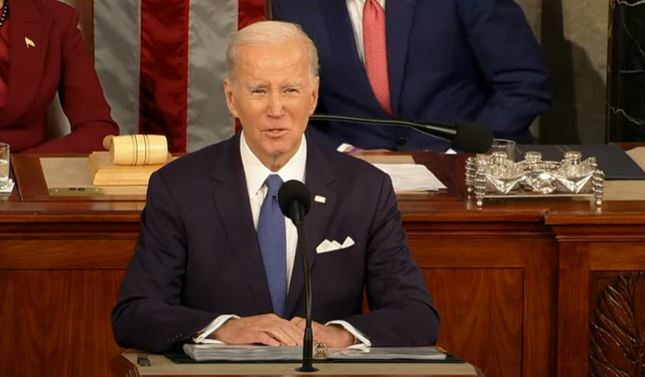
President Joe Biden gave his second State of the Union (SOTU) address on Tuesday night in front of a packed U.S. House chamber and millions of viewers around the world. As is the case with most of these speeches, members of the president’s political party applauded his words, while members of the opposing party largely condemned his statements and policies.
It was no different with members of the Arizona Legislature – some of whom could very well be members of Congress in the future. Many Republican and Democratic state legislators were very active on Twitter before, during, and after the SOTU address.
Representative Matt Gress shared a clip from U.S. Representative Juan Ciscomani’s Spanish language Republican response to the nation following the president’s speech.
House Majority Leader Leo Biasiucci retweeted a handful of posts reacting to President Biden’s statements, including his comments about an assault weapons ban, fentanyl, and Social Security.
Senate President Warren Petersen retweeted a post from U.S. House Speaker Kevin McCarthy, which fact checked Biden’s actions to increase the U.S. deficit.
Representative Tim Dunn gave some SOTU feedback to President Biden on the border crisis: “Biden SOTU speech fails to address the emergency effecting the southern border. This can end by changing his policy. This allows fentanyl to come to your neighborhood. Secure the border protect our airways from China and open up oil exploration to curb inflation.”
Senator Wendy Rogers, in addition to retweeting other posts about the president’s comments, quote tweeted a post showing Bono and Paul Pelosi chatting at the State of the Union, saying, “This shows NO RESPECT for our sacred institutions… I do not allow this in my Arizona Senate committee.”
Senate President Pro Tempore T.J. Shope also retweeted several tweets reacting to the president’s speech, and he added his own quote tweet to U.S. House Speaker McCarthy’s post of U.S. Representative Ciscomani’s Republican response, saying, “Thank you @SpeakerMcCarthy for choosing my friend @RepCiscomani to deliver the Spanish-language @GOP response to the #SOTU! The #AmericanDream is alive and well!”
Representative Jacqueline Parker quote tweeted U.S. Senator Rick Scott’s reaction to the SOTU, writing, “AZ & the federal government are like mirror images right now. The state of OUR state is worsening under Hobbs too. Our borders aren’t secure, school choice is under attack, families are suffering, & all Hobbs wants to do is spend more taxpayer money on big gov’t special interests.”
Representative David Livingston retweeted a number of posts reacting to the SOTU, including some by U.S. Representatives Jim Banks and Byron Donalds. He also shared an Axios story about Arkansas Governor Sarah Huckabee Sanders’ Republican response to the SOTU.
Representative Austin Smith had a one-word answer for President Biden when the @POTUS account tweeted about banning assault weapons: “No”
House Speaker Pro Tempore Travis Grantham shared multiple SOTU tweets from other accounts, including from U.S. Representatives Andy Biggs and Tom Tiffany.
Representative Justin Heap retweeted a post from the National Republican Congressional Committee about U.S. Representative Ciscomani’s Republican response.
Senate Democratic Leader Raquel Terán tweeted, “@POTUS brought it all in for his (SOTU) address!”
Representative Consuelo Hernandez retweeted a post, which positively reacted to President Biden taking a moment to “acknowledge the fears of black parents & their children.”
Senator Christine Marsh retweeted a post from Martin Luther King III, which read, “We must continue working to bring an end to violence everywhere in this country. It’s why I’m continuing dad’s fight to eradicate the triple evils of poverty, racism, and violence.”
House Minority Leader Andrés Cano retweeted Biden’s @POTUS account, showing him shaking hands with Vice President Kamala Harris – and the caption, “What a night, VP.”
Daniel Stefanski is a reporter for AZ Free News. You can send him news tips using this link.