by Jonathan Eberle | Nov 29, 2025 | News
By Jonathan Eberle |
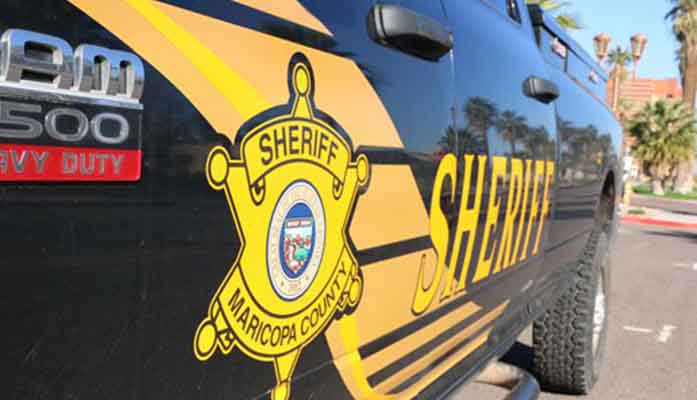
Maricopa County officials are asking a federal judge to rein in what they describe as years of mission creep by the court-appointed monitor overseeing reforms within the Maricopa County Sheriff’s Office (MCSO), arguing that the agency has fully complied with the policy changes required under a landmark racial-profiling case.
In a new legal filing submitted last week in Sheridan v. Melendres—a case that began nearly two decades ago over civil-rights violations during traffic stops—Board of Supervisors Chairman Thomas Galvin and Vice Chair Kate Brophy McGee contend that the county has long met the terms of the court’s orders and that continued federal intervention is no longer justified.
The filing points to a central argument: since the court issued its first injunctive order, MCSO has undergone sweeping reforms, leadership changes, and years of federal scrutiny. “Since the issuance of the Court’s first injunctive order, fourteen years have passed, three new Sheriffs have taken office (from both political parties), MCSO has achieved 100% compliance with required policy changes, and there have been zero new allegations of targeted immigration enforcement by MCSO,” the document states.
At the heart of the county’s challenge is the work of federal monitor Robert Warshaw, who has overseen MCSO’s compliance efforts for nearly 15 years. According to the filing, Warshaw and his team have collected more than $30 million in fees during that time. County leaders say they have been increasingly frustrated with what they describe as an expansion of Warshaw’s role—particularly his recent “audit” of county spending related to the case. They argue that federal oversight was intended to ensure constitutional policing practices, not to scrutinize local budgeting decisions.
“In today’s legal filing, we highlight how far the federal monitor has strayed from his original charge,” Galvin and Brophy McGee wrote in a joint statement. “Digging into county finances and trying to minimize the cost of Melendres compliance is not just an insult to taxpayers, it’s beyond the federal court’s jurisdiction.”
County attorneys note that nothing in the county’s budgeting practices violates state or federal law. For that reason, the Board says it will not participate in further disputes over compliance-related costs. The county’s brief argues that questions about staffing, budgets, and administrative costs fall squarely within local authority. Citing Supreme Court precedent, the filing asserts that “federal-court decrees must directly address and relate to the constitutional violation itself.”
The county maintains that because MCSO has reached full compliance with all policy reforms stemming from the Melendres orders—including the creation of 209 positions tied directly to those requirements—the original purpose of the decree has been fulfilled. “It would be a complete waste of taxpayer money to engage the federal courts in a back-and-forth over what is clearly an issue of local jurisdiction,” the statement reads.
Galvin and Brophy McGee say the Board’s priority is protecting taxpayers and ensuring resources are directed toward public safety needs determined at the local level. The Board of Supervisors represents roughly 4.5 million residents. “We’ll keep standing up for transparency, common sense, and your right to self-govern,” they wrote.
The federal court will now determine whether the county’s arguments warrant narrowing or ending the monitor’s authority—a decision that could significantly reshape the long-running oversight of one of the nation’s most closely watched law-enforcement reform cases.
Jonathan Eberle is a reporter for AZ Free News. You can send him news tips using this link.
by Staff Reporter | Nov 23, 2025 | News
By Staff Reporter |
Maricopa County leadership is dissatisfied with the rejection rate of ballot signatures.
Following Wednesday’s canvass of this month’s election, Board of Supervisors Chairman Thomas Galvin said the new signature verification policy was problematic for having yielded a much higher rejection rate compared to years past.
“At this rate, 15,269 ballots would’ve been rejected in ‘24 prez election,” said Galvin. “Only 7,220 were rejected in ‘24.”
About 30,000 ballots were subject to further review, and of those 15,000 went through the curing process. Altogether, about 5,900 ballots were rejected following the curing process out of about 700,000 total cast ballots. An additional 1,000 ballots were rejected for having no signatures and the voter failing to respond to the county’s curing attempts by deadline.
The rejection rate rose to .8 percent this go around. Last year and in 2023, the rejection rate was .3 percent. It was .1 percent in 2022.
The recorder’s office also clarified that this was the first election in decades to send mailed ballots to all voters, which they say also contributed to the higher rejection rate.
Heap responded to Galvin’s criticism by accusing the chairman of deflecting from the county’s election bungles with fabricated, nonexistent issues in his office.
“Instead of holding his own staff accountable for misplacing thousands of Election Day ballots and illegally seizing control of the Recorder’s statutory responsibilities, Chairman Galvin chose to attack the only part of the process that worked flawlessly,” said Heap.
Heap was referencing the misplacement of two sealed transport boxes with nearly 2,300 ballots by election workers this month. The ballots were discovered several days after the election occurred, on the day of the ballot curing deadline. This forced the recorder’s office to complete ballot processing in record time, and attempt to cure ballots in a matter of hours.
Galvin acknowledged the 2022 election was a disaster in private, sources say, but publicly he defended the county’s administration.
The Heap administration implemented certain changes to ease and strengthen signature verification efforts: side-by-side screen viewing of a voter’s on-file signature and their cast ballot signature, rather than having a worker scroll up and down; and requiring three separate levels of review rather than relying on the same person double-checking their work.
During Wednesday’s board of supervisors meeting, Heap repeatedly defended his position that the signature on the cast ballot must match the voter’s historic signatures on file in their record.
“In the end, if we have a signature, and the signature on the envelope does not match the signatures we have on file, and it’s now been reviewed through multiple phases, we cannot accept that signature unless that person calls,” said Heap. “We can make all diligent efforts to reach out but, in the end, the signatures either match or they don’t.”
The supervisors were divided on Heap’s approach — and whether the changes were worth it — although they did agree that the bipartisan review was a good step.
Supervisor Debbie Lesko approved of Heap’s signature verification process.
“I’ll give you credit when credit’s due, and I think if you’ve done it faster and it’s still accurate and you’re able to make it easier for the people, it sounds like a good thing,” said Lesko.
Supervisor Steve Gallardo questioned how time-consuming the process was in comparison to Heap’s predecessor, Stephen Richer. Heap responded that the signature verification has sped up due to the bipartisan team setup, and that they concluded their work the day after the election.
Some familiar voices chimed into the social media chatter over the bristling interactions between select supervisors and Heap.
Maricopa County’s former recorder, Stephen Richer, said Heap’s approach went against the state’s signature verification law.
“That’s not even how statute works,” said Richer.
Richer told KJZZ that election fraud through stolen mail-in ballots in an off-year election was so far-fetched as to be humorous.
“It’s laughable to think 5,000-plus people stole ballot envelopes and forged signatures so they could cast one more vote in a school bond election,” said Richer.
ABC15’s Garrett Archer said Heap’s multiple levels of review was problematic because matching signatures has a certain level of subjectivity that can cause individuals to disagree on what they’re seeing.
“In the old process, private information was on screen that could be used as a second check. This has been stripped to allow observers to be closer to the process,” said Archer. “If they so choose to proceed this way, there will likely be 80,000+ signature elevations in 2026. They need to staff accordingly or this could become a major problem.”
An elections advocate, Merissa Hamilton, countered that signature verification is “ultimately subjective,” and that the elimination of the private information component allows for a more unbiased review of the ballot.
AZ Free News is your #1 source for Arizona news and politics. You can send us news tips using this link.
by Jonathan Eberle | Sep 12, 2025 | News
By Jonathan Eberle |
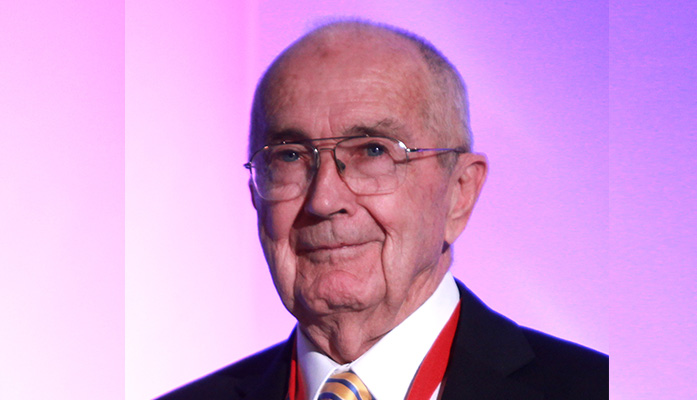
Robert “Bob” Corbin, a longtime Arizona public official who served as state Attorney General and played a pivotal role in some of the state’s most high-profile legal cases, has died. He was 96.
Corbin’s career in public service spanned decades, beginning as Maricopa County Attorney and later as a member of the Maricopa County Board of Supervisors. In 1979, he was elected Arizona’s Attorney General, a position he held through the 1980s.
Known for his commitment to integrity in government, Corbin gained recognition for prosecuting public officials accused of corruption and for pursuing justice in the 1976 car-bomb killing of Arizona Republic reporter Don Bolles — a case that shocked the state and the nation. His work in that era helped shape Arizona’s reputation for taking on organized crime and political misconduct.
Maricopa County Chairman Thomas Galvin expressed condolences, saying Corbin “was a man of integrity and a selfless public servant” whose leadership left a lasting mark on the state. “He played a central role in landmark judicial cases, went after officials who violated the public trust, and prosecuted those responsible for the murder of journalist Don Bolles,” Galvin said in a statement. “As both an attorney and elected official, I am humbled to follow in the footsteps of someone so influential and principled.”
Beyond his courtroom and public service record, Corbin was respected across party lines for his measured approach to law enforcement and governance. He also served as president of the National Rifle Association in the early 1990s, a role that reflected his deep involvement in public policy beyond Arizona.
Corbin is survived by his wife, former state senator Lori Klein Corbin, along with family, friends, and colleagues who remember him as a man deeply devoted to both his work and the people of Arizona.
Jonathan Eberle is a reporter for AZ Free News. You can send him news tips using this link.
by Matthew Holloway | Aug 31, 2025 | News
By Matthew Holloway |
The legal fight between Maricopa County Recorder Justin Heap and the County Board of Supervisors escalated Monday. America First Legal filed two motions on Heap’s behalf, and Arizona’s legislative leaders submitted an amicus brief supporting him.
In a press release, the County Recorder’s Office stated that the motions filed by America First Legal “reveal how the County Board of Supervisors and County Attorney Rachel Mitchell have weaponized county government against duly-elected Recorder Justin Heap simply because he dared to fulfill his statutory duties and protect the sanctity of Arizona elections.”
Heap said in a statement, “It’s unfortunate that the Board’s unprofessional and bad faith actions have forced us to litigate this issue; however, it’s significantly more unfortunate that the Board continues to deny the voters of Maricopa County the positive, common sense election integrity reforms that they voted for last November when they elected me. As I’ve promised from day one, I am working to ensure honest, secure, and transparent elections for every voter in Maricopa County. I am not, and will not, waiver in my commitment to executing on this promise. I’m grateful to America First Legal for standing by my side in this battle.”
America First Legal detailed Heap’s allegations in the first filing: “The Defendants — the members of the Maricopa County Board of Supervisors (‘BOS’) — have crossed from fiscal oversight into outright sabotage. Ignoring [state law] and decades of precedent, the BOS has refused to fund the Recorder’s ‘necessary expenses’ — from modern ballot-processing equipment to indispensable IT staff — while simultaneously seizing control of the very election functions its stonewalling endangers. The BOS’s obstruction is not mere bureaucratic foot-dragging; it is a calculated power grab that throttles the Recorder’s constitutional duty to administer secure, timely elections.”
In an amici filing in support of Heap, Arizona House Speaker Steven Montenegro and Senate President Warren Petersen’s legal representation call for a strict interpretation of state statutes which govern the responsibilities of the county recorder and board of supervisors. They argue that the “court should narrowly conclude that, based on the statutes’ plain language, when the statute authorizes ‘the county recorder or other officer in charge of elections’ to act, it is the recorder’s duty to ensure the statute is complied with unless the recorder expressly agrees to delegate that duty to another ‘officer in charge of elections.’”
As previously reported by AZ Free News, the months-long negotiations between Heap and the Board, led by Chairman Thomas Galvin, devolved steadily since Heap’s election and the replacement of Stephen Richer in January until finally collapsing into litigation in June.
The crux of the disagreement between the Board of Supervisors and County Recorder Heap rests upon a Shared Services Agreement (SSA) agreed to by Heap’s predecessor, Richer, who ardently opposed the election integrity efforts that Heap ran for office to enact. For nearly six months, the two county offices negotiated; however, Heap and the Supervisors were unable to reach an agreement, culminating in a lawsuit filed by Heap.
Since then, Heap has alleged that the Supervisors have “taken retaliatory actions” describing a series of measures that “make it impossible for him to do his job, including removing nearly all his election-related IT staff; seizing the servers, databases, and websites necessary to fulfill his duties; and restricting access to necessary facilities and equipment,” as reported by The Federalist.
In a second filing, Heap and America First Legal introduced allegations involving Maricopa County Attorney Rachel Mitchell, bringing a third County office into the fray in a dispute over who may represent the County Recorder, an attorney chosen by Heap or Maricopa County Attorney Rachel Mitchell. In the legal brief, they allege, “Attorney Mitchell originally appointed a criminal defense attorney to advise the Recorder; however, in April, America First Legal agreed to represent Heap pro bono, a move that Mitchell objected to.”
“When the Recorder complained that the original attorney appointed for him lacked sufficient subject matter expertise, County Attorney Mitchell appointed former Arizona Supreme Court Justice Andrew Gould to advise the Recorder only during negotiations with the Board. However, County Attorney Mitchell and the Board did not allow Justice Gould to litigate on the Recorder’s behalf,” the filing revealed.
But according to AFL, that wasn’t the end of it. “In May of 2025, Justice Gould specifically asked the Maricopa County Attorney’s Office for permission to litigate on Recorder Heap’s behalf but was not allowed to do so because the scope of his representation was limited to negotiation of the SSA and did not include litigation, and, accordingly, the County would not compensate him for litigation-related work.”
Mitchell responded by penning a letter to the AFL attorneys, writing in part, “This letter is to inform you that I am the Recorder’s attorney and that you do not represent the Maricopa County Recorder’s Office or Recorder Heap in his official capacity.”
Per The Federalist, AFL attorney James Rogers retorted that the “County Recorder is allowed to pick his own lawyer in litigation,” adding that Heap “is not subject to the whims of the county attorney.”
In the midst of the complex legal battle between the Recorder’s Office and the Board of Supervisors, which has drawn the attention of legislative leaders, the dispute with Mitchell adds yet another layer of infighting within the already divided county government, with the calendar counting down to the 2026 elections.
Matthew Holloway is a senior reporter for AZ Free News. Follow him on X for his latest stories, or email tips to Matthew@azfreenews.com.
by Matthew Holloway | Jul 18, 2025 | News
By Matthew Holloway |
Robert Warshaw, the court-appointed monitor over the Maricopa County Sheriff’s Office (MCSO), found himself challenged by Republican state and county-elected officials and over 100 attendees at a community forum with Sheriff Jerry Sheridan on Wednesday night.
GOP leaders, including Maricopa County Board of Supervisors Chairman Thomas Galvin, Supervisor Debbie Lesko, gubernatorial candidate Karrin Taylor Robson, and Maricopa County Republican Committee First Vice Chair Shelby Busch, joined the meeting with a large group of supporters of the Sheriff’s Office. The group demanded an accounting from Warshaw for the $311 million in taxpayer dollars spent over the past 11 years on the court-mandated monitoring in the racial profiling case Melendres v. Arpaio.
Supervisor Galvin shared a series of posts to X, laying out the case presented by Lesko and himself. He wrote, “Last night Supervisor @DebbieLesko gave eloquent speech at Maricopa County’s west valley meeting on federal oversight of MCSO[:] *$350 million in costs since 2007[,] *Compliance goalposts keep moving[,] *Monitor paid $2.9M last year[,] *4 sheriffs have served since lawsuit filed[.]”
“Maricopa County pays for these meetings, with taxpayer dollars, and thanks to all who showed up to participate in the public process. High turnout at any public meeting is always a good thing!”
Supervisor Mark Stewart shared video of Galvin’s remarks, initially posted by Maricopa County Attorney Rachel Mitchell, suggesting a concerted effort by the Board of Supervisors and County Attorney’s Office to pushback against the Melendres ruling.
Stewart wrote, “The time to end this decade long oversight. The men and women of the @mcsoaz Sheriffs office deserve recognition as a top tier law enforcement organization. The taxpayers expect their hard earned tax dollars to be invested in their safety. Thank you @Rachel1Mitchell for speaking out and to Chairman @ThomasGalvin for leading this effort.”
During his remarks Galvin quipped, “Mr. Warshaw, you’re a tough man to find! In fact, this is the first time we’ve met.”
Mitchell described the scene in a post writing, “@ThomasGalvin speaking truth to the federal monitor—oversight of our elected sheriff has cost Maricopa taxpayers hundreds of millions of dollars.”
Brandon Hiller, Chief of Staff to the Maricopa County Attorney, shared an image of Warshaw resting his head on his hand during the proceedings, which reportedly became raucous at times. He wrote, “The federal monitor was not pleased with all the support for @JerrySheridan24 and @mcsoaz. Time to end the court orders. 350 million dollars later… 30 million to the federal monitor alone…”
According to KJZZ, the overall cost to the Maricopa County taxpayers to meet the ruling’s 360 requirements for the agency, related to traffic stops and internal affairs, is projected to reach $350 million this year. Warshaw told the audience that the reforms ordered by Judge Snow are not complete yet.
“This agency has made a lot of progress. A lot of progress. We’ll get to the money in a second,” Warshaw told the forum. “Is this thing going to go on forever? No, no, no.”
The monitor told attendees that an independent firm recently did a traffic-stop study of the Sheriff’s Office and found that the bias alleged in Melandres has continued and that oversight will only end after the Sheriff’s Office complies. Warshaw said that the MCSO is still facing a major backlog of internal misconduct investigations, required to be resolved within 180 days with many exceeding that timeline. Warshaw’s most recent report indicated that the department is in “full and effective compliance” with 92% of the 360 requirements in Judge Snow’s order while the misconduct investigation backlog “remains one of the biggest hurdles affecting MCSO’s ability to reach overall completion.”
Lesko was unconvinced however, and said, “I ask the judge, the federal monitor, (and) all the stakeholders to please end this madness.”
Many critics cited the cost of the federal monitoring as their chief concern. Court records show that of the $311 million cost of the lawsuit to date, $31 million has covered the monitoring fees. Warshaw defended the cost, stating that he has 13 full-time staffers monitoring the department.
Galvin was incredulous, referring to the monitoring effort’s 2025 year to date cost of $2.9 million. “We have to spend $2.9 million—you have to spend $2.9 million on Mr. Warshaw. You have to pay for this meeting tonight,” Galvin said. “Debbie and I cut the check, but you, the taxpayers, are paying for this meeting.”
Matthew Holloway is a senior reporter for AZ Free News. Follow him on X for his latest stories, or email tips to Matthew@azfreenews.com.