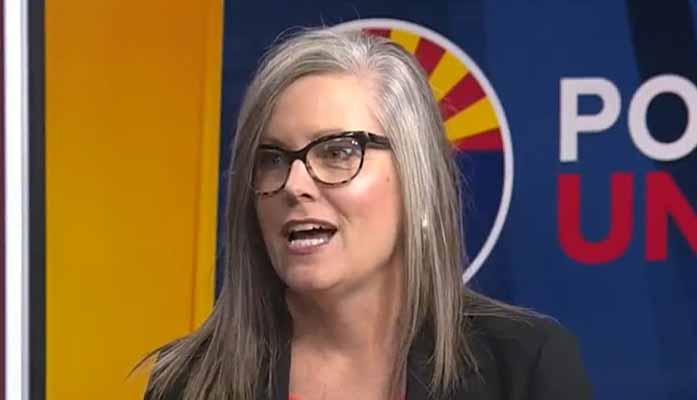
Governor Katie Hobbs claimed the state’s school choice program lacks oversight.
The Arizona Department of Education (ADE) and experts dispute Hobbs’ claim.
The governor targeted the Empowerment Scholarship Account (ESA) Program during her state of the state speech last week. Hobbs advocated for the school choice program to be rolled back from universalization to its previous form that only accepted certain families with disability or military backgrounds.
“While other government entitlements have strict requirements and oversight, the ESA program continues to operate unchecked, squandering taxpayer dollars with no accountability,” said Hobbs. “It seems like every day, we learn about new shopping sprees happening at the expense of taxpayers…diamond jewelry, high-end clothing and furniture…who knows what taxpayers will be footing the bill for tomorrow?”
ADE publishes notice of its internal audits and has attempted to refer cases over to the attorney general’s office for prosecution — though Attorney General Kris Mayes has reportedly been unwilling to pursue prosecution of alleged fraud or abuse.
I’m Arizona’s strongest advocate for school choice. We’ve grown the ESA program from 10,000 students to over 90,000. Our office remains vigilant to auditing ESA accounts. To date, the department has marked $622K for collections due to possible fraud or misuse. Accountability and… https://t.co/EsWeT0rgG6
— Arizona Department of Education (@azedschools) August 19, 2025
ADE bases its claims on existing requirements within the ESA Program: documenting all purchases made, and freezing accounts that make unauthorized expenditures. Parents must repay the program for unauthorized purchases.
In August, ADE reported it marked over $600,000 for collections “due to possible fraud or misuse.”
That’s less than one-tenth of one percent of total ESA spending, as noted by the Heritage Foundation in a report last August.
Comparatively, the estimated total fraud within average federal government obligations ranges from three to seven percent, according to a 2024 report by the Government Accountability Office.
Other examples of improper payment rates within government programs in Arizona have been issued recently. (The latest data aligns with the 2024 fiscal year in most cases).
The Department of Labor announced an estimated seven percent improper payment rate from July 2021 to July 2024.
For the 2024 fiscal year, the USDA reported that Arizona had a payment error rate of nearly nine percent.
The federal government even factors in improper payment rates to mitigate losses.
The Center for Medicaid projected an improper payment rate of over six percent for Arizona in 2024.
This indicates that fraud is an inevitable occurrence within any government program.
Unlike the reporting efforts of ADE regarding the ESA Program, the Arizona Auditor General presently finds that nearly 30 school districts are noncompliant based on financially related internal control deficiencies.
This slate of presently noncompliant districts represents over $1 billion in state spending. The entire ESA program spent under $900 million in the 2025 fiscal year and costs about $1 billion for the 2026 fiscal year.
Arizona school districts have accumulated nearly $8 billion in cash reserves, per the Heritage Foundation’s assessment of Arizona Superintendent Tom Horne’s annual report covering the 2023-2024 fiscal year.
Horne responded to Hobbs’ state of the state address with criticism over the governor’s open opposition to a program supported by a majority of voters. Arizona voters approved universalization of school choice back in 2022.
“Arizona parents have made it clear they believe in being able to choose the best education for their children, whether districts, charters or Empowerment Scholarship Accounts,” said Horne. “By their loud display today, Democrats proved they want to take that power away from mothers and fathers who know their children’s needs best and return education to a government monopoly that parents do not want.”
AZ Free News is your #1 source for Arizona news and politics. You can send us news tips using this link.
As Americans enjoy their freedom — as they have a God-given right to do — they drive where they want in privately owned cars (gas powered, hybrid, or electric), live comfortably in heated-and-air-conditioned homes, and spend their evenings cooking dinner on gas (or electric stoves), and watching whatever television program or sporting event they choose. All of it brought to them by virtue of abundant and affordable energy.
According to 2024 data published by the U.S. Department of Energy, 82.16 percent of the energy consumed in the United States came from fossil fuels, including coal, petroleum and natural gas. Another 8.67 percent came from nuclear power plants.
In other words, more than 90 percent of the energy used in this country last year came from these sources.
Only 1.64% came from windmills; and only 1.17 percent came from solar panels.
As this nation’s economy and population has grown, so too has its power needs. Since 1960, in fact, the consumption of energy produced by fossil fuels and nuclear power has more than doubled.
But the consumption of nuclear energy peaked in 2019 — and has stagnated since then — while facing a campaign of opposition from liberal environmental groups.
This is ironic, however, because as the use of fossil fuels and nuclear power increased in recent decades, greenhouse gas emissions declined. From 1990 to 2022, for example, fossil fuel consumption increased by 8.64 percent, according to the Department of Energy. But during that same period, according to the Environmental Protection Agency, greenhouse gas emissions declined by three percent.
Nonetheless, groups including the Sierra Club, 350.org, and the National Resources Defense Council have sought not merely to stop the growth of this type of energy production, but to roll it back. In theory, they would replace the production lost from nuclear power and fossil fuels with energy produced from “renewable sources,” including windmills and solar panels.
They are particularly opposed to the development of nuclear power — even though nuclear plants don’t emit greenhouse gases.
“The Sierra Club,” says its website, “continues to oppose construction of any new commercial nuclear fission power plants.”
350.org also opposes the construction of new nuclear plants. “New nuclear,” its website says, “is a dangerous distraction in the race to solve climate change.”
The Natural Resources Defense Council (NRDC) argues that “expanding nuclear power is not a sound strategy for diversifying America’s energy portfolio and reducing carbon pollution.”
However, some progress has been made recently in resisting this campaign to foist renewable energy development upon the United States. In 2021, some of this nation’s largest banks — including Wells Fargo, Citi, Goldman Sachs, JP Morgan, Morgan Stanley and Bank of America — joined the Net Zero Banking Alliance. This alliance, said the Sierra Club’s magazine, “signaled a commitment by member institutions to develop voluntary targets that support a climate goal of 1.5C above preindustrial levels.” Since then, however, each of these banks has dropped out of the alliance.
Unfortunately, the ”renewables only” advocates have also achieved some victories in recent years.
Since 2001, the Sierra Club’s “Beyond Coal” campaign has supported the closing of more than 300 coal-fired power plants in this country. In 2021, construction of a liquid natural gas export terminal in Oregon was also canceled. Then, in 2023, a proposed gas-fired power plant in Connecticut was canceled, too. These groups also pressured California into nearly shutting down the Diablo Canyon nuclear plant, which provides 9% of the state’s electricity, before state energy commissioners voted to extend its operation to 2030.
The relentless campaign to force America away from fossil fuels and nuclear power and towards wind and solar is also driving America toward energy dependence on the People’s Republic of China.
The Heritage Foundation published a report last year by Diana Furchtgott-Roth and Miles Pollard that showed how this is happening. “China has succeeded in dominating the world’s supply chains in green energy products and components,” it said. “If America continues to require the use of these green energy products, it will cede economic power to China, giving China control of American energy security.”
Limiting how we produce energy in the United States will, as a matter of course, impose limitations on our freedom. Reliance on China for our energy supply chain will make our country susceptible to economic coercion. Limiting how we produce energy, means less of it and fewer choices about how to use it. This is of course baked into the climate activists’ view of world, one where experts tell us we must drive EVs, use electric stoves, and eat less meat, so that even the smallest of life’s details are predecided.
To preserve freedom, we must unfetter ourselves from ideologically driven restrictions on fossil fuels and overcome decades of naysaying about nuclear power. In so doing we can ensure a future where abundant affordable energy gives every American real choice, which is the heart of freedom.
When we launched the American Conservative Values ETF (ACVF), we did it with an important mission in mind: to give voice to the millions of Americans who are sick and tired of watching their retirement dollars fund woke liberal corporate activism. That mission brought us face to face with a troubling trend: major U.S. companies using their platforms not to grow shareholder value, but to push divisive political agendas. One of the worst offenders is Airbnb.
That’s why, through First Amendment legal powerhouse Alliance Defending Freedom, we’ve filed a lawsuit against Airbnb. The lawsuit says Airbnb violated federal securities law and illegally excluded our shareholder proposal(s) from its 2025 proxy statement. Our proposal was simple.
We wanted Airbnb to explain the risks to its business from denying or restricting service to users based on their religion, political status, or Airbnb’s expansive speech codes. Instead of playing fair and following the law, we believe Airbnb broke the rules to shut us out. Here is a link to the lawsuit.
We believe Airbnb ignored SEC Rule 14a-8, which requires companies to notify shareholders within 14 days if they plan to exclude a proposal and give them an opportunity to challenge that decision. Airbnb didn’t do that. They just silently buried our proposal because it didn’t fit their politics.
Let me be blunt; This is what corporate viewpoint discrimination looks like in 2025. And we’re not going to let it stand.
We believe in free markets and free speech. As institutional investors, we believe that companies, especially publicly traded ones, should be focused on delivering value to their shareholders, not playing political referee. But Airbnb has turned itself into a culture war weapon. And now they’re shutting the door on shareholders who dare to question that approach.
We firmly believe that Airbnb’s behavior isn’t just wrong. It’s illegal. It undermines the entire purpose of shareholder democracy. Rule 14a-8 exists so that companies can’t pick and choose which viewpoints they allow on the proxy ballot. The SEC has made it clear that if a proposal meets the technical requirements, it belongs in front of all shareholders. Period.
When two different conservative groups (our co-plaintiff, The Heritage Foundation, also had a proposal ignored) submit 14a-8 compliant resolutions, those just get “lost in the mailroom.” That proves our point.
It’s our belief that Airbnb isn’t trying to stay out of politics. They’re just trying to silence one side of the political spectrum. Our proposals were lost in the mailroom while a proposal from a left-leaning group managed to make it to the ballot.
That’s why we’re taking this to court. This lawsuit isn’t just about one proposal or one company. It’s about defending the right of every investor including conservative investors to be heard. It’s about holding companies accountable when they break the law to protect their political biases. And it’s about making sure that our money isn’t used against us.
We’re grateful to stand with fellow conservative groups like The Heritage Foundation, our co-plaintiffs in the lawsuit in this fight. We’re grateful to be represented by excellent attorneys at ADF and Boyden Gray. Together, we’re demanding that Airbnb follow the law, include our proposals, and respect the rights of all shareholders, not just the ones who agree with their worldview.
We know this case could set a major precedent. If we win, it will send a loud and clear message to every boardroom in America. Conservatives will no longer be silenced. We have just as much right to shape the direction of the companies we invest in as anyone else. And we won’t stand by while biased corporations break the rules to push their agenda and shut us out.
So Airbnb had a choice. We believe they could have engaged with us, followed the process, and shown respect for their shareholders. Instead, they chose arrogance and exclusion. That choice now comes with consequences.
The woke bubble is bursting. The days of silent conservative investors are over. And we’re just getting started.
William Flaig is a contributor to The Daily Caller News Foundation and the Founder and CEO of the American Conservative Values ETF (ACVF). www.investconservative.com.
Arizona’s Empowerment Scholarship Account (ESA) program, launched in 2011, empowers families to tailor their children’s education with state funds. The 2025-2026 school year covers private school tuition, tutoring, and therapies, averaging $7,000 – $8,000 per student.
While the program serves over 93,000 students, that number is only a fraction of its possible reach. Bureaucratic inefficiencies and government red tape currently hinder broader access and limit the benefits of ESAs. The approval of the 2025-26 ESA Parent Handbook could have fixed this, but as critics pointed out, the handbook’s restrictive guidelines and manual review processes create more bureaucratic obstacles.
Now, it’s time to examine some of the key aspects of the ESA Program. We need real change, including adopting best practices from other states to streamline operations, better serve families, and extend this opportunity to more Arizona children.
ESA Application Process
The ESA program provides eligibility to any Arizona child from kindergarten through 12th grade, including preschoolers with disabilities, as outlined in the 2025-26 ESA Parent Handbook and A.R.S. §15-240. Families apply via the Arizona Department of Education’s (ADE) online portal, submitting proof of residency and, for students with disabilities, an IEP or 504 Plan.
Approvals are typically granted within 30 days. Approved families sign a contract to use funds for educational expenses and to forgo public school enrollment. Quarterly tuition deposits are managed through ClassWallet, requiring allocation to core subjects like reading and math, with receipt submission to ensure compliance. Non-compliance risks account suspension, balancing flexibility with accountability.
ClassWallet and Financial Management
ClassWallet simplifies ESA fund management through the ESA Applicant Portal, allowing parents to monitor balances and make transactions. It offers four spending options: the Marketplace, with pre-approved items like textbooks; Pay Vendor, for payments to providers such as private schools; the Debit Card, which requires receipt validation for purchases like school supplies; and Reimbursement, for out-of-pocket costs after review.
Marketplace purchases are automatically deducted, like a math workbook, are automatically deducted, streamlining routine expenses. However, non-Marketplace transactions require manual review as mandated by the 2025-26 handbook, which causes inefficiencies and frustrates parents.
Manual Review Staffing Strain
The 2025-26 handbook requires a manual review for non-Marketplace items, a detailed and staff-intensive process. Items like custom curricula, tutoring from unregistered providers, computer hardware, therapies for students with disabilities, debit card purchases, public school fees, and expensive items such as a $500 musical instrument must be verified for educational relevance. This includes providing specific documentation for IEP students and detailed invoices.
With more than 93,000 students, that could mean up to 186,000 reviews annually taking 46,608 staff hours. That would require at least 23 full-time ADE employees, thereby straining resources. These reviews, mandated by A.R.S. §15-2403(B), caused delays for 77% of parents, according to a 2024 Heritage Foundation report, which fuels perceptions of bureaucratic inefficiency.
The 2025-26 Handbook Controversy
The latest handbook’s approval by the Arizona State Board of Education (SBE) with an 8-1 vote sparked controversy over its compliance with state law. Critics, including parent Angela Faber, argued that its restrictive approval process, requiring additional documentation for disability-related expenses, violates A.R.S. §15-2402(B)(4), which permits funds for therapies and assistive technology.
Republican lawmakers criticized “overly restrictive cost guidelines,” such as a removed $16,000 cap on items like cellos, claiming the handbook defied a legislative warning. Still, no formal directive is documented, making the accusation speculative. The ADE asserts compliance with A.A.C. R7-2-1503 and A.R.S. §15-231(B), with a 30-day appeal period for denied expenses to ensure recourse. Despite revisions, late draft postings limited public review and increased debate. A 2023 report showed 96% of ESA funds supported academic goals, highlighting the program’s potential when managed effectively.
Lessons from Other States
Expanding ClassWallet’s Marketplace to include more pre-approved items could decrease manual reviews by 20–30% to improve the handbook’s inefficiencies. Implementing a machine-learning system for routine approvals, modeled on Florida’s Family Empowerment Scholarship or Tennessee’s Individualized Education Account, would simplify processing. Reinstating debit cards with Merchant Category Code restrictions and adopting risk-based audits could reduce review volume by 40%. Better parental education through tutorials could lower errors, easing administrative burdens.
Potential Leadership Change: Horne vs. Yee
Amid the handbook concerns, Superintendent Tom Horne may face Treasurer Kimberly Yee in the Republican primary for Arizona Superintendent of Public Instruction. During his tenure, Horne has advanced educational initiatives by eliminating the Kindergarten Entry Assessment to reduce teacher workload and expanded school safety with 565 new officers. As Arizona State Treasurer, Kimberly Yee has championed government transparency by pushing for easily accessible online budgets, with the Arizona Treasury website providing clear information on taxpayer spending, enhancing public accountability. Yee has also prioritized financial literacy for high school courses and a Financial Literacy Fund to educate students, seniors, and vulnerable populations. Voters are urged to select the leader in 2026 who is most qualified and prepared to improve upon the administratively challenged ESA program. Check out my previous column for more information about the Horne and Yee matchup.
Conclusion: Strengthening a National Model
The ESA program’s flexibility for over 93,000 students makes it a national leader, but the 2025-26 handbook’s manual reviews and controversial approval process show administrative challenges. Arizona can improve operations while keeping accountability by increasing transparency and adopting automation, learning from Florida and Tennessee.
For more details, visit https://www.azed.gov/esa or call (602) 364-1969. Be aware of potential staff availability constraints.
Tamra Farah leads AmericanStrategies.org. She brings twenty years of experience in public policy and politics as a journalist, focusing on protecting individual liberty and advocating for limited government. She has worked with ten local, state, and federal candidates and organizations, such as Americans for Prosperity, FreedomWorks, Moms for America, and Arizona Women of Action. Farah has regularly appeared on conservative radio, television, and print media.
In November 2022, Arizona voters narrowly approved Prop. 308, making Arizona the 24th state in the nation giving taxpayer-subsidized, in-state tuition rates to illegals. Its narrow passage on the ballot was preceded by its razor-thin passage at the state legislature, slipping out because two former Republican legislators, who since lost their seats to primary challengers, rolled their caucus and voted in lock step with Democrats to force it for a vote.
It was in part billed by proponents as only applying to “Dreamers,” or recipients of the Deferred Action for Childhood Arrivals (DACA) program established under the Obama administration. In reality, it allowed for anyone here illegally to get in-state tuition rates as long as they spent at least two years in an Arizona high school—signaling to the rest of the world that if you enter here illegally in time to go to an Arizona high school, American taxpayers will subsidize your tuition at our universities.
But they hid from the public one important fact. It unequivocally violates federal law…