A rising array of threats to the public and environment stemming from the boom in “green” energy technologies and the batteries they use means the time for virtue signaling by regulators and policymakers must come to an end.
In every boom time involving any type of energy source, governments at all levels inevitably find themselves behind the curve when it comes to developing an effective set of regulations designed to minimize impacts on the public and environment.
In the early years of the 21st century, Americans witnessed this phenomenon play out when it came to the oil and gas Shale Revolution, which saw its first success in the Barnett Shale region, which happened to lie in the midst of the Dallas/Fort Worth Metroplex in north Texas. For the first time in decades, oil and gas companies found themselves struggling to drill wells and install pipelines in and adjacent to highly populated areas, leading to an array of conflicts and tensions with the public that the pre-existing regulatory structure had not been designed to resolve.
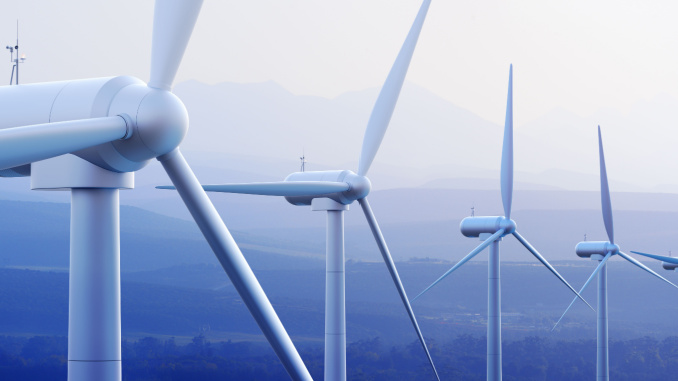
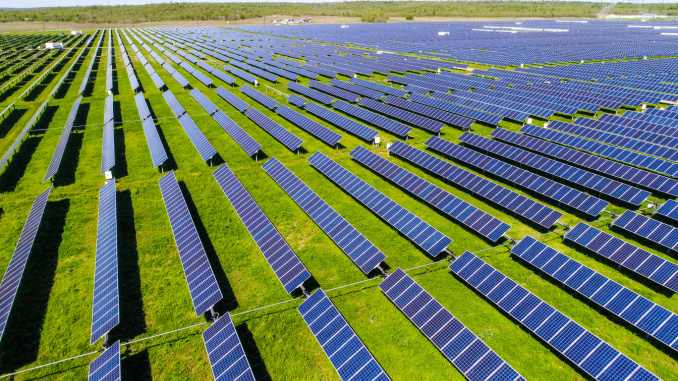
More recent years have given rise to the same societal dynamics related to boom times for the wind and solar industries. In state after state, governments have found their legacy regulations lacking when dealing with public concerns over major projects condemning large swaths of arable lands and wildlife habitats, the dumping of aged-out solar panels and wind blades in public landfills, traffic, and other impacts. Even today, 25 years into this heavily subsidized renewable energy expansion, few if any states have implemented proper regulations governing the dismantling and disposal of these often-gigantic industrial projects.
Similar concerns are now rising related to the dangers posed by lithium-ion batteries, whose use is rapidly expanding across the U.S. to power electric vehicles and provide backup for intermittent power generation provided by wind and solar. The major threat from these rechargeable batteries is their tendency to overheat and spontaneously combust under certain conditions. The problem has resulted in a proliferation of photos and videos of burning passenger and school buses, major conflagrations in large battery storage facilities, and of burned-up commercial freight ships foundering and sinking into oceans around the world.
The AP reported on Oct. 4 on rising opposition from local communities to a proposed installation of large stationary backup battery projects in or adjacent to their cities and towns. The report focused on Long Island, which could become home to an array of such installations to provide back up to multiple offshore wind projects in the coming years.
Industry proponents say the installations are perfectly safe, just as the makers of electric buses have assured city councils and school boards in recent years, only to see some of those buses erupt in flames while on their routes or in crowded bus barns with predictable results. But Michael McGinty, mayor of Island Park, is reluctant to assume the risk. “We’re not guinea pigs for anybody … we are not going to experiment, we’re not going to take risk,” he said.
An Oct. 11 report by The Epoch Times details rising concerns over the risks to airlines and travelers posed by lithium-ion batteries brought on board. The Federal Aviation Administration (FAA) reported 89 incidents during 2024 in which “lithium batteries emitted smoke, fire, or extreme heat on board planes, and up until the end of August 2025, there have been a further 61.” This troubling fact led the FAA to update its guidance on proper care and storage of such batteries on airlines in September.
In January, an Air Busan passenger jet carrying 170 passengers and six crew members was completely destroyed by a battery-caused fire on a runway in Busan, South Korea. Luckily, everyone on board was evacuated and survived, though three suffered serious injuries.
These and other significant, rising concerns surrounding wind, solar, and the batteries they use show that what proponents like to call “green” energy is neither as friendly to the environment nor as safe and benign as advertised. They also point to the very real need for public officials prone to signaling their green virtues to gullible voters to take these issues seriously and develop regulations needed to protect the public and the environment. Doing anything else is simple malpractice.
David Blackmon is a contributor to The Daily Caller News Foundation, an energy writer, and consultant based in Texas. He spent 40 years in the oil and gas business, where he specialized in public policy and communications.
In the first five months of 2025, solar and wind dominated new U.S. electricity generation. Of the 15 gigawatts (GW) added, solar was 11.5, wind was 2.3, and gas was just 1.3, according to the Federal Energy Regulatory Commission (FERC). Industry voices like Stephanie Bosh of the Solar Energy Industries Association hail this as proof that solar delivers power “faster and cheaper than any other source.” Is this true?
As we accelerate toward a grid increasingly reliant on wind and solar, a closer look reveals a troubling reality: these intermittent sources are driving up electricity costs, not slashing them, through a web of hidden expenses that threaten reliability and affordability.
Solar and wind’s part-time nature is the root issue. Solar generates nothing at night, little in the first and last hours of daylight, and falters under clouds, rain, or snow. Wind generation varies unpredictably. This intermittency doesn’t just displace fossil fuels like natural gas and coal—it forces them into inefficient backup roles.
Calling fossil fuels backups is a misuse of the English language that only serves the wind and solar industrial complex. It’s equivalent to calling the starting pitcher a backup in favor of a pitcher who can only play when the wind blows or the sun shines.
Hydrocarbon, coal and natural gas plants, with fixed costs (capital, maintenance, and employees) comprising 60-75% of operational costs, must raise prices on reduced sales volumes to break even. As renewables flood the market during peak production, they suppress wholesale prices temporarily, where subsidized low-bid renewables set the prices for all. In other grids, they get windfall profits, getting the highest price paid for electricity.
Yet, in the “pay-as-clear” system, evening ramps or scarcity periods spike prices, as expensive peaker plants — needed more frequently for renewable gaps caused by the addition of wind and solar — set the highest price, which is paid to all.
Consider the evidence from high wind and solar regions. California’s residential rates are 30-35 cents/kWh—nearly double the U.S. average of 17 cents — despite 50% wind and solar. Germany’s prices top 36-41 cents/kWh with 55% from wind and solar; Denmark and the UK follow suit at 37 and 29-32 cents, respectively.
These ambitious transitions expose the myth: wholesale dips from renewables are overshadowed by retail hikes from taxes, subsidies, grid upgrades, peakers, and using full-time coal and natural gas part-time.
In California, demand from EVs and data centers exacerbates this, and intermittency demands more peakers. These peaker plants run inefficiently, emit more when ramping up, and charge more because they are only used some of the time, causing costly price spikes. They set the price all generators are paid with the take-and-pay system.
In a grid of only hydro, nuclear, gas, and coal — dispatchable sources—peaker needs plummet. These can load-follow predictably, handling demand peaks without the supply volatility renewables cause. Hydro ramps quickly; nuclear provides steady baseload, natural gas and coal are dispatched to match demand. The system worked and was cost effective.
Pre-renewable grids used peakers sparingly, at 4-10%, versus 20% or more in solar-heavy systems like California, where the solar “duck curve” (charting solar generation creates a graph that looks like a duck, no production at night, the belly of the duck, ramp up during the day, the neck of the duck, with a sharp drop as the sun sets, the downward beak of the duck) requires rapid evening ramps of 10-20 GW.
Adding renewables means building more costly, underutilized peaker plants, inflating bills. Cancelling out much of the CO2 emission reductions that are the stated reason for adding costly disruptive wind and solar.
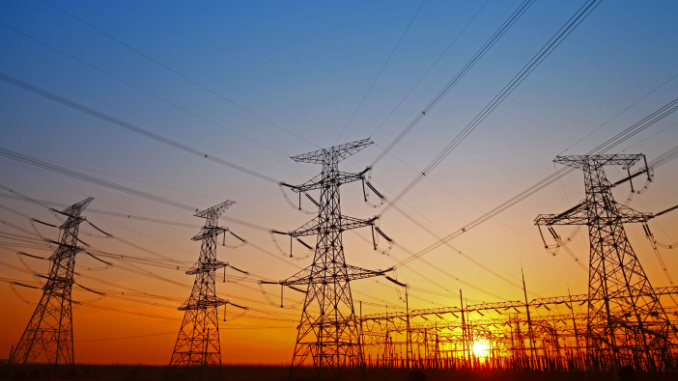
Transmission costs compound the problem. Wind thrives in remote plains or offshore; solar thrives in distant deserts. Connecting these to cities demands expensive high-voltage lines that cost $1-3 million per mile. Thousands of more miles than are needed for nearby hydrocarbon or nuclear plants.
U.S. estimates peg a price tag of $450 billion by 2035 for renewable integration, adding at least 2 cents/kWh to rates. In Germany, €70 billion in upgrades add 3 cents/kWh. Claims of renewables being “cheaper” rely on levelized cost of electricity (LCOE), ignoring transmission and peaker costs. Solar’s $30-50/MWh jumps 30% or more when transmission and backups are factored in.
FERC projects 84% of 133 GW additions by 2028 will come from wind and solar, making our grids less reliable and more expensive.
Policies like the One Big Beautiful Bill Act, which stripped tax subsidies and credits may slow growth, but the trend persists. We need honest accounting. We cannot ignore the wind and solar reality: more blackouts and ever higher prices.
It was Biden’s biggest “accomplishment.” The so-called Inflation Reduction Act, which he later admitted had nothing to do with inflation (it actually did, just not in the direction the name suggested) but was really about dumping billions (really trillions) into subsidizing the green new scam. It was the biggest acceleration towards the “Net Zero” climate scam resulting in utilities across the country, especially here in Arizona, spamming the grid with unreliable energy generation such as solar, wind, and battery storage, driving up rates for utility customers while shattering reliability.
What finally made it through Congress and was signed into law on July 4th terminated tax credits for electric vehicles, “energy efficient” home improvements, and residential solar this year. As for the much larger credits, those subsidizing grid scale solar and wind farms, it’s much more complicated.
Arizona Public Service (APS), the state’s largest utility, has submitted a highly questionable new resource plan to the Arizona Corporation Commission, outlining a significant shift in its energy generation strategy through 2028.
The plan, detailed in a recent filing, reveals APS’s intent to disregard President Trump’s opposition to wind power. It will nearly double its generating capacity by adding 7,200 MW of new power, with 93% coming from expensive and unreliable renewable sources—solar, wind, and battery storage—while natural gas accounts for just 7%.
This marks a dramatic pivot toward renewables, with wind power additions matching gas over the next four years and solar outpacing gas by five times over the next three years.
The plan stems from APS’s 2023 “All Source” Request for Proposals (RFP), which initially sought 1,000 MW of new generation, with at least 700 MW from renewables. Surpassing expectations, APS contracted for 7,200 MW, transforming its energy mix.
By 2028, APS’s generation is projected to shift from 76% reliable dispatchable sources (55% natural gas, 14% coal, 8% nuclear) and 19% renewables (10% solar, 6% wind, 3% battery storage) to 46% reliable sources (35% gas, 6% coal, 5% nuclear) and 52% renewables (22% solar, 7% wind, 23% battery storage). This expansion is equivalent to building two new Palo Verde nuclear plants.
This renewable-heavy strategy comes despite recent emphasis by APS and the Commission on a new natural gas pipeline.
The plan has sparked controversy because it contrasts with President Trump’s criticism of wind energy, as APS doubles down on clean energy investments.
Regarding coal, APS’s filing remains vague on the closure of the Four Corners coal plant, projecting an exit between 2031 and 2038. This aligns with APS’s recent shift from “carbon-free” to a “carbon-neutral” goal by 2050.
The revised commitment addresses concerns about affordability and reliability while maintaining a focus on clean energy. Under carbon neutrality, APS must expand generation without increasing emissions, necessitating significant renewable and storage investments.
The Arizona Free Enterprise Club has expressed concerns over the delayed coal phase-out and questioned the cost of the renewable-heavy plan, estimating $42.7 billion over the next 15 years.
APS’s prior claims that renewables paired with storage could match the reliability and affordability of fossil fuels have faced skepticism that the transition may lead to higher rates and grid reliability challenges.
Ethan Faverino is a reporter for AZ Free News. You can send him news tips using this link.
When they first announced their original Clean Energy Commitment in 2020, APS boasted about their plans to decarbonize. According to their own release, they weren’t doing what they described as the “easy thing” other utilities were doing–developing resource plans that still allow you to produce some carbon emissions, so long as you offset them elsewhere. No, they were committing to go “carbon free,” which means shutting down every single source of baseload power beside nuclear and replacing it entirely with solar, wind, and battery storage.
But late last week, APS announced a modification to their climate commitment. Instead of going carbon free, APS is switching to carbon neutral by 2050.
How is the new commitment different than the old one? For ratepayers worried about skyrocketing utility bills, it doesn’t change much…