A Republican lawmaker is making recommendations for voters in key ballot measures for the state of Arizona.
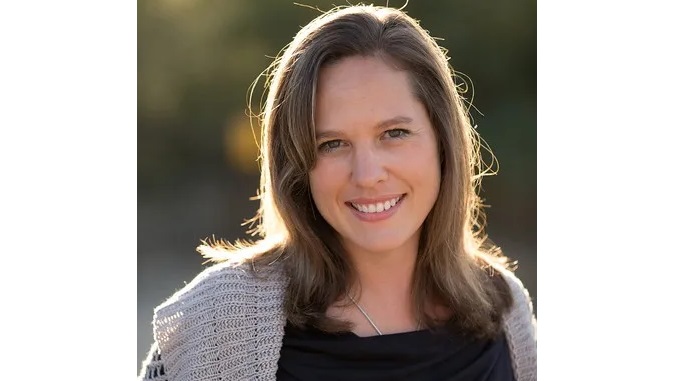
In the most recent Arizona Senate Republicans’ newsletter, state Senator Shawnna Bolick released a statement in support of propositions that her party in both legislative chambers had passed for voters’ review in the upcoming election.
Bolick said, “We are just days away from a crucial election that will help determine the future of Arizona and our nation. Republicans at the Legislature spent tireless hours working to provide voters with the opportunity to have the final say on the key issues our state is facing. Despite Democrats voting ‘no’ on our proposals, we voted in support of sending Propositions 133, 134, 135, 136, 137, 138, 311, 312, 313, 314, and 315 to the ballot.”
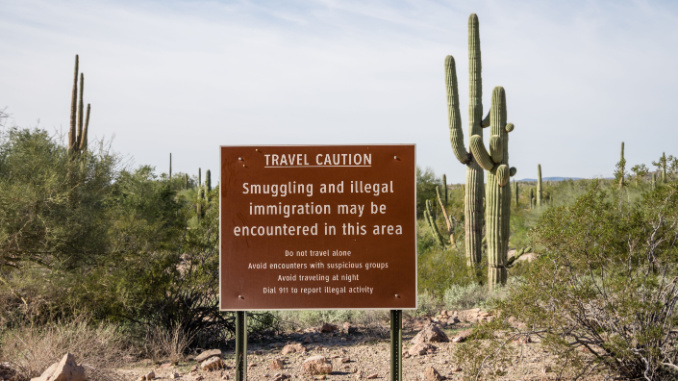
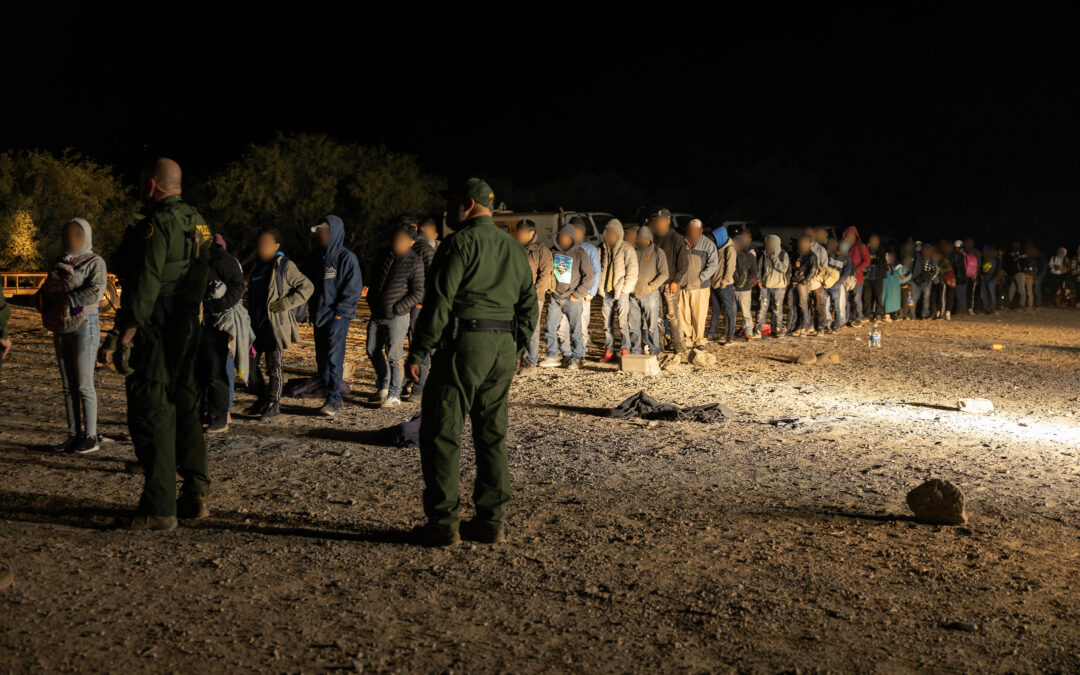
She added, “Included is the ‘Secure the Border Act’ (314), which would provide law enforcement the authority to arrest illegal border crossers to keep our communities safe after the Governor vetoed our original bills to address the crisis. Also, the ‘Children Are Not For Sale’ measure (313) would protect children from sex trafficking by deterring this evil practice with a life imprisonment sentence for the offenders. Make your voices heard! Send in your ballot no later than October 29, or vote in person on November 5- just be prepared for lines.”
Arizona’s ballot propositions haven’t been the focus of many polls – at least publicly available ones, though Noble Predictive Insights had released results from a survey in early September, showing that Prop 314 was receiving 63% support for passage.
The veteran legislator is fighting to retain her seat in the state Senate in next week’s election. Bolick faces a stiff challenge from Democrat state Representative Judy Schwiebert for Legislative District 2, which is one of the most competitive across Arizona, with a 3.8% vote spread in the past nine statewide elections. It is very winnable for Republicans, however, as the party has emerged victorious in six out of those nine elections.
Daniel Stefanski is a reporter for AZ Free News. You can send him news tips using this link.
As the race for Maricopa County Attorney nears its end, the records of both incumbent, Republican Rachel Mitchell, and Democrat challenger Tamika Wooten have rightly been subject to scrutiny.
An in-depth investigation into past litigation handled by Wooten has revealed that, in addition to voicing direct opposition to the “Secure the Border Act” ballot initiative, the Democratic candidate defended at least a dozen criminals charged with human smuggling related offenses as a private attorney under her previous married name “Tamika Cheatham.”
Of the twelve examples of Wooten defending human traffickers, eleven were issued suspended sentences and ten were given unsupervised probation. The offenses these men were charged with ranged from smuggling (class 2 and 4 felonies) to conspiracy to commit smuggling (a class 4 felony,) all of which Wooten fought, often successfully to reduce.
At least one client, Sergio Gonzalez-Sanchez, was charged with smuggling a minor and received a more severe charge: a class 2 felony, for intentionally transporting or procuring the transportation of a human being below the age of 18 who was not accompanied by a family member.
In the 2009 case of Fernando Gomez-Hernandez, the suspect was charged with smuggling, a class-4 felony, and according to court documents, “Intentionally Transported Or Procured The Transportation Of Human Beings, For Profit Or Commercial Purposes.” Gomez-Hernandez was reportedly “the driver” and the arresting law-enforcement officers “immediately recognized,” the situation as “a human smuggling incident.”
“I immediately recognized this as a human smuggling incident. The driver who was identified as Fernando Gomez with a date of birth of REDACTED, by California identification card he gave me. Fernando only spoke Spanish, and the remainder of the conversation was conducted in such. Fernando said he was driving to Flagstaff, Arizona to drop off his friends. Fernando did not know the names of any of the persons in the vehicle nor was he related to any of them.”
The people Gomez-Hernandez was smuggling were “lying down in the rear of the van,” were visibly “scared,” and “were shaking,” according to police. “A traffic stop was initiated and upon contact with the occupants of the van, police noted numerous persons in the back seat and lying down in the rear of the van. Officers noted the subjects appeared scared, they failed to make eye contact and were shaking.”
The smuggler was plead down to a class-5 felony: “Attempt to Commit Smuggling” and served a six-month sentence with 100 days credit for time served.
In another case Wooten defended in 2009, Carlos Figueroa Ramirez was wearing “clean clothes, and newer shoes,” whiel smuggling people in the back of his truck “covered in dirt and debris.”
According to the court documents, the officer explained, “I approached the vehicle, saw one male driver who was later verbally identified as Carlos Ramirez Figueroa with a date of birth of REDACTED. In the back seat of the truck was six humans that were attempting to conceal themselves. Based on my training and experience I believed this to be a human smuggling load. The driver was in clean clothes, and newer shoes. The rest of the passengers appeared to have been in the desert for quite a few days and were covered in dirt and debris from trees and shrubs.”
In a plea deal arranged by Wooten, Ramirez Figueroa was sentenced to serve a six-month sentence in the county jail with a credit for 89 days served after which the remaining sentences for additional counts suspended.
In one case, Guillermo Vazquez-Espinoza pleaded guilty to Conspiracy to Commit Smuggling working with a person he believed to be a coyote, a person smuggling people for profit. In another, Alvaro Ruiz-Alcala was also charged with Conspiracy to Commit Smuggling with five other people believed to by coyotes within a residence. Jose Valentin Nunez-Yanez was traveling in a vehicle that was “part of the agreement made with the coyote to have him transported to the State of California.” Guillermo Vazquez-Espinoza was in the act of attempting to contract a coyote for transport to North Carolina. And Jose Guadalupe Cervantes-Diaz was reportedly conspiring to commit human smuggling to New York as part of an agreement with a coyote.
These cases merely represent the most egregious of the dozen researched. But all point to a consistent pattern of legal maneuvering to arrange the most lenient possible sentences for human smugglers and those willfully conspiring to be smuggled.
Wooten’s litigation history in this area provides vital context for her political positions which followed.
In audio uncovered by AZ Free News, researchers revealed that Wooten, attending a closed-door meeting, expressed her explicit opposition to HCR 2060, the “Secure The Border Act,” which would permit Arizona Law Enforcement to crack down on illegal immigration and human smuggling. Wooten warned the Maricopa County Young Democrats on August 26th, “We have [HCR] 2060 that’s going to come down the pipe,” and told the members “As County Attorney, I’m not going to allow racial profiling for stops” claiming, “We don’t need to patrol our citizens.”
As Maricopa County Attorney, Wooten would be positioned to effectively stop the meaningful prosecution of human smuggling in the most populous county of Arizona, the fourth largest in the nation, by the third largest public prosecutorial agency in the United States. Based on her statement to the Young Democrats and her history of consistently pushing for slap on the wrist sentences for human smugglers, there’s every indication that she will.
When you hear Ruben Gallego’s Senate campaign ads, you might think he’s an outsider taking on the Biden-Harris administration’s policies. In reality, Gallego has been in Congress for ten years, fully backing the Biden-Harris agenda. Over the last four years, he voted with them 100% of the time.
Gallego is now trying to reposition himself for the general election, just like Harris, by running away from his record. But don’t be misled. He is a radical progressive with strong support from Alex Soros, the son of billionaire George Soros.
Gallego shares Soros’s radical views, including being anti-police and soft on crime. He’s even praised those wanting to defund the police, abolish ICE, and eliminate cash bail.
Gallego calls the border wall “stupid” and “useless,” and he mocks those of us who are concerned about 11 million illegals entering our country. According to Gallego, we shouldn’t worry about the hundreds of thousands of drug overdose deaths, the increase in violent crime, sex trafficking, and threats from potential terrorists allowed to enter America. We should look the other way when illegal violent gangs take over apartment buildings and terrorize American citizens in major U.S. cities.
While he decries “right-wing policies” for separating families at the border, Gallego backs Biden-Harris policies that have lost track of over 300,000 unaccompanied minors, with many likely falling into sex trafficking, child labor, or even killed. The Biden-Harris administration has no idea where they are.
Gallego says while in Congress, he has been at the forefront of sensible, comprehensive immigration reform. He claims several bills have passed the House only to be blocked by Senate Republicans. He fails to mention that he voted against H.R.2 – Secure the Border Act of 2023, which passed the House only to be blocked by Schumer in the Senate. He voted for mass amnesty for millions of illegals and for federal funding for sanctuary cities, and Gallego opposes the Remain in Mexico policy.
Ruben Gallego supports the Harris plan to extend Social Security and Medicare benefits to illegal immigrants, which would cost taxpayers millions.
He has had years to address these issues in Congress, but his record shows a consistent push for policies that have worsened the problems. Now he promises change, but with his track record, why should we believe him?
On the economic front, Gallego voted for the Biden-Harris administration’s trillions in reckless spending that fueled inflation and rising prices. Under Biden-Harris, overall inflation is up 19.2%, average gas prices are up 46.6%, grocery prices are up 20.9%, electricity prices are up 29.6%, and real hourly wages are down 2.2%.
Now, despite this record, while running for the Senate after four years of voting for massive spending and billions in higher taxes, he promises to tackle cost-of-living issues and empower workers.
Gallego’s campaign ads say he has pushed back against his own party and has plans to fix all the problems caused by his continued support of the Biden-Harris administration. Does anyone believe that a former congressman, who would be the junior Senator from Arizona, with a track record of voting 100% in support of radical Democrat policies, will somehow become transformed and now vote against the Harris agenda? Not likely.
Just like Harris, the radical Gallego will say anything to get elected.
The overwhelming majority of Americans want a change. Voting for the same people who caused the problems and expecting things to change is foolish.
Radical Ruben Gallego is wrong on the economy and taxes, wrong on crime, and wrong on the border.
Mike Bengert is a husband, father, grandfather, and Scottsdale resident advocating for quality education in SUSD for over 30 years.
A border security ballot measure might be headed for victory this coming November if numbers from a recent poll hold up.
This week, Noble Predictive Insights (NPI) released a poll, showing that Proposition 314 (the Secure the Border Act) was receiving 63% support for passage. Only 16% of respondents indicated that they were opposing the measure at the ballot box.
According to a press release issued by NPI, “Not all components of the expansive Prop 314 are equally popular. According to the poll, supporters of the measure most strongly back two of its planks: holding drug dealers responsible for the death of a person who consumes a drug containing fentanyl (77% support), and requiring employers to verify the immigration status of workers (75% support). Their feelings are more mixed (56% support) about reforms surrounding how migrants obtain public benefits. Among those who oppose Prop 314, 31% oppose the punishments for fentanyl dealers, 47% are against immigration status verification in the workplace, and 64% oppose the portion determining how migrants obtain public benefits.”
“Opponents will have trouble pushing the argument ‘people are only supporting this because of the fentanyl stuff, they don’t care about the immigration’ – that’s what voters like most about Prop 314,” said Mike Noble, NPI Founder & CEO. “Prop 314 is popular across party lines, and that is a difficult trend to disrupt with only a couple of months until Election Day.”
Proposition 314 was referred to the ballot by Republicans in the Arizona Legislature after Democrat Governor Katie Hobbs and left-wing legislators rebuffed most efforts from conservative lawmakers to pass legislation over the past two years to help secure the border and give law enforcement more tools to protect their communities. After the measure was transmitted to the Arizona Secretary of State, progressive interest groups opposed to the efforts challenged the legislation in court in an attempt to keep it from the ballot. However, multiple state courts rejected those lawsuits and gave the greenlight for voter consideration of Prop 314 in the November General Election.
Arizona Senate President Warren Petersen, who was instrumental in making sure Prop 314 made the ballot, reacted to the news of the NPI polling, telling AZ Free News, “The polling goes hand in hand from what I am hearing from my constituents. They are worried about border security. I think it shows how out of touch our democratic legislators are at the Capitol. Every single Democrat voted ‘no’ on this measure. I’m glad the voters will get to decide this.”
House Speaker Ben Toma, who was the sponsor of the legislative vehicle for the measure, added, “The polling is consistent with what we’ve been hearing from Arizonans all along—they are frustrated with the open border policies of the Biden-Harris administration and are demanding change. They want a secure border and safer communities. Proposition 314 offers meaningful, commonsense reforms to protect our communities, and I am confident it will pass in November.”
Daniel Stefanski is a reporter for AZ Free News. You can send him news tips using this link.
A recent report from the Congressional Budget Office (CBO) suggests that the ongoing illegal immigration surge at the southern border will reduce the federal deficit by a staggering $897 billion over the next decade.
At first glance, this figure might seem like a silver lining to this national crisis. However, a closer examination reveals a more complex and concerning picture and reveals this report to be another example of the government trying to conceal the truth from American citizens.
While the CBO projects an increase in revenues of $1.175 trillion and an increase in mandatory spending and spending on net interest of $278 billion over the next 10 years, these numbers fail to capture the full scope of the situation. The report’s limitations and glaring omissions paint an incomplete picture that may lead to misguided policy decisions if Congress does not understand the actual fiscal impacts of the border crisis. By publishing such an incomplete report, CBO is playing a role in covering up the Biden-Harris border crisis and not giving Congress the information it needs to fix the problem.
One glaring omission is the exclusion of discretionary spending impacts. The CBO acknowledges that the immigration surge will likely put pressure on many programs funded through discretionary appropriations. In fact, CBO estimates that increased discretionary funding as a result of the border surge could total around $200 billion over the 2024-2034 period. This substantial sum is mentioned but not factored into the deficit reduction calculation because, as CBO says, “no clear basis exists for projecting how the immigration surge will affect [congressional] funding decisions.”
Moreover, the report “does not include estimates of the surge’s effects on state and local budgets.” The CBO itself admits that “[r]esearch has generally found that increases in immigration raise state and local governments’ costs more than their revenues, and CBO expects that finding to hold in the case of the current immigration surge.” New York City alone spent $4.3 billion from July 2022 to March 2024 to accommodate immigrants and comply with existing housing policies. Extrapolating this to other cities over a decade paints a sobering picture of the financial burden on local communities.
The state of Texas was forced to take action on its own. First with Operation Lone Star (OLS), a response to the border crisis triggered by the Biden-Harris administration’s failure to enforce federal laws along the border. OLS has cost Texans about $11 billion and that’s just to secure the border. That does not include costs to the state’s health care, education, and criminal justice systems — which increase with the addition of aliens who have been let in by the Biden-Harris administration. The CBO report does not adequately assess or include these costs and they can be found in every state.
The revenue calculations assume lower tax compliance rates among the population who entered the nation via the border crisis. This raises questions about the accuracy of the projected $1.2 trillion in additional revenue.
Beyond the fiscal impacts, the report hints at broader economic consequences. The illegal immigration surge is expected to lead to lower productivity, reduce average wage growth (particularly for non-college educated workers), higher interest rates, and increased medical and food prices. These factors could have far-reaching effects on the American economy and the well-being of citizens.
Perhaps most concerning is the CBO’s own admission that its “estimates of the budgetary effects of the immigration surge are highly uncertain.” The report lists numerous “[m]ajor sources of uncertainty,” including the number of aliens who have entered the country, the duration of the border crisis itself, the changing immigration status of individuals, and their impact on productivity. Essentially, many metrics crucial to the estimate are shrouded in uncertainty and the authors of the report knew it and still published these estimates that claim mass illegal immigration is good for the deficit.
Making policy decisions based on such questionable projections, where the political left has clearly put its thumb on the scale, could have disastrous consequences and exacerbate existing problems. We must demand a more comprehensive analysis that accounts for all costs — both seen and unseen. Not a report that is politically appealing to the left’s narrative on illegal immigration.
The border crisis is not just about numbers on a balance sheet. As we debate immigration policy, we must consider not just the potential fiscal benefits but also the hidden costs and societal impacts. The Centers for Disease Control and Prevention estimated there were 74,702 fentanyl overdose deaths in the United States last year — a drug we know flows in through our open southern border.
Human trafficking and smuggling into the United States is a booming multi-billion dollar business for Mexican cartels. We must end this crisis now. When comparing the fiscal impacts to the human toll, money seems secondary and that is true, but understanding the monetary effects is important to solving the larger problem.
The CBO report should be seen as deficient and, overall, as a liability since it does not give Congress the information it needs to take action. The future of our nation depends on getting this right.
With an honest and complete assessment, we can get good legislation like the Secure the Border Act signed into law, force strong executive actions from future presidents, and keep Americans safe. These policies will ensure our nation knows who is coming in, and what the impacts of that are to U.S. citizens. But we need the CBO and Washington to stop playing politics with vital information.