by Terri Jo Neff | Jun 24, 2022 | News
By Terri Jo Neff |
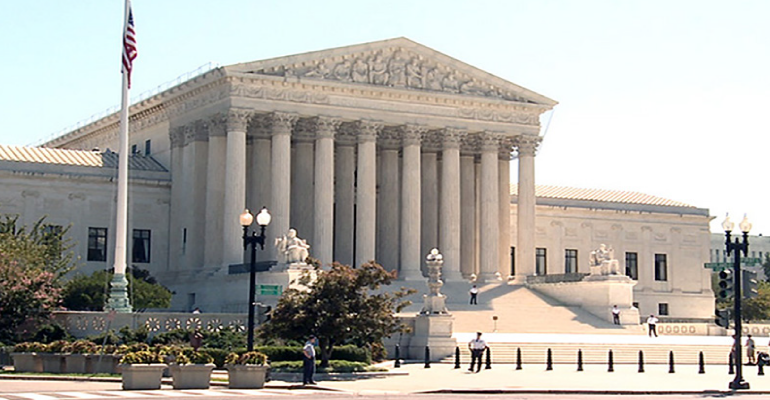
The U.S. Supreme Court ruled 6-3 on Friday that there is no federal constitutional right to have an abortion despite the 1973 decision in Roe v. Wade. And the reaction was swift across Arizona’s political sphere.
Many of the comments focused on what most saw as a faulty ruling issued by the SCOTUS nearly 50 years ago to carve out a right to an abortion under the U.S. Constitution. Among them was Gov. Doug Ducey, who used Twitter to express his thoughts on that aspect of the SCOTUS opinion written by Justice Samuel Alito.
Another elected official who took to Twitter was State Rep. Jacqueline Parker (R-Mesa) who retweeted an official statement released by U.S. Representative Andy Biggs.
State Rep. Walt Blackman (R-Snowflake) gave thanks to the six Justices who provided “victory for the unborn and states rights.”
Also reacting to the decision was U.S. Senator Kyrsten Sinema who expressed concern that government will stand between healthcare decisions she said are best made between a woman, her family, and her doctors.
Sinema added that she will “continue working with anyone to protect women’s ability to make decisions about their futures.”
Others, like Maricopa County Attorney candidate Julie Gunnigle, immediately turned the ruling into a political battle cry.
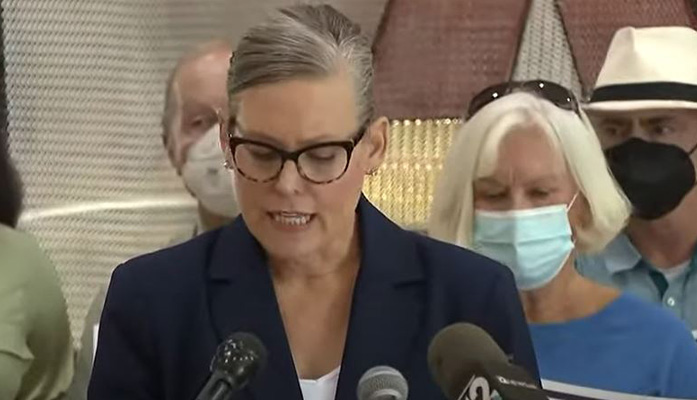
Similarly, current Arizona Secretary of State and presumptive Democratic nominee for Governor, Katie Hobbs used the ruling as fodder for her campaign.
However, Matt Salmon, a Republican candidate for Governor, took a moment to somberly reflect on what he called “a historic moment for the millions of Americans who believe in the sanctity of life.” Salmon,
Meanwhile, the question now for Arizonans is what impact Friday’s ruling with have here. Arizona Attorney General Mark Brnovich issued a statement advising that he expects the state’s newest abortion law to take effect in about 90 days. It bans the medical procedure 15 weeks after conception.
by Corinne Murdock | Jun 24, 2022 | News
By Corinne Murdock |
On Thursday, the Supreme Court (SCOTUS) struck down New York’s concealed carry restriction requiring individuals to prove that they required “a special need for self-protection distinguishable from that of the general community.”
In New York State Rifle & Pistol Association, Inc., et al. v. Bruen, Superintendent of New York State Police, et al., opinion author Justice Clarence Thomas declared that New York’s “proper-cause requirement” violated the Fourteenth Amendment by “preventing law-abiding citizens with ordinary self defense needs” from exercising their right to keep and bear arms.
Arizona is one of the most gun-friendly states in the nation. However, nothing in this world is immune from change. This principle is most obvious with the makeup of the state legislature: the Republican majority has been shrinking over the past decade. A loss of the majority would likely result in an overhaul of current gun rights in the state.
At present, state law allows citizens 18 or older to openly carry a firearm without a permit, and individuals 21 or older may concealed carry a firearm without a license or permit (unless they’re active military or veterans aged 19 or older). The law also doesn’t require individuals to obtain a permit or registration for firearms, and it also doesn’t require a background check when purchasing a handgun from a private individual. Additionally, there aren’t any magazine size restrictions.
Though, it may not just be the loss of a majority that ushers in sweeping gun control measures. State legislators’ assessments of Thursday’s witching hour budget proceedings revealed that current Republican leadership may be willing to work with Democrats to reform gun laws.
State Representative Jacqueline Parker (R-Mesa) predicted that the budget’s bipartisan support was a harbinger of governing changes to come out of the legislature. Parker warned that current Republican legislators would back gun control measures, in what would be similar to their D.C. counterparts working currently with the White House to pass red flag legislation.
This ruling is the latest in a series that conservatives chalked up as crucial victories for constitutional protections. Supporters of the gun rights ruling expressed fondness of Thomas’ explanation of how, historically, gun control laws were implemented to bar Black individuals from gun ownership.
President Joe Biden condemned the ruling in a statement, claiming that the opinion of the court contradicted “both common sense and the Constitution.” Biden cited the recent mass shootings in Buffalo, New York, and Uvalde, Texas as reasons why increased gun control was necessary.
New York Governor Kathy Hochul insisted that SCOTUS should’ve determined its ruling by current affairs, not precedent or past constitutional arguments. Hochul pledged to act through their state legislature in the near future.
Hochul also threatened to only allow muskets as a valid form of arms, despite the Constitution not specifying the type of arms that Americans may keep and bear.
Shortly after his initial reaction to the SCOTUS ruling, Biden issued a follow-up statement addressing Congress’ progress on gun control legislation. If enacted, the federal government would enforce a swath of red flag laws. Critics of the increased gun control measure called it a “gun grab” and a direct affront to the Second Amendment.
Corinne Murdock is a reporter for AZ Free News. Follow her latest on Twitter, or email tips to corinne@azfreenews.com.
by Corinne Murdock | May 4, 2022 | News
By Corinne Murdock |
Secretary of State and gubernatorial candidate Katie Hobbs cursed out the country after the leaked Supreme Court draft opinion circulated on Monday night. She capitalized on the incident with a plug to fundraise for her campaign.
“F**k the patriarchy,” said Hobbs. “If you agree, help us defend the right to choose in Arizona.”
State Representative and congressional candidate Walt Blackman (R-Snowflake) criticized Hobbs as not being a serious individual in response.
Politico published the leaked opinion on Monday night. Justice Samuel Alito authored the 98-page draft majority opinion, which dated back to February. Justices Clarence Thomas, Neil Gorsuch, Brett Kavanaugh, and Amy Coney Barrett signed onto the opinion.
Tuesday morning, Chief Justice John Roberts confirmed the authenticity of the draft. He ordered an investigation into the leak. Although much speculation abounded following the Politico report, no official suspects have been named.
Roberts assured the country that the leak wouldn’t influence the final ruling.
“To the extent this betrayal of the confidences of the Court was intended to undermine the integrity of our operations, it will not succeed. The work of the Court will not be affected in any way,” said Roberts.
While Arizona’s Republican elected officials acknowledged the draft opinion’s content, their greater focus was on the individual responsible for the leak. Arizona’s Democratic elected officials, however, focused on their disagreement with the opinion. They didn’t address the alleged impropriety of the leak — some appeared to even justify it.
Congressman Andy Biggs (R-AZ-05) said that while he agreed with the ruling, he disapproved of the leak and speculated that someone with pro-abortion views was responsible. Congressman Paul Gosar (R-AZ-04) concurred.
Congressman Ruben Gallego (D-AZ-07) argued that the bigger issue at hand wasn’t the fact that someone compromised the process of the highest court in the land by leaking sensitive documents unintended for public consumption. Rather, he argued that the bigger issue was how SCOTUSblog, the independent media blog offering Supreme Court reporting, engaged in “inside ball bulls**t.”
Like his Democratic peers, Congressman Greg Stanton (D-AZ-09) called for the Senate to codify abortion on demand.
Congresswoman Ann Kirkpatrick (D-AZ-02) argued that the draft opinion didn’t reflect the American people’s will. One of the first arguments in the majority draft opinion asserted that both Roe v. Wade and Casey v. Planned Parenthood weren’t based on legal rationale. Rather, Alito wrote that both rulings contained arbitrary, legislation-like rules.
Both of Arizona’s Democratic Senators Kyrsten Sinema and Mark Kelly didn’t address the leak, just their disagreement with the draft majority opinion.
Vice President Kamala Harris accused the Supreme Court justices of “want[ing] to punish women” by “tak[ing] away their rights to make decisions about their own bodies.” Harris claimed that the ruling threatened the “right to privacy” — a concept not enumerated within the Constitution but contrived in the 1890s by Supreme Court Justice Louis Brandeis.
President Joe Biden pledged to push for legalized abortion on demand legislation, should the draft opinion become the final ruling.
The leak inspired pro-abortion and pro-life activists to turn up at the courthouse.
Corinne Murdock is a reporter for AZ Free News. Follow her latest on Twitter, or email tips to corinne@azfreenews.com.
by Corinne Murdock | Apr 5, 2022 | News
By Corinne Murdock |
On Monday, Senator Mark Kelly (D-AZ) announced that he would vote to approve Judge Ketanji Brown Jackson, President Joe Biden’s nominee for the vacant Supreme Court (SCOTUS) seat. Kelly said that he supported all of Jackson’s record on case rulings, which likely included the slew of controversial criminal judgments that gave lenient sentencing to violent criminals.
“After speaking with Judge Jackson and reviewing her record and approach to deciding cases, I believe her to be very well qualified and having demonstrated a commitment to fairly interpret and uphold the Constitution on our nation’s highest court,” said Kelly.
On Sunday, a day before Kelly’s announcement, the New York Post reported that one of the convicted child rapists who’d received lowered sentencing twice from Jackson had been arrested for assault. Sex offender Leo Weekes received one year in prison with credit for time served for failing to register as a sex offender, a classification he earned for raping his 13-year-old niece four years earlier. Jackson’s sentence allowed Weekes to be released five months later. The federal guideline minimum for Weekes’ crime would have been two years in prison. A year later, Weekes was arrested for the attempted sexual assault of his sister-in-law, though she dropped the charges; prosecutors claimed that Weekes paid her off. Several years later, Weekes was back in court for failing to register as a sex offender and violating multiple stipulations of his probation, again coming before Jackson. Again, Jackson gave Weekes a punishment lower than what the guidelines suggested: a 24-month sentence overlapping with his punishment for the previous assault conviction.
As the New York Post report noted, the Weekes case was not included among the seven cases given to the Senate Judiciary Committee for consideration. The requested cases were to clarify Jackson’s habit of sentencing below federal guidelines and the requests of prosecutors.
A day prior, the New York Post also broke the story that Jackson gave lenient sentencing to those convicted of multiple counts of child torture during hearings on eight child porn cases. For those cases, Jackson argued against applying recommended sentencing because she disagreed with the relevance, severity, and logic of child pornography law. Like with Weekes, Jackson reduced one defendant’s original sentence of 60 months, the mandatory minimum that fell under the average sentence of 81 months for similar cases, by giving him credit for time served, thereby reducing his sentence to 38 months.
To another defendant last year charged with child porn distribution, Jackson expressed sympathy and called family members’ letters portraying the defendant in a positive light, “mitigating factors.” Jackson said she wasn’t persuaded by the prosecution’s display of the more “egregious or extreme” child porn distributed by the defendant.
Jackson also advocated for the release of all those imprisoned in Washington, D.C., at the start of the pandemic. She managed to grant several releases to those charged with or convicted of major crimes, such as the member of a fentanyl trafficking ring and a serial bank robber.
Despite this track record, Senate Judiciary Committee Democrats portrayed Jackson as tough on crime.
Corinne Murdock is a reporter for AZ Free News. Follow her latest on Twitter, or email tips to corinne@azfreenews.com.
by Corinne Murdock | Mar 19, 2022 | News
By Corinne Murdock |
The Supreme Court (SCOTUS) announced earlier this month that it would consider the constitutionality of the Indian Child Welfare Act (ICWA), federal law that determines when states can rescue abused or neglected Indian children, as well as foster rules. This law applies to tribal children and those eligible to live on a tribe but living off of a reservation. Essentially, ICWA does all it can to keep Native American children within their own families or with other Native Americans, and requires state officials to apply a higher degree of scrutiny over abuse to determine whether abuse exists. While other children’s cases need only present “clear and convincing evidence” of abuse, Native American children’s cases would need to present “without a reasonable doubt.” ICWA was enacted to prevent the government from taking Native American children from their families.
Phoenix’s nationally-acclaimed public policy research and litigation organization, the Goldwater Institute, requested SCOTUS to review ICWA; they’ve challenged the federal law for years. In light of the SCOTUS announcement, Goldwater Institute Vice President of Litigation Timothy Sandefur discussed ICWA on the “Andy Caldwell Show.”
Sandefur described the law as unconstitutional and depriving children of fair treatment. He noted that Native American children are at greater risk for molestation, abuse, gang membership, and suicide, arguing that already-vulnerable children were only hurt more by ICWA.
“The rules that [ICWA] sets for child protection are actually less protective for a child than the laws that apply for every other racial group,” said Sandefur.
The case SCOTUS will consider, Brackeen v. Haaland, comes from a culmination of different cases brought by several parents desiring to adopt Native American children but were denied due to not being Native American themselves.
Sandefur described one case that the Goldwater Institute worked on, in which a mother wanted to terminate the rights of her abusive husband so that her new husband could legally adopt her son. If the child had been any other race, the rights could’ve been terminated. However, ICWA applied. Under ICWA, it was “prohibitively difficult” to terminate an abusive parent’s right, even in the case of a mother requesting that action.
In a press release, Sandefur also noted that ICWA also violates the separation of the federal and state governments by requiring states to enforce federal law and interpret their own laws differently.
Corinne Murdock is a reporter for AZ Free News. Follow her latest on Twitter, or email tips to corinne@azfreenews.com.