by AZ Free Enterprise Club | Oct 2, 2025 | Opinion
By the Arizona Free Enterprise Club |
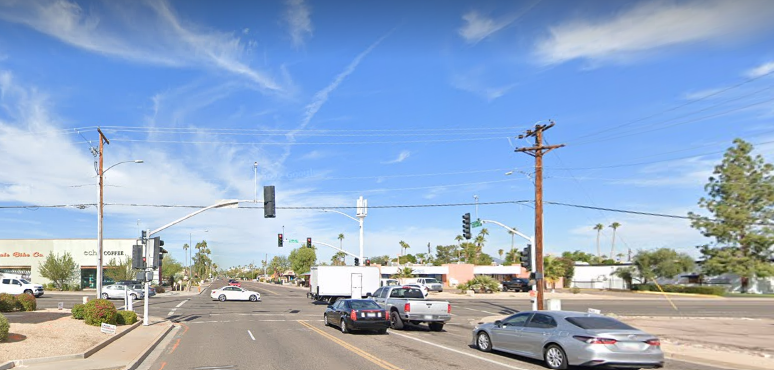
Freedom-loving, car-driving residents of Arizona have long been fighting the constricting “road diets” local government officials, city planners, and corrupt bureaucrats have pushed for years. Proponents of these diets claim that by tearing out perfectly good vehicle lanes, everyone will somehow be safer, healthier, and probably save the planet too.
For those of us who live under the blazing Arizona sun, we recognize this as foolishness. Road diets have not been successful accomplishing any of the goals their proponents claim they will. Instead, the result is that the streets become more congested, you’re spending more time on the road, emergency vehicles have a harder time getting around, and everyone is mad.
Luckily the U.S. Department of Transportation under the leadership of President Trump has promised to stop funding this nonsense. After all, if local city councils are dumb enough to waste money ripping up perfectly good roads, they shouldn’t be able to use everyone else’s tax money to do it.
Of course, unsurprisingly, the residents of those very cities often don’t want their own tax money to go to ripping up the roads they rely upon. One such city is the tiny town of Page, Arizona, where in 2022, the city council approved the “Page Downtown Streetscape Master Plan” which calls for removing vehicle lanes along a 1.4 mile stretch of Lake Powell Boulevard in the heart of the downtown area. In the small northern town, residents stood up against these restrictive, dumb transportation ideas. Page is a community known for its tourism, with visitors bringing boats and heavy gear to explore Lake Powell. For locals, these roads are lifelines for tourism, commerce, and daily living, and Page residents aren’t willing to surrender any more of their precious infrastructure.
>>> CONTINUE READING >>>
by Corinne Murdock | Mar 26, 2023 | News
By Corinne Murdock |
Scottsdale will halve the number of lanes on a major roadway, a “road diet” that effectively burdens car travel. The changes will occur to 68th Street between Indian School Road and Thomas Road, and will reduce the two-lane roads on either side into single lanes.
According to the Department of Transportation (DOT), a “road diet” occurs when a four-lane undivided roadway becomes a two-lane undivided roadway, with the former road lanes converted into alternative transportation lanes: bike lanes or pedestrian refuge islands, for example.
DOT noted that road diets are typically implemented on roadways with current and future average daily traffic of 25,000 or less. According to the city data last updated in 2020, the average daily traffic counts for that area were 38,000 at the crossroads of 68th Street and Thomas Road, and 46,100 at 68th Street and Indian School Road. That number is undoubtedly higher now based on the latest population data.
According to census estimates, Scottsdale is growing at a rate of about one percent annually, and has grown by nearly three percent since the 2020 census. According to the U.S. Census annual state population estimates released last December, the state was the fifth-fastest growing state in the nation; Maricopa County leads in those gains.
The city approved the changes during its council meeting last week in a close vote, 4-3. The two lost lanes will be turned into bike lanes using a .2 percent transportation sales tax funding, costing just over $334,600. The city will also receive over $1.48 million in federal funding awarding environmentalist development: “Congestion Mitigation Air Quality” and “Transportation Alternatives” funds.
With federal and local funds combined, current funding sources for the project total $1.8 million. Proposed funding for the project total over $1.9 million.
Councilmember Barry Graham lamented his fellow council members’ decision.
“I tried to find a compromise that preserved the car lanes,” tweeted Graham. “Unfortunately, councilmembers made the issue about what they want—not what you want.”
Vice Mayor Kathy Littlefield and Councilmembers Betty Janik joined Graham in his “no” vote.
State Rep. Joseph Chaplik (R-LD03) criticized Scottsdale for adopting a “road diet.”
Chaplik also testified that he bore witness to similar initiatives taking place in Portland, Oregon, before that city “imploded.”
The reduction of car lanes to disincentivize car use echoes similar “Vision Zero” efforts — an attempt to eliminate all traffic fatalities by restructuring roads in ways that, ultimately, diminish the number of cars on the road. Vision Zero is a fiscally sponsored project of Community Initiatives, a grantmaking institution whose funding comes from a variety of left-leaning nonprofits such as the Grove Foundation, Rockefeller Brothers Fund, and the NoVo Foundation.
Scottsdale’s major neighbor, Phoenix, adopted a Vision Zero plan of their own.
Last September, the city of Phoenix decided to spend $10 million every year until they achieve zero traffic-related fatalities, as per their Vision Zero Road Safety Action Plan (RSAP).
Corinne Murdock is a reporter for AZ Free News. Follow her latest on Twitter, or email tips to corinne@azfreenews.com.