by Ethan Faverino | Mar 1, 2026 | News
By Ethan Faverino |
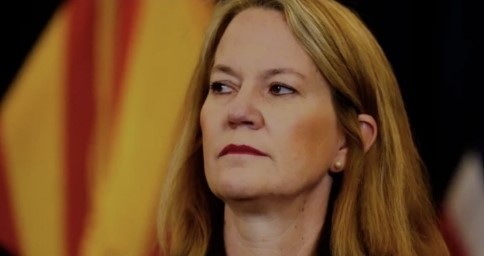
In a decisive step to strengthen voter confidence and streamline Arizona’s election processes, the Arizona House of Representatives passed HCR 2016, a proposed constitutional amendment sponsored by Representative Rachel Keshel (R-LD17).
HCR 2016 seeks to require in-person voting to take place exclusively at designated precinct polling places, eliminating the use of countywide voting centers, emergency voting centers, and on-site early voting locations.
If approved by voters in the upcoming election, the resolution would cap election precincts at no more than 2,500 registered voters at the time precincts are designated. It would also remove statutory authority for voting centers and related provisions in election administration, electioneering, and unlawful acts statutes.
“Arizonans want elections they can understand, observe, and trust, and the precinct model delivers that,” stated Rep. Keshel. “HCR 2016 puts Election Day voting back where it belongs: at clearly designated polling places tied to precincts, with reasonable precinct sizes that are easier to staff and manage. Voting centers and last-minute location changes create confusion, weaken consistent procedures, and slow results. This helps restore faith in our elections for Republicans, Independents, and Democrats who expect clear rules and timely results.”
The resolution would end the option for in-person voting at on-site early voting locations through 7:00 p.m. on the Friday before an election and eliminate references allowing on-site tabulation of early ballots at voting centers.
House republicans advanced HCR 2016 as a key priority under the House Republican Majority Plan to secure elections by reinforcing the structure of in-person voting and empowering Arizona voters to decide the issue directly at the ballot box.
The measure aligns with broader efforts to ensure fast, accurate ballot counting for timely results, protect election integrity, and promote transparency.
Secure elections remain a top focus for Arizona Republicans, who emphasize that voters deserve free, fair, and transparent processes where ballots are counted quickly and results are known sooner. HCR 2016 supports these goals by addressing structural elements that contribute to delays and confusion in election administration.
The measure now advances to the Arizona Senate for further consideration.
Ethan Faverino is a reporter for AZ Free News. You can send him news tips using this link.
by Staff Reporter | Mar 1, 2026 | News
By Staff Reporter |
The Arizona House has passed a bill banning gender transitions for minors.
HB 2085 not only bans gender transition procedures to minors, it bans referrals and distribution of public funding to gender transition procedures. The bill defined procedures to include puberty blockers and hormone replacement drugs.
The legislation did include exemptions for individuals who were born with sex development disorders; who were endangered due to a physical disorder, physical injury, or physical illness; or who sustained an infection, injury, disease, or disorder caused or exacerbated by a gender transition procedure.
It is likely this bill is dead on arrival should it pass the Senate and hit the governor’s desk. Gov. Katie Hobbs supports gender transition procedures for minors, and her husband, Patrick Goodman, assisted children with gender transitions as a Phoenix Children’s Hospital Gender Support Program counselor.
The partisan divide was clear during House floor arguments for and against the bill.
Democrats argued HB 2085 violates parental and medical freedom.
Rep. Nancy Gutierrez (D-LD18), assistant minority leader, claimed parents had the right to decide for their children to transition their children.
Rep. Betty Villegas (D-LD20) argued puberty blockers and hormone therapies should be acceptable for gender transitions since they’re used to treat other ailments and defects.
Rep. Janeen Connolly (D-LD8) said gender transitions were a personal decision that should be beyond the scope of lawmakers. Connolly shared that one of her grandchildren, now 17 and identifying as “they/them,” had transitioned genders at 12 years old.
Rep. Stephanie Simacek (D-LD2) argued these decisions to transition genders weren’t made in haste since minors relied on parental consent to make the decision.
Across the aisle, Republicans argued the gender transitions of minors amounted to child abuse.
Rep. Lisa Fink (R-LD27), the bill sponsor, argued that allowing the puberty process to occur uninhibited was the prevailing treatment for gender dysphoria. Fink read off the myriad adverse health effects of puberty blockers and hormone replacement medications when applied to healthy children seeking gender transitions.
Rep. Rachel Keshel (R-LD17) accused those in support of gender transitions for minors of being inconsistent in their logic.
“It is my opinion that a parent that allows a child to permanently alter their body and potentially take away their ability to be parent one day, that is child abuse,” said Keshel.
Rep. Pamela Carter (R-LD4) countered that gender transitions don’t qualify as valid healthcare, and therefore not within the acceptable bounds of health decisions parents may make on behalf of their children.
“The physicians even now are stopping some of these procedures because they see the results of what happens to a minor when they realize what has happened: they cannot have children, or they are marred physically, emotionally for life,” said Carter. “Parents should be in charge of their children’s health, but to me this is not healthcare.”
Rep. Alexander Kolodin (R-LD3) questioned how Democrats could support irreversible procedures for minors given the universal agreement on age limits for other activities.
“Point of fact, there are many things our society does not allow minors to do: we don’t allow minors, at least up to a certain age, to drive. We don’t allow them to vote. We don’t allow them to drink. We don’t allow them to smoke,” said Kolodin. “We don’t even allow them to get tattoos because we’re worried that one day they will regret that decision. How much more so then should we not allow minors to engage in elective surgery that permanently disfigures them?”
AZ Free News is your #1 source for Arizona news and politics. You can send us news tips using this link.
by Matthew Holloway | Nov 5, 2025 | News
By Matthew Holloway |
Arizona’s Joint Legislative Ad Hoc Committee on Family Court Orders has released a report detailing family court flaws from over 40 hours of testimony and expert review.
The committee’s recommendations include reforms to enhance accountability, transparency, and consistency.
The bipartisan committee, co-chaired by Sen. Mark Finchem (R-LD1) and Rep. Rachel Keshel (R-LD17), includes Sens. Carine Werner (R-LD4) and Theresa Hatathlie (D-LD6), and Reps. Lisa Fink (R-LD27) and Betty Villegas (D-LD20) as members. It examined family court practices related to court-ordered behavioral interventions, reunification programs, guardian ad litem appointments, behavioral-health evaluations, and the prioritization of child safety in custody decisions, according to a Tuesday press release.
The committee gathered input from more than 6,000 combined in-person attendees and online viewers across hearings. Recurring themes from the testimony included:
- Inadequate oversight of court-ordered evaluators and treatment providers.
- Significant financial burdens from reunification programs and mandated services, often exceeding tens of thousands of dollars.
- Inconsistent application of standards for guardian ad litem and representation of the minor’s voice.
- Lack of transparent data, training requirements, and accountability mechanisms in systems intersecting with family court proceedings.
- Absence of a standard of practice for psychologists.
- Calls to set limits on quasi-judicial immunity.
“The testimony we heard made one thing exceptionally clear: child safety must be the top priority in every family court proceeding,” Finchem said. “Right now, inconsistent oversight, extensive court-ordered programs, and fragmented accountability structures are placing families in impossible positions and, in some cases, putting children at risk. Arizona can and must do better. These findings will guide meaningful legislative solutions to protect children and ensure due process for every family.”
“When the system prioritizes process over people, children get lost in the middle,” Keshel said. “The purpose of this work is to ensure that every decision made in family court begins with one question: is this in the best interest and safety of the child?”
“We heard deeply personal and painful testimony from families whose lives were upended by inconsistent court practices,” Werner said. “Their courage in speaking out will help drive needed reform to protect future children and parents.”
“Families should not be forced into financial ruin simply to maintain parental rights or to keep their children safe,” Fink said. “We need transparency, cost controls, and oversight to prevent abuse and restore trust in these proceedings.”
“Every family’s story is different, and our state must recognize cultural, community, and trauma-informed factors when determining child safety,” Hatathlie said. “Reform cannot be one-size-fits-all. It must be grounded in the realities Arizona families face.”
The report synthesizes testimony, transcripts, agency input, and policy review to offer legislative options for improving the family court structure. Proposed reform areas include:
- Strengthening oversight and licensure requirements for court-appointed evaluators and therapeutic providers.
- Establishing statewide standards for guardian ad litem appointments and child-voice representation.
- Creating clear evidentiary guardrails and accountability measures.
- Increasing transparency, data reporting, and specialty training requirements.
- Reducing unnecessary financial burdens associated with mandated programs.
The committee concluded its report with a chilling account read aloud by Representative Keshel, which detailed how two children aged 6 and 7 were tragically murdered by their own father after “repeated warnings to the court were ignored,” after the court granted 50/50 custody “without meaningful safeguards,” despite the court having “documented abuse, a psychiatric hospitalization, and concerning evaluations.” The father tragically murdered his children before ending his own life.
The committee wrote, “This tragedy underscores the systemic failures identified throughout committee hearings: inadequate oversight of professionals, fragmented accountability, lack of child-centered protocols, and judicial immunity that shields negligence from consequence.”
They added that the victim’s story “is not an isolated incident, but a symbol of why thousands of Arizonans tuned into these hearings and why reform is urgently needed. The committee concludes: Arizona’s family court system must change—placing child safety above all else, ensuring judicial and professional accountability, and preventing future families from experiencing preventable loss.”
These recommendations will inform legislation for the 2026 legislative session.
Matthew Holloway is a senior reporter for AZ Free News. Follow him on X for his latest stories, or email tips to Matthew@azfreenews.com.
by Jonathan Eberle | Oct 31, 2025 | News
By Jonathan Eberle |
The Arizona Freedom Caucus announced that Representative Alexander Kolodin will lead a special hearing on “The Implications of Artificial Intelligence for Democratic Governance and How to Preserve Meaningful Elections” on Friday, November 14, 2025, at 9:30 a.m. in House Hearing Room 4 at the Arizona State Capitol.
The hearing, open to the public and livestreamed through the Arizona Legislature’s website, will focus on how the rapid development of artificial intelligence (AI) is reshaping democratic institutions and the electoral process. Lawmakers plan to explore both the opportunities AI presents for improving government efficiency and the potential threats it poses to election security, voter confidence, and public trust.
Representative Kolodin, who chairs the House Ad Hoc Committee on Election Integrity and Florida-style Voting Systems, will be joined by four other Arizona House members, including fellow Freedom Caucus member Representative Rachel Keshel.
“The states cannot be complacent when it comes to the rapid development of AI,” Kolodin said in a statement. “The risk of insufficient oversight of AI is literally what dystopian nightmares are made of. Although it is reasonable to be excited about the prospects of AI to improve human life and society, it is equally critical to be vigilant about the ways it can be abused to erode our freedoms, including threatening democratic governance and our elections.”
The Arizona Freedom Caucus said it views the hearing as a proactive step toward crafting policy that anticipates how AI could be weaponized to undermine democratic processes. The group emphasized that while AI offers enormous benefits, its misuse could have far-reaching consequences for liberty, privacy, and electoral integrity.
“There is perhaps no greater concern than how AI will impact our elections,” the caucus said in its release. “We believe the best way to prevent destructive scenarios is to address AI’s prospective impacts and uses on the frontend.”
The November 14 session is expected to feature expert testimony and legislative discussion on strategies to safeguard Arizona’s electoral systems while responsibly integrating emerging technologies.
Members of the public can view the livestream of the hearing here.
Jonathan Eberle is a reporter for AZ Free News. You can send him news tips using this link.
by Jonathan Eberle | Oct 22, 2025 | News
By Jonathan Eberle |
Arizona House Republicans have taken legal action to defend a decades-old state law governing birth-certificate amendments after Attorney General Kris Mayes failed to confirm whether her office would appeal a recent federal ruling striking the statute down.
Speaker of the House Steve Montenegro announced Monday that the Arizona House Republican Caucus, alongside Senate President Warren Petersen, filed a motion in U.S. District Court seeking to intervene as defendants for the purpose of appealing the decision and requesting a stay pending appeal.
The move follows U.S. District Judge James Soto’s September 30 ruling, which permanently enjoined enforcement of A.R.S. § 36-337, the provision requiring proof of a “sex change operation” before the state can amend the sex marker on a birth certificate. The injunction orders the Arizona Department of Health Services to revise its regulations within 120 days and to allow amendments based on a doctor’s attestation of a “sex change.”
“Arizona’s laws are not optional,” Montenegro said in a statement. “When a federal court rewrites a statute, the Legislature has a duty to defend it. If the Attorney General won’t defend Arizona’s laws, we will. The ruling now opens the door for anyone to change the sex marker on a birth certificate with just a doctor’s note, erasing decades of statute and undermining the integrity of vital records.”
According to the motion, Republican leaders made repeated inquiries to the Attorney General’s Office beginning October 1 about whether the state would appeal. After more than two weeks without a definitive answer, House and Senate leaders moved to intervene to ensure that the state’s position would be represented before the Ninth Circuit Court of Appeals.
The legislative leaders argue that Arizona law gives them authority to defend state statutes when their constitutionality is challenged and that the Attorney General’s inaction effectively leaves the law undefended. Their filing asserts that the federal court’s ruling misapplies equal protection principles and conflicts with recent Supreme Court guidance in United States v. Skrmetti—a 2025 case addressing gender-related classifications under the Constitution.
The lawmakers also requested an immediate stay of the injunction, warning that allowing it to take effect could cause “irreparable harm” to the state by forcing the issuance of amended birth certificates that could later be invalidated if the appeal succeeds.
This legal dispute comes months after Governor Katie Hobbs vetoed HB 2438, a bill sponsored by Rep. Rachel Keshel (R-LD17) that would have barred any changes to the sex marker on birth certificates, reinforcing the same policy now at issue in court.
If granted, the intervention would allow the Arizona Legislature’s top Republicans to pursue an appeal directly to the Ninth Circuit in defense of the statute—marking a rare instance of state lawmakers stepping into a role traditionally held by the Attorney General.
Jonathan Eberle is a reporter for AZ Free News. You can send him news tips using this link.