by Matthew Holloway | Feb 10, 2026 | News
By Matthew Holloway |
New Legislation requiring continuous electronic monitoring for certain registered sex offenders who lack a fixed residence advanced out of a key legislative committee last week.
House Bill 2413, sponsored by Rep. Quang Nguyen (R-LD1), chairman of the House Judiciary Committee, was approved by that Committee and is bound for the House Rules Committee before heading to the House floor for consideration.
The bill would amend existing law to require courts to place any registered sex offender without a permanent address on a global positioning system (GPS) or other electronic monitoring until a residence is established.
As explained in a news release, the bill “closes a serious gap in current law by ensuring offenders who cannot be reliably located are continuously monitored, strengthening accountability and protecting Arizona communities.”
Under current statute, sex offenders who are homeless may register as transients and periodically update their status, a gap Nguyen’s bill aims to close. HB 2413 also directs the Arizona Department of Public Safety to oversee compliance with the monitoring requirement.
“Public safety in Arizona is not negotiable,” Rep. Nguyen said. “If a registered sex offender cannot tell authorities where they live, the public should not be left guessing where they are. This bill puts accountability first and gives law enforcement the tools they need to track offenders who would otherwise be difficult to locate.”
House GOP leaders stated, “House Republicans have made clear that protecting communities requires firm enforcement, clear standards, and consequences that are enforced.”
HB 2413 advances the House Republican Majority Plan’s public safety pillar, which emphasizes enforcing the rule of law and prioritizing the safety of families and neighborhoods.
Under the bill language summarized by legislative tracking services, the monitoring requirement would be in addition to any supervision already in place for offenders on probation, parole, or other court orders.
The committee vote was 5–4 along party lines, with the bill clearing the Judicial Committee and moving to the Rules Committee, before going to the full House for a potential floor vote.
Matthew Holloway is a senior reporter for AZ Free News. Follow him on X for his latest stories, or email tips to Matthew@azfreenews.com.
by Staff Reporter | Feb 2, 2026 | News
By Staff Reporter |
A proposed bill making its way through the Arizona Senate promises to increase the number of police by relying on certain military veterans.
Senate Bill 1107 seeks to provide veterans with an alternative pathway for officer certification. This pathway would be limited to honorably discharged military veterans who served as military police. The Senate Public Safety Committee passed the bill unanimously on Wednesday.
The initial version of the bill extended the alternative pathway to all honorably discharged veterans. An amendment adopted by the Senate Public Safety Committee during Wednesday’s hearing modified the bill to limit the pathway to former military police.
Senate President Warren Petersen (R-LD14) authored the bill. Petersen said in a press release that this bill cut “unnecessary red tape” for those veterans with law enforcement training and experience, while remedying ongoing officer shortages.
“The law enforcement shortages we’re seeing around the state are affecting our officers’ abilities to respond to and stop illegal and criminal activities, hurting the morale of our brave men and women in blue and jeopardizing the freedoms of law-abiding Arizonans,” said Petersen. “Government’s first responsibility is to protect our citizens, which is what my bill does by giving an alternative to hire qualified officers. It’s time to have a surplus of officers in every community across our great state.”
Jeannette Garcia, a councilwoman for the city of Avondale and former military police officer, testified military police were more than qualified to enter the force without undergoing regular certification. Garcia said she may have become a police officer in Arizona herself had state laws not required her to start over in her law enforcement career.
“We operate under strict rules of engagement, high standards, and real consequences. We protect community, maintain order, and lead under pressure,” said Garcia. “This is not about making it easier to wear the badge. This is about making it possible for experienced veterans to continue serving without being forced to repeat training that they mastered.”
The bill would require the state to establish an alternative pathway for peace officer certification. That pathway would factor an applicant’s existing military police training and allow applicants to complete an abbreviated police standards and training program focusing on Arizona laws, procedures, and community policing requirements.
“Military police veterans possess substantial training, discipline, and law enforcement experience gained through active-duty service,” stated the bill’s legislative intent. “Transitioning veterans into civilian policing strengthens public safety while honoring their service.”
Applicants would still be required to pass a certification examination approved by the Arizona Peace Officer Standards and Training Board on Arizona’s police procedures and laws, as well as maintain statutory requirements relating to moral character, medical and physiological fitness, and background investigations.
As of this report, the bill only has individuals registered in support of the bill and none against.
Multiple states have adopted similar laws enabling veterans to have an expedited pathway for joining law enforcement, including Texas, Florida, and North Carolina.
If passed and approved by the governor, the bill would go into effect on Jan. 1, 2027.
AZ Free News is your #1 source for Arizona news and politics. You can send us news tips using this link.
by Jonathan Eberle | Dec 17, 2025 | News
By Jonathan Eberle |
Arizona Senate Republicans released their 2026 Majority Plan on Monday, outlining policy priorities aimed at reducing the cost of living, strengthening public safety, supporting economic growth, and increasing oversight of state government.
The plan follows several years of divided government at the Capitol and builds on what Republicans describe as recent legislative accomplishments, including balanced budgets and multiple tax cuts passed without raising overall taxes. Caucus leaders say the 2026 agenda is intended to address challenges facing Arizona families, particularly rising housing costs, inflation, and concerns about government accountability.
“Arizonans want affordable living, safe neighborhoods, and a government that strengthens — not weakens — our economy,” Senate President Warren Petersen said in a statement. “While the Governor’s vetoes stall progress, Senate Republicans remain focused on protecting taxpayers, upholding Arizona’s freedoms, and preventing the radical left from turning our state into California.”
A central component of the plan is a proposed tax and budget framework aimed at providing relief from rising prices. Senate Republicans say they are pursuing reductions in state taxes on tips and overtime, expanded deductions for seniors, and policies to support small businesses. Caucus leaders estimate the proposals would return more than $1 billion to taxpayers over three years while pairing tax relief with restrained government spending.
Housing affordability is another major focus. The plan cites regulatory barriers, slow permitting processes, and executive-level actions as factors contributing to Arizona’s housing shortage. Republicans say they support reforms to speed up construction, reduce fees, and limit local restrictions on new housing, while aligning development decisions with water availability data.
“Arizonans can’t afford policies that stall development, inflate housing prices, or jeopardize our water security,” Senate President Pro Tempore T.J. Shope said. “Senate Republicans are advancing practical, data-driven solutions that support responsible growth and keep Arizona livable for the next generation.”
Water policy is addressed alongside housing, particularly as negotiations over the Colorado River continue. The plan emphasizes the Legislature’s statutory role in those talks and calls for shared conservation efforts among basin states to avoid placing disproportionate burdens on Arizona.
Public safety proposals include addressing staffing shortages in correctional facilities, increasing oversight of state agencies, and strengthening accountability for violent offenders and probation violators. The plan also reiterates support for Second Amendment protections and public safety pension stability.
Senate Majority Leader John Kavanagh criticized the current administration’s record, saying, “Arizonans deserve leadership that solves problems, not a wolf in sheep’s clothing who blocks solutions and hopes voters won’t notice.”
Additional priorities outlined in the plan include border security enforcement, election integrity measures, education policy, transportation and infrastructure investment, emergency preparedness, artificial intelligence safeguards, family court reform, veterans’ services, and oversight of agencies such as AHCCCS and the Department of Child Safety. Opening day of the second regular session of the 57th Legislature is scheduled for January 12, when many of the proposals are expected to be introduced.
Jonathan Eberle is a reporter for AZ Free News. You can send him news tips using this link.
by Stefani Buhajla | Nov 21, 2025 | Opinion
By Stefani E. Buhajla |
The Trump administration’s recent deployment of National Guard troops and federal resources to major U.S. cities reflects a growing majority of Americans who are fed up with inaction on public safety. After years of unchecked violence and open-air drug use, many see these moves not as overreach but as long overdue.
Fueling much of this primordial decay is a Fentanyl epidemic, which is now the leading cause of death for Americans under 50. Meanwhile, other rampant street drugs like meth and bath salts are inducing or worsening levels of psychosis, unlike anything in history. The result has been broken people, broken homes, broken cities, and unspeakable violence. Tents and waste sprawl across once beautiful urban centers while needles litter children’s playgrounds, and women avoid pumping their own gas after dark.
The United States’ rate of violent crime, such as rape, robbery, and assault, is nearly three times higher than Europe’s. And the homicide rate? That’s seven times higher. Worse still, an alarming number of these crimes are perpetrated by repeat offenders. Our criminal justice system is failing to carry out the duties of its most basic requirement: to protect the public from career criminals. A quick glance at any morning paper on any given day in any city across America will tell the story.
In Charlotte, NC, Ukrainian refugee Iryna Zarutska survived war only to be brutally stabbed to death on a train by a career criminal who never should have been free. The video of this horrific tragedy plays back in our nightmares over and again. We have seen enough.
The Cicero Institute’s new national poll puts numbers to this sadness and frustration:
- 82% support life in prison or the death penalty for aggravated murder, even when mental illness is involved.
- 63% want lenient judges removed from the bench.
- 75% support electronically monitoring transient sex offenders.
- 60% want automatic federal investigations into states that repeatedly release violent criminals, something the White House is already looking into.
But nothing captures the stakes more vividly than the testimonies of those who have to live with the consequences of failed policy. Stephen Federico, father of 22-year-old Logan Federico, gave emotional testimony before a House Judiciary subcommittee in Charlotte. He recounted how his daughter was “executed … on her knees begging for her life … begging for her hero, her father. Me. And I could not protect her.” He did not lean on political ideology. He called out a broken system that allowed a man with at least 39 arrests and 25 felonies to remain on the streets, serving little time despite a decade of violent and property crime. “There is only one thing that would have kept my daughter alive,” he said. “Putting a career criminal in prison.”
And if you think it ends there, it doesn’t.
In Kentucky, the anguish of one father has come to embody a nation’s rage. Years after his six-year-old little boy was stabbed to death by a man deemed “criminally insane,” that man was granted parole “good behavior.” Dean Tipton has vowed that if the system will not deliver justice for his son, he will. His words are not a threat born of malice, but of despair. Thankfully, proactive law enforcement officials in Florida picked up the murderer on a parole violation, sparing Mr. Tipton further trauma.
But Americans should not have to wait for a technicality to get violent predators off the street. The voice of America is saying, “Enough.”
While we face rising crime, record overdose deaths, and exploding homelessness, bickering and posturing dominate from the local to the federal level by those who are content with the status quo of death, disease, and despair. The average family does not care about partisan brinkmanship. They care about being safe in their own neighborhoods.
In Athens, GA, Laken Riley, a 22-year-old nursing student, was dragged off her morning jog, beaten, and murdered by an illegal alien who had already been arrested in the U.S. and released back onto our streets. This was not an accident or a tragedy of circumstance. It was the predictable result of a government that refuses to protect its citizens, releasing violent men again and again until they finally kill one of our daughters. Riley’s blood, like Iryna’s and Logan’s, cries out against a broken system that values ideology and excuses over human life.
Yet instead of focusing on these failures, Leftists consumed by political theater are eager to offer aid to our enemy rather than save our cities from this terror. America is not asking for cruelty but for safety. Voters are not asking the government to shrug at addiction or mental illness. They want public spaces reclaimed for families and small businesses, not surrendered to chaos.
That is what the poll numbers capture: a public demand for strong consequences that bring peace to our streets. People want dangerous offenders confined and controlled, drug dealers punished, transient sex offenders tracked, and public spaces cleared of disorder.
The new federal deployments mark a turning point. From state houses to our national capital, citizens are signaling to their elected officials that the duty of government is to protect them. And if current leaders cannot find the gumption to deliver security and justice, they should resign and make way for those who will.
Americans have seen enough. The public’s patience has expired. They are eager to support leaders who will match words with courageous action.
Stefani E. Buhajla is a pollster, political strategist, and Sr. Director of Communications at the Cicero Institute.
by Matthew Holloway | Nov 14, 2025 | News
By Matthew Holloway |
The Arizona Supreme Court recently declined to review an Appeals Court ruling holding the City of Tucson liable for a public nuisance caused by homeless encampments, siding with three property owners who suffered property damage and financial losses. The Goldwater Institute highlighted this case as “welcome news for all Arizonans,” following the adoption of voter-approved Proposition 312.
The case, Bradford v. City of Tucson, comes on the heels of a similar court ruling against the City of Phoenix over its “Zone” encampment and is now being highlighted by the Goldwater Institute alongside voter-approved Proposition 312—a 2024 measure that lets property owners seek refunds when cities decline to enforce basic public nuisance laws.
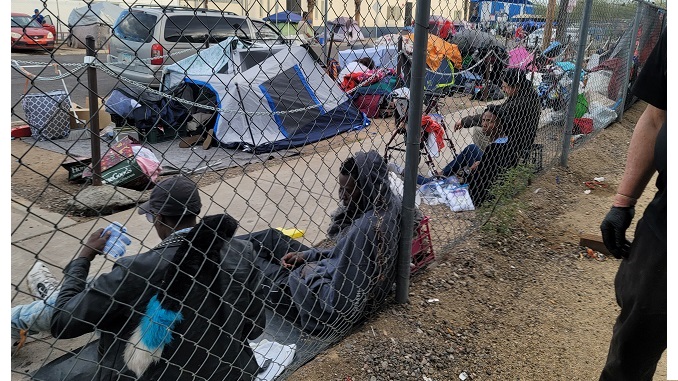
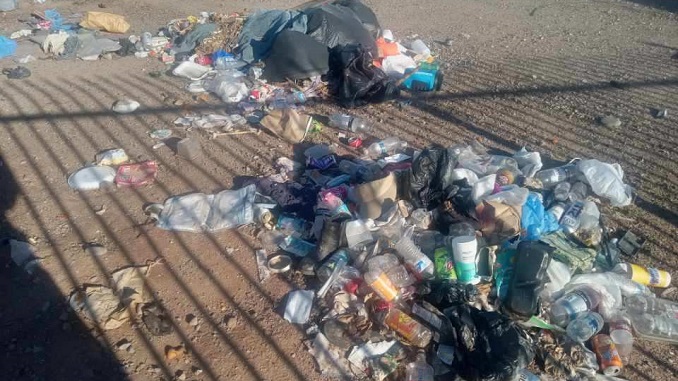
Filed on behalf of three Tucson residents, the lawsuit sought injunctive relief against the City of Tucson, after homeless encampments near their homes and businesses in the Navajo Wash developed with makeshift toilets, dangerous fires, and individuals engaging in violent and criminal behavior.
The appellate court, reversing a trial court ruling against the residents, found that the “record is replete with testimony of specific incidents which proved that camping in the Navajo Wash has caused unsanitary and indecent conditions that invade the rights of the neighboring residents and business owners,” and demonstrated that Tucson was not shielded from liability “because the City knew the activity of homeless camping in this location was being carried on and that it repeatedly and continually caused a nuisance, yet consented to it anyway.”
Prop 312 now gives property owners a reimbursement tool in situations like those described in Bradford v. Tucson, allowing Arizonans to seek relief when a municipality “follows a policy, pattern, or practice of declining to enforce existing nuisance laws prohibiting illegal camping, obstructing public thoroughfares, loitering, panhandling, public urination or defecation, public consumption of alcoholic beverages, or possession or use of illegal substances, or maintains a public nuisance,” according to the Goldwater Institute’s explanation of Prop 312 claims.
Reimbursements are capped at the amount of property taxes paid the prior year, with any excess eligible for reapplication later.
Goldwater explained the law’s necessity on its website:
“Rampant homelessness is overtaking Arizona’s cities, as municipalities refuse to enforce laws against public camping, loitering, intoxication, and other nuisances. The result has been a rise in violent crime, biohazardous pollution, property destruction, and even death. Residents and business owners have had to take matters into their own hands, installing fences, hiring security, and cleaning up garbage, human waste, and other hazardous materials themselves—services the city is supposed to provide with the tax money these residents pay every year.”
Under Prop 312, once the Department of Revenue notifies a municipality of a claim, the city has 30 days to accept or reject it. If rejected, property owners may challenge the decision in superior court; if the city does not respond in time, the refund is deemed approved. Goldwater has offered to assist residents, saying, “If you believe your claim was improperly denied and you would like legal assistance, please contact us! Our lawyers may be able to help you.”
Claims are filed through the Department of Revenue’s online portal at prop312reimbursement.aztaxes.gov, which requires proof of property ownership, tax payment, and mitigation costs. The department notifies cities and issues approved reimbursements by check.
The decision represents a major blow to a large Arizona city’s assertion of immunity and underscores growing frustration with Tucson’s approach to homelessness amid public safety concerns.
In an op-ed Monday, Timothy Sandefur, Goldwater’s vice president for legal affairs, urged city leaders to act:
“Homelessness is a tragic and frustrating issue. But policies that leave people living on the streets aren’t the answer. Instead, they only create a new set of victims: the innocent taxpayers who must pay for police protection that they don’t receive. The time has come for city officials to shoulder their responsibilities—instead of forcing homeowners to shoulder the costs.”
Sandefur also warned that property owners in other states lack similar protections, citing Utah, and encouraged lawmakers elsewhere to “follow Arizona’s lead” by adopting Goldwater’s proposed Safe Neighborhoods Act.
Correction Notice: A previous version of this story incorrectly linked the Bradford v. Tucson case to the Goldwater Institute and cited an unrelated ruling.
Matthew Holloway is a senior reporter for AZ Free News. Follow him on X for his latest stories, or email tips to Matthew@azfreenews.com.