Arizona State University (ASU) banned a professor after his verbal confrontation with a Muslim woman on campus went viral online.
ASU professor Jonathan Yudelman, a School of Civic and Economic Thought and Leadership postdoctoral research scholar, confronted a hijab-clad Muslim woman during a pro-Israel protest near campus last Sunday, captured in viral footage amplified by pro-Hamas activists.
The events leading up to the heated, expletive-laden exchange weren’t captured or circulated, and the identity of the woman is unknown. It is also not known if she is an ASU student.
“You’re disrespecting my religious boundaries,” said the woman.
“What does this have to do with religion? You’re spewing hate,” said the man with Yudelman, former IDF soldier Sammy Ben.
“You disrespect my sense of humanity, b****,” said Yudelman.
“Get the f*** out of my face,” responded the woman.
“Get the f*** out of here,” said Yudelman.
“Go back to Jihad,” said Ben, to which another woman recording the viral exchange began screaming “Hate Crime!” and yelling for the cops to come handle the two men. At that point, Ben turned around to face the woman filming.
“What do you say about the seventh of October? Do you have an opinion about it? You also glorified it? You’re happy about it?” asked Ben.
His identity must be discovered and revealed! Footage shows a former Israeli soldier harassing a Muslim woman in the United States, along with other pro-Israeli gang members. The police do not intervene in Islamophobic and racist attacks against women. pic.twitter.com/oFz1vMePb2
Clemson University professor C. Bradley Thompson, a peer of Yudelman, offered some background to the viral exchange: the mystery woman had allegedly engaged by verbally accosting him first, and Yudelman wasn’t initially part of the pro-Israel protest.
According to Thompson, Yudelman is talking with a lawyer about his situation.
ASU President Michael Crow said in a statement that Yudelman was not only dismissed, but completely banned from campus and future teaching opportunities.
“He is no longer permitted to be on campus and will never teach here again,” said Crow.
Yudelman resigned before Sunday’s incident, though his resignation wasn’t scheduled to take effect until the end of June. Yudelman is an associate professor with University of Austin, a new private university enrolling its first undergraduate class this fall.
Yudelman formerly held positions with Harvard University, Princeton University, Baylor University, and the University of Texas.
Activists and organizations such as the Arizona chapter of the Council on American-Islamic Relations (CAIR-AZ) demanded Yudelman to be arrested and fired for the exchange.
CAIR-AZ Executive Director Azza Abuseif said Yudelman’s rhetoric amounted to a “broader pattern of Islamophobia and religious intolerance weaponized by pro-Israel, pro-genocide extremists.” Abuseif also called for any criminal charges possible to be filed.
In a Wednesday press release, ASU reported that it had placed Yudelman on leave on Monday pending their investigation. The university referred the matter to Tempe police.
“Arizona State University protects freedom of speech and expression but does not tolerate threatening or violent behavior,” said ASU. “While peaceful protest is welcome, all incidents of violent or threatening behavior will be addressed.”
AZ Free News is your #1 source for Arizona news and politics. You can send us news tips using this link.
An Arizona State University (ASU) professor is urging Phoenix pastors to warn their congregations against universities.
ASU professor Owen Anderson wrote on his Substack and in an opinion piece for the Arizona Daily Independent that the standard at universities, including ASU, is to oppose Christianity:
Pastors, the radical philosophies that are normalized in many ASU classes are direct attacks on Christian belief. They teach that Christianity is merely a system of social control. Christian missionaries are called bigots who used force to impose Christian beliefs on otherwise peaceful societies. And Jesus, if he was anything, is merely a moral teacher who taught people to be nice to their neighbors by paying taxes to a centralized government for welfare safety nets. These things are taught as the truth of the matter under radical gender, race, and class philosophies. This is the lens through which all the rest of the course material is viewed.
Anderson, who teaches philosophy and religious studies, has been outspoken on a number of other issues in recent months, namely concerning the alleged free speech issues at ASU.
The professor went on to ask why Christian students should have to “suffer through classes” without speaking against criticisms of their faith for fear of reprisal by their professors. Anderson encouraged Christian families to actively counter what’s being taught at institutions like ASU and to attend other higher education institutions instead.
“We can let professors and administrators know that we will not send students into classes or universities where their Christian faith is attacked and belittled,” said Anderson. “We can let them know that we will no longer hold our noses and put up with radical philosophies controlling the curriculum.”
Later, Anderson posted on X (formerly Twitter) that neither faculty members or university administrators care about Christians.
“The faculty care so little about Evangelicals that one of them can insult Evangelicals and not one faculty member will say anything and no administrator will understand why it matters,” said Anderson.
“The faculty care so little about Evangelicals that one of them can insult Evangelicals and not one faculty member will say anything and no administrator will understand why it matters.”
Anderson appeared on “The Seth Leibsohn Show” on Wednesday to discuss his claims. He said that he began his Substack to document the allegedly radical state of ASU.
“In your day to day classroom — in the kind of classroom that teaches decolonizing, anti-racism, infinite genders — that’s the philosophy that I think pastors will be interested to know about and need to know about,” said Anderson.
Earlier this month, Anderson reported on an ASU employee training course that requires employees to accept progressive ideologies on sexual orientation and gender. The training course informs employees that there are more than two genders, and that opposition to certain sexual orientations was impermissible.
Anderson said that the employee training directly countered Christian beliefs, and questioned whether Christians would face repercussions for opposing those stances made by ASU.
“Can Christians work at ASU without facing discrimination? Will Christian employees be forced to agree that there are infinite genders?” asked Anderson.
Students have reported incidents of the Christian faith being mocked by professors at the institution over the years. An incident of a professor mocking creationism in an introductory biology class went viral in 2014.
Corinne Murdock is a reporter for AZ Free News. Follow her latest on Twitter, or email tips to corinne@azfreenews.com.
A professor hailing from China with a World Economic Forum (WEF) background is behind critical race and gender theory research on children at two of Arizona’s taxpayer-funded universities.
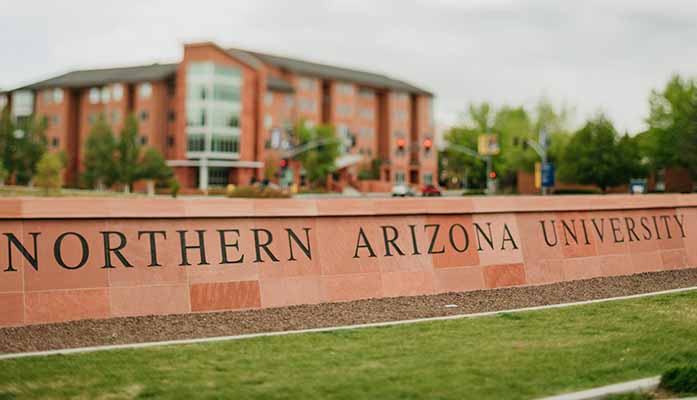
Sonya Xinyue Xiao teaches psychological science and performs developmental research on moral and gender development at Northern Arizona University (NAU). Xiao was a postdoctoral scholar at the Arizona State University (ASU) T. Denny Sanford School of Social and Family Dynamics (SSFD) from 2020 to 2022, where she taught until last year. NAU has Xiao on a tenure track.
Presently, Xiao is also an affiliated research fellow for the Cultural Resilience and Learning Center (CRLC) in California and a member of the Diversity Scholars Network in the National Center for Institutional Diversity at the University of Michigan (UM). Xiao’s UM profile declares her social priority on children, youth, and families, with her specific focus pertaining to that priority on gender, sexuality, sexual orientation, race, ethnicity, social class, and socioeconomic status.
“[Xiao] is investigating how early adolescents’ multiple intersecting identities in gender and race/ethnicity are related to their prosocial behavior toward diverse others over time, with youth from diverse ethnic racial backgrounds,” stated her UM profile.
Additionally, Xiao has served as the programming committee member for the Sexual Orientation, Gender Identity and Expression (SOGIE) Caucus of the Society for Research in Child Development (SRCD) since 2021. The SRCD has repeatedly opposed efforts to restrict or ban gender transitions for minors.
Xiao’s published research papers have declared the need for parents to raise their children to embrace gender theory in themselves and their peers, under the claim that rejection results in poor social and emotional outcomes later in life, as well as to engage their children in diverse friendships, under the claim that those as young as preschoolers can be racist.
Characteristics aligning with progressive critical race and gender theories are what Xiao defines as “prosocial behaviors” throughout her research.
Finally, the last paper I started in grad school class on #gender is out in time for #PrideMonth! I was auditing carol's gender class, and that was the semester when covid hit….The paper has been in submission for 14months! Nonpaywalled version here: https://t.co/VEHUH7WEtN
— Sonya Xinyue Xiao, Ph.D. (@SonyaXinyueXiao) May 30, 2023
Last year, Xiao contributed to a chapter entry in a book, “Gender and Sexuality Development.” The chapter expanded the understanding of gender to many gender identities.
Check out this new meta-analysis on understanding predictors of prejudice toward trans individuals 👏 The authors tested 15 predictors, all but one are important (e.g.,political orientation, social dominance orientation, religiosity, gender essentialism) https://t.co/Q16biGeq2m
Xiao’s work includes “gender integration,” which studies the differences between genders with the ultimate goal of total integration. Xiao’s team with the T. Denny Sanford School of Social and Family Dynamics (SSSFD) holds the belief that gender is fluid and not binary; they receive federal funding through the Institute of Education Sciences (IES).
Xiao’s research has also relied on participants’ self-reported gender identities. Elsewhere, her current research team’s most recent release of preliminary findings asked children “how much they think they look like girls and how much they think they look like boys,” and reported that 10 percent thought they looked like both genders, and nearly one percent believing they didn’t look like either gender.
we are doing school-based research in AZ now and ask an open-ended question "what's your gender?” and the reader/experimenter says "for example, I am a girl."
In May, Xiao’s work on gender integration was featured in an IES blog series focusing on “research conducted through an equity lens.” SSSFD professor Carol Martin said that their work aims to achieve diversity, equity, and inclusion in education. Martin further insisted that teachers need to break up naturally-occuring gender segregation in their students to encourage diversity.
“We study the importance of having diverse classrooms (mixed-gender in our case) and breaking down barriers that separate people from each other but stress that this diversity matters only when it is perceived as inclusive and fosters a sense of belonging,” said Martin. “For some students, additional supports might be needed to feel included, and we hope to identify which students may need these additional supports and what types of support they need to promote equity in classrooms around issues of social belongingness.”
— Sonya Xinyue Xiao, Ph.D. (@SonyaXinyueXiao) May 6, 2023
According to her LinkedIn, Xiao attended Tianjin University of Science and Technology before beginning her career as a teacher at Zhenguang Primary School in Shanghai, China. While at Tianjin, Xiao had two notable back-to-back volunteering stints in 2010: first, a two-month gig at the Shanghai World EXPO 2010, then a month-long gig at the World Economic Forum (WEF) Summer Davos. For the latter gig with the WEF, Xiao reported providing document and verbal translation at the Lishunde Hotel, as well as assistance to conference attendees.
China’s practice of its cultural subversion tactics on U.S. soil, especially involving children, have been widely reported over the years, most recently concerning TikTok. While the Beijing-based company behind the app pushes content ranging from the mind-numbing to dangerous to foreigners, it restricts Chinese youth to a domestic version, Douyin, which contains only educational and inspirational content. In its short existence, TikTok has become a major influence in American children’s development.
Papers published while at ASU or NAU where Xiao was the principal author are listed below:
Xiao has also contributed in over a dozen other research papers uplifting critical race and gender theories, as well as promoting “nurturant parenting,” described as inductive discipline and punishment avoidance, versus the disciplinary model of “restrictive parenting,” described as punitiveness, corporal punishment, and strictness. That paper on nurturant versus restrictive parenting further advised that white parents should avoid restrictive parenting to ensure their children behaved better toward non-white peers.
Other papers to which Xiao contributed argued that white parents who claimed to be color-blind or were displaying evidence of “implicit racial bias” caused their children to have less empathy toward Black children.