by Staff Reporter | May 20, 2026 | News
By Staff Reporter |
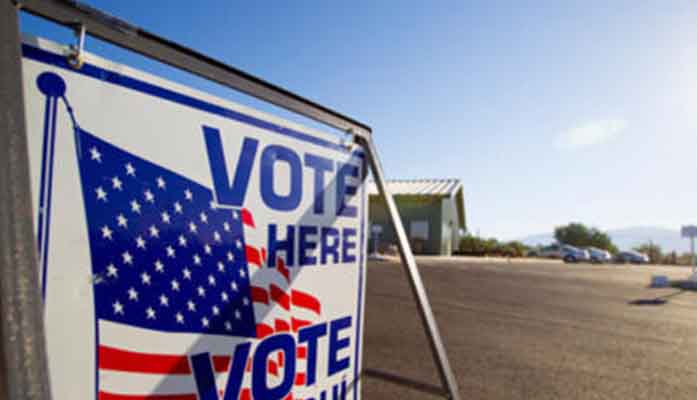
The Republican candidate for the Arizona secretary of state race stands in support of precinct-based voting.
Alexander Kolodin, a Republican lawmaker representing LD3, told Pinal County Attorney Brad Miller in a sit-down interview that precinct-based voting had “the opposite” effect of disenfranchising disabled voters.
Rather, Kolodin said that the vote center model preferred by his opponent — incumbent Secretary of State Adrian Fontes, a Democrat — presents a greater risk for disenfranchisement because of the distance between vote centers.
“Precinct-based voting — I want to make this very clear — is the opposite of disenfranchising disabled voters. It is the vote center model that disenfranchises the most disabled voters because, again, it’s that travel time, it’s that distance,” said Kolodin.
Kolodin added that the distances between vote centers compared to precinct polling were more costly, gas- and time-wise. Kolodin likened the cost to taxation, with the greater burden on disabled voters.
“It’s almost a poll tax. Imagine how much gasoline it costs these days to drive 30 miles. You drive 30 miles there and back, I tell you in my car that’s going to cost me $10, $15 bucks. So, I’d have to pay that money in order to vote,” said Kolodin. “It’s hard for me to get a caregiver who can have that much time to take me if I’m a disabled person that far to vote, whereas if I have a polling place in my precinct, that becomes a much easier lift for me.”
Earlier this month, Secretary of State Fontes lost a court fight with Pinal County over its precinct-based voting model. Fontes sued in 2024 to force the county to adopt vote centers under the guise of retaining precinct-based voting.
In the 2025 Election Procedures Manual (EPM), Fontes mandated that all counties with precinct-based voting repurpose the Accessible Voting Devices (AVDs) to contain provisional ballots for the entire county. AVDs were intended and used exclusively in the past for voters with disabilities. Under Fontes’ design, precinct-based polling places would deprioritize voters with disabilities by requiring them to share this specialized voting equipment with out-of-precinct voters.
The court ruled that Fontes’ mandate would likely disenfranchise disabled voters.
Fontes dismissed the judge’s ruling as “sid[ing] with conspiracy theorists” in a social media post. He claimed his 2025 EPM policy wasn’t rooted in a desire to force “de facto” vote center models, as the court ruling stated, but instead an intent to allow voters with disabilities to vote wherever they wanted in the county.
“We were trying to help voters with disabilities just go to whatever polling place they can get to the easiest and cast a ballot from anywhere in their county,” said Fontes. “Unfortunately, for now, the politics have won in the court.”
However, that EPM policy didn’t explicitly limit AVDs usage to out-of-precinct voters with disabilities. The policy opened up the AVDs to all out-of-precinct voters.
“If the voter declines or is unable to travel to the voter’s assigned polling place, permit the voter to vote a provisional ballot in the correct ballot style for the voter’s assigned precinct using an accessible voting device that is programmed to contain all ballot styles,” stated the 2025 EPM. “The election official should inform the voter that their provisional ballot will be counted only if it is confirmed the voter is otherwise eligible to vote and did not vote early or at another voting location and had that other ballot counted as determined by the County Recorder.”
AZ Free News is your #1 source for Arizona news and politics. You can send us news tips using this link.
by Ethan Faverino | Mar 1, 2026 | News
By Ethan Faverino |
In a decisive step to strengthen voter confidence and streamline Arizona’s election processes, the Arizona House of Representatives passed HCR 2016, a proposed constitutional amendment sponsored by Representative Rachel Keshel (R-LD17).
HCR 2016 seeks to require in-person voting to take place exclusively at designated precinct polling places, eliminating the use of countywide voting centers, emergency voting centers, and on-site early voting locations.
If approved by voters in the upcoming election, the resolution would cap election precincts at no more than 2,500 registered voters at the time precincts are designated. It would also remove statutory authority for voting centers and related provisions in election administration, electioneering, and unlawful acts statutes.
“Arizonans want elections they can understand, observe, and trust, and the precinct model delivers that,” stated Rep. Keshel. “HCR 2016 puts Election Day voting back where it belongs: at clearly designated polling places tied to precincts, with reasonable precinct sizes that are easier to staff and manage. Voting centers and last-minute location changes create confusion, weaken consistent procedures, and slow results. This helps restore faith in our elections for Republicans, Independents, and Democrats who expect clear rules and timely results.”
The resolution would end the option for in-person voting at on-site early voting locations through 7:00 p.m. on the Friday before an election and eliminate references allowing on-site tabulation of early ballots at voting centers.
House republicans advanced HCR 2016 as a key priority under the House Republican Majority Plan to secure elections by reinforcing the structure of in-person voting and empowering Arizona voters to decide the issue directly at the ballot box.
The measure aligns with broader efforts to ensure fast, accurate ballot counting for timely results, protect election integrity, and promote transparency.
Secure elections remain a top focus for Arizona Republicans, who emphasize that voters deserve free, fair, and transparent processes where ballots are counted quickly and results are known sooner. HCR 2016 supports these goals by addressing structural elements that contribute to delays and confusion in election administration.
The measure now advances to the Arizona Senate for further consideration.
Ethan Faverino is a reporter for AZ Free News. You can send him news tips using this link.
by Ethan Faverino | Jan 9, 2026 | News
By Ethan Faverino |
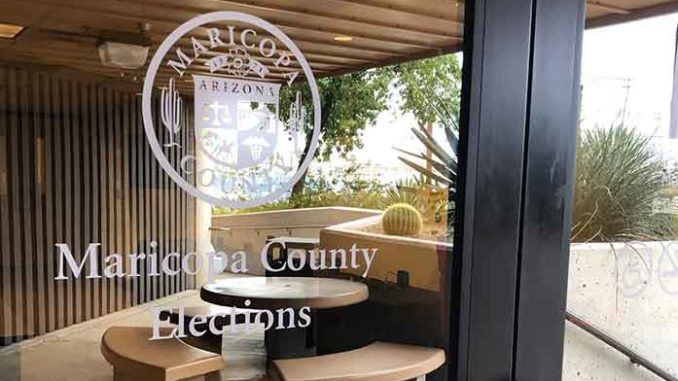
Maricopa County Elections’ latest newsletter, released January 1, 2026, delivered key updates for upcoming elections, including precinct boundary changes, opportunities to support upcoming elections, and important dates for the 2026 election cycle.
The Maricopa County Board of Supervisors recently approved 235 voting precinct changes, which took effect on January 2, 2026, eliminating precincts with zero voters, aligning boundaries with major freeways, reducing overall precinct sizes for better manageability, and minimizing splits across cities, towns, and school districts.
These adjustments aim to accommodate ongoing population growth across the county and ensure sufficient precinct capacity to support efficient in-person voting operations. Additionally, the Board established a new Justice Court District in the West Valley, named Canyon Trails.
Maricopa County Elections also continues its search for community partners willing to host Vote Centers for the 2026 election season. By providing a suitable space, hosts play a direct role in strengthening election access and supporting participation in the community.
Ideal Vote Center locations must meet the following requirements:
- Minimum room size of 1,600 square feet
- Full ADA accessibility
- Reliable power and air conditioning
- Ample parking to handle high voter traffic
Hosts may commit to one of several durations: 27 days, 12 days, 4 days, 2 days, or 1 day, depending on the election period and location needs.
For the City of Tempe, Maricopa County Elections will conduct an all-mail election on March 10, 2026. Under Arizona law, eligible voters will automatically receive a ballot by mail. The voter registration deadline for this election is February 9, 2026.
Replacement ballots will be available for in-person voting starting March 3, 2026, at the Tempe History Museum.
Maricopa County Elections serves as the filing officer for a range of countywide elected offices, including Justice of the Peace, Constable, Judges seeking retention, Special Taxing Districts, and Precinct Committeemen.
To assist prospective candidates, Maricopa County Elections will host the following virtual training sessions:
- January 13 and February 5, 2026 – General candidate training
- January 15 and February 3, 2026 – Precinct Committeeman training
Ethan Faverino is a reporter for AZ Free News. You can send him news tips using this link.
by Corinne Murdock | Apr 25, 2022 | News
By Corinne Murdock |
Former Maricopa County Recorder Adrian Fontes declared that Arizona should eliminate its voting precincts and adopt all-mail voting.
Fontes proposed the ideas during a half-hour debate with House Minority Leader Reginald Bolding (D-Laveen) hosted by Arizona Horizon on Wednesday.
“We need to have vote centers across the entire state so anyone can vote anywhere,” said Fontes. “Do we need reform? The simple answer is yes, but that reform needs to come in a continuation of the progress Arizona has had for 30 years, not stepping backwards like some people want.”
Fontes also proposed that the state should adopt Maricopa County’s ballot tracking system and send voters text messages when mail-in ballots are mailed to the voter and received by the election department.
Bolding appeared to disagree with Fontes.
“One thing I do think is extremely important is that we have to provide Arizonans with choices. And we have to make sure that we have free, fair, and secure elections,” said Bolding. “We have to make sure our systems are working for everybody.”
That wasn’t to say that Bolding disagreed with mail-in voting. Bolding insisted that vote-by-mail is secure, and that Arizona is a prime example of that fact.
Fontes responded that his proposal for vote centers would still provide options for those who want to vote in-person rather than by mail. He insinuated that Bolding didn’t understand all-mail voting because he lacked the election administration experience.
“It’s very clear to folks with the experience in these offices that when we say ‘all ballot by mail’ we have to have an option for replacing messed-up ballots, ballots that folks want to change, for example: they can bring them in, turn them in, and get new ballots,” said Fontes.
Bolding pledged to register high school seniors to vote as soon as they turned 18 and improve the state’s lobbyist database. He said that partisanship has reached an “all-time high” in the state and country.
Fontes pledged to publish an easy-to-read elections procedures manual, reduce red tape for small business development such as registries of trademarks and notary public procedures, increase public communications, and improve information technology security systems.
Bolding argued that the current elections process was too complicated for most Arizonans to understand. Fontes agreed.
Fontes claimed that his administration executed a secure election that defeated former President Donald Trump’s “Big Lie” that the 2020 election was rigged to ensure President Joe Biden’s victory.
Corinne Murdock is a reporter for AZ Free News. Follow her latest on Twitter, or email tips to corinne@azfreenews.com.
Page 1 of 11