by Staff Reporter | Mar 4, 2026 | News
By Staff Reporter |
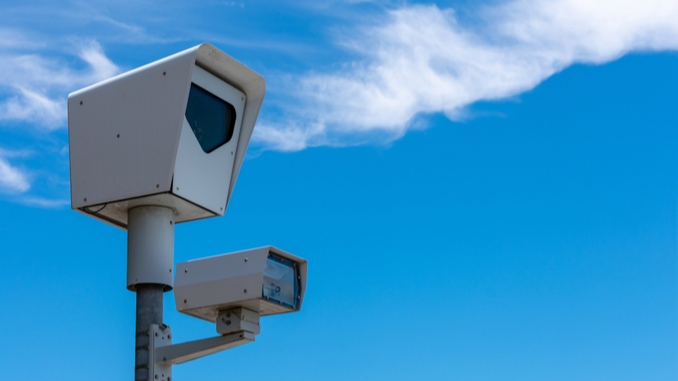
The Arizona Senate passed legislation to allow voters to decide whether or not they have photo radar.
SCR 1004 would allow voters to decide whether they should be the ones to decide on photo radar installations in their communities. If passed and approved, jurisdictions with photo radar would need to receive voter approval or shut that form of automated policing down within 90 days. The bill passed with all Republicans in support and all Democrats against.
Sen. Wendy Rogers (R-LD7), who is behind the bill, says Arizonans should have the final say on installations of photo radar in their communities.
“Arizonans deserve a direct voice in whether automated ticketing systems operate in their communities,” said Rogers. “This measure restores accountability and makes sure enforcement decisions are made by voters specific to each town or city, not outsourced systems that many residents believe prioritize fines over fairness. If these programs truly have public support, they should be able to earn it at the ballot box.”
Rogers previously got a bill through the legislature to ban photo radar. Gov. Katie Hobbs vetoed that bill.
Several citizens spoke in favor of the bill.
Among them was Shawn Dow, who referenced in his testimony an investigative report that $140 million went to political candidates from the 11 percent cut of photo radar tickets, and that in one case the city of Mesa was forging judge signatures on photo radar tickets.
In the latter instance, the city continued using autopen signatures for judges who retired months before.
“This is unconscionable that you are taking $140 million and taking it and putting it into your campaign coffers,” said Dow.
Mesa issued a notification that they wouldn’t issue notices to the recipients of forged autopen tickets, nor would they dismiss them. Mesa’s assistant city manager, Ken Cost, told AZ Family last month that the judges’ signatures were ornamental.
“It’s legally valid. The name is inconsequential. Totally understand where people are coming with their concern, but people need to understand their tickets were valid in the city of Mesa,” said Cost. “It was a process error, not a legal error.”
Not all were on board with how the original form of the bill would have empowered voters to decide on photo radar statewide. An approved amendment to the bill does allow local authorities and state agencies to implement photo enforcement systems by December 2026, but would require local voter approval every 10 years.
Police leadership from Phoenix, Paradise Valley, Mesa, and Scottsdale urged lawmakers to allow more room for voter input.
Commander Nick Diponzio with the Phoenix Police Department explained to the committee that law enforcement relies on photo radar due to the ongoing officer shortage.
“Ideally, I would have a motor officer on every corner. However, during these challenging times technology can serve as an effective tool to reduce collisions and enhance roadway safety,” said DiPonzio.
Chief Freeman Carney with the Paradise Valley Police Department said photo radars assist with reducing fatalities, citing their low rates of road fatalities despite getting tens of millions of drivers on their roads a year.
Commander Stephanie Derivan with the Mesa Police Department emphasized their local community support for photo radar. Derivan shared city statistics reflecting low recidivism among drivers who received photo radar tickets.
“This is an important tool that we need to slow people down near our children,” said Derivan.
Should the House approve the bill, the resolution would be referred to the ballot for Arizona voters to decide.
AZ Free News is your #1 source for Arizona news and politics. You can send us news tips using this link.
by Staff Reporter | Jan 22, 2026 | News
By Staff Reporter |
Voters may soon get to decide whether or not photo radar will continue to be used in the state.
A committee in the State Senate approved the bill on Tuesday.
SCR 1004 would ban photo enforcement systems used to identify violators of speed restrictions or traffic control devices from the entire state.
If approved by the state legislature, the measure could appear on the ballot as early as this November. Lawmakers opted for a resolution as a more viable pathway to bypass the requirement for Governor Katie Hobbs’ approval.
The governor didn’t support attempts to ban photo radar in the past.
Last year, the governor vetoed the same legislative language (outlined in a bill rather than a resolution) after its party-line approval in the legislature. No Democrats in either the House or Senate voted for the bill. Hobbs’ veto letter argued that the removal of photo radar would make the roads more dangerous, not safer.
“This bill attempts to remove the ability of local law enforcement to keep our streets safe by eliminating a tool used to enhance roadway safety,” stated Hobbs.
This sentiment was shared by Democratic lawmakers. State Sen. Lauren Kuby argued that certain studies supported the effectiveness of photo enforcement systems to reduce and deter traffic violations.
During voting on the bill last year, some Republicans — Reps. Teresa Martinez, Justin Wilmeth, Alexander Kolodin — did express doubts about the strategy of advancing a bill with SB 1019 rather than a resolution. An identical measure existed in SCR 1002.
Wilmeth said they were “wasting” their time by voting on the bill version of the legislation rather than the resolution.
“I want my Republican caucus members to understand: this bill will pass, and it will get vetoed,” said Wilmeth. “This is what majorities are about, and in this issue we are wasting our opportunity.”
Kolodin said Democrats were defending photo radar under false pretenses of public safety concerns, and that their true intentions had to do with ticket revenues’ ties to clean election campaign funds.
“The photo radar scam is the way that our friends across the aisle fund their war machine. They run candidates in noncompetitive districts and funnel taxpayer money over to competitive districts, all on the backs of hardworking Arizona drivers who are denied due process when they receive their traffic tickets,” said Kolodin. “It’s almost as if we’re more interested in making a show of solving the problem than actually solving the problem.”
State Sen. Wendy Rogers authored both pieces of legislation last year and was the lawmaker to reintroduce it again this year.
Rogers disputed Hobbs’ veto claim in a press release published on Tuesday. The state senator stressed the unreliability of automated enforcement, which is what photo radars operate under. Rogers said it should be law enforcement, not technology, to make the judgment call on violations of traffic law.
“Automated enforcement removes discretion, undermines due process, and turns routine driving into a revenue stream,” said Senator Rogers. “That’s not how law enforcement should work in Arizona. The resolution does not excuse dangerous driving or eliminate traffic enforcement. It ensures that enforcement decisions are made by trained law enforcement officers, not algorithms and contractors.”
AZ Free News is your #1 source for Arizona news and politics. You can send us news tips using this link.
by Daniel Stefanski | May 28, 2023 | News
By Daniel Stefanski |
Days after an Arizona legislative attempt to prohibit photo radar was sent to her desk, Democrat Governor Katie Hobbs vetoed the proposal.
On Friday, Governor Hobbs sent a letter to Senate President Warren Petersen, informing the legislature of her veto of SB 1234, which was sponsored by Senator Wendy Rogers.
In her letter to the Legislature, Hobbs wrote, “I’ve heard from local leaders and the law enforcement officers across the state about the impact this bill will have on the safety of Arizonans. Research indicates that photo radar cameras demonstrate effectiveness in changing driver behavior and decreasing fatal accidents, especially in vulnerable areas like school zones. This bill’s ban of photo radar would eliminate an important tool for law enforcement that allows for a more efficient allocation of limited police resources.”
Hobbs expressed a desire to find solutions for safety issues on the streets, stating that she looks “forward to continuing the work with the Arizona legislature, law enforcement, and local municipalities to solve traffic issues and enhance public safety.”
Rogers, the bill’s champion, was deeply disappointed by Hobbs’ action on the bill. In a statement released after the news of the veto, Rogers responded: “Cities and towns use the photo radar scheme to collect millions of dollars from unwitting statewide drivers, each year. This traffic citation scam enables third-party companies to exploit Arizona drivers, a scheme never contemplated under state law. These surveillance systems ignore the root causes of safety concerns on our roads. They do little to eliminate immediate threats like drunk drivers, reckless drivers or speeders. Instead, photo radar cameras provide quick cash for the coffers of unelected municipal bureaucrats.”
She went on to say, “Furthermore, photo radar incentivizes politicians to penalize our citizens with unfair fines because 10% of each citation goes directly to fund campaigns through the AZ Clean Elections program. To add insult to injury, every single motor vehicle driver who passes by a camera, whether they’ve violated the law or not, are being photographed and documented. This is an egregious invasion of our privacy. Hobbs’ veto fails Arizonans. She will ultimately answer to our fleeced drivers who don’t support this years-long cash grab cloaked in the name of ‘traffic enforcement.'”
Arizona Representative Joseph Chaplik also weighed in on Twitter about the legislation’s demise, posting, “Disappointed but not surprised that Katie Hobbs vetoed the ban on photo radar and red light cameras. It is a money making scheme and corrupts law enforcement. I will continue fighting with Wendy Rogers until it’s finally gone from our streets.”
Stopping photo radar has long been a focus of Senator Rogers, who forecasted her plans to introduce this legislation last summer. In a statement before this legislative session, Rogers said, “The photo radar industry made its home base in Arizona. And that ends next year. We’re no longer going to allow government to spy on Arizonans for profit and trample due process rights.”
Last week, the Arizona House of Representatives passed the bill with a vote of 32-26 (with one member not voting and one seat vacant). Before passing the House last this month, this legislation had languished in the legislative process. The House Military Affairs & Public Safety Committee had considered the bill back on March 6, passing it with an 8-7 vote. Earlier in the session, the Senate Government Committee had cleared the measure with a 5-3 vote; and then the full Senate giving the green light with a 16-13 tally (with one member not voting).
Daniel Stefanski is a reporter for AZ Free News. You can send him news tips using this link.
by Daniel Stefanski | Feb 11, 2023 | News
By Daniel Stefanski |
Photo radar has always been a contentious issue in Arizona with regular attempts from state legislators to remove cameras from Arizona streets and highways. This year, one powerful Republican state senator is leading the efforts to prohibit all such operations once and for all.
SB1234, sponsored by Senator Wendy Rogers, “prohibits a local authority from using a photo enforcement system to identify violators of laws or ordinances relating to excessive speed or failure to obey a traffic control device,” according to the Senate’s fact sheet for the legislation. Her bill, which was introduced last month, has twelve co-sponsors (Senators Bennett, Borrelli, Farnsworth, Gowan, Hoffman, Kaiser, Kavanagh, Kern, Kerr, Mesnard, Petersen, and Wadsack).
When asked by AZ Free News why he supported this bill, Senator Borrelli said, “Law enforcement should not be farmed out to third-party private companies.”
This week, the bill cleared the Senate Government Committee, chaired by Hoffman, with a 5-3 party line vote. Senators Rogers (vice-chairman), Farnsworth, Shamp, Wadsack, and Hoffman voted in favor of the photo radar ban; while Democrat Senators Diaz, Mendez, and Sundareshan voted in opposition.
The Arizona chapter of the Republican Liberty Caucus (RLCAZ) was in strong support of SB1234. Its Twitter account wrote, “There are many reasons to abolish photo radar, starting with questions about constitutionality….Photo radar traffic enforcement is bad policy & it should come to an end.” RLCAZ then listed multiple concerns with photo radar, including issues of the 6th Amendment, due process, 4th Amendment, and other arguments in a seven-tweet thread.
Stopping photo radar has long been a focus of Senator Rogers, who forecasted her plans to introduce this legislation last summer. Rogers said, “The photo radar industry made its home base in Arizona. And that ends next year. We’re no longer going to allow government to spy on Arizonans for profit and trample due process rights.”
After her vote in the Senate Government Committee, Senator Justine Wadsack tweeted the news, and added, “I am a proud co-sponsor.”
SB1234 was one of the “Top Freedom Bills This Week” from EZAZ. Merissa Hamilton, one of EZAZ’s co-founders, tweeted an “easy as pie” summary sheet, including the photo radar prohibition bill with one of her cheat sheets.
Hundreds signed in to oppose this legislation on the Arizona Legislature’s site. The City of Chandler, Town of Paradise Valley, AZ Chapter National Safety Council, City of Kingman, City of Mesa, League of Arizona Cities & Towns, and City of Scottsdale were among the opposition.
Daniel Stefanski is a reporter for AZ Free News. You can send him news tips using this link.
Page 1 of 11