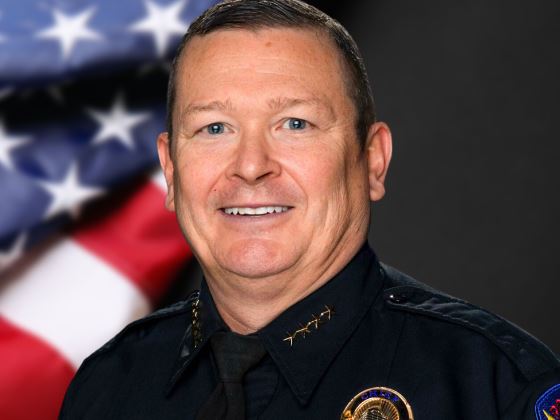
It is a standard officer safety, public safety protocol for an officer to draw his or her duty weapon and point it at a suspect during a high-risk arrest. But a proposal by Phoenix PD Interim Chief Michael Sullivan would make pointing a firearm at anyone, regardless of the situation, a Level 1 reportable Use of Force action even if the gun is never discharged.
It is just one of several changes to Phoenix PD’s Use of Force policy for which Sullivan is seeking public comment, and which clearly notes the policy will be “deliberately stricter than the Constitutional and legal minimums established by the Courts.”
A number of national law enforcement organizations, however, have come out in opposition to the underlying direction of the agency’s proposal, including the International Association of Chiefs of Police (IACP).
According to a recent IACP Use of Force position paper, managing use of force by officers is “one of the most difficult challenges” facing law enforcement agencies.
“The responsibility of law enforcement officers to enforce the law, protect the public, and guard their own safety and that of innocent bystanders is very challenging,” the IACP noted. “Interactions with uncooperative subjects who are physically resistant present situations that may quickly escalate.”
Ideally, an officer is able to gain cooperation through the use of verbal persuasion and other de-escalation skills. But there are situations, the ICAP noted, where use of force is unavoidable.
In such instances, use of force to gain control and compliance of subjects must be “objectively reasonable,” according to the U.S. Supreme Court in Graham v. Connor, which acknowledged that an officer’s decision to use force is often made under varied scenarios and often on a split-second basis.
Most agencies base their Use of Force policies and training around Graham v. Connor, in which the justices recognized that officers do not need to use the minimum amount of force in any given situation. Instead, the officer’s use of any force must be “objectively reasonable” based upon the totality of the circumstances known to the officer at the time force was used.
The totality of the circumstances could include the immediate threat to the officer or others; the time available for an officer to make decisions in tense, uncertain, and rapidly evolving circumstances; the seriousness of the crime(s) involved; whether the subject is attempting to evade or escape; and the danger the subject poses to the community.
Other factors may include prior contact with the subject; the number of officers on-scene; the age, size, and strength of the subject versus the officer; specialized skills of the officer; injury or exhaustion of the officer; whether the subject appears affected by mental illness or the influence of alcohol or other drugs; crowd-related issues; and the subject’s proximity to potential weapons.
But Sullivan wants to change the Phoenix PD Use of Force policy away from the objectively reasonable standard to a standard of “reasonable, necessary, and proportional” that goes outside the Supreme Court’s analysis and relies on a more subjective review or interpretation.
IACP has “significant concerns” with any policy or legislation which replaces the Graham v. Connor standard with a standard which opens an officer’s split second decision to a new level of interpretation that results “in endless scrutiny and second-guessing by investigators, prosecutors, and civil courts.”
AZ Free News spoke with several officers about their reaction to the proposed Use of Force changes. The officers are not being identified due to concerns of retaliation although their identities and employment have been confirmed.
One Phoenix officer said his biggest worry is that he and other officers “will hesitate for fear of being disciplined” when confronted with a threatening or potentially threatening situation.
“A moment’s hesitation can cause someone their life,” the officer said, adding he expects more officers to be injured on duty under such a vastly different standard.
He also pointed out that officers would be prohibited from using “any force” on a person whose health, age, condition, or circumstances “make it likely” that death or serious physical injury will result.
The prohibition is so broadly worded to be unclear whether an officer cannot use force to subdue a gun-wielding 80 year old who has just shot a neighbor.
Another Phoenix PD officer points to concerns with the proposed change to de-escalation tactics, which Sullivan wants to expand to include withdrawing from the scene.
According to the officer, current policy allows for retreating from a volatile or dangerous scene as a method of de-escalation. This is often utilized when dealing with someone having a mental health crisis or when a criminal suspect can be apprehended in another, less risky manner.
But under the proposed policy, Phoenix officers could be disciplined for not opting to deescalate by completely withdrawing and leaving the scene. While this may appear to resolve the immediate issue at hand, the officer says the tactic could place the public “at further risk” once the police presence has left.
One example is an uncooperative trespasser on private property. If the officer withdraws from the scene to avoid escalating into physical contact, the property owner would be left to protect the property and the residents’ safety.
Or officers will be called back to the scene to deal with a now more dangerous set of circumstances.
And then there are those high-risk arrests where a suspect could have a weapon or has shown a propensity for physical violence. It is common practice to point a gun at such suspects to protect the safety of officers and the public.
Sullivan’s proposal, however, would now add a Use of Force demarcation on an officer’s record for such conduct. This means, according to another Phoenix officer, that an officer involved in a few hundred arrests over several years in which their gun was drawn could be alleged to have poor de-escalation skills because the majority of their arrests involved “force” even if no physical contact was involved.
Another activity which could result in a Use of Force report against an officer under Sullivan’s proposal involves Phoenix PD’s highly touted utilization of a Less-Lethal Launcher that fires a 40mm rubber projectile as well as a Pepperball Launcher, both of which can temporarily incapacitate a suspect.
Public records show these proven best-practice tools have been successful by officers to reduce more dangerous encounters. Yet under Sullivan’s proposed policy changes, the use of such tools could easily end up being considered “deadly force” in many instances.
Attorney Steve Serbalik explains his concerns with Chief Sullivan’s proposed Use of Force policy:
Other agencies which support the current objectively reasonable threshold for the use of force include Association of State Criminal Investigative Agencies. Commission on Accreditation for Law Enforcement Agencies, Federal Law Enforcement Officer Association, Fraternal Order of Police, Hispanic American Police Command Officer Association, International Association of Directors of Law Enforcement, National Association of Police Organizations, National Association of Women Law Enforcement Executives, National Organization Black Law Enforcement Executives, and National Tactical Officer Association.
Terri Jo Neff is a reporter for AZ Free News. Follow her latest on Twitter, or send her news tips here.
As the city of Phoenix prepares to navigate through a U.S. Department of Justice civil rights investigation, there is a new chief at the helm.
Michael G. Sullivan was sworn-in last Friday as Interim Chief, several weeks after he officially began working for the city under a one year contract with a base pay of $232,000. His swearing-in ceremony came just days after the Arizona Peace Officer Standards and Training (AZPOST) board approved Sullivan’s application for a restricted certification
The restriction bars Sullivan from being assigned “any duty likely to result in the need to apply physical force.” His contract signed in September gives Sullivan six months to pass all AZPOST training requirements and “satisfactorily perform the practical demonstrations of proficiency in physical conditioning, vehicle operations, pursuit operations, and firearms, including firearms qualifications as required by AZPOST.”
In the meantime, city officials are planning to conduct a nationwide search for a permanent police chief, although no promises have been made to Sullivan if he wishes to stay longer.
Today, Michael Sullivan (@ChiefPHXPD) was officially sworn in as our Police Chief.
Sullivan was hired by Phoenix PD from Baltimore PD where he has spent the last few years helping that agency deal with the fallout of a US DOJ investigation. He previously spent 20 years with Louisville PD in Kentucky.
In public comments, Sullivan has acknowledged there are many challenges facing the department beyond the US DOJ investigation. He has mentioned the agency’s understaffing problem, its lack of accountability and transparency to the community, and dwindling department morale as just some of the issues he needs to tackle while also trying to appease investigators with the US DOJ’s Civil Rights Division.
In August 2021, the US DOJ announced it was undertaking a “comprehensive review” of Phoenix PD’s policies, training, supervision, and force investigations. Also under scrutiny will be the department’s “systems of accountability, including misconduct complaint intake, investigation, review, disposition, and discipline.”
The investigation is authorized under the Violent Crime Control and Law Enforcement Act of 1994, which prohibits state and local governments from engaging in “a pattern or practice of conduct” by law enforcement officers that is in violation of federal law or which deprives individuals of the constitutional rights. The Act allows the U.S. Attorney General Merrick Garland to seek a number of remedies through civil litigation.
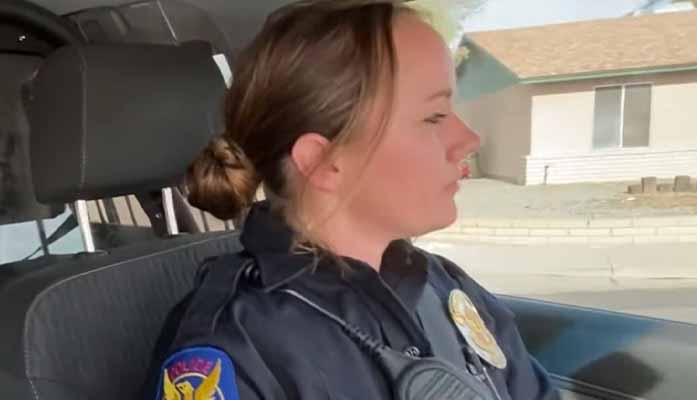
Two years ago, Phoenix Police Officer Jackie Ravelo gave one of her kidneys to her friend’s ten-year-old daughter, Lily Rios — a lifesaving measure Ravelo says she didn’t think twice about. Ravelo and Rios were only able to meet recently because of COVID-19.
“As a parent, you know, I have three daughters. And you kind of put their face to that. I can’t imagine the pain that Becky felt, and you know wanting to make things better or do something that can help her — and not being able to, that’s heartbreaking for me,” said Ravelo. “I can speak for all officers that you want to help everybody, you want to solve problems and sometimes you can’t, so to me it was simple — how could I not do this?”
Rios suffered from focal segmental glomerulosclerosis (FSGS), sometimes called “focal glomerular sclerosis” or “focal nodular glomerulosclerosis,” in which scar tissue develops on the parts of kidneys that filter waste from the blood. FSGS may be caused by a variety of conditions and can lead to kidney failure; according to Kopp, her daughter’s case was aggressive and unresponsive to treatments.
Rios and Ravelo spent part of the day together, with Ravelo seating Rios inside her cop car and talking to her about her life since the surgery. Rios has been able to live a normal life since receiving Ravelo’s kidney.
“Being next to someone that almost saved my life, I start to think about how thankful I am,” said Rios.
Ravelo knew of the girl’s mom, Becky Kopp, through a recreational softball league. Kopp expressed gratitude for Ravelo’s selflessness.
“To Jackie: the gift that you gave my daughter is — I can’t express how meaningful it is, and how amazing it is, and how priceless it is. As a mother to a mother, you saved my baby,” said Kopp.
Ravelo had seen Kopp’s Facebook post after a kidney intended for her daughter was no longer a viable option. She explained that she posted to explain what was happening — it wasn’t meant to be a call to action. However, that’s how Ravelo took it.
“At exactly midnight last night, I got the call that a kidney was available for Lily. We rushed to PCH and were directly admitted. Her labs were drawn and she went to sleep. I didn’t. I couldn’t. The doctors just came in to let us know that the kidney looked great last night but has deteriorated and is no longer viable. We are being discharged. Yes, this sucks. Yes, it’s devastating to be so close yet so far away. But we are going to focus on the positives from the last 11 hours… we now know the process. I know what to do and what to expect the next time I get the call. Lily is at the top of the list. The fact that she has only been on the list for 13 days and is already getting called means we are very close. Lily is strong and healthy and ready for surgery. We will remain positive and hope for the next one. Please say a prayer for the donor. We may have lost the opportunity at this kidney but that person lost their life.”
Kopp posted an update on her daughter’s “kidneyversary.” According to Kopp, her daughter has been doing well ever since.
Corinne Murdock is a reporter for AZ Free News. Follow her latest on Twitter, or email tips to corinne@azfreenews.com.
Phoenix Police Department (PPD) leadership informed city council that they may have to stop responding to certain 911 calls due to their shortage of police officers. PPD Chief Jeri Williams shared with the Public Safety and Justice Subcommittee at the start of this month that they haven’t made such a policy official yet, but may have to in order to offset the workload created by 370 vacancies.
They had 27 recruits going through academy and 31 officers-in-training. PPD has 2,755 total officers. The fifth-largest city in the nation had over 1.6 million people according to the 2020 census — approximately 17 officers per 10,000 residents.
The proposal was based on a study from Arizona State University (ASU). The university identified eleven call types: intrusion alarms, assisting fire departments with unruly patients, drug overdoses, loose animals, public marijuana smoking, civil matter stand-bys, abandoned vehicles, found property, minor vehicle crashes without injuries, illegal parking, and noise complaints. Williams suggested that the last six call types could be mitigated by civilian members or assistants and not PPD, and that public marijuna smoking calls were nullified with the legalization of marijuana.
Williams suggested that eliminating police response to intrusion or false alarms, fire department assistance and/or check welfare calls, drug overdoses, and loose animals wouldn’t be good for public safety. PPD recorded 60,000 welfare calls and 552 drug overdose calls.
Civil matter stand-by calls have to do with incidents like exchanges of children, roommate relationships, and merchant or customer relations. Williams reported that PPD received about 14,000 of civil matter stand-by calls annually, 10,000 abandoned vehicle calls, 3,200 found property calls, 26,000 minor vehicle accidents without injury calls, 10,000 minor vehicle hit-and-run, 6,200 illegal parking calls, and 14,000 noise complaint calls.
Overall, Williams reported that PPD received 2 million calls in 2020 with 660,000 of those dispatched, and 1.8 million calls in 2021 with about 614,000 of those dispatched.
“This is just preliminary information that we’re going through. We didn’t want you all or members of the public to be surprised by the types of calls we’re looking at. We’ve made no decisions on these whatsoever, we’re really just trying to introduce the topic and idea,” explained Williams.
The second adjustment was PPD’s new “deferred patrol response” program where officers come into the station and work overtime by assisting with calls, taking reports, and handling paperwork.
The third adjustment was changes to PPD’s dispatch protocol concerned changes to dispatch protocols.
In all, Williams touched on six different improvement efforts: in addition to call type reduction, deferred patrol response, and dispatch protocol changes, PPD has undertaken programs implementing civilianization, body worn cameras for all officers, and specialty back to patrol. PPD also introduced efforts to increase officer retention and morale, such as raises.
Corinne Murdock is a reporter for AZ Free News. Follow her latest on Twitter, or email tips to corinne@azfreenews.com.
Phoenix Police Department Chief Jeri Williams determined that police who die off-duty won’t have formal funeral arrangements. The police chief issued the policy announcement through a memo letter to city staff on Monday.
Phoenix City Council member Sal DiCiccio criticized the policy last week, days prior to Williams issuing the memo.
“DISTURBING: Chief Williams has really lost her way with the rank and file to placate the crazy anti-police crowd,” wrote DiCiccio. “We were notified early this morning that funerals for our brave police officers who die on duty are treated differently than those that are off duty. Seriously?”
DISTURBING: Chief Williams has really lost her way with the rank and file to placate the crazy anti-police crowd.
We were notified early this morning that funerals for our brave police officers who die on duty are treated differently than those that are off duty. Seriously? pic.twitter.com/bqOROZd0ne
DiCiccio told AZ Free News that this latest decision was yet another mistreatment of officers.
“What Phoenix is doing is BS. We have rising crime rates, can’t patrol our streets effectively – all because we don’t have enough cops – and Phoenix politicians are making it worse by constantly attacking Phoenix PD. They don’t even want to honor them with a proper funeral. It’s absurd,” stated DiCiccio.
The memo is reproduced in its entirety below:
The following memo addresses recent concerns related to notification of Police non-line of duty deaths. Based on research conducted by the Phoenix Police Department it has been determined that no written policy exists regarding non-line of duty death notifications. Instead, it has been the department’s longstanding practice to only formally notify City Council and City Management of line-of-duty deaths. Non-line of duty death notifications have been much less formal and not consistent. Therefore, I am establishing a formal written process from this point forward to ensure that information is provided consistently to all members of management and elected leadership for both line of duty and non-line of duty deaths and funeral services.
To effectively address the concerns referenced above, I am instructing the City Manager Liaison (Commander) to notify the Mayor, City Councilmembers, City Manager, and Assistant City Manager upon learning of a current police employee’s death.
Line of Duty Death: Line of Duty deaths have very formal programs for involvement of Police and City leadership. The City Manager Liaison will work with the Police Department’s Employee Assistance Unit (EAU) and provide funeral arrangement notification to the Mayor, City Councilmembers, and City management for Line of Duty deaths of current police employees as soon as possible. This will include funeral and viewing information, dignitary seating, and logistics notifications.
Non-Line of Duty Deaths: The Police Department’s Employee Assistance Unit often assists with Non-Line of Duty deaths of current police employees. Once advised by EAU, the City Manager will notify the Mayor, City Councilmembers, and City management of the non-line of duty death. Recognizing that each funeral service is different, the Department will make every attempt to support the wishes of a deceased employee’s family for public involvement in the funeral services.
Corinne Murdock is a reporter for AZ Free News. Follow her latest on Twitter, or email tips to corinne@azfreenews.com.