by Daniel Stefanski | Jan 25, 2024 | News
By Daniel Stefanski |
Arizona law enforcement officials are warning against a federal consent decree for the City of Phoenix Police Department.
Earlier this month, the Arizona Sheriffs’ Association sent a letter to Phoenix Mayor Kate Gallego, highlighting their members’ “complete opposition to any additional federal oversight of local law enforcement in the state of Arizona.”
The letter, sent by Yavapai County Sheriff David Rhodes and Navajo County Sheriff David Clouse, wrote that “the unintended but far-reaching consequences of federal oversight in Phoenix are of great concern to all law enforcement agencies in Arizona.” They noted the exorbitant costs of such decrees – most recently in Arizona’s backyard with Maricopa County, which has shelled out “$250 million of taxpayer funds in the last 16 years including on court monitors who have a disconnect between their mandate and experience, and their investment in the community.”
Sheriffs Rhodes and Clouse pointed out “the failure of the DOJ to help Arizona secure its borders” as another strike against the federal government’s ability to effectively commandeer a local police department, let alone to maintain its constitutionally tasks. They stated, “The DOJ has the authority and powers to also initiate a civil rights investigation into the Department of Homeland Security and as of yet has not. One does not need to look far to see the extraordinary constitutional violations occurring at our southwest border at the hands of the DHS. We find this inequity hypocritical considering the serious public safety implications manifesting from this failure.”
The association promised its complete support to Phoenix “in rejecting an offer of negotiation or consent decree by the DOJ,” adding the sheriffs would “stand behind you in forcing litigation to shine the light for all your citizens onto the allegations.” They asserted that “the necessary oversight of your police force can be done internally, with confidence from your constituents and other law enforcement agencies.”
Just days after the sheriffs transmitted this letter, the City of Phoenix sent one of its own to the DOJ, requesting “that the Department of Justice commit to negotiating in good faith a technical assistance letter with the City of Phoenix and the Phoenix Police Department, with assurances sufficient to reassure the DOJ that the City and PPD will continue with the reforms they are in the process of implementing.” The City’s letter accused the DOJ of operating its investigation with “a lack of transparency,” alleging the federal team “has declined to meaningfully share its observations, impressions, concerns, or tentative conclusions with the City of Phoenix, PPD, or their counsel despite numerous requests, and has rejected a specific request for a mid-investigation briefing.”
According to the City of Phoenix, “a technical assistance letter would allow the DOJ to provide Phoenix remedial recommendations and mechanisms to ensure proper implementation without the presence of a court enforced consent decree and monitor.”
The city argued that its Interim Chief, Michael G. Sullivan, has helped to enact meaningful reforms over “virtually every aspect of the operations implicated by the DOJ investigation.” City officials made the case that Sullivan’s changes “demonstrate a powerful commitment to reform, a commitment that warrants a different approach from the DOJ than has been the case over the past dozen years.”
Late last year, Arizona State Representative David Marshall and 20 of his colleagues in the chamber sent a letter to City of Phoenix officials, asking them to “swiftly reject any consent decree proposed by the DOJ and challenge the findings in the forthcoming DOJ report.”
The request from these representatives followed other petitions from Arizona officials who oppose the imposition of a consent decree upon the city’s police department. Earlier last fall, Maricopa County Attorney Rachel Mitchell posted her displeasure with the principle of federal monitoring of law enforcement departments, writing, “Look no further than MCSO to see what ‘federal monitoring’ does to agencies. Monitors (people paid to determine whether an agency is in compliance) have ZERO incentive to find compliance. It will cost the taxpayers MILLIONS and crime will increase.”
City of Phoenix Councilmember Ann O’Brien also wrote an op-ed for the Arizona Republic, voicing her sentiments regarding any arrangement handed down from the DOJ. In her piece, O’Brien wrote, “I have no intention of signing anything given to us by the Department of Justice without getting to read their findings first. That’s the thing: the DOJ gets agencies to sign an agreement in principle before ever releasing their findings, which essentially means that agency will negotiate a consent decree in good faith. Not Phoenix.”
Per the City of Phoenix’s information, the DOJ’s Civil Pattern or Practice investigation into the Phoenix Police Department “is the 71st investigation of its kind since the Violent Crime Control and Law Enforcement Act of 1994 was signed into law by President Bill Clinton.” If DOJ finds “patterns or practices of misconduct,” then Phoenix will likely find itself with a federal monitor.
Daniel Stefanski is a reporter for AZ Free News. You can send him news tips using this link.
by Joseph Yang | Jan 21, 2024 | Opinion
By Joseph Yang |
In whatever field you work for, can you imagine doing your job with one hand tied behind your back? What about both hands tied behind your back? Well, for the Phoenix Police Department this is no longer an “imagination,” this is their reality.
For the past 2 years, the Department of Justice has been investigating the Phoenix PD on the basis of allegations against the department regarding use of force, retaliation to protestors, and mistreating the homeless. For 2 years the Phoenix PD has been fully compliant with their investigation as stated by the Phoenix Law Enforcement Association in an open letter to Mayor Kate Gallego; “Because the city and it’s police department have nothing to hide, you have cooperated with every aspect of the DOJ’s investigation thus far – rightly so, and with our full support.”
However, the Phoenix PD, in that same open letter, conveyed their dismay to Mayor Gallego; “I write to you today on behalf of PLEA, United Phoenix Firefighters Local 493, AFSCME 2384, AFSCME 2960, ASPTEA and neighborhood groups Operation Blue Ribbon, Violence Impact Coalition, and Phoenix Mid-Century Modern Neighborhood Association to express our concerns about the direction of the DOJ investigation and its implications for the future of the City of Phoenix.” The Department of Justice, after concluding their “investigation,” has recommended—as they always seem to do—a consent decree go in effect for the Phoenix PD.
Now, why is this such a bad thing? Why are people against this? Here are a few of the reasons.
At What Cost
Let’s start with the most obvious reason taxpayers and residents of Phoenix oppose this. The financial burden on the City of Phoenix would be astronomical, costing the city $10 million alone for the court ordered monitor required by the consent decree. The rest of the cost widely depends on the length a consent decree is in effect for, but the Seattle PD, which has a consent decree, has spent $100 million so far. And that number continues to climb as the consent decree remains in place. I am sure you can see why taxpayers would be against this.
“I’m From the Government, and I’m Here to Help”
If the cost alone isn’t enough to sway you, then let’s look back on Ronald Reagan’s famous quote that the “nine most terrifying words in the English language are ‘I’m from the government, and I’m here to help.’” This is exactly what is going on in Phoenix. There really is no reason that someone from another state or the federal government should be dictating or instructing officers within the Phoenix PD. This takes away our state and local sovereignty. While the Phoenix PD is not perfect, they have taken actions and steps to improve and make policy and training changes when necessary. For the DOJ to come in and overreach in such a way, costing taxpayers hundreds of millions of dollars, is grossly inappropriate.
The CRIME, Need More Be Said?
If you look at cities that have a consent decree in place, violent crime has skyrocketed! In a statement, about a survey of officers within the Phoenix PD, the President of the Phoenix Law Enforcement Association said, “In [the survey], we asked what the members felt would happen to crime if a consent decree was implemented. 93.73% said crime would rise either somewhat or substantially. That is in line with what we have seen across the country.” In that same survey, officers were asked how likely they would be to retire if a consent decree were to go in effect for Phoenix PD. The President of the Phoenix Law Enforcement Association shared the results, saying, “Here in Phoenix, we are approximately 600 short of the max staffing of 3,125. In a recent survey, PLEA asked members how likely they would be to retire or resign if a consent decree was implemented in Phoenix. 12.57% responded that they would definitely retire or resign, while another 30.26% said they would strongly consider retiring or resigning. 42.87% is a concerning number!” Phoenix already has rising crime rates. We cannot afford to lose more officers. We need to gain more!
This Affects Us ALL
If you don’t live in Phoenix, why should you care? Phoenix is the 5th largest police department in the U.S. If the DOJ can do this to Phoenix, what will stop them from coming to Chandler, Gilbert, Mesa, Scottsdale, or other cities in the valley? Not only that, but if crime rates soar in Phoenix, that will certainly flow into neighboring cities. As the residency rates rise in Arizona, crime is bound to rise too, but so far Arizona has remained a decently safe state to live. However, if this consent decree goes in effect, there’s no telling how bad it could get.
Speed, Speed, Speed
After a slow and drawn-out investigation, speed seems to be the name of the game for the DOJ all of a sudden. After the DOJ concluded its two-year investigation, it brought its recommendation to the city council and for a decision within 48 hours. Many council members were frustrated and curious as to why an outside entity came into their city and demanded action in 48 hours when they themselves got 2 years to do their investigation. As Phoenix Councilwoman Ann O’Brien said, “Phoenix has been transparent and collaborative, now it’s time for the DOJ to do the same.”
This Is Nonpartisan
This is a non-partisan issue that affects all Arizonans, and we need you in this fight. Even the Maricopa County Sheriff Paul Penzone, a Democrat, has announced his resignation because of the lack of ability to run his office due to this consent decree. That’s why I encourage everyone in our state to go to community forums hosted by the Phoenix PD and voice your concerns. The future of our state may depend on it.
Joseph Yang is a young community leader and grassroots activist. He currently runs a community organization and serves on the Chandler Police Review Panel. Joseph is the Founder of the East Valley Young Republicans and current assistant state advisor for the TeenAge Republicans. He hosts a show called “The Conservative Seoul Show” that you can find here.
by Daniel Stefanski | Nov 11, 2023 | News
By Daniel Stefanski |
Maricopa’s Republican County Attorney is joining law enforcement organizations in pushing back against federal monitoring of police departments.
Last week, Maricopa County Attorney Rachel Mitchell posted her displeasure with the principle of federal monitoring of law enforcement departments, writing, “Look no further than MCSO to see what ‘federal monitoring’ does to agencies. Monitors (people paid to determine whether an agency is in compliance) have ZERO incentive to find compliance. It will cost the taxpayers MILLIONS and crime will increase.”
Mitchell’s forceful comment was in response to a post from the Phoenix Law Enforcement Association (PLEA), which shared an opinion piece in a local publication, entitled “Phoenix Deserves Better.” The article was written by PLEA’s President, Darrell Kriplean, to counter another piece in support of federal monitoring of the City of Phoenix’s Police Department.
Kriplean called the endorsement of federal monitoring “both dangerous and deceitful,” opining that “while it’s hard to comprehend how someone without any law enforcement experience…could so boldly write a piece designed to inflame the emotions of our citizens through emotionally laden rhetoric, it certainly is not a surprising tactic.”
The association’s president excoriated the motivation and genesis of federal monitoring, saying, “Federal Consent Decrees on police agencies have been a stain on American communities since their inception in 1994 and their continued failure combined with the cottage industry of ‘experts’ making millions from them, have no choice but to inject scare tactics and lies into the communities they prey on in an attempt to justify the continued madness.”
According to the piece, the City of Seattle’s Police Department, among other American cities, have been under federal monitoring, and the price tag and results have been crippling. Kriplean added, “Seattle has been in a consent decree since 2011 and it just crossed over the $120-million-mark for its decree and the only thing that has changed in the Emerald City other than record crime is a police department with the lowest staffing since 1991. The quality of life is gone. Not even their $30,000 hiring bonus can help them, and they currently have more murders than police hires.”
On August 5, 2021, the U.S. Department of Justice opened a “pattern or practice investigation into the City of Phoenix and the Phoenix Police Department (PhxPD)” to “assess all types of use of force by PhxPD officers, including deadly force.” The DOJ highlighted that its investigation would “include a comprehensive review of PhxPD’s systems of accountability, including misconduct complaint intake, investigation, review, disposition, and discipline.”
At the time of the announcement, U.S. Attorney General Merrick Garland said, “When we conduct pattern or practice investigations to determine whether the Constitution or federal law has been violated, our aim is to promote transparency and accountability. This increases public trust, which in turn increases public safety. We know that law enforcement shares these goals.”
Earlier this year, the City of Phoenix and Phoenix Police Department updated people on the progress of the investigation, alerting readers that “city and police leaders have provided the DOJ with documents, videos, interviews, ride-a-longs, and access to training sessions with the department.” The City’s bulletin revealed that the DOJ investigation “has come with challenges, as it took several months to negotiate a method for sharing sensitive law enforcement information which complied with FBI standards.”
Per the City of Phoenix’s information, the DOJ’s Civil Pattern or Practice investigation into the Phoenix Police Department “is the 71st investigation of its kind since the Violent Crime Control and Law Enforcement Act of 1994 was signed into law by President Bill Clinton.” If DOJ finds “patterns or practices of misconduct,” then Phoenix will likely find itself with a federal monitor.
Daniel Stefanski is a reporter for AZ Free News. You can send him news tips using this link.
by Corinne Murdock | Nov 7, 2023 | Education, News
By Corinne Murdock |
A Paradise Valley Unified School District (PVUSD) board member is criticizing district leadership for withholding the truth about an allegedly predatory teacher from parents and the community.
The Phoenix Police Department is investigating the late Keiko Yoshimine, a Paradise Valley High School chemistry teacher and Horizon High School basketball coach, on allegations of inappropriate conduct with a female high school student. Yoshimine allegedly committed suicide last month, a day after she had admitted to inappropriate behavior during police questioning; no arrest was made.
In a press release, PVUSD Governing Board Member Sandra Christensen pointed out that PVUSD has implemented other mental and behavioral health supports — such as the Multi-Tiered Systems of Support (MTSS), Whole Child initiatives, and partnerships with behavioral health clinics — yet declined to bring attention to an immediate alleged danger to children.
“It is ironic how the district seems so concerned with mental health that we focus more on emotional well-being than academics; however, when an actual crisis occurs, it gets swept under the rug. […] I have to question the motives of district leadership and whether expressions of concern for the safety and well-being of all our students are more than just lip service,” said Christensen. “At what point did the district start caring more about the image of the administration rather than the safety of our children? […] Hiding egregious violations or allegations of crimes, including child endangerment, should never be tolerated.”
Christensen revealed that she had urged PVUSD leadership, including Superintendent Troy Bales and Governing Board President Nancy Case, to advise the district community about the investigation into Yoshimine, since the district’s letter advising the community of Yoshimine’s death omitted the allegations of sexual misconduct against her. Christensen also recommended that district leadership notify parents of students in Yoshimine’s class and on Yoshimine’s sports teams of the allegations against their teacher and coach.
Bales turned down Christensen’s advice. Bales informed Christensen that the district’s legal counsel had advised them to not inform the public about the Yoshimine investigation until given direction to do so by law enforcement.
“At this time and advised by legal counsel, the District will continue to take direction from Phoenix PD regarding expanding inquiry to other students,” stated Bales.
According to Christensen, Bales had informed her on the day police questioned Yoshimine that Yoshimine’s fingerprint clearance card would be suspended should she be arrested.
Christensen reported that it was only after social media publicization of the investigation into Yoshimine preempting her untimely death that PVUSD leadership offered the parents and community members more information about the police investigation.
“In the case of Ms. Yoshimine, I am deeply saddened that our students and families were not told the truth in a timely manner,” said Christensen.
As AZ Free News reported previously, there have been over 50 Arizona educators (along with over 20 certified in Arizona) accused of sexual misconduct with minors this year. Yoshimine was not named among those educators, nor are there any mentions of her in past Arizona State Board of Education meeting files.
The public is urged to come forward with any information of sexual misconduct or harm to a PVUSD student in the Yoshimine case, or in any other case. Please file a report with the Phoenix or Scottsdale police and PVUSD.
Corinne Murdock is a reporter for AZ Free News. Follow her latest on Twitter, or email tips to corinne@azfreenews.com.
by Corinne Murdock | Jul 2, 2023 | News
By Corinne Murdock |
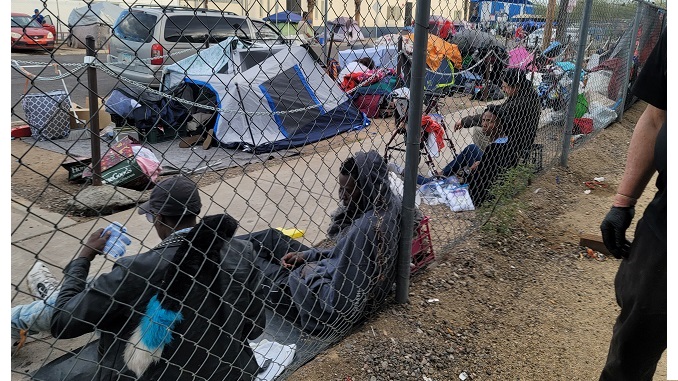
The city of Phoenix sought advice on handling homelessness from another city plagued by the same problem: Portland, Oregon.
City officials attended a “homelessness summit” in May. Officials included Gina Montes, deputy city manager; Rachel Milne, director of the Office of Homeless Solutions (OHS); Scott Hall, deputy director of OHS; Titus Mathew, director of the city’s housing department; Sean Connolly, assistant chief of operations for Phoenix Police Department (PPD); Brian Fruendentahl, commander of PPD; Luke Christian, assistant city attorney.
“Given our issues and the continued increase in unsheltered homelessness, the crime and other complex problems, we have been in touch with other communities to see what we can learn (both from their successes and mistakes),” wrote Montes in an invitation email for the event.
Officials from the cities of Mesa and Glendale were invited on the trip, but it appears from records obtained by AZ Free News that a visit to Portland either didn’t sound appealing or beneficial. In a March email exchange, the city of Mesa’s deputy city manager, Natalie Lewis, asked why Montes and the city of Phoenix felt the need to go to Portland as well as Seattle, Washington — another proposed location for a homelessness summit.
Glendale’s director of community services, Jean Moreno, concurred with Lewis’ remarks.
“Our feedback was the same as Mesa’s — happy to participate but not sure Portland is the right field trip,” wrote Moreno.
Montes responded that Phoenix could learn much from Portland’s mistakes. She revealed that many of the issues facing Phoenix currently were the same as those Portland faced in the past. Meaning: Portland could be Phoenix’s future, if changes aren’t made.
“The reason we are interested in Portland is honestly because a lot of the same issues are happening here that happened there years ago. They made a lot of mistakes that they are paying for now. I’m concerned that our community trajectory is pointing in a similar direction,” wrote Montes. “I understand if Portland is not of interest to others and promise not to be offended!”
The homeless in Portland have taken over residential neighborhoods and public streets, with residents telling reporters that the crime-riddled mass encampments decimated quality of life.
Lewis turned down the invitation, sharing that she may attend a potential future trip to either San Antonio or Houston, Texas, potentially around the same time as this fall’s ICMA Conference in Austin, Texas. Lewis added that the breakup of the mass homeless encampment known as The Zone would likely impact her city.
“Also, I foresee the work to dismantle/relocate will impact Mesa. I am open to having a regional discussion on this (when Phx is ready) so that we are all working to minimize impact of the shift,” wrote Lewis.
Montes issued the proposal to visit either Portland or Seattle on March 29: two days after the Maricopa County Superior Court ordered the city to clean up The Zone.
Estimates of the homeless population in the Portland area hovers around 5,000, based on Multnomah County data. Phoenix’s homeless population sits around 3,000.
AZ Free News asked Montes whether city officials would attend similar summits in other cities who’ve mitigated homelessness in recent years such as Austin, Texas. Montes didn’t respond by press time.
City of Phoenix officials were also joined by officials from the Maricopa Association of Governments (MAG), Maricopa County, and the city of Avondale. MAG representatives were Continuum of Care officials Amy St. Peter, deputy executive director, and Katy Gentry, regional homelessness program manager. Maricopa County officials were Jacqueline Edwards, human services director, and T.J. Reed, homelessness programs manager. City of Avondale representatives were Cherlene Penilla, assistant city manager; Dale Nannenga, chief of the Office of Public Safety; Memo Espinoza, chief of Avondale Police; Manuel Rios, sergeant of Avondale Police; and Brian Planty, homeless services manager.
The cost for the trip, for all 16 officials in attendance, likely totaled around $10,000. (Based on averages of flight, hotel, and per diem costs compiled from MAG travel request forms).
Corinne Murdock is a reporter for AZ Free News. Follow her latest on Twitter, or email tips to corinne@azfreenews.com.