Arizona Congressman Andy Biggs (R-AZ-05), alongside fellow Republican Congressmen Paul Gosar (R-AZ-09) and Eli Crane (R-AZ-02), is urging the U.S. Department of War to explore opportunities to expand domestic copper production on military lands across Arizona.
In an October 19 press release, Biggs announced that the three lawmakers sent a letter dated October 9, 2026, to Secretary of War Pete Hegseth, requesting that the department identify opportunities for copper mining, processing, refining, and recycling on approximately 3.12 million acres of defense land under its management in Arizona.
The lawmakers emphasized Arizona’s position as the nation’s leading copper-producing state, accounting for approximately 70% of all copper mined in the United States.
With its extensive mineral deposits, skilled workforce, established infrastructure, and significant military presence, the state is positioned to play a central role in strengthening domestic mineral supply chains and reducing dependence on foreign sources.
“Arizona has been blessed with an abundance of natural resources that are essential to America’s economic prosperity and national security,” stated Congressman Biggs. “For too long, our country has allowed unnecessary barriers and an overreliance on foreign supply chains to undermine our ability to produce the critical materials our military needs.”
“Arizona already leads in copper production, and we have a tremendous opportunity to build on that strength. We should be looking at every responsible avenue to expand domestic production, unleash American industry, and ensure our military has a reliable supply of the resources necessary to defend our citizens and freedoms,” added Biggs.
I'm urging the Department of War to identify opportunities to expand domestic copper mining, processing, refining, and recycling on the approximately 3.12 million acres of defense land under its management in Arizona.
In their letter, the congressmen highlighted copper’s importance to military readiness, noting its widespread use in electrical systems, communications equipment, munitions, aircraft, naval vessels, and military installations.
The lawmakers also cited three executive orders aimed at strengthening domestic mineral production and national security.
These include Executive Order 14220, which identified copper as essential to national security, Executive Order 14241, which directed efforts to accelerate domestic mineral production, and Executive Order 14415, signed July 20, 2026, which established a policy prioritizing domestic and allied sources for critical materials used by the military.
The letter requests that the Department of War identify suitable military lands in Arizona for copper and other critical mineral development while ensuring that any proposed activities remain consistent with military training, testing, and operational readiness requirements.
Additionally, the lawmakers asked the department to evaluate existing federal authorities, programs, partnerships, and investments that could accelerate domestic mineral production and processing, while identifying potential legislative changes Congress could consider.
Biggs, Gosar, and Crane also requested a briefing within 90 days outlining potential development sites, available resources, and any outstanding infrastructure or permitting requirements.
“Arizona has the resources, workforce, infrastructure, and military presence to play a central role in securing America’s copper supply,” the lawmakers wrote. “We urge the Department to put these assets to work.”
The congressmen argued that expanding domestic copper production and processing would strengthen the nation’s defense supply chain, create opportunities for American workers, and reduce reliance on foreign mineral suppliers.
Ethan Faverino is a reporter for AZ Free News. You can send him news tips using this link.
The National Federation of Independent Business (NFIB) announced its endorsement of six Arizona congressional candidates ahead of the November general election, citing their positions on policies affecting small businesses and economic growth.
The endorsements include two Republican candidates seeking seats in the U.S. House of Representatives and four incumbent Republican congressmen seeking reelection.
The organization endorsed:
Jay Feely (AZ-01)
Eli Crane (AZ-02)
Mark Lamb (AZ-05)
Juan Ciscomani (AZ-06)
Abe Hamadeh (AZ-08)
Paul Gosar (AZ-09)
“Arizona small businesses are the foundation of our state’s economy,” stated NFIB Arizona State Director Chad Heinrich. “The candidates we have endorsed have a deep understanding of the small business landscape and will be reliable pro-Main Street voices in Congress. We are eager to work with them to ensure that Arizona small businesses can continue to effectively operate and create jobs.”
The NFIB regularly participates in federal and state policy debates involving taxation, government regulations, labor requirements, and other issues affecting business owners.
The organization said its endorsements reflect its assessment of the candidates’ commitment to advancing policies that support small businesses.
The endorsements were issued through NFIB FedPAC, the organization’s political action committee, which is funded through voluntary contributions from NFIB members beyond their membership dues. According to NFIB, endorsement decisions are made through a member-driven grassroots evaluation process.
“We are proud to endorse a slate of candidates who have demonstrated a steadfast commitment to advancing the interests of Arizona small businesses,” stated Louis Bertolotti, NFIB Political Director. “Small business owners deserve representatives who understand the issues that matter to them and will consistently advocate for policies that promote economic growth. We look forward to working with these pro-small business leaders in Washington.”
The congressional endorsements came the same day the NFIB’s Arizona political action committee announced its support for 52 candidates seeking state offices, reflecting the organization’s involvement in both state and federal elections ahead of November.
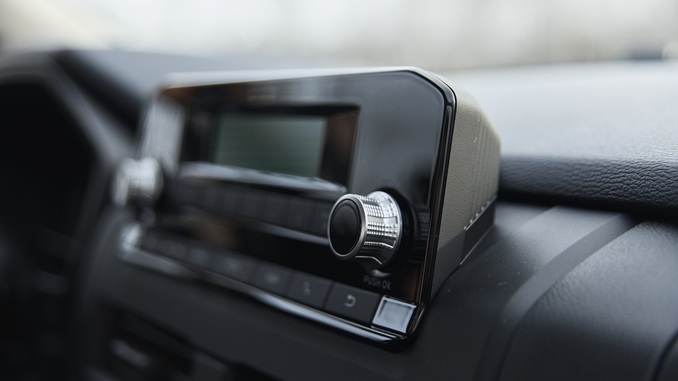
The U.S. House approved legislation Tuesday that would require automakers to provide access to AM broadcast radio as standard equipment in new passenger vehicles sold in the United States.
The AM Radio for Every Vehicle Act of 2025, introduced by Rep. Gus Bilirakis (R-FL), passed Sept. 15 by voice vote under suspension of the rules. The procedure produced no recorded tally identifying how individual House members voted.
Arizona Reps. Eli Crane (R-AZ-02), Greg Stanton (D-AZ-04), Abe Hamadeh (R-AZ-08), and Paul Gosar (R-AZ-09) are among the bill’s cosponsors. The congressional record also lists the late Rep. Raúl Grijalva (D-AZ-07), who died on March 13, 2025, as a cosponsor.
Crane called the voice vote unanimous in a post on X.
“Last night, the House passed the AM Radio for Every Vehicle Act in a unanimous vote,” Crane wrote. “This legislation protects a vital source Arizonans rely on for emergency information, weather updates, and news. Proud to support this measure.”
Last night, the House passed the AM Radio for Every Vehicle Act in a unanimous vote.
This legislation protects a vital source Arizonans rely on for emergency information, weather updates, and news.
Under the House-approved text, the Department of Transportation would have one year after enactment to issue a rule requiring new passenger vehicles to include equipment capable of receiving and playing broadcasts from analog or qualifying digital AM stations.
The requirement would cover vehicles manufactured domestically for sale in the United States, imported into the country, or shipped through interstate commerce. The AM function would have to be installed as standard equipment, accessible to drivers, and provided without an additional fee or surcharge.
The legislation defines passenger vehicles as those designed primarily to carry a driver and no more than 12 passengers. Motorcycles are excluded.
The Transportation Department would generally have up to two years after issuing the regulation to make it effective. Manufacturers that produced no more than 40,000 passenger vehicles for the U.S. market in 2022 would receive at least four years to comply.
During the period before the regulation takes effect, manufacturers selling vehicles without AM reception would be required to provide clear labeling notifying buyers. They also could not charge buyers an additional fee to access AM programming.
Supporters have cited AM radio’s role in delivering emergency information when power, cellular networks, or internet services are unavailable. House Speaker Mike Johnson said local communities depend on the technology during natural disasters.
“When disaster strikes—especially in hurricane and tornado-prone states like Louisiana—local communities rely on AM radio to deliver accurate, up-to-date information and critical safety alerts,” Johnson said.
The Federal Emergency Management Agency’s National Public Warning System consists of broadcast stations equipped with backup communications equipment and generators intended to keep them operating during and after disasters. FEMA says the system can directly reach more than 90 percent of the country’s population. The agency lists KDRI 830 AM in Tucson as Arizona’s Primary Entry Point station.
The bill would require the Government Accountability Office (GAO) to study AM radio’s role in the Integrated Public Alert and Warning System and compare its resilience, accessibility, and effectiveness with other emergency communications technologies. The Transportation Department would also be required to examine possible effects on vehicle safety and automated-driving systems before issuing its regulation.
The Transportation Department, in coordination with FEMA and the FCC, would also be required to report to Congress at least once every five years on whether AM radio remains useful for emergency alerts and whether alternative communications systems could provide comparable coverage.
The Congressional Budget Office (CBO) estimated that implementing the legislation would cost the Transportation Department and GAO approximately $1 million from 2026 through 2031. The CBO said the requirement would principally affect manufacturers of electric vehicles that have removed AM equipment or announced plans to do so.
The CBO also estimated that manufacturers would need to update equipment in approximately 2 million to 2.5 million vehicles annually. The agency projected that the private sector mandate would cost several million dollars per year, remaining below the $214 million threshold used to evaluate private sector mandates in 2026.
The Alliance for Automotive Innovation, a trade association representing major automakers, has opposed the mandate, citing interference between AM signals and electric vehicle propulsion systems. The organization cited a Center for Automotive Research estimate placing the potential industry cost at $3.8 billion over seven years.
The House legislation now moves to the Senate, where Massachusetts Democratic Sen. Ed Markey and Texas Republican Sen. Ted Cruz introduced a companion measure, S. 315. The Senate Commerce, Science and Transportation Committee approved that bill in February 2025, and it was placed on the Senate legislative calendar in April.
When severe weather strikes and the power goes out, Texans need communications they can count on.
AM radio remains a critical lifeline for emergency alerts, local news, weather updates, and other vital information.
The Senate bill currently has 60 cosponsors—37 Republicans, 21 Democrats, and two independents. Arizona Sens. Mark Kelly and Ruben Gallego are not listed among its cosponsors. The Senate has not held a floor vote on either the companion legislation or the House-approved bill.
The U.S. House of Representatives passed Kayleigh’s Law in late August, introduced in April by Rep. Abe Hamadeh (R-AZ-08). The Senate Judiciary Committee has not yet scheduled action on the measure.
H.R. 8481, the Kayleigh’s Law Act of 2026, passed the House by voice vote on Aug. 31; no individual vote tally was recorded. Reps. Andy Biggs (R-AZ-05), Eli Crane (R-AZ-02), Paul Gosar (R-AZ-09), Juan Ciscomani (R-AZ-06), and David Schweikert (R-AZ-01) were original cosponsors.
🇺🇸WATCH🇺🇸
"Mr. Speaker, I rise today as a former prosecutor and as an Arizonan who has seen what happens when the system prioritizes a criminal over the victim."
Congressman Hamadeh takes the House floor to champion his bill, H.R. 8481, the Kayleigh’s Law Act of 2026. pic.twitter.com/Yq4fy8PuHH
— Office of Congressman Abe Hamadeh (@RepAbeHamadeh) August 31, 2026
The Senate companion, S. 5372, was introduced Aug. 7 by Sen. Mike Lee (R-UT) and referred to the Senate Judiciary Committee. No hearing or markup date has been posted.
The bill is named for Kayleigh Kozak, an Arizona mother of five who was sexually abused as a child by her soccer coach. In 2020, 13 years after the offender’s conviction, Kozak was brought back to court when her attacker sought to end his lifetime probation.
🇺🇸WATCH🇺🇸
Congressman Hamadeh promised @kayleigh_kozak that if he got to Congress, he would pass federal Kayleigh’s Law, the lifetime no-contact protection Arizona enacted in her honor.
He introduced it. He pushed it. Yesterday, he brought Kayleigh and her family to the… pic.twitter.com/xYjFyGiQt6
— Office of Congressman Abe Hamadeh (@RepAbeHamadeh) September 1, 2026
Arizona enacted its state version of Kayleigh’s Law through Senate Bill 1653 in 2022. The federal bill would require a court at sentencing to issue a lifetime no-contact order when a victim—or the government with the victim’s consent—requests one following a conviction for a qualifying federal violent felony or sex offense. The order could be suspended or terminated only under limited circumstances specified in the bill. Victims could not be charged a fee for its issuance.
Lee said in August that victims “often have to face their abusers in court over and over again.” Kozak said the harm caused by sexual assault is lifelong and its protections should be as well.
Like too many other abuse victims, @kayleigh_kozak was forced to repeatedly face the soccer coach who assaulted her as a child, just to get courts to keep him away.
Victims deserve protection, not more fear for their safety.
Hamadeh called the House vote “promise made, promise kept.”
In a post on X, Biggs wrote, “The U.S. House did its job to protect victims of certain violent crimes in passing Kayleigh’s Law this week. Now, the U.S. Senate must act before the clock runs out on us in January. We cannot fail these victims. We must send Kayleigh’s Law to the President’s desk.”
The U.S. House did its job to protect victims of certain violent crimes in passing Kayleigh’s Law this week.
Now, the U.S. Senate must act before the clock runs out on us in January.
We cannot fail these victims. We must send Kayleigh's Law to the President's desk.
In a post quoting Biggs, Lee wrote, “Proud to have introduced Kayleigh’s Law in the Senate. Victims should not suffer years of unwanted contact with their abusers. And @RepAndyBiggsAZ is right: as with a large number of important House bills, we need to stop sitting around and PASS IT to President Trump’s desk!”
Proud to have introduced Kayleigh’s Law in the Senate. Victims should not suffer years of unwanted contact with their abusers.
And @RepAndyBiggsAZ is right: as with a large number of important House bills, we need to stop sitting around and PASS IT to President Trump’s desk! https://t.co/mRum5DDMgN
Legislation that does not become law before the 119th Congress ends in January would have to be introduced again in the next Congress.
AZ Free News contacted Lee’s office seeking a timeline for Senate Judiciary Committee consideration. No response was received by the time of publication.
Republicans hold the majority on the Judiciary Committee, which is chaired by Sen. Chuck Grassley (R-IA). The House passed the measure without recorded opposition. Its next potential steps include a committee hearing or markup on S. 5372, or Senate consideration of the House-passed bill.
Until the Senate acts, the Arizona-born proposal remains legislation and has not reached the president.
Congressman Paul Gosar’s campaign announced Monday that the National Rifle Association Political Victory Fund (NRA-PVF) has endorsed his reelection bid and awarded him an “A” rating ahead of the November general election.
Gosar, a Republican representing Arizona’s Ninth Congressional District, faces Democrat Danielle “Dani” Sterbinsky following the state’s July 21 primary election.
The NRA just endorsed my campaign and gave me an A rating.
I have never wavered on the Second Amendment. Our right to keep and bear arms is not negotiable, and I have voted that way every single time.
“I have never wavered on the Second Amendment,” Gosar said. “Our right to keep and bear arms is not negotiable, and I have voted that way every single time. I am grateful to have the NRA standing with me.”
The NRA-PVF evaluates candidates based on their voting records, public statements, and responses to its candidate questionnaire. Its grading system defines an “A” candidate as someone who has supported NRA positions on key votes or demonstrated support for Second Amendment issues.
Gosar’s campaign said he has maintained a career “A” rating from the organization. His congressional office also listed a career “A” rating from the NRA among its career ratings as of Jan. 1, 2024. His campaign platform states his opposition to a national gun registry and other legislation he considers an infringement on gun rights.
Federal Election Commission (FEC) summaries covering campaign activity through July 1 show Gosar held a cash advantage over Sterbinsky. Gosar’s campaign reported $303,213.70 in cash on hand, while Sterbinsky’s campaign reported $25,744.84. The FEC summaries list $580,042.50 in total receipts for Gosar from Jan. 1, 2025, through July 1, 2026, and $354,382.57 for Sterbinsky from July 1, 2025, through July 1, 2026.
The Ninth District includes communities in Mohave, La Paz, Maricopa, and Yuma counties, encompassing portions of western Arizona and the Phoenix metropolitan area’s West Valley.
Gosar was first elected to Congress in 2010 after working as a dentist. His campaign’s stated priorities include federal spending cuts, a balanced budget amendment, border security, domestic energy development, and lower taxes.
Sterbinsky’s campaign website identifies her as a Navy veteran and human resources professional living in Wittmann. Her platform includes housing affordability, reducing health care and prescription drug costs, and expanding rural infrastructure, including broadband access.
Arizona’s general election is scheduled for Nov. 3. The voter registration deadline is Oct. 5.