Rep. Andy Biggs (AZ-05), Republican gubernatorial candidate, is leading Arizona’s congressmembers in a bipartisan petition to House leadership to include emergency funding for Colorado River Basin infrastructure.
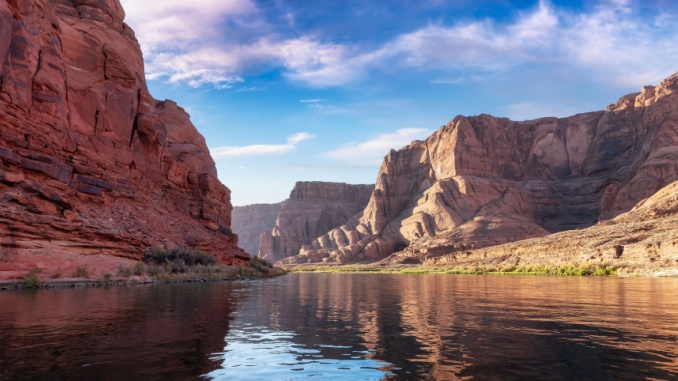
The Colorado River serves as a critical water supply for Arizona and the six other basin states. 36% of the state’s supply comes from the river. Put another way, the river supplies drinking water for one in 10 Americans.
Additionally, around 2.5 million individuals across the Western states rely on the river for power.
The river has reached historically low water levels due to prolonged drought and increasing aridity. These levels haven’t been seen on the river since the late 1950s.
The letter requested emergency funding to provide for infrastructure investments, upgrades, and long-term planning, noting that the present average flow measurements on the river amount to 20% less of what they were in the 20th century.
Democratic Reps. Yassamin Ansari (AZ-03), Adelita Grijalva (AZ-07), and Greg Stanton (AZ-04) joined the letter alongside Republican Reps. Eli Crane (AZ-02), Abe Hamadeh (AZ-08), and Paul Gosar (AZ-09).
The letter argued that the river’s decline represented a national security threat worthy of emergency funding, citing its critical function as more than a water and energy source for individuals but also as a source for the national security industry. California and Arizona are consistently among the top 10 states for defense spending, and Colorado is in the top 20.
“In addition to helping meet basic needs of communities out West by supplying drinking water, serving as a power source, supporting municipal services, and helping put food on the table, the Colorado River and its related parks, forests, and recreation areas also contribute over $26 billion to the outdoor recreation economy each year,” said the letter. “In addition, the River supports critical national security industries that have taken root in the West, including in the advanced manufacturing, aerospace, and defense sectors.”
The letter also documented congressional precedent for the proposed emergency funding. In 2022, Congress issued $4 billion for drought mitigation with priority given to Arizona and the other basin states. According to the congressmembers, this cash infusion did mitigate the water crisis.
By comparison, congressional funding sits currently at less than $100 million for the river.
“We have no doubt that without this vital funding source, the water crisis today facing our communities would be much worse,” stated the letter. “Funding is urgently needed to limit the pain that could be felt by communities across the basin in the near term and may smooth the path forward for post-2026 operating agreements.”
Biggs said in a statement that bipartisanship was a need because the river represents a crisis far bigger than either party.
“For desert dwellers, nothing is more important than protecting and cultivating our water resources,” said Biggs. “The Colorado River situation is not just an issue for Arizona and the West; it’s an issue that affects the entire country because of the national industries that depend on this water source. I hope that House leadership and appropriators will heed our request and include the necessary funding to prevent this crisis from getting worse and needlessly harming vulnerable Americans.”
AZ Free News is your #1 source for Arizona news and politics. You can send us news tips using this link.
Rep. Paul Gosar’s reelection campaign reported more than $303,000 in cash on hand, giving the Republican incumbent a substantial financial advantage over Democratic challenger Danielle Sterbinsky ahead of Arizona’s 2026 congressional election.
Gosar for Congress reported $303,213.70 in available campaign funds through July 1, according to newly filed Federal Election Commission (FEC) data. Sterbinsky’s campaign reported $25,744.84 over the same election cycle, leaving Gosar with approximately $277,469 more in reserve.
Gosar’s campaign described the financial advantage as evidence of support for the congressman’s positions on border security, inflation, federal spending, and other issues.
We’re in a very strong position!
My campaign has $303,000 cash on hand compared to my opponent’s weak $25,744.
“Voters are clearly behind our movement,” Gosar said in the campaign announcement. “This financial lead puts us in a dominant position heading into the general election.”
The FEC figures show Gosar’s campaign has collected $580,042.50 in total receipts since the beginning of the 2025-2026 election cycle. That includes approximately $490,056 in individual contributions and $85,000 from other political committees.
The Gosar campaign reported spending $368,425.78 during the cycle and listed $6,958.18 in outstanding debts or obligations. The campaign began the cycle with approximately $91,597 in cash on hand, according to the FEC financial summary.
Sterbinsky’s campaign reported receiving $354,382.57 and spending $332,315.71 since July 2025. Her committee reported no outstanding debts or loans in its latest FEC summary.
The filings give Gosar an advantage in both total receipts and remaining cash, although the difference between the campaigns’ available funds is considerably larger than the gap between their total fundraising.
President Donald Trump offered his endorsement of the congressman on Truth Social in late 2025, ahead of an unopposed 2026 primary.
In full, President Trump wrote:
“Congressman Paul Gosar, D.D.S., is an America First Patriot, who is doing a fantastic job representing Arizona’s 9th Congressional District!
A MAGA Warrior, who has been with us from the very beginning, Paul is working hard to Grow our Economy, Cut Taxes and Regulations, Promote MADE IN THE U.S.A., Advance American Energy DOMINANCE, Keep our now very Secure Border, SECURE, Support our Brave Military/Veterans, and Protect our always under siege Second Amendment.
Dr. Paul Gosar has my Complete and Total Endorsement for Re-Election — HE WILL NEVER LET YOU DOWN!”
Gosar was first elected to Congress in 2010 after working as a dentist for 25 years. He currently represents the Ninth Congressional District, which covers portions of western Arizona, including communities in Maricopa, Mohave, La Paz, and Yuma counties.
According to his congressional biography, Gosar entered Congress without previously holding elected office and has made limited government, immigration enforcement, natural resources, and federal spending central issues during his tenure.
President Donald Trump has issued a select number of endorsements in Arizona races for the 2026 election.
The latest endorsements went to Rep. Juan Ciscomani to retain his seat in the 6th Congressional District, Rep. Paul Gosar to retain his seat in the 9th Congressional District, and Mark Lamb, former sheriff of Pinal County, for the seat opened by departing Rep. Andy Biggs in the 5th Congressional District.
Neither Ciscomani nor Gosar have opponents in their primaries. Lamb faces off against Daniel Keenan, a construction company owner, in the primary.
Trump’s endorsement bundle on Friday referred to Gosar and Lamb as “MAGA warrior[s],” and Ciscomani as “a tremendous champion.”
All three men, Trump promised, were capable of improving border security, stopping migrant crime, strengthening the military, bolstering economic growth, cutting taxes and regulations, boosting domestic manufacturing and energy, supporting law enforcement, and protecting Second Amendment rights.
Ciscomani will likely face off against Democratic candidate Joanna Mendoza.
I’ve stood with President Trump from Day 1 and I’ve never wavered, not once.
I’m honored to have President Trump’s “COMPLETE & TOTAL” endorsement for Governor of our great state of Arizona! 🇺🇸 pic.twitter.com/gGootCd6kV
Here are the other endorsements for Arizona candidates made by Trump so far:
Thomas “Jay” Feely, former NFL kicker, for the seat opened by departing Rep. David Schweikert in the 1st Congressional District. Feely faces off against former State Rep. Joseph Chaplik and technology consultant John Trobough in the Republican primary.
I’ve stood with President Trump from Day 1 and I’ve never wavered, not once.
I’m honored to have President Trump’s “COMPLETE & TOTAL” endorsement for Governor of our great state of Arizona! 🇺🇸 pic.twitter.com/gGootCd6kV
Rep. Abe Hamadeh received Trump’s endorsement to retain his seat in the 8th Congressional District. Hamadeh has no opponents in the primary.
Happy birthday, Mr. President!
My first endorsement from President Trump came on his birthday, June 14, 2022. Even on his birthday he was giving to others. I will never forget that phone call. Thank you for trusting me to be in this battle alongside you to save our country! pic.twitter.com/K1YetQTTGp
Andy Biggs received Trump’s endorsement for the governor’s seat held by incumbent Democratic Gov. Katie Hobbs. Biggs has three other opponents: Schweikert and two businessmen, Scott Neely and Ken Miceli.
I’ve stood with President Trump from Day 1 and I’ve never wavered, not once.
I’m honored to have President Trump’s “COMPLETE & TOTAL” endorsement for Governor of our great state of Arizona! 🇺🇸 pic.twitter.com/gGootCd6kV
Other races have indicated some weigh-in from Trump, but no outright endorsements.
In the attorney general’s race, Trump reposted a county supervisor’s endorsement of Republican primary candidate Rodney Glassman sans commentary last month. Glassman is up against State Senate President Warren Petersen to determine who will face off against the Democratic incumbent, Attorney General Kris Mayes.
But in April, Trump gave Petersen a shout-out at the Turning Point Action (TPA) “Build the Red Wall” event. Trump said Petersen would “help achieve [the] victory” of expanding the “red wall” — the Republican majority.
Trump made a similar post in recent weeks in the secretary of state’s race. The president also reposted a picture sans commentary of another organization’s endorsement of Republican primary candidate Gina Swoboda, former chair of the Arizona Republican Party.
Swoboda took the repost as an outright endorsement, though the other Republican primary candidate in the race, State Rep. Alexander Kolodin, disputed that characterization. Kolodin was also given a shoutout at the TPA event in April.
AZ Free News is your #1 source for Arizona news and politics. You can send us news tips using this link.
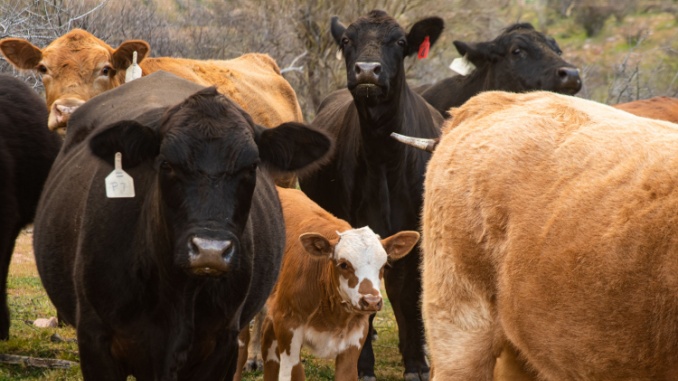
Ranchers in Arizona and across the nation secured a step toward a potentially major grazing rights victory from the federal government following the intervention of a coalition of Arizona’s Republican congressmen.
Republican Reps. Andy Biggs (AZ-05), Juan Ciscomani (AZ-06), Eli Crane (AZ-02), and Paul Gosar (AZ-09) successfully petitioned the Department of the Interior (DOI) to issue a newly proposed grazing rule that purports to give ranchers greater flexibility and security for their work.
Biggs offered his support for this proposed rule, announced by the DOI on Monday. Biggs promised to Arizonans in a press release that the rule would prioritize American ranchers and food security.
“Under the previous administration, cattle ranchers were forced to reduce their herd counts because of federal mandates and orders cutting public grazing land use. This administration knows how critical it is to protect our great ranchers and allow these families to provide abundant food to the American people.”
DOI Secretary Doug Burgum issued a similar commitment to ranchers about the impact of the rule.
“For too long, ranchers and land managers have been forced to work under outdated rules that do not match today’s challenges,” said Burgum. “President Trump has made it clear that we must cut red tape, support the people who feed our nation and ensure our public lands remain healthy for future generations. These updates will help us do exactly that.”
The proposed rule promises to streamline grazing administration and expand rangeland health standards. As part of this approach, the Bureau of Land Management was directed to update definitions, simplify processes, and clarify regulatory language.
Last December, Biggs sent a letter requesting actionable support on expanding and rebuilding American cattle to Burgum, Department of Agriculture (USDA) Secretary Brooke Rollins, Forest Service Chief Tim Schultz, and Fish and Wildlife Service Director Brian Nesvik.
Ciscomani, Crane, and Gosar signed onto Biggs’ letter, which asked the agency heads to resist influencing from “extreme environmental causes.” Certain environmental advocates — most in progressive circles — believe cattle grazing to be environmentally devastating.
“Ranchers are not the problem. They are the solution,” said Biggs. “Yet outdated regulations and false claims continue to punish them, while predators such as the Mexican wolf devastate herds under the shield of a misapplied endangered species designation.”
Biggs claimed that he’d received reports of cattle ranchers forced to reduce herd counts due to government mandates and orders impacting the use of public grazing lands, and asked the agencies to review their processes, rules, and regulations for adverse impacts on American ranchers.
“At a time when rebuilding the domestic cattle herd is vital to our food security and rural livelihoods, these mandates are unacceptable,” wrote Biggs.
U.S. cattle operations have been on the decline for nearly a decade despite increased demand — the lowest in over 70 years. USDA reporting from last year reflected that cattle operations dropped by 17% while demand grew by 10%.
Biggs echoed the sentiments of blame regularly expressed by the average American rancher: increasing pressures from bureaucratic red tape magnifying other issues like the rising costs of supplies, namely feed, and environmental pressures, namely drought.
The DOI will continue to gather public input for the proposed rule affecting grazing management on public lands until July 13. The BLM is scheduled to host a virtual information session about the proposed rule on June 11 from 5 to 7 p.m. MT.
AZ Free News is your #1 source for Arizona news and politics. You can send us news tips using this link.
Congressman Abraham Hamadeh (R-AZ-08) introduced Kayleigh’s Law, a landmark federal legislation designed to provide survivors of dangerous crimes with permanent, lifelong protection from their convicted abusers by requiring courts to issue no-contact injunctions that remain in effect for the rest of the offender’s life.
Named after Kayleigh Kozak, an Arizona mother and prominent victim advocate who was sexually abused as a child by her teacher, the bill aims to end the repeated “legal tug-of-war” that forces survivors to return to court multiple times to maintain basic safety protections against their predators.
Kayleigh’s Law would mandate that federal courts impose lifetime no-contact injunctions against individuals convicted of federal sex crimes and violent felonies when requested by the victim or the government at sentencing.
The legislation builds directly on successful state-level reforms. Kayleigh’s Law has been enacted in Arizona and Wisconsin since 2022, where it has provided critical relief to survivors. In its first year alone in Arizona, the law enabled over 1,000 victims to secure lifetime protective orders against their abusers.
“As a former prosecutor, I know how vulnerable victims can be, how determined their predators often are, and how judges can frequently fail victims of crime. That is why we must require federal courts to impose these lifetime injunctions when requested by the government or the victim during sentencing,” stated Congressman Hamadeh. “I have seen what victims go through as the predator’s adjudication process plays out, and I know how important it is for the victim’s healing process to begin. That process cannot be interrupted by their predators simply because our courts fail to take crime seriously and fail to impose lifetime injunctions.”
Kayleigh Kozak, whose personal experience drove the creation of the original state law, emphasized the lifelong impact of sexual violence.
“The harm caused by sexual assault is not temporary. It is lifelong,” stated Kayleigh. “The protections for those who have been sexually violated should be lifelong too. No survivor should have to repeatedly return to court just to request the continuation of a protective order from the person who was convicted of sexually violating them. Kayleigh’s Law ensures no victim ever has to endure the nightmare of continuously justifying their need for safety. When I was a little girl, I could not protect myself from the teacher who sexually abused me at school – but I can fight now to protect myself, other innocent children, and every victim.”
Under the federal proposal, the lifetime injunction would prohibit all forms of direct or indirect contact with the victim and would remain enforceable even after the offender completes prison, probation, or supervised release.
Original cosponsors of Kayleigh’s Law include Representatives Brian Babin (TX-36), Andy Biggs (AZ-05), Tim Burchett (TN-02), Juan Ciscomani (AZ-06), Eli Crane (AZ-02), Troy Downing (MT-02), Mike Ezell (MS-04), Brandon Gill (TX-26), Paul Gosar (AZ-09), David Joyce (OH-14), Nancy Mace (SC-01), Dan Meuser (PA-09), Barry Moore (AL-01), Gary Palmer (AL-06), Chris Smith (NJ-04), David Schweikert (AZ-01), Greg Steube (FL-17), Marlin Stutzman (IN-03), David Taylor (OH-02), and Delegate Kimberly King-Hinds (MP).
Congressman Juan Ciscomani (AZ-06) stated, “Kayleigh’s Law originated in Arizona and will uplift thousands of victims of unspeakable crimes. I’m proud to join my colleagues in supporting this commonsense legislation to ensure victims of dangerous crimes can obtain lifetime protections against their abusers. Survivors should not be faced with uncertainty about those who have harmed them. Kayleigh’s Law will close critical gaps in federal law by strengthening protections, enhancing enforcement, and ensuring lasting safety for victims.”
Congressman Marlin Stutzman (IN-03) added, “Victims of violent crime and sexual assault deserve to have permanent, basic safety protections without having to repeatedly face their attacker in court. The emotional and psychological toll of these legal proceedings is high. Kayleigh’s Law gives victims one less thing to worry about by removing the fear and dread of reliving these experiences. I am proud to cosponsor Congressman Hamadeh’s bill to ensure these criminals hold no power over their victims.”
The bill mirrors key elements of Arizona Statute (A.R.S. 13-719), which applies to dangerous offenses, serious/violent felonies, and specific sex offenses under Chapters 14 and 35.1. Injunctions issued under the law are effective immediately upon sentencing and do not expire for the predator’s natural lifetime.
Kayleigh’s Law is being introduced during Sexual Assault Awareness Month, underscoring its focus on empowering survivors and closing critical gaps in federal protections for victims of sexual assault and violent crimes.
Ethan Faverino is a reporter for AZ Free News. You can send him news tips using this link.