by Matthew Holloway | Nov 24, 2025 | News
By Matthew Holloway |
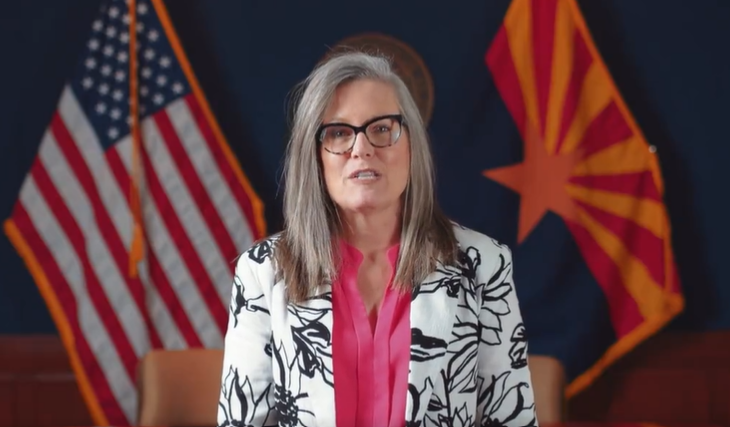
Congressman Andy Biggs has called out Arizona Gov. Katie Hobbs for “blatant hypocrisy” after she publicly pitched the benefits of the federal Working Families Tax Cut, a policy she previously denounced as a “betrayal.”
In a statement released Thursday, Biggs said Hobbs is “shamelessly” attempting to attach herself to a Republican-driven tax package that she vocally opposed earlier this year.
“After calling the Working Families Tax Cut a ‘betrayal,’ Katie Hobbs now shamelessly wants to take credit for the tax cuts passed by President Trump and Congressional Republicans,” Biggs said. The congressman provided links to her July comments to Fox10 in which the Governor stated:
“This bill is a betrayal of working families, children, and seniors in Arizona who will lose their healthcare, their ability to put food on the table, and good-paying jobs, all to give tax cuts to the people who are already billionaires while ballooning our national debt by $3.4 trillion.”
Biggs argued that despite Hobbs’ prior opposition, Republicans “successfully delivered tax relief to working-class Arizonans and seniors who are being hurt by the rising energy costs of Hobbs’ progressive, green energy agenda.”
On X, Biggs highlighted Hobbs’ recent promotion of her own “Middle Class Tax Cuts Package,” which includes bigger deductions, tax relief for seniors, and exemptions on taxes for tips, overtime, and new car loan interest.
Hobbs, who recently launched her 2026 reelection bid, has highlighted the tax cut in campaign messaging and controversially billed her events as “Arizona First” rallies, as noted by Capitol Media. Biggs asserted that the move reflects political weakness within her own party.
“Even her fellow Democrats are calling her ‘weak’ because they know the truth just like Arizonans do: Katie Hobbs has failed our state, and now she’s trying to cover it up by taking credit for Republican victories,” he said citing an op-ed from AZ Mirror.
The Working Families Tax Cut, a component of the “One Big Beautiful Bill” championed by President Donald Trump, Biggs, and other House Republicans, expanded credits for lower- and middle-income households and included relief provisions for seniors. Hobbs criticized the measure during negotiations, calling it fiscally irresponsible and siding with Democrats who argued it favored Republican priorities.
Matthew Holloway is a senior reporter for AZ Free News. Follow him on X for his latest stories, or email tips to Matthew@azfreenews.com.
by Matthew Holloway | Nov 8, 2025 | News
By Matthew Holloway |
Policy experts are pushing back on Democratic attack ads against Rep. Juan Ciscomani (R-AZ06) and other Republicans, saying the One Big Beautiful Bill Act’s (OBBB) Medicaid reforms target fraud and waste—not vulnerable populations.
The ads, funded by the dark-money group Unrig Our Economy, are linked to the George Soros-backed Sixteen Thirty Fund via Arabella Advisors, according to Influence Watch. They feature individuals with disabilities like cerebral palsy, autism, and Down syndrome, accusing legislators, including Ciscomani, of supporting “cuts to Medicaid to pay for tax breaks for billionaires.” The ads target GOP Reps. Mike Lawler (R-NY), Mariannette Miller-Meeks (R-IA), and Thomas Kean Jr. (R-NJ), in addition to Ciscomani, and insinuate that the subjects would lose benefits under the Trump-backed OBBB.
A report from the Economic Policy Innovation Center (EPIC), titled “The Truth Behind the Medicaid Cuts Myth,” counters that Medicaid spending is projected to grow by nearly $189 billion over the next decade, an increase of more than 30% of the current allocation, without reducing benefits for low-income children, individuals with disabilities, or working recipients.
“The reforms in the OBBB do not target low-income children, individuals with a disability, or those who can work and choose to do so,” EPIC stated in the report.
“As usual, all the Democrats have is lies. Representative Juan Ciscomani voted to protect care for Arizona’s most vulnerable, and no amount of spin can change the facts,” National Republican Congressional Committee (NRCC) Spokesperson Ben Petersen said in a statement.
The OBBB introduces work requirements for able-bodied adults, enhanced eligibility verification to cut improper payments (which surged to 21.7% in FY 2020 post-COVID, per CMS data but have since declined to 5.09% in FY 2024), and exemptions for parents of children under 14, disabled veterans, the blind or physically disabled, those with mental or developmental issues, clinically addicted individuals, and those with severe medical conditions.
EPIC and other analysts point to state 1115 demonstrations that have included work and employment elements; evaluations of such waivers show mixed employment impacts and mixed effects on utilization, varying by state and program design.
In Arizona, Ciscomani’s district faces heightened scrutiny amid a state budget shortfall. Arizona budget analysts and JLBC staff warn of material budget pressure heading into FY2026–27; JLBC’s state-impact memos estimate a $363 million reduction in Arizona total-fund Medicaid spending stemming from federal reconciliation provisions, according to the Arizona Joint Legislative Budget Committee.
EPIC is advocating “smart waivers” to prioritize the disabled and families. For Arizona’s fiscal details, see JLBC’s full report.
Matthew Holloway is a senior reporter for AZ Free News. Follow him on X for his latest stories, or email tips to Matthew@azfreenews.com.
by Jonathan Eberle | Sep 13, 2025 | News
By Jonathan Eberle |
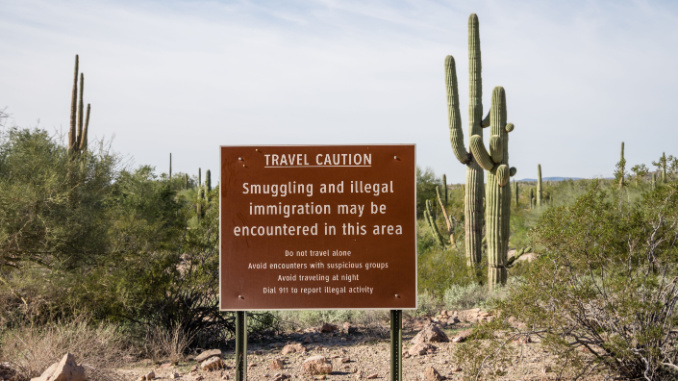
Arizona’s top Republican lawmakers are asking the Trump administration to reimburse the state for more than $700 million spent on border security initiatives over the past several years.
Senate President Warren Petersen and House Speaker Steve Montenegro sent a letter this week to U.S. Secretary of Homeland Security Kristi Noem, requesting repayment under the recently passed One Big Beautiful Bill, which provides $10 billion for states to recover border-related expenses incurred during the Biden administration.
According to the letter, Arizona appropriated $599 million in 2021 and 2022 through the Border Security Fund, in addition to $145 million over five years for law enforcement and other enforcement efforts tied to the southern border. The funds were used to support sheriffs, the Department of Public Safety, and construction tied to border barriers.
“For four years, the Biden Administration failed to defend our border, leaving Arizona to shoulder the burden,” Petersen said in a statement. He argued that the investments made by the Legislature were necessary to protect residents and that taxpayers deserve reimbursement.
Earlier this year, Petersen joined a group of attorneys general on a border tour reviewing state and federal enforcement operations. He praised former President Donald Trump’s policies, calling them effective in reducing illegal crossings without additional legislation.
Montenegro also underscored the legislature’s commitment to border security, contrasting it with the approach taken by Democratic Gov. Katie Hobbs. He pointed to the voter-approved Secure the Border Act as evidence of public support for stricter enforcement.
“Arizona voters made their voices clear when they overwhelmingly passed the Secure the Border Act that Democrats tried to block,” Montenegro said. “Thanks to President Trump and his administration, Washington is finally treating border security as a priority again, and Arizona taxpayers deserve to be reimbursed.”
If the state receives federal funds, legislative leaders said the money will be directed into Arizona’s General Fund and overseen by the legislature to ensure proper use.
Jonathan Eberle is a reporter for AZ Free News. You can send him news tips using this link.
by AZ Free Enterprise Club | Sep 10, 2025 | Opinion
By the Arizona Free Enterprise Club |
It was Biden’s biggest “accomplishment.” The so-called Inflation Reduction Act, which he later admitted had nothing to do with inflation (it actually did, just not in the direction the name suggested) but was really about dumping billions (really trillions) into subsidizing the green new scam. It was the biggest acceleration towards the “Net Zero” climate scam resulting in utilities across the country, especially here in Arizona, spamming the grid with unreliable energy generation such as solar, wind, and battery storage, driving up rates for utility customers while shattering reliability.
And President Trump promised on the campaign trail that he would terminate it on day one, instead committing to unleash American energy dominance, “drill, baby, drill”, and slash harmful regulations standing in the way of building affordable baseload generation. The recently passed “One Big Beautiful Bill” was the avenue to do the first.
What finally made it through Congress and was signed into law on July 4th terminated tax credits for electric vehicles, “energy efficient” home improvements, and residential solar this year. As for the much larger credits, those subsidizing grid scale solar and wind farms, it’s much more complicated.
>>> CONTINUE READING >>>
by Ethan Faverino | Aug 28, 2025 | News
By Ethan Faverino |
Through the One Big Beautiful Bill Act, the U.S. House of Representatives reauthorized the Radiation Exposure Compensation Act (RECA) through December 31, 2028, and enacted its largest-ever expansion.
This act broadens eligibility to include new populations, such as Northern Arizona counties and additional uranium workers, while continuing support for those affected by the U.S. nuclear weapons program.
The expanded RECA provides a one-time, lump-sum payment of up to $100,000 to qualifying individuals or their survivors, offering critical restitution for those who developed serious illnesses due to radiation exposure.
Representative Eli Crane (AZ-02) announced that the reauthorized act now covers individuals in Coconino, Yavapai, Navajo, Apache, Gila, and Mohave counties in Arizona affected between January 1951 and November 1962, as well as uranium workers employed in covered occupations from January 1, 1942, to December 31, 1990.
The program also extends to onsite participants of nuclear tests and those impacted by the Manhattan Project waste.
RECA provides a non-adversarial alternative to litigation, requiring no proof of causation. Claimants qualify by demonstrating a compensable disease and presence in a designated area or occupation during specified periods.
The program, administered by the Department of Justice, is designed to resolve claims efficiently, using existing records to minimize administrative costs for both claimants and the government.
The four qualifying categories are Downwinders, onsite participants, uranium workers, and Manhattan Project waste victims.
Downwinders are individuals who developed certain cancers after radiation exposure from U.S. nuclear tests between 1944 and 1962.
The program now includes several Arizona counties along with eligible areas in Idaho, New Mexico, Utah, and Nevada.
To qualify, individuals must have lived in one of the areas during a specific time period and have been diagnosed with a compensable disease such as leukemia, multiple myeloma, lymphoma, or certain primary cancers.
On-site participants were individuals present at U.S. atmospheric nuclear tests before January 1, 1963, and later developed a compensable disease.
Uranium workers also receive compensation for individuals employed in uranium mining, milling, core drilling, ore transport, or remediation efforts in mines or mills located in Colorado, New Mexico, Arizona, Wyoming, South Dakota, Washington, Utah, Idaho, North Dakota, Oregon, or Texas between January 1, 1942, and December 31, 1990.
To qualify, uranium workers must have been employed for at least one year during the time period and been diagnosed with a compensable disease such as lung cancer, pulmonary fibrosis, silicosis, pneumoconiosis, cor pulmonale related to lung fibrosis, or renal cancers.
Lastly, Manhattan Project waste victims get compensation for individuals exposed to Manhattan Project waste in designated areas of Missouri, Tennessee, Alaska, and Kentucky.
To qualify, individuals must have lived, worked, or attended school for at least two years after January 1, 1949, in designated zip codes and have a compensable disease.
The expanded Radiation Exposure Compensation Act delivers long-overdue justice, honoring those whose lives were forever changed by radiation exposure.
Ethan Faverino is a reporter for AZ Free News. You can send him news tips using this link.