by Matthew Holloway | Jan 18, 2026 | News
By Matthew Holloway |
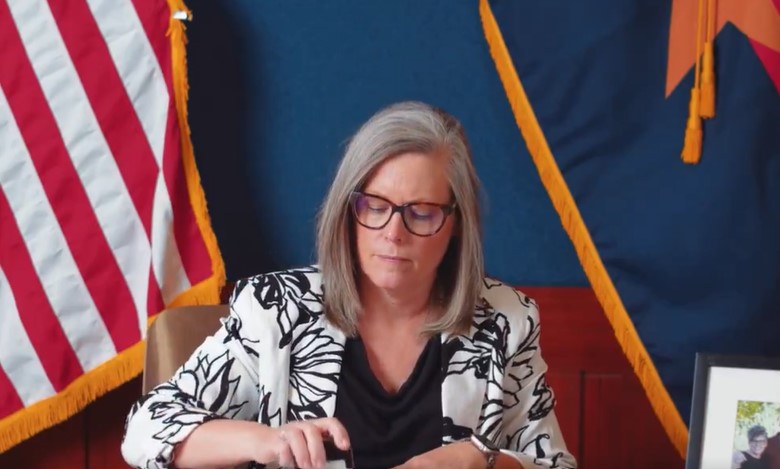
Gov. Katie Hobbs has vetoed Republican-backed tax conformity legislation approved Thursday by the Arizona Legislature.
The bill, SB 1106, would have provided $1.1 billion in tax relief over three years while maintaining a balanced state budget.
The legislation would have aligned Arizona’s tax code with recent federal changes and included provisions eliminating state income tax on tips and overtime pay, increasing the standard deduction, expanding the child tax credit, creating a deduction for childcare expenses, and providing additional tax relief for seniors.
Hobbs vetoed the bill without releasing a formal veto message as of the time of publication.
In response, House Speaker Steve Montenegro (R-LD29) issued a statement criticizing the governor’s decision and warning of potential impacts on taxpayers as the filing season approaches.
“Governor Hobbs’ veto of our tax relief act is a failure of leadership that will create unnecessary confusion and disruption for millions of Arizona taxpayers,” Montenegro said in a statement released Thursday.
Montenegro said House and Senate Republicans passed the legislation early to provide clarity and certainty for families, seniors, small businesses, employers, and tax preparers. He added that the bill conformed Arizona law to federal tax changes and removed provisions the governor had previously opposed.
“The Governor admitted swift action was needed. She asked for a bill to be sent quickly. We did exactly that,” Montenegro said. “What she did not do was offer a plan of her own. No bill. No alternative. No solution.”
Montenegro also listed several provisions included in the legislation that were rejected through the veto, including increases to the standard deduction, a childcare expense deduction, an expanded child tax credit, elimination of state taxes on tips and overtime, and additional tax relief for seniors.
Montenegro said the veto would lead to confusion for taxpayers, adding, “The chaos ahead is not accidental. It is the direct result of Governor Hobbs’ decision to veto a responsible tax conformity bill with no replacement plan.”
The veto also prompted reaction from other Republican lawmakers. State Rep. Nick Kupper (R-LD25) criticized the decision in a post on X. Kupper wrote, “Of course @GovernorHobbs vetoed the tax cuts we sent her because she doesn’t give a crap about working families. If she can’t give more handouts to non-working people then she won’t like whatever we send her.”
Arizona Congressman and 2026 gubernatorial candidate Andy Biggs, said, “Katie Hobbs vetoed a $1.1 BILLION tax cut for Arizona seniors, families, and workers. She is a weak and ineffective governor keeping Arizona from its full potential. She has no vision for the state. She has no ability to lead.”
Republicans do not hold the votes necessary to override the governor’s veto, leaving tax conformity unresolved unless lawmakers and the governor reach an agreement later in the legislative session.
Matthew Holloway is a senior reporter for AZ Free News. Follow him on X for his latest stories, or email tips to Matthew@azfreenews.com.
by Ethan Faverino | Jan 18, 2026 | Economy, News
By Ethan Faverino |
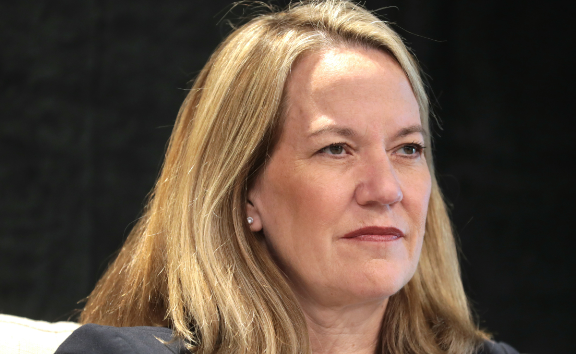
State Representative Nick Kupper (R-LD25) introduced House Bill 2325, also known as the Own Something and Be Happy Act. This legislative measure is designed to reduce the growing influence of large institutional investors in Arizona’s single-family housing market and restore ownership opportunities for working families.
The bill, which amends Title 44 of the Arizona Revised Statutes by adding Chapter 42, targets corporate dominance that has driven up home prices and made it harder for Arizona residents—particularly first-time buyers—to purchase homes in their communities.
Key provisions include:
- Capping institutional ownership at no more than 50 single-family homes statewide.
- Prohibiting bulk purchases, defined as acquiring two or more single-family homes in a single transaction or within a rolling 12-month period by the same entity.
- Imposing a 60-day waiting period, during which institutional investors are prohibited from bidding on or purchasing newly listed single-family homes, giving individual buyers priority.
Institutional investors—defined as entities owning or managing 10 or more single-family homes in Arizona—exceeding the cap on the bill’s effective date would be prohibited from new acquisitions and encouraged to voluntarily reduce holdings to achieve compliance.
The legislation includes targeted exemptions to avoid unintended impacts on housing efforts, such as:
- Nonprofit organizations focused on affordable housing
- Government housing agencies
- Community land trusts
- Small property owners (fewer than 50 homes)
- Pension funds of fiduciary entities with assets under $5 million
- Homebuilders whose primary business is constructing new homes for individual sale
To ensure transparency and accountability, HB 2325 requires institutional investors to file annual disclosures with the Arizona Department of Housing by March 15, detailing the single-family homes they own, purchase, or sell, along with their compliance with applicable laws.
Enforcement authority rests with the Arizona Attorney General, who may investigate violations, seek injunctive relief, or pursue other remedies. If the Attorney General declines action, county or city attorneys in the relevant jurisdiction are empowered to step in.
Representative Kupper emphasized the bill’s alignment with broader national concerns over housing affordability. “President Trump is right to call this out,” Kupper stated. “Homeownership has long been central to the American Dream and the reward for hard work. When large investment firms buy up neighborhoods, families lose, and prices climb. HB 2325 puts Arizona on the side of working people who want to own a home, raise a family, and stay rooted where they live.”
“Housing costs have climbed nationwide as institutional investors expanded their residential footprint, while homeownership rates for younger Americans have stalled,” continued Kupper. “In Arizona, population growth and limited housing supply have intensified the squeeze on first-time buyers. This bill draws a clear line. Arizona homes should be owned by Arizona families, not treated like financial instruments by distant corporations.”
Ethan Faverino is a reporter for AZ Free News. You can send him news tips using this link.
by Jonathan Eberle | Dec 18, 2025 | News
By Jonathan Eberle |
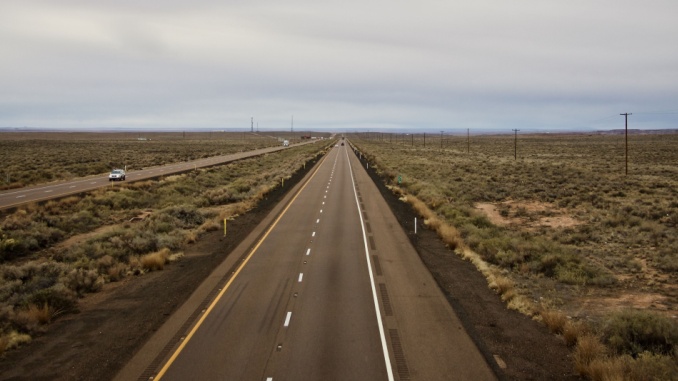
Arizona state Rep. Nick Kupper (R-LD25) has introduced legislation that would allow higher speed limits on certain rural interstate highways, citing roadway design, safety data, and differences between urban and rural driving conditions.
House Bill 2059, known as the Reasonable and Prudent Interstate Driving (RAPID) Act, would give the Arizona Department of Transportation authority to designate limited stretches of rural interstates as “derestricted” speed zones for non-commercial vehicles during daylight hours. The proposal maintains an 80-mile-per-hour maximum speed limit at night and preserves existing laws addressing unsafe or reckless driving.
Under the bill, ADOT would determine which highway segments qualify based on engineering studies, roadway design standards, and historical safety records. The legislation also increases civil penalties for drivers who misuse the derestricted zones, including those who engage in aggressive or dangerous driving behavior.
The measure requires annual safety audits of any approved segments and directs ADOT to coordinate enforcement efforts with the Arizona Department of Public Safety. In addition, the bill calls for a public education campaign to ensure drivers understand expectations in derestricted zones, including proper lane use and passing rules.
The proposal would begin with a one-year pilot program on a segment of Interstate 8. Any continuation or expansion would depend on safety outcomes and compliance with the bill’s requirements.
“Most drivers can tell the difference between a crowded city freeway and a wide-open stretch of rural interstate,” Kupper said in a statement. “The RAPID Act accounts for that difference. It will let us raise speeds where it’s safe, keep tough penalties for reckless driving, and update our laws to reflect how people actually use these roads.”
Kupper pointed to Montana’s former “reasonable and prudent” daytime speed standard as a precedent. According to a review by Montana’s Legislative Audit Division, average speeds increased after posted daytime limits were removed, but crash and fatality rates per vehicle mile traveled continued to decline and remained comparable to neighboring states. The audit concluded that factors such as seatbelt use and driver behavior had a greater effect on safety outcomes than posted speed limits alone.
“Montana showed that you can modernize speed laws without sacrificing safety,” Kupper said. “When rules are clear and focused on driver behavior, states can let safe highways operate as they were designed to operate.”
Jonathan Eberle is a reporter for AZ Free News. You can send him news tips using this link.
by Ethan Faverino | Dec 9, 2025 | News
By Ethan Faverino |
Arizona State Representative Nick Kupper (R-LD25) issued a warning to Governor Katie Hobbs and Attorney General Kris Mayes, demanding they stop blocking the release of SNAP program data required by the U.S. Department of Agriculture (USDA) to maintain federal funding for Arizona’s food assistance program.
In a letter dated December 3, 2025, Rep. Kupper highlighted last week’s explicit statement from U.S. Agriculture Secretary Brooke Rollins that any state refusing to share SNAP data with the federal government will lose funding for the program.
The data is essential for verifying eligibility, preventing fraud, and ensuring taxpayer dollars reach only those who qualify. Arizona now joins a handful of states facing funding penalties due to the officials’ actions, which include an ongoing lawsuit by Attorney General Mayes to block the data release.
“Twenty-nine states said yes, not surprisingly, the red states, and that’s where all of that data, that fraud, comes from. But 21 states, including California, New York, and Minnesota – blue states – continue to say no,” said Rollins. “So as of next week, we have and will begin to stop moving federal funds into those states until they comply, and they tell us and allow us to partner with them to root out this fraud and to protect the American taxpayer.”
Rep. Kupper’s letter emphasized that “political maneuvering” ahead of an election year must not endanger a program serving Arizona’s most vulnerable residents. He urged both Democratic leaders to “set aside the partisan divide and do the right thing.”
“Families who follow the rules and rely on SNAP to get through the week should not be put at risk because the Governor and Attorney General are choosing political fights,” Rep. Kupper said. “The federal government has made the requirement clear. If Arizona refuses to comply, our state risks losing SNAP funding altogether. That outcome would punish people who legitimately need help. Governor Hobbs and Attorney General Mayes should reverse course and release the data, so Arizona families are not left paying the price.”
Ethan Faverino is a reporter for AZ Free News. You can send him news tips using this link.
by Matthew Holloway | Nov 1, 2025 | News
By Matthew Holloway |
Arizona Senator Ruben Gallego sharply criticized Republican leaders over the Democrat-led federal government shutdown during an appearance on CBS’s The Late Show with Stephen Colbert this week. Gallego claimed that the impasse threatens health care affordability nationwide
The segment spotlighted the Democrat-instigated federal government shutdown and the looming expiration of enhanced Affordable Care Act (ACA) subsidies, which could drive up premiums as open enrollment begins November 1st. The interview played out like an in-kind political ad for Gallego.
The subsidies, extended under the 2021 American Rescue Plan as a form of COVID relief, eliminated income caps for marketplace eligibility, allowing households above 400% of the federal poverty level to receive aid.
Host Stephen Colbert teed up the Democratic position for the softball interview: “Well, this shutdown has gone on for 29 days. If I can characterize the position the Democrats want the Republicans to address [as] the lapsing of the tax credits and ACA, the Obamacare, so people are going to see the rates jump up starting in November, right?”
Gallego detailed the stakes for his state. He noted that premiums could surge nearly 50% for a family of four earning up to $128,600 annually—or a family of five up to $150,600—potentially adding about $7,000 to yearly costs. He said, “And things are hard right now. I mean, everything is fricking expensive, and now the government, these Republicans, are going to willingly raise people’s premiums. That’s what’s happening right now.”
The senator, who has continued to cash his congressional paychecks during the shutdown, directed fire at GOP figures absent from negotiations. He accused House Speaker Mike Johnson of being “off hiding somewhere with the Epstein list” and quipped about former President Donald Trump, saying, “I don’t know where the hell Trump is. But I think he’s probably in Korea putting on a crown or something like that.”
Gallego stressed the fallout for ordinary Americans: “Either way, our people, everyday working-class people in this country are hurting right now.”
Just two weeks ago, Gallego claimed he needed to “restrain” himself in the presence of Speaker Johnson when he and Sen. Mark Kelly confronted the Speaker in a Capitol hallway.
Gallego’s account seems to ignore a point that Senate Majority Leader John Thune exposed explosively from the Senate floor Monday night when he said, “The senator from New Mexico is absolutely right; SNAP recipients shouldn’t go without food. People should be getting paid in this country, and we’ve tried to do that 13 times—and you voted no 13 times! This isn’t a political game; these are real people’s lives we are talking about, and you have all just figured out 29 days in that, oh, there may be some consequences?!?”
Instead, Gallego took the time to leverage his well-worn rags-to-Senate story—from a single-mother home to advocating for economic opportunity —continuing what appears to be a soft start to 2028 White House ambitions.
Arizona State Representative Nick Kupper (R-LD25) took to X to respond to Gallego’s post, sharing the interview. Gallego wrote, “The fact that someone like me ended up where I am is proof that this country can still be great. But that promise doesn’t survive on its own. We have to fight for it.”
Kupper, seemingly unimpressed, reposted him, quipping: “The fact that he’s on this late-night show slinging his crap is more proof that this is all just performance art.”
The full interview is available on YouTube and Paramount+.
Matthew Holloway is a senior reporter for AZ Free News. Follow him on X for his latest stories, or email tips to Matthew@azfreenews.com.