by Corinne Murdock | Nov 24, 2023 | News
By Corinne Murdock |
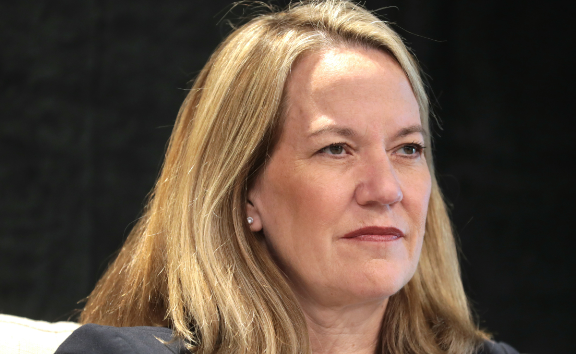
Mohave County officials backed down from a proposed policy to hand count all future ballots after Attorney General Kris Mayes threatened criminal charges.
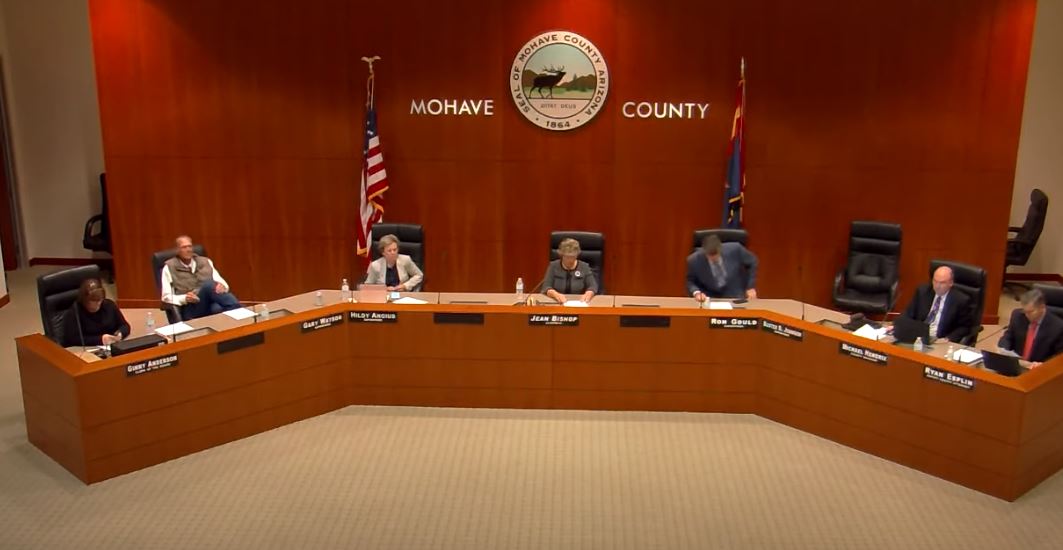
The Mohave County Board of Supervisors convened on Monday to discuss whether they would hand-count all ballots for the 2024 election and beyond; the board declined the policy in a divided vote. Mayes congratulated the board for heeding her threat.
“I am greatly relieved and commend the Mohave County Board of Supervisors for their decision not to authorize a hand count of all ballots for the 2024 election, upholding Arizona law,” said Mayes. “The Board’s decision to adhere to state-mandated procedures for ballot counting avoids potential legal complications and reinforces public trust in the integrity of our elections.”
During the meeting, State Sen. Majority Leader Sonny Borrelli (R-LD30) said that the county could count on an amicus brief from the House and Senate should the county vote for hand counting ballots and face criminal prosecution.
Supervisor Hildy Angius clarified that hand counting wasn’t as “easy-peasy” as sitting down and physically tabulating the ballot. Angius agreed that problems continue to plague Arizona’s elections, namely calling out mail-in ballots.
Supervisor Ron Gould challenged the notion that no election problems could exist in their county because the law doesn’t allow supervisors access to the voting logs. As a challenge to the strength of voting machines, Gould said that when he served as a state senator in 2005, voting machines in the Republican state representative primary were found to be severely defunct — out of calibration by as much as 18 percent — after a recount flipped the race by 250 votes.
“My biggest concern here today is that folks are losing faith in elections; they don’t think their vote counts,” said Gould. “So much for the infallibility of voting machines.”
Borrelli suggested that Mohave County count ballots through hand counts at the precinct level, then through tabulators at the county level prior to certification. However, Deputy County Attorney Ryan Esplin said that couldn’t be done in light of Mayes’ letter and their own legal analysis. Esplin advised that the board err on the side of caution by adhering strictly to what statute allowed. The county attorney noted that ARS § 16-443 and 16-445 necessarily implied that hand counts could be used, but that 16-622 and 16-602 undermined that argument. Both of those latter statutes were cited by Mayes in her Sunday letter.
“It has to be spelled out in statute, or necessarily implied: that’s the legal standard. There is no statute that specifically authorizes a hand count, and that’s why we say we do not believe you can do a hand count, because there’s no statute that authorizes it,” said Esplin. “Take the safe route: use the machines, because we know those are legal, we know the law, the law says very clear, ‘This is what we do.’”
Supervisors Gould and Angius voted for hand counting ballots; Supervisors Buster Johnson, Jean Bishop, and Travis Lingenfelter voted against.
Mayes sent a letter to the Mohave County supervisors on Sunday that she would file criminal charges against them should they vote to hand count all ballots for the 2024 election and beyond. The attorney general said that the hand count method was not only too slow and less accurate, it also wasn’t permitted by statute. Mayes cited A.R.S. § 16-449, 16-468, 16-602, 16-621, and 16-622.
Mayes also expressed concern that the board was influenced by “bad-faith actors” aiming to sow doubt and undermine Arizona elections.
In a viral response to Mayes’ statement on Monday, conservative commentator Rogan O’Handley criticized Mayes as “an illegitimate attorney general” that benefited from election fraud.
“Yeah forcing ballots into the same machines that shut down on election day in Maricopa is one hell of a way to ‘reinforce public trust,’” said O’Handley.
Corinne Murdock is a reporter for AZ Free News. Follow her latest on Twitter, or email tips to corinne@azfreenews.com.
by AZ Free Enterprise Club | Aug 13, 2023 | Opinion
By the Arizona Free Enterprise Club |
Clean and accurate voter rolls are a cornerstone to safe and secure elections. And they are required by both state and federal law. Section 8 of the National Voter Registration Act (NVRA) specifically obligates states to conduct a general program that makes a reasonable effort to remove the names of ineligible voters from the official lists of eligible voters due to death or change of residence. The U.S. Supreme Court even backed this up in its 2018 decision in the case Husted v. A. Philip Randolph Institute.
But Arizona’s current Secretary of State Adrian Fontes and its former Secretary of State (now Governor) Katie Hobbs have failed to perform the necessary voter list maintenance. And right now, 14 Arizona counties are in violation of Section 8 of the NVRA…
>>> CONTINUE READING >>>
by Terri Jo Neff | Jan 30, 2023 | News
By Terri Jo Neff |
Kris Mayes may have been sworn in as Arizona Attorney General earlier this month, but the legal arguments over whether she received the most lawfully cast votes is still ongoing, with a decision expected in a few weeks on whether Republican candidate Abe Hamadeh should be granted a second trial in his election contest.
Hamadeh’s motion for a new trial has been opposed by Mayes, Maricopa County, and new Arizona Secretary of State Adrian Fontes, who took over as a defendant when then-Secretary Katie Hobbs was sworn in as Governor. Hamadeh’s reply to the oppositions is due Feb. 6 and is reportedly being written by Jen Wright, the former head of the Election Integrity Unit under Attorney General Mark Brnovich.
After the reply is filed, Judge Lee Jantzen of the Mohave County Superior Court can either rule based on the written pleadings or set a hearing for oral arguments. Any decision Jantzen makes will likely be appealed to the Arizona Supreme Court, which could keep the case in limbo for weeks.
Jantzen dismissed Hamadeh’s election challenge Dec. 23 after a brief trial that featured the results of an expedited and limited inspection of ballots in just a few of Arizona’s 15 counties. The inspections were undertaken in an effort to obtain evidence supporting Hamadeh’s claim that thousands of votes cast for him were not counted during the Nov. 8 General Election.
The evidence presented to Jantzen, however, did not include reports of tabulation problems experienced by Pinal County. Those reports were not made public until Dec. 29 when the statewide recount results were announced, cutting Mayes’ margin from 511 votes to 280 votes out of more than 2.5 million ballots cast.
In a Jan. 3 motion for a new trial, Hamadeh’s legal team points out Hobbs in her then-role as Secretary of State, did not disclose the extensive Pinal County problems to Hamadeh or the judge, even though Hobbs had direct knowledge of the issues prior to the trial. It is enough reason to allow for a more in-depth review of uncounted votes in the attorney general’s race across the state, Hamadeh argues.
The argument for a new trial recently got a boost from Arizona’s top two lawmakers.
In an Amici Curiae (friends of the court) brief, Senate President Warren Petersen and House Speaker Ben Toma urge Jantzen to “afford the parties a full and fair opportunity” to determine to answer the pivotal question of which candidate received the highest number of votes for Attorney General in the 2022 General Election.
Petersen and Toma take no position on who is the legitimate winner. Instead, they point to the fact Hamadeh now has “the kind of salient evidence” that Mayes, Hobbs, and Maricopa County argued Hamadeh had to supply to prevail during trail.
The Jan. 25 brief argues those same parties argue it is simply too late for Jantzen to do anything about it on behalf of Arizona voters. But that is not what the Legislature intended when it created state laws which allow voters and candidates to challenge the proclaimed “official” election results, according to the brief.
“The nearly unprecedented circumstances surrounding this proceeding underscore the judiciary’s indispensable role in ensuring that the certified winner of an election did, in fact, receive the highest number of lawful votes,” the brief states, adding Arizona law has “for more than a century afforded contestants a nearly unqualified right to inspect all voted ballots upon a minimal threshold showing of good cause.”
Toma discussed the amici curiae brief shortly after it was filed, pointing to the important role judges like Jantzen play in preserving election integrity.
“Election contests promote transparency, fact-finding, and an independent judicial inquiry when there are credible questions surrounding the accuracy of certified election results,” Toma explained.
In the meantime, Jantzen has another matter he needs to rule on.
Several persons were appointed to serve as ballot inspectors for the various parties during Hamadeh’s trial last month. Compensation for those inspectors is mandated under state law at a rate fixed by the court.
Jantzen, however, did not announce the rate in advance. As a result, those inspectors cannot be paid until an appropriate court order is issued.
Mayes has requested nearly $2,900 for the ballot inspector she chose for review of ballots in Maricopa County, a rate of $445 per hour for 6.5 hours. Meanwhile, Mohave County Attorney Matthew Smith is asking Jantzen to authorize payment to its inspector for 7.5 hours of work on the pay scale similar to an attorney in private practice.
Navajo County also filed a motion to compensate the three inspectors who traveled to Holbrook to inspect ballots in that county. Each of the three traveled at least 100 miles roundtrip and worked between 7 and 9.5 hours.
Unlike the motions by Mayes and Mohave County, the compensation request by Deputy County Attorney Jason Moore of Navajo County took no position on the hourly rate for the inspectors.
Hamadeh’s legal team has until Jan. 31 to respond to the compensation motions. Jantzen can then request additional arguments or issue an order.
Terri Jo Neff is a reporter for AZ Free News. Follow her latest on Twitter, or send her news tips here.
by Corinne Murdock | Dec 13, 2022 | News
By Corinne Murdock |
On Monday, the Mohave County Board of Supervisors canceled their upcoming special meeting to discuss potential election litigation against Maricopa County and Secretary of State Katie Hobbs.
The board didn’t offer an explanation for their decision to cancel the meeting. They first announced the special meeting last week.
AZ Free News reached out to the board’s communications director for comment. He didn’t respond by press time.
The county delayed certification of their election results amid expressed uncertainty over the validity of Maricopa County’s results. They certified their results about two weeks ago. Chairman Ron Gould stated during the certification that he was compelled under threat of arrest to certify the results.
“I vote aye under duress. I found out today that I have no choice but to vote ‘aye’ or I will be arrested and charged with a felony,” stated Gould. “I don’t think that’s what our Founders had in mind when they used a democratic process to elect our leaders, our form of self-government. I find that very disheartening.”
The board is facing an open meeting law complaint filed by a Kingman-based political action committee (PAC) for making a “political statement” during certification of the election results. The PAC, Real Change for LD5, named Chairman Ron Gould and Supervisors Hildy Anguis and Travis Lingenfelter in the complaint submitted to Attorney General Mark Brnovich.
Chairman Ron Gould called the complaint “baseless” in a statement to Mohave Valley Daily News.
“The agenda states ‘discussion and possible action re: Approval of the Canvass of the election,’” stated Gould. “I am sure that the attorney general will agree that the phrase possible action would cover approval and denial.”
Behind the complaint is the PAC founder and chair, J’aime Morgaine. She sued Rep. Paul Gosar (R-AZ-04) in 2018 after he blocked her from his Facebook page; the ACLU picked up the lawsuit after Gosar restored her access and she dropped it. However, the ACLU also voluntarily dismissed the case four months later.
That same year, Morgaine ran an unsuccessful bid for the State Senate. She lost in the general election to Sen. Sonny Borrelli (LD-30).
In a statement, Morgaine called the board members’ protest over the election results a “nasty habit” that undermined confidence in elections.
“The bottom line is this is an election integrity issue,” said Morgaine. “These supervisors have every right to be angry and protest in any personal capacity, but they do not have the right or legal authority to misappropriate Mohave County’s governing forum or taxpayer resources to perpetuate disinformation about Mohave County’s election integrity and undermine confidence in Arizona’s elections.”
Corinne Murdock is a reporter for AZ Free News. Follow her latest on Twitter, or email tips to corinne@azfreenews.com.
by Terri Jo Neff | Jun 5, 2022 | News
By Terri Jo Neff |
A judge in Mohave County is expected to rule by noon on Monday whether Arizonans could lose their ability to vote by mail without providing an excuse.
Judge Lee Jantzen is being asked by the Arizona Republican Party and its chair, Kelli Ward, to declare the state’s no-excuse voting by mail “system” unconstitutional despite the fact the system has been in effect for three decades. The judge heard arguments last Friday to issue a preliminary injunction to ban no-excuse voting by mail effective with the upcoming Nov. 8 General Election.
About 85 percent of all ballots cast in the 2020 General Election—including Ward’s ballot—were mailed out to voters in advance of the election. But the AZGOP contends the law passed by the Legislature in 1991 violates the constitutional requirement that Arizona’s elections be held in such a way to ensure “secrecy in voting.”
The lawsuit argues the only ballots which should be accepted through the mail are those from voters who provide a satisfactory excuse—such as military service, a disability that makes it a burden to vote in person, or being out of town on Election Day.
(The AZGOP acknowledged in their May 17 lawsuit that there is not enough time to outlaw no-excuse voting for the Aug. 2 Primary Election as ballots are in the process of being printed so they can be in voters’ mailboxes in early July.).
Attorneys for Arizona Secretary of State Katie Hobbs and several county election officials argued to Jantzen that there is nothing unconstitutional with Arizona’s no-excuse voting by mail system. They also advised the judge of the practical problems with trying to ban a practice after 30 years without much advance notice to voters and those responsible for running each county’s elections.
One such problem involves the Active Early Voter List, from which ballots are sent to voters who have signed up to receive them by mail. Those voters recently received a reminder notice from their respective county recorder with the 2022 election schedule and confirming the voters will receive ballots by mail for the primary and general elections.
The AZGOP argued to Jantzen that counties can be forced to accommodate changes in time for the General Election, even if it requires hiring thousands more poll workers and election staff across the state, scrounging to find enough voting machines and other election-related equipment, and locating facilities which can accommodate millions more in-person voters than have turned out in years.
That argument was pushed back on during Friday’s hearing by an attorney for seven of Arizona’s 15 county recorders responsible for the voting by mail process and county election directors who are responsible for election day voting and ballot tabulation.
“They cannot conjure polling places or poll workers out of nothing,” Karen Hartman-Tellez of the Maricopa County Attorney’s Office told Jantzen.
Whatever order Jantzen issues in response to the AZGOP’s preliminary injunction request is likely to be appealed. But even if no-excuse voting by mail is allowed to take place this year, the AZGOP’s constitutional challenge does not die.
Instead, the litigation will move forward to a trial under civil court rules, same as any other lawsuit.