by AZ Free Enterprise Club | Oct 23, 2023 | Opinion
By the Arizona Free Enterprise Club |
Last week, the Joint Legislative Budget Committee (JLBC) released an updated state revenue forecast showing that Arizona may be facing a $400 million budget shortfall next year. And as predictable as the sun rising in the East, Democrat politicians and their friends in the media went on the attack, blaming the deficit on two historic reforms despised by the left—universal school choice expansion and the 2.5% flat tax cut passed in 2021.
For the Democrats and their sycophant media allies, the problem is always too much parental choice in education and letting taxpayers keep more of their hard-earned money. Yet this narrative couldn’t be further from the truth. A closer look at Arizona’s budget and the projected budget deficit reveals that we have a spending problem, not a revenue problem…
Projected Budget Shortfall Is a Spending Problem
Just 5 years ago, the legislature enacted the FY 2019 budget that included $10.1 billion in on-going spending, plus $500M in “one-time” expenditures ($10.7 billion total). By last year, that number had exploded to nearly $15 Billion in ongoing spending, a 50% growth in ongoing spending in 5 years! The most recent budget negotiated with Democrat Katie Hobbs earlier this year kept ongoing spending at a lower trajectory but included “one-time” outlays that brought the total budget cost to $17.8B…
>>> CONTINUE READING >>>
by Daniel Stefanski | Aug 7, 2023 | Education, News
By Daniel Stefanski |
One of Arizona’s most-influential organizations is bringing facts to the conversation surrounding the state’s historic school choice expansion program.
Last month, the Director of Education Policy for the Goldwater Institute, Matt Beienburg, responded to the latest political attacks against Arizona’s Empowerment Scholarship Accounts (ESA) program, releasing a comprehensive fact-check to promote the truth.
Beienburg’s fact-check came after the Governor’s Office issued a memo, which targeted the ESA program, showing that it “could cost the state over $943 million, with over 53% of all new K-12 education spending going towards only 8% of Arizona students.” In conjunction with the release of that memo, Democrat Governor Katie Hobbs said, “The universal school voucher program is unsustainable. Unaccountable school vouchers do not save taxpayer money, and they do not provide a better education for Arizona students. We must bring transparency and accountability to this program to ensure school vouchers don’t bankrupt our state. I’m committed to reforming universal vouchers to protect taxpayer money and give all Arizona students the education they deserve.”
The fact-check from the Goldwater Institute refuted three claims made against the ESA program. First, that “spending on ESA vouchers could account for 53.25% of all new K-12 education spending in the FY2024 budget going towards only 8% of Arizona students.” Beienburg put forward three facts in opposition to the claim: that “total spending on universal ESA students makes up just 2% of total Arizona K-12 spending,” that “Arizona public school districts are projected to receive over 60% (more than $570 million) of all new K-12 funding in FY 2024, despite making up 0% of the growth in students served this upcoming year,” and that “even under the Arizona Department of Education’s (ADE) highest projections, the ESA program would be funding the education of roughly 8% of Arizona’s students (including a disproportionately high percentage of students with severe disabilities) for less than 6% of the total taxpayer cost of educating Arizona’s students.”
The second claim refuted by Goldwater was that “there is an increased cost to the State when a student leaves a public district school and enrolls in the ESA voucher program. This occurs because the ESA award amount is based on the state funding provided to charter school students, which is higher than the state funding provided to district school students.” Goldwater issued one fact in opposition to this claim – that “the average savings per ESA student is even higher when including other (non-formula) spending on public school students. In total, JLBC reports over $3 billion (roughly $3,000 per student on average) of additional spending by state and local taxpayers per public school student outside the basic funding formula. ESA students receive none of this funding.”
The third – and final – claim refuted by Goldwater was that “new estimates indicate the ESA voucher program may cost taxpayers up to $943,795,600 annually, resulting in a potential $319,795,600 General Fund shortfall in FY 2024.” Goldwater issued four facts in opposition to this claim, including that “Gov. Hobbs’ office itself does not believe the report that it is using as the basis for these figures;” that “Gov. Hobbs’ office mistakes the cost ESA awards by thousands of dollars per student;” that “the nonpartisan JLBC continues to project ESA costs in line with the state budget; “ and that “even if the higher enrollments and total ESA award amounts estimated by ADE do materialize, they would not represent the net cost to taxpayers of the program.”
Beienburg closed his fact-check, writing, “Arizona’s ESA program now offers tens of thousands of families an opportunity to pursue the best education possible for their children at a lower cost than traditional public schooling. The governor and her budget office owe it to parents and the public to provide the facts about ESAs free of manipulation.”
Daniel Stefanski is a reporter for AZ Free News. You can send him news tips using this link.
by Corinne Murdock | Mar 28, 2023 | News
By Corinne Murdock |
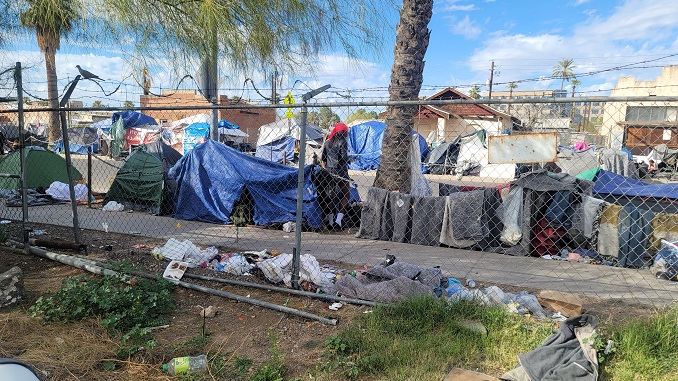
On Monday, the Maricopa County Superior Court ruled that the city of Phoenix is at fault for the homeless crisis, most evident in the massive encampment downtown known as “The Zone.”
Judge Scott Blaney ruled that city officials had done nothing to improve The Zone, declaring it a public nuisance. Rather, Blaney declared that the city had created and maintained The Zone. Blaney added that the actions undertaken by the city, allegedly to address the homeless crisis, had served only to grow its bureaucracy and throw money into government and nonprofit programs that haven’t yielded any discernible results.
“With few exceptions, the action items about which city representatives testified centered around the creation of more bureaucracy, additional staff positions, and obtaining additional funding for programs to vaguely address homelessness in general,” stated Blaney. “The Court received very little evidence — if any — that the City intends to take immediate, meaningful action to protect its constituent business owners, their employees, and residents from the lawlessness and chaos in the Zone.”
Blaney ordered the city to abate The Zone by permanently removing the encampments in public rights of way; cleaning up the biohazardous materials including human feces and urine, drug paraphernalia, and other trash; and removing individuals committing offenses against the public order. Effectively, the judge ordered the city to enforce existing laws.
The city has until July 10 to achieve material results toward compliance with the court’s ruling.
In the 23-page ruling, Blaney agreed with arguments posed by the plaintiffs, made up of residents and business owners in The Zone: that the city stopped enforcing laws within The Zone, resulting in increased violent crime, property crime, prostitution, public indecency, public drug use, a blocks-long biohazard, fire hazards, and environmental destruction.
READ OUR INVESTIGATIVE REPORT ON THE ZONE
Notably, Blaney agreed that the owners of Maker Kitchens had the right to install the dinosaur statues on the right of way adjacent to its building to discourage the homeless from re-establishing their encampments after the city did a cleanup to do gas line work. Blaney ruled that the city had arbitrarily enforced its laws so as to ignore violations by the homeless on that land and yet demand removal of the statues.
Blaney ruled that the city couldn’t force the restaurant to remove the dinosaur statues until it cleaned up The Zone or the court issued a further order.
Blaney ruled that the city had “abused its discretion through the arbitrary application of the law and provision of taxpayer funded security in The Zone.” He also ruled that the residents and business owners who filed the lawsuit had a strong possibility of receiving damages on the basis of irreparable injury, should the city not provide relief by mitigating The Zone.
Blaney agreed that city leaders erroneously applied the Ninth Circuit Court of Appeals’ ruling in Martin v. City of Boise, which determined that municipalities couldn’t enforce public camping laws against the homeless when no adequate temporary shelter options existed.
The judge further noted that the city had wholly ignored the residents’ and business owners’ proposals to resolve the homeless crisis, an outdoor shelter space, presented in January 2020 — just before the crisis “really got out of hand.” However, the city ignored all proposed plans to mitigate the crisis until one month before the plaintiffs filed their lawsuit, last October. That’s when the city approved the construction of a “sprung structure” containing 200 additional shelter beds.
Yet, Blaney stated that the city’s proposed shelter options were either designed as temporary, being seasonal, or as speciality situations, being intended for domestic violence survivors or COVID-19 response.
At one point in his ruling, Blaney surmised that violent, organized crime had taken root in The Zone. AZ Free News reported that gangs run The Zone, assaulting and charging encampment space rent to the homeless.
“The evidence also strongly suggests that the City created and maintained the dire situation that currently exists in The Zone through its failure, and in some cases refusal, to enforce criminal and quality of life laws in The Zone,” said Blaney. “The City’s refusal to meaningfully enforce statutes and ordinances in The Zone has created a classic ‘siren song’ to certain individuals that are enticed at their peril by The Zone’s drugs, sex, and lack of societal rules.”
The court’s ruling comes days after the city promised it would arrange some kind of meeting on the issue at some point following back-to-back murders in The Zone.
Corinne Murdock is a reporter for AZ Free News. Follow her latest on Twitter, or email tips to corinne@azfreenews.com.
by Terri Jo Neff | Sep 4, 2022 | Education, News
By Terri Jo Neff |
The Arizona Attorney General’s Office has been called on to take immediate action to prevent public school districts from using taxpayer funds in an effort to reduce how many of the state’s K-12 students are eligible for up to $7,000 for educational expenses.
The Goldwater Institute worked earlier this year to expand eligibility for Arizona’s Empowerment Scholarship Account (ESA) program from roughly 11,000 K-12 students to all of the estimated 1.1 million students. Gov. Doug Ducey signed the legislation in July and it takes effect later this month.
However, Democrats and special interest groups, including union organizations, have pledged to stop universal ESAs from becoming a reality. And Arizona’s public school districts appear poised to violate state law to do so, according to Scott Day Freeman, a Senior Attorney for the Goldwater Institute’s Scharf-Norton Center for Constitutional Litigation.
“Arizonans would rightly be appalled to learn that school districts will be using taxpayer resources to have district employees participate in an event clearly geared toward a political objective: undoing Arizona’s innovative, new universal school-choice program,” Freeman wrote on Aug. 31 to Michael S. Catlett, the Chief Counsel of Special Litigation for Attorney General Mark Brnovich.
In the letter, Freeman outlines the Goldwater Institute’s concern that many of the state’s school districts are poised to use taxpayer dollars to send representatives to a politically motivated meeting later this week at which attendees will be encouraged to help overturn Arizona’s new ESA opportunity.
“Arizona Revised Statute Section 15-511 prohibits school districts from spending or using district school resources to influence the outcomes of elections, including the support or opposition of ballot measures,” Freeman wrote. “But school districts are doing precisely that, and the Attorney General is statutorily empowered to stop it.”
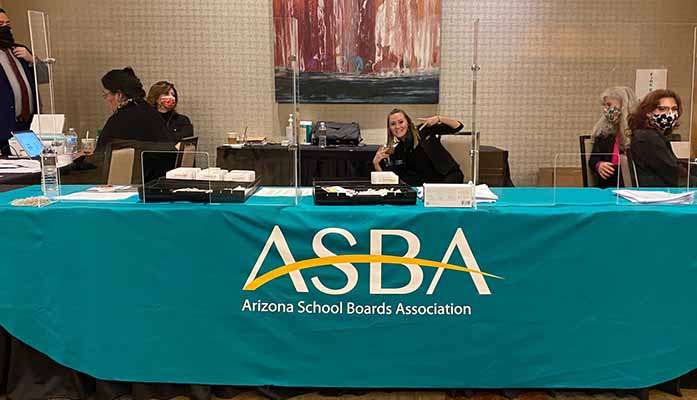
Freeman notes numerous public school district employees plan to attend a “Law Conference” presented by the Arizona School Boards Association at the J.W. Marriott Camelback Inn in Paradise Valley on Sept. 7 through 9 that will include programming by Friends of the ASBA, a 501(c)(4) organization opposed to school choice.
Friends of the ASBA, Freeman wrote Catlett, “will be working at the conference to gather signatures on a petition to overturn the universal school choice reform via ballot referendum.” He added that the ASBA “has brought its political advocacy to a fine point in its upcoming Law Conference.”
The Goldwater Institute is asking the Arizona Attorney General’s Office (AGO) to immediately investigate and “take all appropriate legal action to enforce Arizona’s law prohibiting school districts from using public recourses to support a ballot measure seeking to invalidate Arizona’s universal ESA program,” Freeman wrote.
The authority of the AGO to act is provided in ARS 15-511 “but only if your office acts promptly,” he added.
In a follow-up public statement, Freeman said the Goldwater Institute is dedicated to exposing the plans of entrenched interests in education to use hard-earned taxpayer dollars to deprive parents of the educational freedom provided by ESAs.
“All Arizona families should be free to make educational choices for their children without having the government work against them by rigidly defending a status quo that protects bureaucrats and government unions,” he stated.
by Corinne Murdock | Mar 29, 2022 | Education, News
By Corinne Murdock |
State Representatives Judy Schwiebert (D-Phoenix) and Jennifer Longdon (D-Phoenix) said during Monday’s House Appropriations Committee that schools don’t need curriculum transparency offered by SB1211, and that parents should switch schools instead.
In an exchange with Goldwater Institute Director of Education Policy Matt Beienburg, Schwiebert insisted that parents should just use school choice if they disliked lack of curriculum transparency.
“Arizona is a school choice state, correct?” asked Schwiebert. “Parents could choose to go to another school. That could be their recourse, correct?”
Beienburg said Schwiebert made a valid point that further strengthened his argument.
“That’s a great point and illustrates part of the problem,” responded Beienburg. “A parent shouldn’t have to have their child in a school, find material that is clearly not academically appropriate, and now be faced with a decision of grumbling to a school board who may or may not be sympathetic to them, or take their kid out of school, away from their friends and their established environment.”
When she voted against the bill, Schwiebert said that parents already have the opportunity to engage with teachers. She insinuated that the blame lay with parents for not doing more, claiming that many teachers sit without any visitors at events like parent-teacher conferences and meet-the-teacher nights.
Longdon seconded Schwiebert’s argument, telling parents and legislators to utilize the school choice they championed before claiming that teachers have the “best interest” of their students at heart. She insisted the bill would stymie teachers’ improvisation efforts in class.
“So, I’ve heard a couple of things here. First off, when it was mentioned with this bill there was school choice, there was pushback against that. Although, when it’s been mentioned on other bills from folks who share my particular philosophy, we’re reminded we have school choice. So, I’ll put that out there. If you’re unhappy with the curriculum, school choice exists here in Arizona,” said Longdon.
Longdon also contended with Beienburg’s citation of the 1619 Project used in schools without parents’ knowledge, reminding Chairwoman Regina Cobb (R-Kingman) that the committee agreed not to discuss critical race theory (CRT) during the hearing at all.
Schwiebert’s recent stances on curriculum content may explain her stance against further transparency laws. Early last month, Schwiebert voted against two separate bills to ban divisive and adult content from K-12 curriculum: HB2112 concerning CRT and HB2495 concerning sexually explicit material.
Schwiebert argued that CRT imparted on children lessons of honesty, integrity, and freedom to pursue their dreams.
“When we teach history, it’s not about assigning guilt or blame. It’s about teaching young people to think deeply and critically themselves so we don’t repeat the same mistakes,” said Schwiebert.
Other Democrats said that they supported curriculum transparency but disagreed with the bill’s approach. However, State Representative Jake Hoffman (R-Queen Creek) challenged their claims, arguing that their description of transparency efforts as “meddling” proved their disingenuity. Hoffman also dispelled certain rumors presented by bill opponents, such as requiring teachers to photocopy documents. He noted that educators couldn’t be trusted on their own, citing his struggle as a school board member to get transparency from his district — in one case, he had to wait over 10 months for a contract.
“The bill is very clear. It requires you adding what those resources are to a list so that parents can be informed and so that parents have the ability to know what’s going on in their classrooms,” said Hoffman. “This system is not set up for parents to be informed or empowered beyond the cursory information that they are allowed to have. This bill empowers parents.”
State Representative Kelli Butler (D-Phoenix) claimed that curriculum transparency already exists, and characterized the bill as an “attack” on teachers.
“We need to stop tying the hands of our wonderful, dedicated classroom teachers,” said Butler.
State Senator Nancy Barto (R-Phoenix) sponsored the bill; it passed out of the Senate along party lines several weeks ago, 16-13.
Corinne Murdock is a reporter for AZ Free News. Follow her latest on Twitter, or email tips to corinne@azfreenews.com.