by AZ Free Enterprise Club | Nov 25, 2022 | Opinion
By the Arizona Free Enterprise Club |
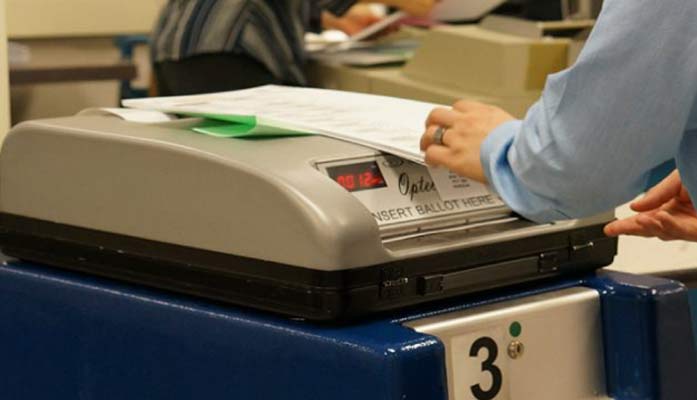
Maricopa County dropped the ball. They botched the election, and there is simply no way for politicians to gaslight their way out of it. After years of fearmongering from the media and the left that election integrity measures would suppress and disenfranchise voters, it turns out no one suppresses and disenfranchises voters quite like politicians and bureaucrats in Maricopa County.
Rather than taking accountability for their failures, they have rubbed their incompetence in the faces of frustrated voters, smugly downplaying their failure and patting themselves on the back, asserting that they made a “remarkable effort.”
All eyes were on this election. Everyone knew it would be contentious, that key races would be close, and that record levels of Republican voters would show up to vote in-person on election day. Given this, one would think election officials would go above and beyond to ensure every minute detail was ironed out so that the election process was beyond reproach.
Instead, within minutes of polls opening at 6 am, reports were coming in that tabulators were not accepting ballots…
>>> CONTINUE READING >>>
by Corinne Murdock | Nov 22, 2022 | News
By Corinne Murdock |
Over the weekend, the Arizona Attorney General’s Office advised Maricopa County that it may have violated election law.
According to the attorney general’s office, their Elections Integrity Unit (EIU) received hundreds of substantive complaints concerning Maricopa County’s handling of the election. Assistant Attorney General Jennifer Wright asked the Maricopa County Attorney’s Office to explain the faulty printer settings, issuance of unlawful information regarding voting “check-out” procedures, and the unlawful mixing of “Door 3” non-tabulated with tabulated ballots by next Monday. At least 17,000 voters across 60 voting locations were impacted by Election Day tabulation issues.
“Arizonans deserve a full report and accounting of the myriad problems that occurred in relation to Maricopa County’s administration of the 2022 General Election,” stated Wright.
According to sworn complaints received by the EIU, printer settings were fine during testing the day before Election Day. Wright asked the county to provide the attorney general’s office with a comprehensive report detailing the voting locations that experienced printer or tabulation issues, the specific issues experienced by each voting location, all issues related to the printers and tabulators that contributed to voting location problems, a log of all changes to the printer settings that includes the identification of the individuals who made the changes, the county’s standards for printer settings, the exact time when the county discovered printer settings were the cause of the widespread vote center failures, and the methods used to remedy the printer settings at each voting location.
Maricopa County Board of Supervisors Chairman Bill Gates said that the long lines caused by the malfunctioning tabulators weren’t indicative of voter suppression. Rather, Gates said that the long lines were caused by voters’ resistance to dropping off their ballots in “Door 3” slots when the tabulators failed. Gates alluded that Republican Party leadership was to blame for voter aversion to casting a Door 3 ballot.
As the attorney general’s office noted in their letter to the county, Door 3 non-tabulated ballots were unlawfully mixed with tabulated ballots at some voting locations. According to the EIU, at least one election observer witnessed more than 1,700 Door 3 non-tabulated ballots placed in black duffle bags intended to hold tabulated ballots only.
The attorney general’s office added that the law requires the county to reconcile ballots cast against check-ins at voting locations — not at central count. Wright asked the county to provide a statement clarifying whether reconciliation occurred at the voting locations or at central count.
Confusion over whether the county reconciled ballots at voting locations prior to central count likely occurred due to statements by officials. The county made no mention of the reconciliation process when advising voters what happens to Door 3 ballots.
In a later apology to voters, Maricopa County Recorder Stephen Richer said that Door 3 ballots were retrieved by election workers at the end of the day and brought to central count. Again, Richer issued this statement without any mention of reconciliation.
Additionally, the attorney general’s office contradicted the county’s assertion that voters could cast a valid ballot after checking into another voting location.
The attorney general’s office asserted that poll workers weren’t trained on executing “check out” procedures — further contradicting county officials’ claims that this was a viable option for voters who desired to cast their ballot at another voting location after checking in to one. EIU reports reflected that voters were required to cast a provisional ballot at the secondary location since “check out” procedures weren’t possible.
The attorney general’s office contended that state law prohibits provisional ballots from being counted when a voter checks in at multiple pollbooks.
The attorney general’s office asked the county to issue a report detailing when and how poll workers were trained in “check out” procedures, the legal basis for “check out” procedures, why the county continued to encourage voters to leave voting locations despite EIU notification that “check out” procedure training wasn’t proper, and all voters provided a provisional ballot due to multiple pollbook check-ins.
The county announced on Sunday that its tabulation efforts are nearly complete. Following this, all 15 counties will complete a canvass of the votes.
Corinne Murdock is a reporter for AZ Free News. Follow her latest on Twitter, or email tips to corinne@azfreenews.com.
by Corinne Murdock | Nov 14, 2022 | News
By Corinne Murdock |
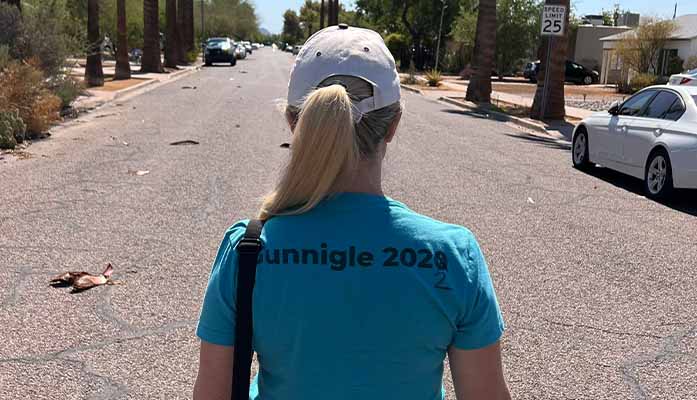
On Monday, the Democratic candidate in the Maricopa County Attorney’s race, Julie Gunnigle, conceded.
Gunnigle’s opponent, incumbent Republican Rachel Mitchell, earned 52 percent of the vote to Gunnigle’s 48 percent. In a statement, Gunnigle said that Maricopa County deserved better than Mitchell.
“This isn’t the result we were hoping for because what it means is a continuation of the legacy of corruption within the Maricopa County Attorney’s Office,” wrote Gunnigle. “The change we need won’t happen this year, but we aren’t deterred. We vow to keep our eye on this office and, along with the community, continue to demand better for all of Maricopa County.”
Mitchell’s victory statement focused on thanking the voters and the staff of her office.
“Public safety isn’t partisan. All Arizonans demand safe communities in which to live, work, and raise their children,” stated Mitchell. “I will continue working with law enforcement and community leaders to hold criminals accountable, increase the use of treatment to rehabilitate where appropriate, deliver justice for victims, and put the safety of Maricopa County residents first.”
National attention was fixed on the race, mainly for the fact that the county is the fourth-largest in the nation and had the potential to be led by another George Soros-backed prosecutor.
As AZ Free News reported in August, Gunnigle received over $6,500 from Way to Lead Arizona — a political action committee (PAC) funded primarily by its national counterpart, Way to Lead PAC. That PAC received millions from Soros, his family, or the organizations he’s either founded or funded. Gunnigle denied benefiting from Soros funding in May.
This marks Gunnigle’s third campaign loss: she lost in the 2020 general election for Maricopa County Attorney and lost in the 2018 general election for the State House. Gunnigle first began running for office as her former employer, Arizona Summit Law School, faced accreditation troubles.
Although Gunnigle no longer serves as the shuttered law school’s Dean of Students, she continues to receive support from them.
Gunnigle received thousands in funding from an attorney for Arizona Summit Law School. The donor, Donalyn Mikles, listed her employment as the law school’s attorney. Mikles was one of Democratic gubernatorial candidate Katie Hobbs’ top ten donors, after Jennifer Allan-Soros and Planned Parenthood. In all, Mikles has donated over $476,000 to Democratic candidates and political organizations in Arizona and $450,000 to Democratic candidates nationwide
Gunnigle’s loss comes after indications that Democrats appeared to be distancing themselves from her. As AZ Free News reported earlier this month, former minority leader for the state legislature and Democratic consultant Chad Campbell said that Gunnigle’s campaign resembled that of failed 2018 gubernatorial candidate David Garcia. Campbell called Garcia’s campaign the “worst campaign” to have occurred over the last 30 years.
Corinne Murdock is a reporter for AZ Free News. Follow her latest on Twitter, or email tips to corinne@azfreenews.com.
by Corinne Murdock | Nov 9, 2022 | News
By Corinne Murdock |
The most highly-contested races tightened overnight after Election Day votes were counted, leaving a substantial number of early ballots left to process.
In eight of these 13 races, Democrats lead Republicans. Total ballots processed numbered over 1.8 million, or 44 percent of total registered voters (over 4.1 million). Voter turnout in the 2018 midterms was over 2.4 million ballots cast (nearly 65 percent of the 3.7 million total registered voters).
In the Senate race, incumbent Democrat Mark Kelly leads Republican Blake Masters by nearly 90,000 votes, 51 to 46 percent.
In the gubernatorial race, Democrat Katie Hobbs leads Republican Kari Lake by over 11,700 votes, 50 to 49 percent.
In the secretary of state race, Democrat Adrian Fontes leads Republican Mark Finchem by over 84,500 votes, 52 to 47 percent.
In the attorney general race, Democrat Kris Mayes leads Republican Abraham Hamadeh by 4,000 votes, both sharing about 50 percent.
In the state treasurer race, incumbent Republican Kimberly Yee leads Democrat Martín Quezada by 201,200 votes, 55 to 44 percent.
In the superintendent race, Republican Tom Horne leads incumbent Democrat Kathy Hoffman by nearly 7,700 votes, both sharing about 50 percent.
In the first congressional district, Democrat Jevin Hodge leads incumbent Republican David Schweikert by 4,400 votes, 51 to 49 percent.
In the second congressional district, Republican Eli Crane leads incumbent Democrat Tom O’Halleran by 18,700 votes, 53 percent to 46 percent.
In the third congressional district, incumbent Democrat Ruben Gallego leads Republican Jeff Nelson Zink by 47,300 votes, 76 to 24 percent.
In the fourth congressional district, incumbent Democrat Greg Stanton leads Republican Kelly Kooper by 24,400 votes, 57 percent to 43 percent.
In the fifth congressional district, incumbent Republican Andy Biggs leads by 38,200 votes, 56 to 38 percent.
In the sixth congressional district, Republican Juan Ciscomani leads Democrat Kirsten Engel by 2,400 votes, 50 to 49 percent.
In the seventh congressional district, incumbent Democrat Raúl Grijalva leads Republican Luis Pozzolo by nearly 34,000 votes, 64 to 36 percent.
Incumbents Debbie Lesko (R-AZ-08) and Paul Gosar (R-AZ-09) were unchallenged.
Corinne Murdock is a reporter for AZ Free News. Follow her latest on Twitter, or email tips to corinne@azfreenews.com.
by Corinne Murdock | Nov 8, 2022 | News
By Corinne Murdock |
Maricopa County’s vote tabulators were intermittently malfunctioning on Election Day, prompting voter concern that ballots won’t be counted properly or at all.
The problem lasted well into the afternoon, around 8 hours, until the county said it believed it had found the cause of these mass failure: faulty printer settings. The county said it did test-run the machines ahead of the election. They assured voters that they would send technicians to the vote centers to fix the printer settings.
As of noon on Election Day, Maricopa County Board of Supervisors Chairman Bill Gates reported to KTAR that 60 vote centers were hit with tabulator and printer problems out of the 223 centers across the county. Each vote center has two tabulators.
The elections department advised voters to cast their ballots into a slot on the machine below the tabulator, where it would be stored until it could be counted manually at a later time.
We collected some testimonies of voters who say they experienced these malfunctioning tabulators. This is not an all-inclusive list, and results are quickly changing:
Anthem:
7:30 am – long lines caused by tabulators malfunctioning.
8 am – Anthem Outlets tabulators malfunctioning.
Cave Creek:
7:30 am – Cave Creek Town Hall tabulators were reportedly rejecting ballots.
8:30 am – Black Mountain Baptist Church and Cave Creek Town Hall locations were turning away voters.
9 am – Laestadian Lutheran Church reported that they had no equipment issues.
9:30 am – Poll workers informed voters that the tabulator issue had to do with how ballots are printed, and that only 1 in 5 ballots were accepted earlier in the day.
Gilbert:
8 am – Valor Christian Center voter said one machine wouldn’t accept ballots.
9:30 am – Trilogy Power Ranch experienced no problems.
Goodyear:
8 am – Compass Church voter reported that her location had printing issues, prompting her to leave without her ballot scanned.
Mesa:
9 am – Love of Christ Lutheran Church voter and Turning Point Action activist reported that only 1 in 15 ballots were read by the tabulators. One woman reportedly waited two hours until her ballot was read properly, while the husband had to spoil his ballot after seven failed attempts.
10:15 am – Mesa Court House reported no issues, per our sources.
Peoria
2 pm – Journey Church voters reported their machines down.
2 pm – Arrowhead Country Club voters reported their machines down.
Phoenix
6 am – Burton Barr Library became a ballot drop off site due to tabulation machine issues. An hour later, their check-in stations became operational.
Scottsdale
9:30 am – Unspecified location, voter had to run ballot through tabulator five times before it was read.
10:40 am – North Scottsdale United Methodist Church machines down, some left without votes counted while there.
Surprise
8 am – Asante Library voter reported their machines rejecting 90 percent of ballots.
Maricopa County Recorder Stephen Richer reported at 7:30 am Tuesday morning that over 23,000 people voted in person.
Voters casting ballots at polling places experiencing tabulator issues have three options: stay to wait out the tabulators, drop their ballot in the tabulator slot for manual processing, or go to a nearby vote center.
Secretary of State and Democratic gubernatorial candidate Katie Hobbs reassured voters that ballots deposited in drop boxes would be tabulated manually.
At around 2 pm, Richer issued an apology for the mass failure of tabulator machines.
Ahead of Election Day, the Department of Justice (DOJ) deployed its Civil Rights Division forces to monitor polling places in Maricopa, Navajo, Pima, Pinal, and Yavapai counties on Tuesday to ensure no voting rights were violated.
Arizona wasn’t the only state to experience issues with voting machines. Voters in Texas, such as Bell County, reported that the machines wouldn’t allow people to vote at all.
Corinne Murdock is a reporter for AZ Free News. Follow her latest on Twitter, or email tips to corinne@azfreenews.com.