by Corinne Murdock | Oct 7, 2023 | News
By Corinne Murdock |
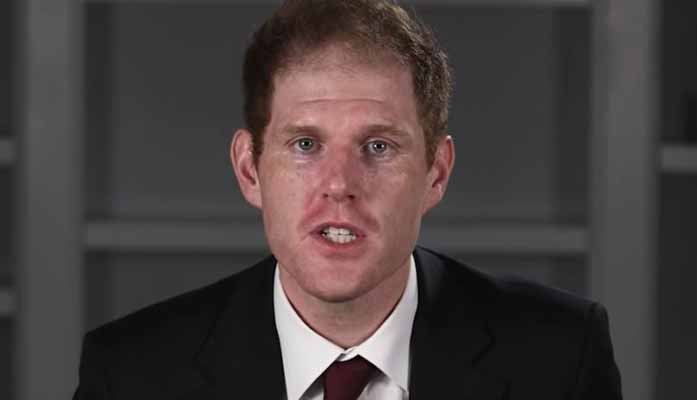
Maricopa County Recorder Stephen Richer says that a number of progressive social issues aren’t major threats to America.
Richer dismissed the notion that transgender activism, woke corporations, and critical race theory were the most important challenges facing America. He also deprioritized the concerns over globalization, worker power, and financialization.
Rather, Richer declared that he believed government regulation, tax rates, free trade, and illegal immigration were the top challenges facing America.
Specifically: tax rates on corporations and job creators are too high, regulation is discouraging business growth and innovation, and tariffs on China are raising prices and interfering with free trade.
The county recorder elicited his self-characterization in response to an American Compass report on a survey of Republicans describing “The New Conservative Voter.” By the report’s standards, Richer declared himself to be the “old right.”
“Naive of me to think politics was about competing ideas for a governing philosophy,” stated Richer.
A majority of survey respondents believed, in order, that transgender activism, woke corporations, illegal immigration, critical race theory, and globalization were the top five most important challenges facing America.
Those survey responders most concerned with the threat of progressive cultural issues were characterized as “cultural” Republicans. They agreed that transgender activists are trying to erase the differences between boys and girls; that “woke” corporations are forcing their values on Americans; and that schools, businesses, and even the military are telling Americans that the country is racist.
Survey responders most concerned with illegal immigration, family and fertility, and higher education were characterized as “consensus” Republicans. They agreed that illegal immigration undercuts American workers and lowers their wages; not enough people are married and having kids; and the education system only works for people who are able to succeed in college.
Those survey responders most concerned with globalization, worker power, and financialization were characterized as “new right” Republicans. They agreed that American manufacturing has been gutted by globalization and trade with China; workers have little control over their jobs and can’t do anything about it; and people make more money working Wall Street than building real businesses.
The survey respondents also overwhelmingly agreed that it’s become harder for a family to achieve middle-class security in America, that employers should offer better jobs and higher pay to bring in more workers, that colleges should have to bring down their costs and make loans themselves to students who need them, that tariffs are good and needed to boost American manufacturing, that the government should provide support to ensure that America is a leader in advanced technologies like semiconductors, that politicians should focus on cutting taxes and never consider raising them, and that the government shouldn’t implement welfare stipends under a “family benefit” policy.
However, survey respondents were more evenly divided on two issues. A lesser majority agreed that Wall Street investors are getting rich doing things that weaken our economy, and that unions are a negative force that harm workers, employers, and consumers.
Corinne Murdock is a reporter for AZ Free News. Follow her latest on Twitter, or email tips to corinne@azfreenews.com.
by Corinne Murdock | Feb 6, 2023 | News
By Corinne Murdock |
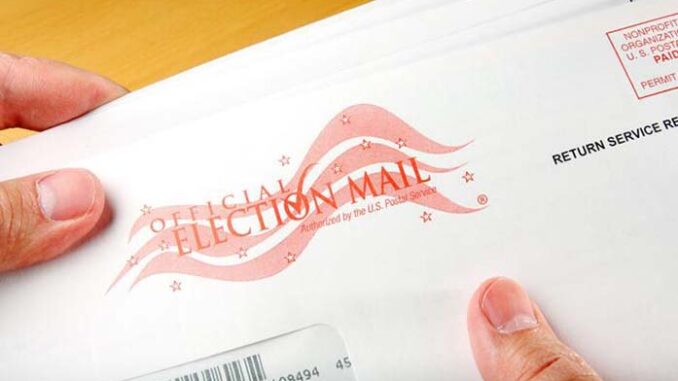
The Maricopa County Recorder’s Office says third-party voter turnout organizations using government seals have sent voter registration forms to ineligible voters and, in at least one instance, a dog.
Aaron Flannery, a government affairs official for the Maricopa County Recorder’s Office, revealed this during the Senate Elections Committee meeting. Flannery spoke in favor of a bill proposing mandatory disclosures on election-related mailers from nongovernmental entities or persons. He noted that the county receives frequent complaints about third-party mailers containing voter registration forms and pre-paid postage to their office.
“We did receive the following emails: from a very smart resident who said, ‘I am not a U.S. citizen, why are you sending me this?’ We had one from an upset resident saying ‘My spouse has been dead for 11 years and I have provided the death certificate. What kind of operation are you running there?’ And another confused resident — and this one really gets me — saying, ‘Jada is a dog. She cannot vote,’” said Flannery.
The bill, SB 1066, would require the phrase “not from a government agency” displayed in boldfaced, legible type on the outside of the envelope and on the document inside. The inner disclosure must make up at least 10 percent of the size of the document, or less than an inch on a standard 8.5-inch flyer or mailer brochure.
According to Flannery, third-party groups sent nearly 109,700 letters containing voter registration forms during the last primary election. Of these, voters returned 3,284 to the recorder’s office. Of those, 2,681 contained updated voter information, 365 had been addressed to deceased voters, and 234 contained brand-new registrations.
Flannery noted that this has been an issue for over a decade. These third-party organizations get their mailing lists from mass-mined data. Flannery said that SB1066 would alleviate voter confusion and improve voter confidence in county elections.
“It is not a voter suppression bill, it is a voter confidence bill,” said Flannery. “We are against mass mailings that are easily mistaken for official election mail that can lead to confusion.”
Flannery explained that the county has its own voter registration notification system for eligible voters, called “Eligible But Not Registered.”
The bill sponsor, State Sen. John Kavanagh (R-LD03), said the bill would prevent organizations from appearing to represent government messaging and interests.
“This is just a matter of transparency,” said Kavanagh.
In addition to the Maricopa County Recorder’s Office, the Arizona Association of Counties issued support of the bill.
All three Democrats on the Senate Elections Committee voted against the bill: State Sens. Juan Mendez (D-LD08), Anna Hernandez (D-LD24), and Priya Sundareshan (D-LD18). They were backed in their opposition by the American Civil Liberties Union (ACLU) of Arizona, the Sierra Club Grand Canyon Chapter, and All Voting Is Local Arizona.
Mendez questioned whether the bill actually solved a problem or whether it simply created less paperwork for election officials. Mendez insisted that this bill would violate the First Amendment; he claimed that some of his constituents complained that this proposed law was compelling speech.
Kavanagh rebutted that other compelled disclosures, such as cigarette companies notifying smokers of the link between cancer and cigarettes on cartons, weren’t considered to be in violation of the First Amendment.
Kavanagh clarified that the bill wouldn’t necessitate preapproval of election mailers.
Corinne Murdock is a reporter for AZ Free News. Follow her latest on Twitter, or email tips to corinne@azfreenews.com.
by Corinne Murdock | Dec 13, 2022 | News
By Corinne Murdock |
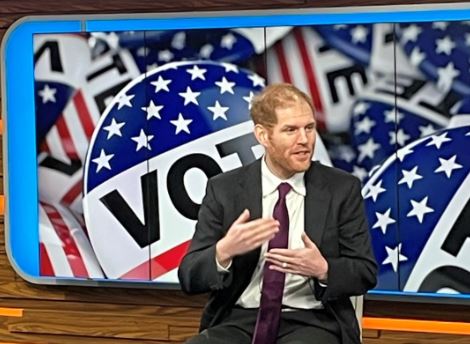
Maricopa County Recorder Stephen Richer said that early mail-in ballots are less problematic than in-person voting.
Richer made the remark during last month’s rowdy Board of Supervisors’ meeting to certify the election results. Richer said that this year’s early voting process had few issues, which he assured were remedied quickly.
“The early voting process is safe. It is secure, it is trackable, and it is subject to fewer of the caprices of in-person voting,” stated Richer.
The county recorder disclosed that preference at the end of his summary report on the county’s election processes and relevant data. He also took a swipe at critics.
“We can spend the next two years as we’ve spent the last two: fighting over conspiracy theories as promoted on social media by people who know nothing about elections,” stated Richer.
That line prompted loud, angry outcries from the audience. Gates pleaded calm, remarking that “the world is watching” as the audience shouted at Richer.
Richer continued, insisting that people should stop focusing on issues like splunk logs and ballot mules, and instead focus on legislative efforts like speeding up early vote processing.
Richer assured those present and the tens of thousands viewing the live stream of the meeting that the election was run efficiently despite Election Day hiccups with tabulators stemming from printer settings. Richer noted that political observers representing all parties were present throughout the election process.
Richer reported that Election Day voter registration totaled around 2.4 million. Approximately 77 percent of those were on the Active Early Voting List (AEVL); the county reportedly mailed out just under 1.9 million ballots.
There were 6,836 Uniformed and Overseas Citizens Absentee Voting Act (UOCAVA) votes. Over 1.3 million million early ballots were returned early: 806,000 came through USPS. Of the 461,000 early ballots dropped off at drop box early voting locations, 290,000 were dropped off on Election Day. Richer remarked that the number of early ballots dropped off on Election Day were a significant increase, despite his “best efforts” to dissuade voters from doing that.
Richer walked through the early ballot review process. He dispelled rumors that the county uses artificial intelligence for signature verification.
Richer reported that on the day before Election Day, the county had processed all early ballots received by Saturday. By Wednesday morning they processed all early ballots they received by Sunday, Monday, or by mail on Tuesday.
Richer emphasized that the county didn’t compromise any aspect of their early ballot processing because of the “stink” raised by the community concerning signature verification over the last few years.
He reported that the Sunday after Election Day, the early vote team had to review provisional ballots and cure ballots. Approximately 16,000 ballots had “bad” signatures, and all were cured except about 1,800.
Corinne Murdock is a reporter for AZ Free News. Follow her latest on Twitter, or email tips to corinne@azfreenews.com.
by Corinne Murdock | Dec 9, 2022 | News
By Corinne Murdock |
Maricopa County Recorder Stephen Richer worked with the federal government to moderate speech, suggesting in one meeting that they hold “bootcamps” for media outlets to improve election reporting. Richer clarified to AZ Free News that he doesn’t advise or direct the actions of the federal government.
According to documents obtained by Trump’s 2024 campaign attorney Christina Bobb, Richer met with the Cybersecurity and Infrastructure Security Agency (CISA) Cybersecurity Advisory Committee (CSAC) Misinformation & Disinformation (MDM) Subcommittee in March. CISA is an agency of the Department of Homeland Security (DHS).
Richer cited The Gateway Pundit (TGP) reporting on a debunked claim that county election officials held an unannounced meeting as one example of misinformation.
TGP sued Maricopa County last month, TGP Communications v. Sellers, for denying one of its reporters a press pass. On Monday, the Ninth Circuit Court of Appeals ordered the county to issue the press pass while litigation continues. The court asserted that the county likely violated the First Amendment, finding that the county discriminated against TGP for its reporter’s political views.
This reporter asked Maricopa County for comment on the order to issue a press pass. The county responded that it doesn’t comment on ongoing litigation.
AZ Free News asked Richer about this collaboration with CISA, as well as his decision to delete the below tweet amid the ongoing lawsuit. Richer responded that his remarks to CISA weren’t unique from remarks that he’s shared with many other audiences. He added that the documents posted on Twitter summarized the topics he discussed.
“I don’t advise them on anything or direct any of their actions. I think they just wanted the perspective of an election administrator and what I try to do to share accurate voting information,” stated Richer.
As for the tweet, Richer explained that he occasionally deletes posts that he dislikes or believes to be unproductive in hindsight. He added that he doesn’t keep track of the posts he deletes or the reasons why he deleted them.
Richer told the MDM Subcommittee that the federal government and CISA had low credibility in rumor control. He advised that those with the most credibility were local community members, mainstream media, and social media companies like Twitter and Facebook.
Along with the misinformation and disinformation claims, Richer told CISA that some were guilty of “malinformation” by submitting too many public records requests. In its meeting summary, CISA characterized the increase in requests as an “abuse.”
“In 2019, Maricopa County received 30-40 public records requests. In 2021, they received over 350 requests ranging from requests to produce everything related to the 2020 election to all email communications related to elections, to all the rules and processes on how the elections are administered,” stated the report. “This example highlights how individuals can use lawful means to burden a system already stretched thin.”
Those leading the MDM Subcommittee meeting were Megan Tsuyi, designated federal officer for CSAC and MDM Subcommittee; Kate Starbird, a University of Washington professor and MDM Subcommittee chair; and Kim Wyman, CISA senior election security lead.
Others present at the meeting were Vijaya Gadde, the legal, public policy, and trust and safety lead for Twitter; and Suzanne Spalding, senior DHS advisor and director of Defending Democratic Institutions Center for Strategic and International Studies.
Corinne Murdock is a reporter for AZ Free News. Follow her latest on Twitter, or email tips to corinne@azfreenews.com.
by Corinne Murdock | Nov 9, 2022 | News
By Corinne Murdock |
“Where there’s crisis, there’s opportunity,” as the saying often attributed to Albert Einstein goes.
In the midst of a widespread Election Day disaster concerning tabulation machine malfunctions reportedly caused by printer settings, Maricopa County Recorder Stephen Richer capitalized on the crisis in his county as an opportunity to fundraise for his campaign.
In an email to voters publicized by the Arizona Daily Independent, Richer explained his office takes responsibility for voter registration and early voting. Those in charge of the tabulator failures would be the Maricopa County Board of Supervisors, he added, throwing in commendation of his own job performance. Richer included a contribution link and a disclosure that the email was paid for by his reelection campaign.
“Since becoming Recorder in 2021, I have worked hard to improve voter registration and Early Voting, while also supporting the Board’s administration of Election Day operations and tabulation, as well as bolstering communications about elections holistically,” Richer said in the email.
On Richer’s personal Twitter account, which he usually uses to discuss his work, this letter was published without disclosing its campaign origins or including the contribution request.
Voters faced with faulty vote centers were faced with multiple options, some leading to potential disenfranchisement: leave without voting, spoil their ballot, cast a provisional ballot, or wait in the hopes that their ballot would be tabulated properly (sometimes for hours).
GOP consultant Constantin Querard told the ADI that this was a bad move on Richer’s part.
“I can’t imagine a worse time for a County Recorder to be soliciting contributions than on Election Day, while your voters are stuck in line, waiting for your malfunctioning machines to be repaired so they can vote,” said Querard.
Richer’s term doesn’t end until 2025.
Corinne Murdock is a reporter for AZ Free News. Follow her latest on Twitter, or email tips to corinne@azfreenews.com.