by AZ Free Enterprise Club | Oct 23, 2022 | Opinion
By the Arizona Free Enterprise Club |
Every voter should be required to provide identification before casting a ballot. It’s the bedrock of secure elections and ensures it is both easy to vote and hard to cheat. But in Arizona, some in-person voters can present two non-photo documents in place of a photo ID, and for the millions of Arizonans who choose the convenience of voting by mail, only a signature is required.
The fact is we currently treat different types of voters disparately—not all voters are showing ID. That’s why Prop 309 is critical. It creates universal voter ID requirements so that valid ID is required no matter when, where, or how we vote, meaning all voters will be treated equally and all will show ID. Plus, Prop 309 waives the fee for a state issued photo ID.
If that sounds like a no-brainer, that’s because it is.
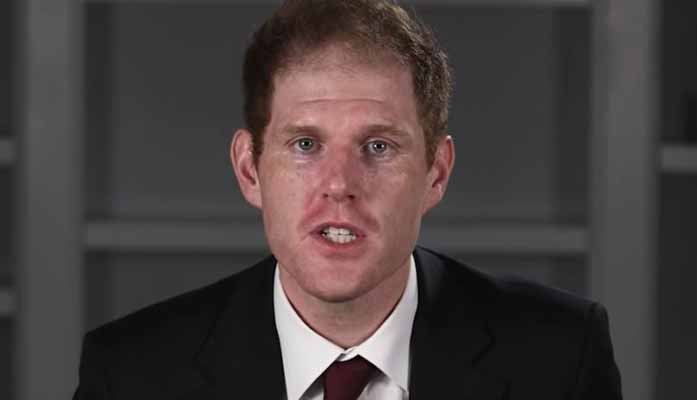
But recently, Maricopa County Recorder Stephen Richer waged a political campaign against Prop 309, illegally using his office and taxpayer resources to misinform voters and influence the outcome of the election…
>>> CONTINUE READING >>>
by Terri Jo Neff | Oct 13, 2022 | News
By Terri Jo Neff |
Arizona Attorney General Mark Brnovich has been asked to look into whether some of the state’s top election officials violated state law this week by issuing a statement opposing Proposition 309, which is on the Nov. 8 statewide ballot.
Prop 309 is before the voters to decide whether to amend several of Arizona’s current election laws. For an example, a “yes” vote would require voters to write their birthdate and government-issued identification number on the concealed early ballot affidavit, and for those who want to vote in-person they would be required to present an official photo identification at their polling place.
The Arizona Association of County Recorders (AACR) issued a statement Tuesday advocating a “no” vote which would leave in place the state’s existing laws about early ballot affidavits and voter identification. Among the duties of a county recorder is to conduct early voting, including mailing out early ballots and verifying signatures when early ballots are returned by voters.
Maricopa County Recorder Stephen Richer is the president of AACR and is the one who distributed the anti-Prop 309 statement on Tuesday. Yet according to election law expert Timothy La Sota, it appears Richer has violated two Arizona laws in connection with the statement, which was also posted to a website controlled by Maricopa County.
“Contrary to what Mr. Richer appears to believe, the County Recorder’s website is a publicly funded website, and using it as a vehicle to promote Mr. Richer’s political agenda is not only inappropriate, it is illegal,” attorney La Sota wrote, pointing Brnovich to Arizona Revised Statute 11-410(A) and 16-192(A). “This website is not at Mr. Richer’s disposal to use as a campaign website for his favored political causes.”
That first statute states a county “shall not spend or use its resources, including the use or expenditure of monies, accounts, credit, facilities, vehicles, postage, telecommunications, computer hardware and software, web pages, personnel, equipment, materials, buildings or any other thing of value” for the purpose of swaying an election outcome.
The second statute prohibits the state and “any public agency, department, board, commission, committee, council or authority” from spending or using public resources to influence an election, including the use of “computer hardware and software, web pages and personnel and any other thing of value of the public entity.”
La Sota pointed out that data associated with the document indicates the AACR statement -which includes the names of all 15 county recorders- was created by one of Richer’s employees during office hours, another “no no,” he told the attorney general.
“As a countywide elected official charged with various election related duties, Mr. Richer should know this,” La Sota added. “And his actions in placing his thumb on the scale illegally in this context do not auger well for maintaining a professional perception in other realms.”
During an interview Thursday morning, Amy Yentes of the Arizona Free Enterprise Club discussed why Arizona law expressly prohibits the government from electioneering activities in an effort to sway a particular race or contest.
“This is a protection for taxpayers,” Yentes told KFYI’s James T. Harris. She also supports La Sota’s request to Brnovich for an investigation into how the AACR’s anti-Prop 309 statement came to be created by a Maricopa County employee and posted to the county’s website.
“What is more disturbing is that Stephen Richer is an election administrator,” Yentes told Harris. “It is quite concerning that he can’t even follow basic election law and yet we’re trusting him to administer our elections.”
But that is not the only problem stemming from Richer’s distribution of the anti-Prop 309 statement, which he said on Tuesday afternoon was approved by AACR members by “unanimous voice vote (no nays, all ays).” Richer also tweeted that “14 of the 15 counties were present” for the vote, with only Apache County absent.
According to Cochise County Recorder David Stevens, the inference voters will make from the AACR statement and Richer’s social media comments is that all 15 county recorders are against Prop 309. In fact, Richer retweeted someone else’s comment that the vote was unanimous against the proposition.
That, Stevens says, is not true. In fact, he is an adamant supporter of Prop 309 and has demanded Richer correct the AACR statement and clear any misperception.
“Stephen, I was out of the office yesterday and did not see this email. I STRONGLY OBJECT to anyone assigning an opinion to me without my expressed consent. Silence is NOT acceptance. I do support prop 309 and kindly request you remove my name from this list and issue a retraction immediately,” Stevens wrote.
As of press time, Stevens had no contact from Richer about the Prop 309 issue. He was, however, included on a mass email the Maricopa County Recorder sent to his fellow recorders Wednesday evening.
“Good luck Recorders!” the subject line reads, before Richer wished everyone “the absolute best this early voting season.”
by Corinne Murdock | Sep 7, 2022 | News
By Corinne Murdock |
In an attempt to set voter expectations ahead of the upcoming midterm elections, Maricopa County Recorder Stephen Richer shared that initial results would favor Democrats heavily.
Richer based his prediction on the voting patterns from November 2020 and last month’s primary election. Both elections first tabulated early ballots received the week beforehand, most of which voted for Democratic candidates. Then, the county tabulates early ballots dropped off the day before and on Election Day, as well as in-person ballots, most of which voted for Republican candidates.
“First moral of the story: in Arizona, initial results will likely be much bluer than eventual final results,” said Richer. “Second moral: if you want your ballot to be part of results released at 8:00 pm on Election Night, return it before the weekend before Election Day.”
Less than two weeks after last month’s primary election, the Maricopa County Board of Supervisors released their canvas of the election results. Over 866,000 voters (35 percent of the 2.47 million registered voters) cast ballots in the primary election, over 87 percent of which were early voters.
According to the canvas, Republicans had a higher turnout than Democrats in Maricopa County: over 59 percent to just over 47 percent, respectively.
REVIEW PRIMARY ELECTION RESULTS HERE
While Richer predicted the county’s potential initial outcomes for the midterms, the primary’s voter turnout and the county’s voter registration numbers hint at the potential final outcomes.
According to the county’s latest voter registration statistics in July, most voters identified as Republican. Over 854,000 voters were Republican (34.5 percent), while over 851,000 voters were “other” (34.4 percent) and over 748,000 were Democrats (30.2 percent).
For months, party switches have trended in the following order from least to greatest: other, Republican, Democrat, than Libertarian. In July, over 5,500 voters switched to “other,” over 4,500 switched to “Republican,” over 3,500 switched to Democrat, and over 400 switched to Libertarian.
Maricopa County’s pattern of voter registrations aligns with the state’s. According to the secretary of state’s latest voter registration statistics, there are over 1.4 million Republicans (34.5 percent), over 1.4 million “other” voters (33.7 percent), and nearly 1.3 million Democrats (30.9 percent). Less than one percent, or 32,600 voters, were Libertarian.
Corinne Murdock is a reporter for AZ Free News. Follow her latest on Twitter, or email tips to corinne@azfreenews.com.
by Corinne Murdock | Oct 2, 2021 | News
By Corinne Murdock |
Cochise County Recorder David Stevens disagrees with the assurances from Maricopa County election officials that the recently-released audit was entirely inaccurate. Stevens made this assessment on KFYI’s James T. Harris radio show. He honed in on the purported issues presented by Maricopa County’s signature verification process.
“We have standards in this field. I was in this field for 30 years, they go back decades that dictate what are good practices – and they [Maricopa] show none of them,” said Stevens.
Stevens explained that his county’s signature verification process was very different from Maricopa County’s. That caused him to question the strength of Maricopa County’s results.
“They’re verifying the scanned copy of the signature with what’s in their file. What I do in my county is we actually have the envelope in hand, looking at the signature on screen, because there are indicators in the signature that help to determine if it’s a valid signature or not. But you saw the scans if you watched the presentation on Friday, [of] how low quality of the scan was. And those indicators are very small. Like when you stop – when you’re writing your name and you stop, and that one letter you start up again – that kind of stuff disappears on a scan, and it makes it harder if not impossible to verify.”
AZ Free News reached out to Maricopa County Recorder Stephen Richer about these concerns. He didn’t respond by press time.
Stevens said that he was also astounded by the other problems discovered by auditors – like the fact that countless people used the same log-in credentials.
However, Stevens said that the more troublesome aspect of the audit concerned the election officials themselves. He cited the recent resignation of Maricopa County Supervisor Steve Chucri as an example, who quit following the audio leak of a phone call in which he claimed that his county knew their audit and the Dominion voting machines weren’t trustworthy.
“Why did the elected officials obstruct this audit?” asked Stevens. “We’re elected to serve the public, not to serve ourselves. You see what happens when you get caught on a phone call you don’t know what’s being recorded, you don’t know what comes out. They were afraid for themselves.”
Maricopa County officials disagree with the audit because of who was put in charge: Cyber Ninjas. Prior to the Arizona Senate’s contract, the technology security company had never conducted any election-related work, including audits. This is something that Richer and others have reiterated: their reluctance to cooperate comes from their distrust of Cyber Ninjas’ intentions and competence.
Stevens said that he couldn’t see what good reasons the county could have for the issues presented in the audit.
He added that officials shouldn’t be deleting files, referencing a claim made during the Senate audit hearing last week. Maricopa County responded that they hadn’t deleted the files: they’d archived them elsewhere, something which the Senate hadn’t subpoenaed.
When asked, Stevens said there likely wouldn’t be any remedies to improve elections before the 2022 midterms.
“I think the best solution going forward is a random, constant audit going forward,” said Stevens.
Maricopa County created a webpage to address various concerns and claims made about their election processes.
Attorney General Mark Brnovich promised to have his Election Integrity Unit (EIU) investigate some of the findings in the Senate audit. He issued a follow-up request for the supporting documents to the audit earlier this week.
“The Arizona Senate’s report that was released on Friday raises some serious questions regarding the 2020 election,” said Brnovich. “Arizonans can be assured our office will conduct a thorough review of the information we receive.”
Read the latest updates from the EIU here.
Corinne Murdock is a reporter for AZ Free News. Follow her latest on Twitter, or email tips to corinne@azfreenews.com.