by Staff Reporter | Feb 27, 2026 | News
By Staff Reporter |
The Arizona Senate approved legislation to facilitate coordination between law enforcement and federal immigration agents.
SB 1055 passed 16-11, with all Republicans in support and all Democrats against.
The bill requires law enforcement to notify either Immigration and Customs Enforcement (ICE) or Customs and Border Protection (CBP) immediately following the arrest of an individual who is discovered to be an illegal alien.
The bill sponsor, Sen. Wendy Rogers (R-LD7), says this will give law enforcement the sense of security they deserve to appropriately process individuals with deportation orders. Rogers said her legislation was necessary to support safe neighborhoods and consistent enforcement within public safety.
“When someone is under arrest and unlawfully present in our country, law enforcement should never have to hesitate, second-guess, or worry about whether doing the right thing will jeopardize their career,” said Rogers. “For too long, unclear policies and political pressure have created confusion that undermines public safety and puts officers in an impossible position.”
Given the partisan nature of the bill, it’s highly likely the legislation will die under Gov. Katie Hobbs’ veto pen should it pass the House.
The first to speak against the bill during Monday’s floor vote was Assistant Minority Leader Catherine Miranda (D-LD11). She said the bill wasn’t needed. Miranda discouraged the idea that Arizona law enforcement needs to support ICE in deportation proceedings, since ICE agents were “terrorizing” communities across the nation.
“[SB1055 is] unnecessary and strives to increase fear in communities and empowers all law enforcement to act as ICE agents,” said Miranda.
During the committee hearing on the bill last month, Miranda said she carries all of her sensitive personal documents in her car — her birth certificate, Social Security card, and passport — just in case law enforcement questions her citizenship.
Sen. Sally Ann Gonzales (D-LD20) claimed the bill would cause racial profiling.
“Our communities are already, you know, not feeling well, not wanting to go to work, school, or otherwise because of what is happening in our communities with the federal immigration process that’s happening in and around our communities,” said Gonzales.
Sen. Analise Ortiz (D-LD24) called it an “anti-public safety bill” and “cruel.” Ortiz said the detainment facilities were “death camps.” She opposed the concept of deporting illegal aliens
“It is going to invite a violent, armed paramilitary force to have more unnecessary interactions with our communities,” said Ortiz. “ICE out of Arizona, ICE out of our communities.”
Similarly, Sen. Lauren Kuby (D-LD8) said ICE was too dangerous and relying on poorly trained and violent forces.
Majority Leader John Kavanagh (R-LD3) said it was effective government to have local law enforcement cooperating with federal law enforcement. Kavanagh lamented the likely veto from Hobbs.
“People who are accused of being here illegally need to be brought to justice,” said Kavanagh. “We shouldn’t be trying to hamper [the lawful execution of our laws].”
Sen. Jake Hoffman (R-LD15) reminded his colleagues across the aisle that the bill impacts individuals who were already arrested for committing a crime and in custody.
“It’s absurd that you would not want the criminals who come over illegally removed from this country. Apparently it’s just lawlessness run amok in this chamber. We are hearing [Democrats] advocate for not turning over illegal alien criminals to federal immigration law enforcement,” said Hoffman.
As a response to Democratic lawmakers citing the Minnesota deaths of anti-ICE activists Alexi Pretti and Renee Good, Hoffman read off a handful of the names of individuals murdered by illegal aliens, which prompted an outburst from the audience.
Minority Leader Priya Sundareshan (D-LD18) dismissed Hoffman’s list of victims, saying all illegal aliens who committed those crimes were facing charges unlike the officers involved in the Pretti and Good deaths. Sundareshan took issue that individuals arrested for civil violations, not just criminal violations, may face deportation.
“In this country we are innocent until proven guilty,” said Sundareshan.
Sen. Mitzi Epstein (D-LD12) said this would allow “perfectly innocent” individuals to be arrested and attacked.
“ICE has become an agency of thugs who do not follow the law,” said Epstein. “I am afraid of ICE agents.”
AZ Free News is your #1 source for Arizona news and politics. You can send us news tips using this link.
by Staff Reporter | Feb 23, 2026 | News
By Staff Reporter |
The Republican-led Senate is poised to vote on multiple bills that would impose greater restrictions on gender transition procedures in Arizona.
The Senate Health and Human Services Committee passed four bills targeting different aspects of gender transition procedures: Senate Bills 1014, 1177, 1094, and 1095. All with the exception of SB 1095 were heard in committee last week. All were passed without the support of Democratic lawmakers.
Progressive activists lined up to testify against the bills during the several committee hearings.
SB1095, which would ban gender transition procedures for minors, provoked testimony from several activist adults who identify as transgender.
Former Liberty Elementary School District governing board member, Paul Bixler, said SB1095 would harm, not help, children. Bixler, a man, identifies as a transgender woman.
Ruth Carter, an attorney, said SB1095 amounted to discrimination. Carter, a woman, identifies as a nonbinary individual.
Marilyn Rodriguez, Creosote Partners founder and lobbyist representing the ACLU, said SB1095 was impermissibly broad as written.
Sen. Lauren Kuby (D-LD8) called the bill discriminatory, and argued that lawmakers shouldn’t ban gender transition procedures since certain healthcare experts support those procedures as treatments for gender dysphoria.
“These are private, personal decisions, healthcare decisions, we shouldn’t be discriminating against transgendered youth or those who have gender dysphoria as is described,” said Kuby.
Sen. Analise Ortiz (D-LD24) said the legislature would be better focusing on making healthcare more affordable. Ortiz said the legislation was not only discriminatory but violative of parental rights laws.
“It bans healthcare for a specific group of people solely based on gender identity; that is discrimination no matter how you want to paint it,” said Ortiz.
Sen. Mark Finchem (R-LD1), the bill sponsor, disputed the narratives of his Democratic colleagues that healthcare experts were to be trusted fully and that gender transition procedures were appropriate for minors.
“To those who worship the grounds that doctors walk on: they also said cigarettes were good for you,” said Finchem. “[Permanently altering treatments like mastectomies] are decisions that kids are being talked into, in some cases. I didn’t just dream this bill up myself. This came from kids and parents. More kids than parents.”
Majority Leader John Kavanagh (R-LD3) questioned the logic of his Democratic colleagues that parents had a right to submit children to irreversible medical treatments, but not the right to decide whether their children should be called by certain pronouns or alternative names in school.
SB 1014 would require health insurers to offer coverage for detransition procedures should those insurers provide coverage for gender transition procedures. It would also issue reporting requirements on insurance claims for gender detransitions.
“Detransitioners are people too; they deserve the same care as those who are manipulated into believing they have gender dysphoria, which leads them to undergo gender transition surgery that they later regret,” said the bill sponsor, Sen. Janae Shamp (R-LD29), in a press release. “This legislative package puts their long-term well-being above politics and ideology.”
Jeanne Woodbury, a lobbyist for the ACLU, argued the reporting requirements within the bill would result in discriminatory outcomes.
Bixler, the transgender-identifying former school board member, claimed the bill would result in providers refusing to provide gender transition procedures.
SB 1177 would ban public funding for gender transition procedures.
Sen. Wendy Rogers (R-LD7), the bill sponsor, explained during Wednesday’s HHS hearing that she discovered taxpayers were funding gender transition treatments for prisoners. Rogers also discovered that individuals were being arrested on purpose in order to receive free gender transition treatments.
“Taxpayer dollars should never be used to bankroll irreversible procedures on children,” said Rogers in a later press release. “This legislation draws a hard line and makes clear that public funds will not subsidize experimental or life-altering interventions on minors.”
Ashton Allen expressed support on behalf of Center for Arizona Policy. Allen said subsidies should be tied to valid medical treatments, which he said gender transition procedures weren’t.
Woodbury, the transgender-identifying ACLU lobbyist, argued against Rogers’ claims and said the treatments were affordable. Woodbury also said an end to subsidization would lead to excessive medical risks associated with forced detransitions.
Minority Whip Rosanna Gabaldon (D-LD21) said ending subsidies was “extreme and punitive,” as well as “unfair and dangerous.”
Sen. Sally Ann Gonzales (D-LD20) accused Rogers of faking a story that individuals were getting themselves arrested in order to receive free gender transition treatments. Gonzales called the bill discriminatory.
Sen. Shamp questioned why drugs historically considered to be dangerous were suddenly ethical in the context of gender reassignment.
“Lupron was deemed cruel and unusual punishment being utilized in the prison system for sex offenders, rapists. But now we want Arizona taxpayers to pay for that drug to be utilized for gender reassignment? How the heck did we get here?” said Shamp.
SB 1094 would allow individuals to seek damages in court against physicians who performed gender reassignment surgeries on them as minors. Kavanagh sponsored the bill.
“When permanent procedures are performed on minors who suffer harm, there must be consequences,” said Kavanagh in a press release. “These reforms restore transparency and provide a pathway to just compensation for those harmed.”
AZ Free News is your #1 source for Arizona news and politics. You can send us news tips using this link.
by Staff Reporter | Jan 22, 2026 | News
By Staff Reporter |
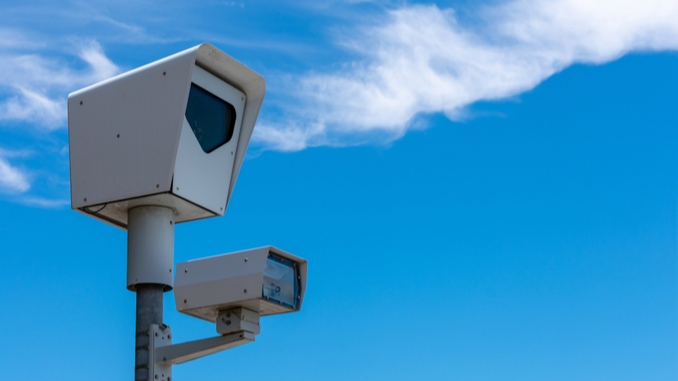
Voters may soon get to decide whether or not photo radar will continue to be used in the state.
A committee in the State Senate approved the bill on Tuesday.
SCR 1004 would ban photo enforcement systems used to identify violators of speed restrictions or traffic control devices from the entire state.
If approved by the state legislature, the measure could appear on the ballot as early as this November. Lawmakers opted for a resolution as a more viable pathway to bypass the requirement for Governor Katie Hobbs’ approval.
The governor didn’t support attempts to ban photo radar in the past.
Last year, the governor vetoed the same legislative language (outlined in a bill rather than a resolution) after its party-line approval in the legislature. No Democrats in either the House or Senate voted for the bill. Hobbs’ veto letter argued that the removal of photo radar would make the roads more dangerous, not safer.
“This bill attempts to remove the ability of local law enforcement to keep our streets safe by eliminating a tool used to enhance roadway safety,” stated Hobbs.
This sentiment was shared by Democratic lawmakers. State Sen. Lauren Kuby argued that certain studies supported the effectiveness of photo enforcement systems to reduce and deter traffic violations.
During voting on the bill last year, some Republicans — Reps. Teresa Martinez, Justin Wilmeth, Alexander Kolodin — did express doubts about the strategy of advancing a bill with SB 1019 rather than a resolution. An identical measure existed in SCR 1002.
Wilmeth said they were “wasting” their time by voting on the bill version of the legislation rather than the resolution.
“I want my Republican caucus members to understand: this bill will pass, and it will get vetoed,” said Wilmeth. “This is what majorities are about, and in this issue we are wasting our opportunity.”
Kolodin said Democrats were defending photo radar under false pretenses of public safety concerns, and that their true intentions had to do with ticket revenues’ ties to clean election campaign funds.
“The photo radar scam is the way that our friends across the aisle fund their war machine. They run candidates in noncompetitive districts and funnel taxpayer money over to competitive districts, all on the backs of hardworking Arizona drivers who are denied due process when they receive their traffic tickets,” said Kolodin. “It’s almost as if we’re more interested in making a show of solving the problem than actually solving the problem.”
State Sen. Wendy Rogers authored both pieces of legislation last year and was the lawmaker to reintroduce it again this year.
Rogers disputed Hobbs’ veto claim in a press release published on Tuesday. The state senator stressed the unreliability of automated enforcement, which is what photo radars operate under. Rogers said it should be law enforcement, not technology, to make the judgment call on violations of traffic law.
“Automated enforcement removes discretion, undermines due process, and turns routine driving into a revenue stream,” said Senator Rogers. “That’s not how law enforcement should work in Arizona. The resolution does not excuse dangerous driving or eliminate traffic enforcement. It ensures that enforcement decisions are made by trained law enforcement officers, not algorithms and contractors.”
AZ Free News is your #1 source for Arizona news and politics. You can send us news tips using this link.
by Staff Reporter | Dec 21, 2025 | News
By Staff Reporter |
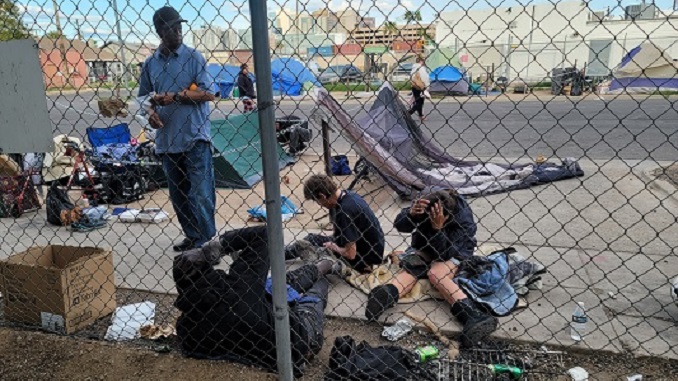
The Phoenix City Council approved several ordinances that will hold the homeless accountable for crimes committed in public parks and spaces.
The council approved ordinances prohibiting certain behaviors most often done by the homeless.
One ordinance puts more restrictions on public parks: no more entering areas closed to the public, drinking liquor, smoking, bathing, or obstructing guests or amenities.
Park rangers or police officers will be allowed to issue a trespass notice lasting one year, and the court may impose community restitution, education, or treatment programs.
Council member Anna Hernandez was the sole “no” vote on the ordinance.
Hernandez said she “needed to take [the council] to church” on the issue. She called the ordinance “shameful, racist, ineffective policy.”
“This is a huge step in aligning our city in Trump’s war on homelessness. We need more beds [and support services], not more criminalization,” said Hernandez.
Parks and Recreation Director Cynthia Aguilar clarified this ordinance was about aligning park code of conduct with city ordinances — not a new effort to criminalize behaviors, or target the homeless specifically.
“The consequences or the penalties that exist already existed prior to this when it comes to the ordinances, but there were clarifications in where that language was placed,” said Aguilar.
The council also approved, unanimously, an ordinance increasing the punishment for remaining on road medians and obstructing traffic. Rather than requiring law enforcement to give a warning for the first violation, law enforcement may issue a civil traffic offense amounting to a class one misdemeanor.
By far the most controversial ordinance passed prohibits the public provision of medical care or treatment, sale or exchange of needles and syringes, and the sale or distribution of harm reduction, or drug usage, kits. First responders, family members, individuals rendering aid during an emergency, and administration or distribution of naloxone are exempt.
Parks and Recreation Director Cynthia Aguilar cited the need for the ordinance to address “safety, potential harm, and [bio]hazard [concerns]” for park users.
Again, Hernandez was the sole “no” vote on the ordinance.
Opponents to the ordinances said they amounted to “criminalization” of poverty and “fascism.” They argued the city had a duty to address the underlying causes of unlawful behaviors by the homeless and provide alternatives, such as more public showers, rather than holding them accountable for their crimes.
Supporters of the ordinances testified to the dangers posed by the transients, especially to the children: bathing publicly in the nude, open-air drug usage, discarding drug paraphernalia, dealing drugs, blocking traffic, and harboring dogs that roam unleashed in public spaces and roadways.
State Senator Lauren Kuby (D-LD8), speaking on behalf of constituents and “mutual aid groups” claimed the behaviors that would be punished were actually constitutionally protected activities. Kuby also argued that it was “basic human behavior” for the homeless to bathe in public.
“Phoenix parks are not just recreational spaces. Under the Constitution, they are traditional public forums — places where people gather, speak, assemble, pray, protest, and exist in public life,” said Kuby.
State Representative Mariana Sandoval (D-LD23) and Senator Analise Ortiz (R-LD24) issued a joint letter criticizing the ordinances as “criminalizing poverty” that would cost taxpayers more without reducing crime or overdoses.
Council member Betty Guardado implied that families in affected neighborhoods should use their “means” to go elsewhere to enjoy public spaces and have their children play.
Council member Jim Waring criticized the opponents of the ordinances as supportive of preserving currently dangerous environments.
“Some of you are clapping. You think you’re on the side of truth and justice. Well, I’ve got some bad news: you’re not. You’re wrecking it for the rest of these people who are also paying taxes. When do we start thinking about them?” asked Waring.
Waring also criticized the hands-off approach to the homeless. He expressed a desire for the homeless to be made to accept services to get off the street and cease drug usage in public.
“We spend a fortune on the homeless — way more than we used to,” said Waring. “You guys think the homeless should just take over the parks and do whatever they want.”
AZ Free News is your #1 source for Arizona news and politics. You can send us news tips using this link.
by Ethan Faverino | Jul 22, 2025 | News
By Ethan Faverino |
The Arizona Republican Assembly (AZRA) has released its Final Legislative Scorecard for the 2025 Arizona State Legislative Session.
This scorecard evaluates Arizona State Senate and House of Representatives members based on their voting records and alignment with AZRA’s core principles of limited government, individual liberties, and fiscal responsibility.
As primary elections approach, this scorecard is a critical tool for voters to distinguish authentic conservatives from those who merely claim the label.
The AZRA Legislative Scorecard is the only one, not only in Arizona but in the nation, where a committee of twelve members from across the state invest thousands of hours analyzing over 1,800 bills annually, rating more than 250 bills.
AZRA then publishes these bill ratings before legislative votes, notifying every legislator in advance and inviting feedback to ensure fairness. To maintain integrity, AZRA contracts a national data firm that receives daily voting data from the Arizona Legislative Council, updating results without manipulation or bias.
The scorecard lists 30 State Senators and 60 State Representatives, providing numerical scores out of 100 based on weighted votes on key bills. Scores are presented alphabetically by last name for letter grades, in descending order, along with party affiliation and legislative district.
Among senators, Senate President Warren Petersen (R-LD14) earned the highest score of 98.5, followed by Senator Wendy Rogers (R-LD7) at 96.9, Senator David Farnsworth (R-LD10) at 95.9, and Senator Timothy Dunn (R-LD25) at 95.5.
The highest-ranking Democrats were Senator Brian Fernandez (D-LD23) at 40.5 and Rosanna Gabaldón (D-LD21), at 34.1. The lowest scoring Democrats were Lauren Kuby (D-LD8) at 25.4 and Priya Sundareshan (D-LD18) at 23.8.
Representative Selina Bliss (R-LD1) led the House with a score of 96.8, followed by a four-way tie at 96.1 among Majority Leader Michael Carbone (R-KD25), John Gillette (R-LD30), Quang Nguyen (R-LD1), and James Taylor (R-LD29).
Rep. Bliss recognized AZRA’s Scorecard saying, “It is an honor to be recognized, along with seatmate Quang Nguyen, by the Arizona Republican Assembly for our work at the Capitol!”
Out of the Democrat Representatives, Alma Hernandez (D-LD20) scored the highest with a 49.4 and Consuelo Hernandez (D-LD21) with a 48.8. The lowest ranked Democrats are Quantá Crews (D-LD26) with a score of 26.6 and Mariana Sandoval (D-LD23) with a 25.5.
The AZRA scorecard reveals a significant divide in voting patterns between Republican and Democratic legislators in the Arizona State Senate and House, with Republicans ranging from 78.7 to 98.5 and Democrats scoring from 23.8 to 49.4.
Correction: This story originally stated that there are 50 State Representatives. The story has been updated to reflect the correct number at 60 State Representatives.
Ethan Faverino is a reporter for AZ Free News. You can send him news tips using this link.
Page 1 of 11