by Matthew Holloway | Aug 2, 2025 | Education, News
By Matthew Holloway |
Arizona State Representative John Gillette (R-LD30) shared a post on Wednesday containing images and video footage taken at Dobson High School from Turning Point Action Field Representative Angel Guess. The images and video footage depicted Black Lives Matter (BLM) and pro-LGBTQ material in the classroom.
In her post, Guess wrote, “Attention Mesa Residents, mothers, fathers… this is what your taxpayer dollars pay for.. School starts tomorrow [at Dobson High] and YOUR kids are walking into this. Video from today!”
She continued, “Mesa Public School District is this what parents subscribe to when they sign your enrollment agreement? Not my child! Who agrees?”
Sharing the post, Representative Gillette declared it to be “Another advertisement for the Arizona ESA voucher program.”
“Govt schools can’t understand why their student count keeps falling. Woke indoctrination, DEI, and poor academic results are destroying government schools,” Gillette added.
The post to X has since garnered the attention of former Republican Congressional candidate Josh Barnett, who observed, “This is why school choice is so important and allowing Private/charter schools to prosper.”
Senior Advisor for the U.S. Agency for Global Media Kari Lake excoriated the district, writing, “Stop radicalizing our children! Cut all taxpayer funding to woke public schools. Our kids deserve better.”
As previously reported by AZ Free News, Dobson High School has a history of alignment with Diversity, Equity, and Inclusion (DEI) efforts such as the “No Place For Hate” (NPFH) program of the Anti-Defamation League (ADL) of Arizona, which named Dobson as an NPFH school in 2022.
As recently as July 18th, Arizona Women of Action posted a thread on X, making serious allegations that “There are explicit books in MPS libraries. High schools. Middle schools. Even ELEMENTARY schools.”
The texts reportedly include: “Push” by Sapphire, “The Bluest Eye” by Toni Morrison (which both detail sexual abuse), “Tricks” by Ellen Hopkins, which has been removed from schools in 13 states for references to drug use, sexual abuse, and suicide, and “Thirteen Reasons Why” by Jay Asher, which is available in elementary schools and has been challenged in dozens of school districts for its sexually explicit content and discussion of suicide.
Matthew Holloway is a senior reporter for AZ Free News. Follow him on X for his latest stories, or email tips to Matthew@azfreenews.com.
by Ethan Faverino | Jul 22, 2025 | News
By Ethan Faverino |
The Arizona Republican Assembly (AZRA) has released its Final Legislative Scorecard for the 2025 Arizona State Legislative Session.
This scorecard evaluates Arizona State Senate and House of Representatives members based on their voting records and alignment with AZRA’s core principles of limited government, individual liberties, and fiscal responsibility.
As primary elections approach, this scorecard is a critical tool for voters to distinguish authentic conservatives from those who merely claim the label.
The AZRA Legislative Scorecard is the only one, not only in Arizona but in the nation, where a committee of twelve members from across the state invest thousands of hours analyzing over 1,800 bills annually, rating more than 250 bills.
AZRA then publishes these bill ratings before legislative votes, notifying every legislator in advance and inviting feedback to ensure fairness. To maintain integrity, AZRA contracts a national data firm that receives daily voting data from the Arizona Legislative Council, updating results without manipulation or bias.
The scorecard lists 30 State Senators and 60 State Representatives, providing numerical scores out of 100 based on weighted votes on key bills. Scores are presented alphabetically by last name for letter grades, in descending order, along with party affiliation and legislative district.
Among senators, Senate President Warren Petersen (R-LD14) earned the highest score of 98.5, followed by Senator Wendy Rogers (R-LD7) at 96.9, Senator David Farnsworth (R-LD10) at 95.9, and Senator Timothy Dunn (R-LD25) at 95.5.
The highest-ranking Democrats were Senator Brian Fernandez (D-LD23) at 40.5 and Rosanna Gabaldón (D-LD21), at 34.1. The lowest scoring Democrats were Lauren Kuby (D-LD8) at 25.4 and Priya Sundareshan (D-LD18) at 23.8.
Representative Selina Bliss (R-LD1) led the House with a score of 96.8, followed by a four-way tie at 96.1 among Majority Leader Michael Carbone (R-KD25), John Gillette (R-LD30), Quang Nguyen (R-LD1), and James Taylor (R-LD29).
Rep. Bliss recognized AZRA’s Scorecard saying, “It is an honor to be recognized, along with seatmate Quang Nguyen, by the Arizona Republican Assembly for our work at the Capitol!”
Out of the Democrat Representatives, Alma Hernandez (D-LD20) scored the highest with a 49.4 and Consuelo Hernandez (D-LD21) with a 48.8. The lowest ranked Democrats are Quantá Crews (D-LD26) with a score of 26.6 and Mariana Sandoval (D-LD23) with a 25.5.
The AZRA scorecard reveals a significant divide in voting patterns between Republican and Democratic legislators in the Arizona State Senate and House, with Republicans ranging from 78.7 to 98.5 and Democrats scoring from 23.8 to 49.4.
Correction: This story originally stated that there are 50 State Representatives. The story has been updated to reflect the correct number at 60 State Representatives.
Ethan Faverino is a reporter for AZ Free News. You can send him news tips using this link.
by Matthew Holloway | Jul 19, 2025 | News
By Matthew Holloway |
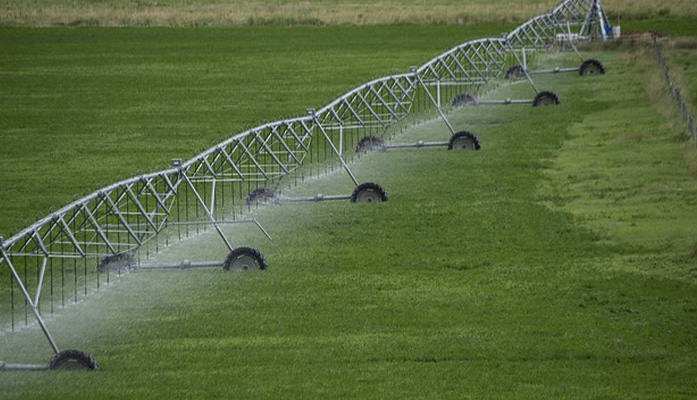
A quiet battle has been raging over the groundwater of the Hualapai Basin between Arizona State Representative John Gillette (R-LD30) and Mohave County Board of Supervisors Chairman Travis Lingenfelter.
Gillette has alleged that Lingenfelter enjoys the support of Governor Katie Hobbs, and High Ground, LLC., a firm “closely tied to the Walton Family Foundation and Environmental Defense Fund.”
In an email to AZ Free News, Rep. Gillette stated that Lingenfelter “has ‘cozied up’ with Governor Hobbs and High Ground, LLC., not by joining their party, but by aligning on a policy platform that places rural water in the hands of the Governor. He has advocated for several of the leftists’ water bills that trample the rights of property owners.”
The controversy appears to have arisen around the Final Assessment of the Hualapai Basin Water Data Integrity issued by Gillette to fellow legislators and third-party reviewers, which was allegedly made public by Lingenfelter in a May 8, 2025, formal rebuttal.
In his final assessment, Gillette wrote, “After continued research, legislative engagement, and review of both historical and current data, my original 2021 assessment of the Hualapai Basin water situation remains valid. The data presented by the City of Kingman and Mohave County remains suspect, with indications of overstatement used to drive political narratives and policy agendas.”
In the assessment, which Rep. Gillette asserted was reviewed by “three independent scientific and policy bodies prior to publication,” he found:
- The Hualapai Basin has enough groundwater storage to supply the region for 100–300+ years, even under heavy usage.
- Forecast models were based on worst-case pumping assumptions and should not be used to justify alarmist policy actions.
- Recharge estimates, storage volumes, and historical withdrawal rates all point to significant long-term water availability.
- The City of Kingman and Mohave County appear to have overstated risks—possibly to justify control over water rights or block agricultural competitors.
In the formal rebuttal dated May 8th, Lingenfelter addressed Gillette and claimed, “Your letter unfortunately contains a series of flawed assumptions, technical inaccuracies, and mischaracterizations that misinform rather than advance the public dialogue around long-term rural groundwater sustainability in Mohave County.”
He added, “Your letter asserts that data presented by Mohave County and the City of Kingman remains ‘suspect’ and ‘politically compromised.’ Such a characterization is categorically false and impugns the reputations of Mohave County, City of Kingman, and credentialed hydrologists at the ADWR and USGS and the public they serve.”
Responding to Lingenfelter’s rebuke in a formal response on May 16th, Gillette wrote, “While I welcome constructive dialogue, your letter reflects a degree of emotional overreach rather than a calm, scientific response to the concerns raised. Unfortunately, it reveals more about political defensiveness than about data transparency or hydrological best practice.”
Responding to critiques of the assessment’s findings Gillette wrote, “The assessment I authored was reviewed by three independent scientific and policy bodies prior to publication. All concluded that the findings were as accurate as possible given available data. I welcome peer review. What I reject is politically motivated resistance to scrutiny. As further evidence of bias, it should be noted that the ‘comparison document’ you reference—submitted by your team only days after my final assessment—contains several confirmations of my position.”
Rep. Gillette pushed back on Lingenfelter’s assertions based on the MODFLOW-NWT model from the U.S. Geological Survey and its 75,586 adjustable parameters writing, “As any trained analyst knows, such complexity magnifies sensitivity. Even small changes in assumptions—especially politically influenced assumptions—can result in dramatic shifts in outcome. Your confidence in the model would carry more weight if you supported my proposal to recalibrate baseline figures using 15 new field test sites with controlled, non manipulated measurement inputs. This is the kind of ground-truth methodology science demands. Strangely, your rebuttal ignores this recommendation entirely.”
He further strongly criticized the veto of a bill to cap irrigation on an irrigation non-expansion area (INA) by Governor Katie Hobbs, saying the veto “executed without explanation—is further evidence that political goals are outweighing scientific governance.”
AZ Free News reached out to Supervisor Lingenfelter for a comment and received the following reply:
Thank you for reaching out. I am not aware of any dispute or controversy between the Mohave County District 1 Office and Representative Gillette’s Office as you phrase it. As Mohave County Supervisor for District 1, I have served as Mohave County’s lead on water issues for the past five years, and was actively involved in our local water policy advocacy during my prior four years on the Kingman City Council.
My responsibility is to represent the shared, official position of both Mohave County and the City of Kingman, guided by the most accurate and credible data and hydrological modeling available, based on a multi-year, science-based partnership between Mohave County, the City of Kingman, and the United States Geological Survey (USGS)—an independent agency with a long-standing reputation for being the gold standard of scientific water modeling.
The ‘Final Assessment of the Hualapai Basin Water Data Integrity’ issued by Rep. Gillette is his office’s interpretation. The County and City remain firmly grounded and unified in the professional peer-reviewed science and long-term hydrological data and modeling that have guided our efforts to protect rural groundwater and ensure sustainable water use for future generations.
As always, Mohave County, City of Kingman, and USGS look forward to jointly collaborating with all legislators on our water issues on behalf of our rural communities.”
Based upon his team’s findings, Rep. Gillette has announced his intention to pursue “a stand-alone Hualapai Basin bill—developed outside of executive influence—that reflects the data as it exists, not as it is manipulated.”
Editor’s Note: Following the filing of this report, AZ Free News was contacted by Nick Ponder, Senior Vice President of Government Affairs of HighGround Public Affairs. Mr. Ponder provided the ’Analysis of Water Constraints and Economic Growth,’ a report prepared for Mohave County by Rounds Consulting Group, and the formal rebuttal issued on May 8th by Chairman Lingenfelter to Rep. Gillette with the note: “The County, City, and USGS have been very transparent in the processes and data used in determining the water situation in the Hualapai Valley Basin. The letter and the attached analysis should reflect that robust and transparent process.”
Matthew Holloway is a senior reporter for AZ Free News. Follow him on X for his latest stories, or email tips to Matthew@azfreenews.com.
by Matthew Holloway | Jul 6, 2025 | News
By Matthew Holloway |
Arizona State Representative and U.S. Army Command Sergeant Major (ret.) John Gillette (R-LD30) offered a public rebuke of Attorney General Kris Mayes in a July 2nd post to X. Gillette offered a stern correction to Mayes after the Democrat AG announced a lawsuit against the federal government and accused the Trump administration of “violating privacy protections with its decision to share Medicaid data with DHS, which houses ICE.” Mayes claimed the administrative data sharing is an “illegal transfer of Arizonans’ private, personally identifiable health data.”
In a statement announcing the lawsuit, Mayes’ office wrote, “Arizonans accessing Medicaid services do so with the assurance that their data would be confidential. While administering AHCCCS and other healthcare programs, Arizona has relied on the federal government’s assurances that it will follow the law and protect confidentiality. It appears the federal government has broken their promise.”
In his post to X Gillette wrote, “Administrative data sharing with DHS, DOJ, HHS is lawful. The state agreed to the terms when they took the matching funds. 42 CFR 431 privacy act, every service member knows this is only protected from non govt use.” According to 42 CFR §431.300 the law “requires agencies to exchange information to verify the income and eligibility of applicants and beneficiaries.” It further defines under § 431.302 that “Purposes directly related to plan administration include—
(a) Establishing eligibility;
(b) Determining the amount of medical assistance;
(c) Providing services for beneficiaries; and
(d) Conducting or assisting an investigation, prosecution, or civil or criminal proceeding related to the administration of the plan.”
Under these terms, the sharing of information between the State of Arizona and the Department of Homeland Security, Department of Justice, and Health and Human Services aren’t merely lawful, but are mandatory. Any extrajudicial attempts to disrupt this information sharing by Arizona would likely be grounds for the Federal government to similarly take legal action against Arizona at the taxpayers’ expense.
Strict limitations are also placed on the federal agencies requiring that they safeguard the information shared regarding program participants, provide “conditions for release and use of information about applicants and beneficiaries,” and restrict access to the information “to persons or agency representatives who are subject to standards of confidentiality that are comparable to those of the agency.”
Matthew Holloway is a senior reporter for AZ Free News. Follow him on X for his latest stories, or email tips to Matthew@azfreenews.com.
by Jonathan Eberle | Mar 22, 2025 | News
By Jonathan Eberle |
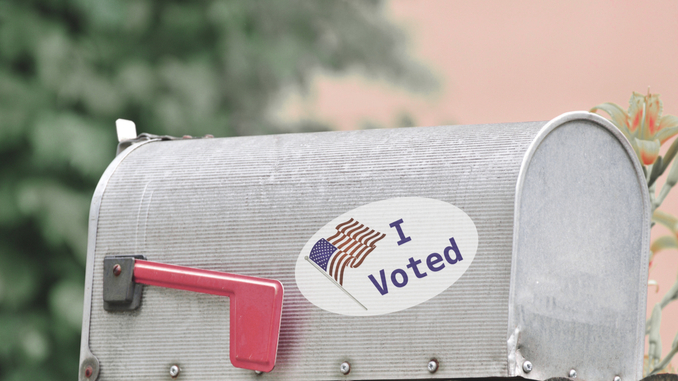
The Arizona State Legislature is reviewing several election-related bills aimed at tightening voter registration rules, increasing transparency in election mailings, and preventing potential voter fraud.
Sponsored by Rep. John Gillette (LD-30), the three bills—HB 2004, HB 2006, and HB 2007—focus on restricting voter registration mailings, requiring disclosures on election-related mailings, banning payment incentives for voter registration, and limiting third-party election mailers. Supporters argue these measures will protect election integrity.
HB 2004: Restricting Out-of-State Voter Registration Mailings
This bill prohibits Arizona county recorders from sending voter registration cards to mailing addresses outside the state, with exceptions for military personnel and overseas voters covered under federal law as well as Arizona residents without in-state postal service access.
Supporters argue this bill prevents potential voter fraud by ensuring only Arizona residents receive registration materials at valid in-state addresses. HB 2004 passed the House Floor (33-27-1) and is now under Senate consideration.
HB 2006: Requiring Disclosures on Election Mailings
Under this bill, any nongovernmental entity that mails or delivers election-related documents—such as voter registration applications or early ballot requests—must include the phrase “not from a government agency” on the envelope. The requirement applies to third-party voter registration groups, political organizations, and nonprofit advocacy groups.
Proponents argue this measure prevents voter confusion and ensures recipients can differentiate between official government communications and third-party outreach. HB 2006 passed the House Floor (37-19-4) and is advancing to the Senate.
HB 2007: Prohibiting Payment for Voter Registration Quotas
This bill bans individuals or organizations from paying or receiving compensation based on the number of voter registration forms collected, completed, or submitted.
Currently, government agencies, political parties, and private organizations conducting voter registration drives receive state and federal voter registration forms at no cost. However, this bill would ensure that voter registration efforts are not incentivized by financial compensation, which supporters say prevents fraudulent or rushed registrations. HB 2007 passed the House Floor (34-23-3) and is now under Senate review.
The Arizona Senate is expected to debate these bills in the coming weeks. As lawmakers debate these measures, Arizona voters will be watching closely to see how the changes may impact future elections.
Jonathan Eberle is a reporter for AZ Free News. You can send him news tips using this link.