Is the world still transitioning to green energy in the era of Donald Trump and in the midst of, yet again, geopolitical unpleasantness in the oil-rich Middle East?
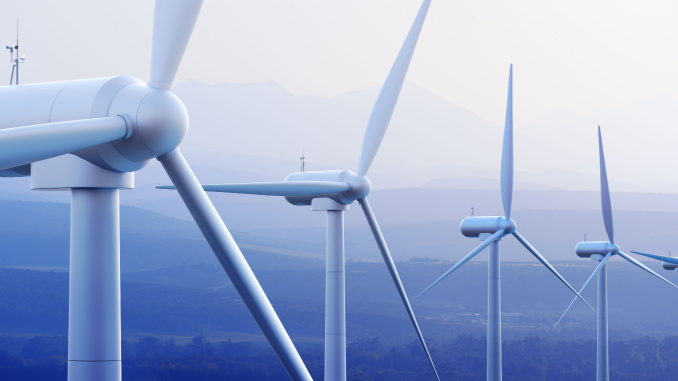
While climate activists bewail the Trump administration’s embrace of fossil fuels and its corresponding disdain for solar panels and wind turbines, a new report released by the Massachusetts Institute of Technology’s Center for Energy and Environmental Research says greener days may yet be in our future.
The report, “Glass Half-Full: Building a Decarbonized U.S. Power Sector,” sees a green light at the end of Trump’s dark tunnel of dismantling Biden-era climate policies. Focusing exclusively on electricity generation over the next decade, the report uses a mathematical model to compare how much “clean power” will survive the Trump administration’s phase-out of wind and solar subsidies and its scuttling of other green-energy initiatives with what would have been produced under Biden-era climate policies.
According to the model, the energy transition is alive and well, with about three-quarters of the “clean electricity capacity” that would have come online under the Biden-era Inflation Reduction Act and power plant regulations surviving the Trump onslaught. Yes, onshore wind power will take a hit, and other decarbonization initiatives will be delayed. But writing in The Washington Post, the MIT report’s author, Lily Bermel, a visiting fellow at Columbia University’s Center for Global Energy Policy, urged the “climate community” to continue pursuing “deep decarbonization.”
But the headwinds that the vaunted transition from fossil fuels to renewable energy is encountering show no sign of letting up. A recent report from the BlueGreen Alliance, a partnership between labor and environmental organizations, found that the 2025 One Big Beautiful Bill Act and other Trump energy initiatives have already delayed or canceled 223 wind and solar projects representing at least $82 billion in capital investment and 111,000 green-energy jobs. While a few coastal wind facilities survive, since March, developers have canceled five leases for offshore wind projects in coastal California, New York, Maine, Louisiana, and North Carolina valued at over $3.9 billion. In accordance with agreements developers negotiated with the Trump administration, most of that money will be redirected to oil and gas projects, geothermal development, and upgrading the power grid.
Furthermore, “deep decarbonization” has been aggressively pursued in Europe, with disastrous results.
“From 2015-2025, the first decade of the Paris Agreement on climate change, global energy consumption rose by more than 14%, with sharply contrasting dynamics,” notes Samuel Furfari, professor of energy geopolitics at the Université Libre de Bruxelles. “Europe’s decrease in energy use is no triumph of ecological heroics but rather the outcome of the assault of the EU Green Deal on competitiveness and its predictable deindustrialization and economic decline.”
Citing a recent Energy Institute report showing fossil fuels make up 86% of global primary energy consumption, with wind and solar accounting for just 3%, Furfari, writing in The Center Square, throws cold water on the idea of an energy transition. “The dominance of fossil fuels in the world energy system persists even as wind and solar, expensive and intermittent, expand. The world is undergoing an energy addition, not a transition, as new technologies supplement the growing capacity of legacy sources.”
Japan, the world’s fourth-largest economy and once a champion of decarbonization, has responded to the recent Middle East energy bottlenecks by reducing its liquefied natural gas (LNG) imports from that troubled region (while increasing LNG imports from the U.S.), ramping up coal-fired generation, and restarting nuclear power plants. Wind and solar power, along with battery storage, are being pushed aside.
Back in the U.S., Elon Musk’s SpaceX recently disclosed plans to develop a natural-gas power plant in Grimes County, Texas, where it is developing a massive new chip manufacturing facility.
“Musk is relying on dozens of gas turbines to power data centers he says are necessary to train the artificial intelligence at the center of his business plans,” The Wall Street Journal reported. Texas abounds in wind turbines and solar panels, but they can’t produce the round-the-clock power 21st-century technology demands.
In addition to failing to meet the soaring global demand for affordable and reliable energy, what is billed as “clean energy” — in the MIT report and elsewhere — isn’t really clean. Wind turbines and solar panels may not produce carbon emissions, but they do create waste — lots of it. Disposal of giant wind turbines in landfills is often the only way to deal with equipment that is no longer serviceable.
“Blades are frequently buried in fragments in several landfills throughout the Great Plains, transforming sites in Wyoming, Iowa, and South Dakota into wind turbine graveyards. By 2050, the cumulative decommissioning material from wind turbines could reach 133 million tons,” noted Ariel Cohen in Forbes.
Out-of-service solar panels, laden with lead, cadmium, and other heavy metals, pose their own environmental problems. According to the U.S. Environmental Protection Agency, by 2030, the nation could have as much as one million tons of solar panel waste on its hands.
These not-so-clean, weather-dependent energy sources will never be more than bit players in today’s fast-moving, technology-driven industrial revolution.
Bonner Russell Cohen, Ph. D., is a contributor to The Daily Caller News Foundation and senior policy analyst with the Committee For A Constructive Tomorrow (CFACT).
Let’s start with a very simple truism: you can’t have prosperity without people.
Human beings are the most valuable resource, because it is human ingenuity that creates and cultivates all other earthly resources. We as human beings are the custodians and protectors of the planet, not its destroyers, as the radical environmentalists would have you believe.
The richer and more technologically advanced we become, the more likely we are to avert a catastrophic event like a giant meteor crashing into the planet and destroying all life.
Which brings us to a potentially ruinous trend: many countries are literally running out of people.
This alarming chart on births and deaths in Europe is a terrifying glimpse into the future of a new dark age of the western world, if birth rates don’t start rising — and quickly. Europeans are becoming extinct.
Negative population growth is a sure killer of prosperity and human flourishing. It’s also contrary to Christianity and most other religions, which instruct us to “be fruitful and multiply.”
It’s not just Europe. Japan and Korea will cut their populations in half over the next 80 years if they don’t start moving away from one child per couple rates of propagating.
Why are rich countries depopulating the planet?
For 60 years, prophets of doom like Paul Ehrlich (“The Population Bomb”) and governments around the world — including our own — warned that we all had a moral obligation to save the planet by having fewer babies. There were periods of forced abortions, forced sterilizations, forced birth control, and — in advanced nations like in Europe and the U.S. — a cultural sneering at families with four or five or six kids.
That mendacious propaganda campaign worked all too well. Look what it has wrought.
There are other explanations. As we have gotten richer — and especially as women’s earnings have risen — the “cost” of having a child in terms of lost income, has risen. Women are less likely to have more than one or two children. To be clear: I’m NOT suggesting that women should be paid less!
Marriage rates have declined, and vows are coming later in life, so the median year for a woman to have a child keeps rising — leaving fewer fertility years left for multiple children.
Religiosity has declined somewhat in our more secular “me first” society. That’s sad because childless couples tend to be less happy. And why have kids if you don’t believe there is a divine reason we were put on this planet?
The solutions to this problem aren’t obvious. Pro-natalist government policies, like paying people to have kids and offering free childcare have had spotty levels of success.
The U.S. has delayed the demographic crisis happening in Europe and much of Asia through immigration of young workers. Not only do immigrants increase the population, but they tend to have more kids than native-born Americans.
But even with immigration, we in America have an obvious aging problem.
One simple step is to start celebrating as a society the virtues and the self-sacrifice of motherhood. Our schools and our teachers and our clergy and our political leaders need to keep pushing the message that the greatest contribution men and women can give to saving our species is to have more kids — as soon as possible.
Stephen Moore is a contributor to The Daily Caller News Foundation, a cofounder of Unleash Prosperity, and a former senior economic advisor to President Donald Trump.
Is the much-hyped “energy transition” starting to crumble at its foundations now? In recent weeks we have seen the following:
Ford Motor Company warns investors its electric vehicle division will lose $4.5 billion in 2023;
Reports that China has commissioned another 50 GW of new coal-fired electricity generation capacity;
The British government led by Prime Minister Rishi Sunak beginning to back away from absurdly aggressive transition timelines amid public outcry over rising energy bills and other deprivations;
The German government continuing to reactivate mothballed coal plants and facilitating new mining for coal;
The Scottish government forced to admit it has facilitated the felling of 16 million trees in this century to make way for new wind farms;
The Japanese government moving to reinvigorate its own coal-fired power sector;
Global demand for crude oil rapidly growing and outpacing supply growth, surprising all the supposed experts;
The U.S. Department of Energy forced to admit its initial estimate of consumer “savings” from converting from gas stoves to more expensive electric models was grossly overstated.
This list could go on and on, but the macro view is clear: Everywhere one looks, the aggressive timelines and heavily subsidized plans for a rapid transition are falling apart. Nowhere is the dynamic becoming clearer than in the wind industry.
In an Aug. 7 report titled “Wind Industry in Crisis as Problems Mount,” the Wall Street Journal catalogues $30 billion in planned investments in new wind projects in the U.S. and elsewhere that have now been delayed due to an expanding variety of factors. “After months of warnings about rising prices and logistical hiccups, developers and would-be buyers of wind power are scrapping contracts, putting off projects and postponing investment decisions,” the story says, emphasizing that the problems are becoming especially severe in the offshore wind business that has been so heavily promoted by the Biden administration.
I wrote a story in July detailing the fact that some of the so-called “Big Oil” companies have recently made big inroads into the offshore wind business, winning bids in the U.S. and Germany for licenses to develop large projects. But the Journal’s story quotes Anders Opedal, CEO of Norwegian oil giant Equinor, saying, “At the moment, we are seeing the industry’s first crisis.”
Along with British oil major BP, Equinor has plans in place to develop three wind farms off the Atlantic coast of New York, but recently warned state officials they would need to renegotiate power prices or the projects would not be able to obtain the needed financing. This demand by the two oil companies echoed a call by traditional wind developer Orsted in June for more subsidies from the U.K. government if its planned projects in the North Sea are to remain viable.
Make no mistake about it: Developing these offshore wind projects doesn’t come cheap. Orsted pulled out of a competitive bidding auction in Germany last month for government licenses to develop 7 GW of new offshore wind capacity when BP and French oil major TotalEnergies ran the final bids up to almost $14 billion.
“Orsted very deliberately chose not to pay record high concession prices for new offshore projects in Germany,” Orsted CEO Mads Nipper said in a post on LinkedIn. Orsted objected to the process that awarded the licenses based on the willingness of developers to pay the government for the right to develop — the same process used in oil and gas leasing all over the world — rather than the government offering more and more subsidies to incentivize development.
Therein lies the central conundrum for this subsidized transition: At some point, wind, like solar, electric vehicles and all the other rent-seeking solutions being promoted in this energy transition will have to become viable without an expectation of permanently rising subsidies, since governments already seeing their credit ratings downgraded due to overwhelming debt won’t be able to just keep printing money forever.
But, at the present moment, the business models in play do not appear to be headed for that outcome. And that’s why this energy transition seems to be falling off the rails.
David Blackmon is a contributor to The Daily Caller News Foundation, an energy writer, and consultant based in Texas. He spent 40 years in the oil and gas business, where he specialized in public policy and communications.
The University of Arizona (UArizona) announced this week that it would establish a Center for East Asian Studies. East Asia includes China, Japan, Mongolia, North Korea, South Korea, and Taiwan. UArizona is the only higher education institution in the state with an East Asia NRC.
The U.S. Department of Education (DOE) awarded UArizona $5.9 million to launch the program under its Office of Postsecondary Education (OPE) Title IV National Resource Center (NRC) grants.
The purpose of Title VI NRCs is to instill understanding of the countries featured by the center and teach one or more of those countries’ languages. Additionally, these centers maintain relationships with foreign higher education institutions and other organizations that contribute to each center’s teaching and research.
Other East Asia NRCs are located at Columbia University, Stanford University, Ohio State University, University of California – Berkeley, University of Chicago, University of Hawaii, University of Kansas, University of Michigan, University of Pennsylvania, University of Pittsburgh, University of Washington, and University of Wisconsin – Madison.
For the 2022 fiscal year, OPE appropriated over $25.5 million in funds to NRCs.
The establishment of a center focused on East Asian studies comes about two years after the mass forced closures of Chinese government-backed Confucius Institutes: a trio consisting of the Chinese government, a Chinese higher education institute, and an American higher education institute.
Confucius Institutes pushed Chinese propaganda without academic freedom under the guise of teaching Chinese language and culture. In all, the Chinese government had a foothold in 118 higher education institutions.
Along with UArizona, Arizona State University (ASU) once had a Confucius Institute. Under changes to federal law under the Trump administration, both universities closed their institutes.
Lecture, “For Study and for the Dao: Explaining the Principles of Taiji Training,” 《为学与为道:解说太极拳的训练原理》 pic.twitter.com/RgOT9jbvAL
However, both universities have maintained their ties to China through other avenues. UArizona continues its relationship with China and their Confucius Institute partner Shaanxi Normal University through other departments, such as the Center for Buddhist Studies. Likewise, ASU continues its relationship with China’s Sichuan University.
While it had a Confucius Institute on campus, UArizona shared a comfortable relationship with the Chinese government. Three years into the institute’s founding, the university shared a news feature on their institute from CCTV: the Chinese government-controlled news station.
Corinne Murdock is a reporter for AZ Free News. Follow her latest on Twitter, or email tips to corinne@azfreenews.com.