The Arizona Senate passed legislation mandating expedited reporting for human trafficking on Monday.
SB 1416 sponsored by Sen. Shawnna Bolick (R-LD2) passed with total bipartisan support.
“When a child goes missing, time matters. Delays cost lives,” said Bolick in a press release. “SB1416 ensures that law enforcement has clear, enforceable requirements to act immediately, share information quickly, and engage the public right away. This is about urgency, accountability, and giving families the best possible chance to bring their child home safely.”
SB 1416 would require law enforcement agencies to submit reports of missing, kidnapped, or runaway children to the National Center for Missing and Exploited Children (NCMEC), media outlets, and social media platforms within 24 hours.
Reports to the NCMEC would have to include a recent photo; name, birth date, sex, race, height, weight, eye color, and hair color; and category under which the child was reported missing. Reports to the media outlets and social media would have to include law enforcement agency phone number and the child’s physical description, last known location, clothing last known to be worn, and current photographs.
Within 30 days after receiving the report, law enforcement would also be required to enter a report into the National Missing and Unidentified Persons System.
The bill also would require law enforcement agencies to develop and conduct training once every two years on the mandatory reporting requirements for a missing, kidnapped, or runaway child, and on the Seek and Find Alert Notification System.
Last week the Arizona Senate passed another key piece of legislation addressing human trafficking, SB 1077. The bill would make it a felony to knowingly profit from online operations trafficking minors.
Sen. Mark Finchem (R-LD1), the bill sponsor, stated in Monday’s press release that the legislation reflects the shift in how traffickers operate.
“This bill closes loopholes that predators rely on and sends a strong message that Arizona will not tolerate profiting off the exploitation of children,” said Finchem.
Unlike SB 1416, Finchem’s bill didn’t receive any support from Senate Democrats. Only one Senate Democrat rose to explain their vote on the floor.
Sen. Analise Ortiz (D-LD24) said the bill was “overly broad and vague,” and claimed it would punish individuals who weren’t aware they were communicating with a minor online and had ceased communications immediately after they became aware.
Both bills were the result of findings by the Human and Sex Trafficking Task Force convened during the 2025 interim session by Senate President Warren Petersen (R-LD14).
Yavapai County Sheriff David Rhodes, former president of the Arizona Sheriffs’ Association, said in Monday’s press release that both bills would greatly assist law enforcement operations.
“President Petersen’s human trafficking task force led to the development of these laws which will give better tools to law enforcement in the fight to protect our children from these monsters who are profiteering off of their vulnerability,” said Rhodes. “I am grateful and fully support these needed changes in the law.”
AZ Free News is your #1 source for Arizona news and politics. You can send us news tips using this link.
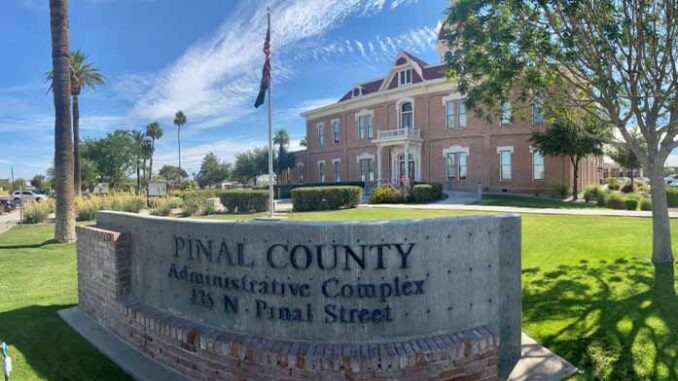
State Representative Teresa Martinez (R-LD16) recognized Pinal County Sheriff’s Office (PCSO) Deputies Gregory Sanders and Jacob Montoya on the floor of the Arizona House for their courageous actions in rescuing an 8-year-old boy from a suspected human trafficking and smuggling operation in January.
In a formal legislative proclamation read before members of the House, Rep. Martinez honored the deputies for their quick thinking, professionalism, and unwavering commitment during a multi-agency traffic stop that led to the child’s safe recovery and the arrest of a suspect.
“These deputies trusted their training, asked the right questions, and refused to ignore what didn’t add up,” stated Martinez. “Because of their professionalism and courage, a child was removed from danger and protected. This is the kind of work Pinal County deputies do every day to keep our communities safe.”
According to PCSO, the incident began on January 7, when a multi-agency task force, including officers from Cochise County and federal partners, conducted a traffic stop on a vehicle with Mexican license plates in Cochise County. The driver, a Mexican citizen, was transporting two young children: her biological daughter and an unrelated 8-year-old boy.
During a subsequent search of the vehicle for narcotics, federal partners flagged suspicions of child trafficking linked to cartel activity. The vehicle was temporarily seized, and the woman obtained a motel room in Eloy, Arizona. PCSO deputies were called to make contact.
Upon questioning, deputies observed inconsistencies in the woman’s story. The boy appeared coached in his responses and was unable to correctly identify the woman as his guardian. Deputies separated the child from the suspect, confirmed that he was unharmed, and learned the woman had provided a false name for the boy.
She ultimately admitted to being paid $500 to transport the 8-year-old across the border for unknown individuals, with no knowledge of his family or destination.
Body camera footage released by the Pinal County Sheriff’s Office captured the interaction, including the moment the suspect confessed to the payment and the boy’s visible relief and comfort once separated from her, allowing him to speak freely without coercion.
Cochise County deputies assisted in Eloy, and federal agents took custody of the boy to facilitate family reunification efforts. The suspect was placed in federal custody, facing potential charges, while the investigation continues to determine the full intentions of the traffickers.
Following the proclamation, Rep. Martinez praised the Pinal County Sheriff’s Office and all involved agencies for their collaborative efforts in combating human trafficking and protecting vulnerable children.
Ethan Faverino is a reporter for AZ Free News. You can send him news tips using this link.
Arizonans will have the final say on whether drug cartels should be classified as terrorist organizations under state law, following the passage of House Concurrent Resolution 2055 by the Arizona Legislature. The measure, championed by House Speaker Steve Montenegro (R-LD29), will appear on the November 2026 general election ballot.
The resolution calls for the state of Arizona to formally recognize transnational cartels as terrorist organizations and directs the Arizona Department of Homeland Security to use every available tool to combat their operations. If approved by voters, the designation would not carry federal legal weight but would signal Arizona’s position on the issue and potentially influence state-level enforcement priorities.
“These cartels run brutal, organized operations that traffic women and children, flood our streets with fentanyl, and kill without consequence,” said Speaker Montenegro. “Arizona is on the frontlines of a war…By sending it to the ballot, we’re putting the decision where it belongs—with the people.”
Supporters of the measure say it reflects a growing public concern about border-related crime, fentanyl overdoses, and human trafficking. According to statistics cited by the resolution’s backers, U.S. Customs and Border Protection encountered 282 individuals on the terrorist watchlist at the southern border from 2021 to 2023—a sharp increase compared to previous years. Meanwhile, fentanyl seizures and related overdose deaths continue to climb.
The proposed ballot measure is part of the House Republican Majority Plan, which emphasizes border security and law enforcement. GOP lawmakers argue that Arizona must act independently to address what they see as federal inaction on border issues.
“House Republicans are taking action to protect Arizona,” Montenegro said. “We trust voters to make their voices heard and stand with us in this fight.”
Proponents insist that the measure would send a strong message and help marshal additional state resources to combat cross-border crime. Voters will weigh in on the measure during the 2026 election. If passed, Arizona would become one of the first states in the nation to define international cartels as terrorist groups under state law.
Jonathan Eberle is a reporter for AZ Free News. You can send him news tips using this link.
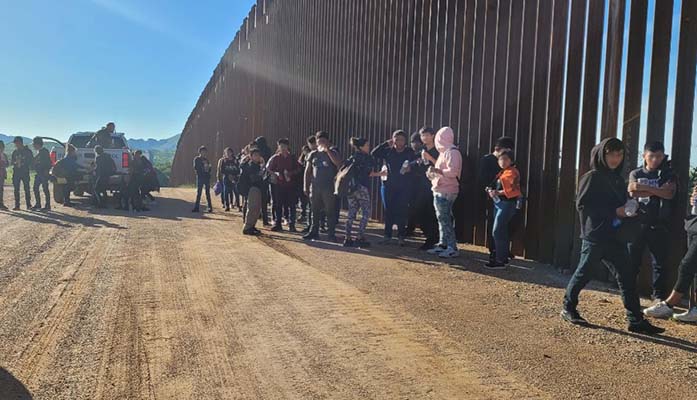
A recent report from the Congressional Budget Office (CBO) suggests that the ongoing illegal immigration surge at the southern border will reduce the federal deficit by a staggering $897 billion over the next decade.
At first glance, this figure might seem like a silver lining to this national crisis. However, a closer examination reveals a more complex and concerning picture and reveals this report to be another example of the government trying to conceal the truth from American citizens.
While the CBO projects an increase in revenues of $1.175 trillion and an increase in mandatory spending and spending on net interest of $278 billion over the next 10 years, these numbers fail to capture the full scope of the situation. The report’s limitations and glaring omissions paint an incomplete picture that may lead to misguided policy decisions if Congress does not understand the actual fiscal impacts of the border crisis. By publishing such an incomplete report, CBO is playing a role in covering up the Biden-Harris border crisis and not giving Congress the information it needs to fix the problem.
One glaring omission is the exclusion of discretionary spending impacts. The CBO acknowledges that the immigration surge will likely put pressure on many programs funded through discretionary appropriations. In fact, CBO estimates that increased discretionary funding as a result of the border surge could total around $200 billion over the 2024-2034 period. This substantial sum is mentioned but not factored into the deficit reduction calculation because, as CBO says, “no clear basis exists for projecting how the immigration surge will affect [congressional] funding decisions.”
Moreover, the report “does not include estimates of the surge’s effects on state and local budgets.” The CBO itself admits that “[r]esearch has generally found that increases in immigration raise state and local governments’ costs more than their revenues, and CBO expects that finding to hold in the case of the current immigration surge.” New York City alone spent $4.3 billion from July 2022 to March 2024 to accommodate immigrants and comply with existing housing policies. Extrapolating this to other cities over a decade paints a sobering picture of the financial burden on local communities.
The state of Texas was forced to take action on its own. First with Operation Lone Star (OLS), a response to the border crisis triggered by the Biden-Harris administration’s failure to enforce federal laws along the border. OLS has cost Texans about $11 billion and that’s just to secure the border. That does not include costs to the state’s health care, education, and criminal justice systems — which increase with the addition of aliens who have been let in by the Biden-Harris administration. The CBO report does not adequately assess or include these costs and they can be found in every state.
The revenue calculations assume lower tax compliance rates among the population who entered the nation via the border crisis. This raises questions about the accuracy of the projected $1.2 trillion in additional revenue.
Beyond the fiscal impacts, the report hints at broader economic consequences. The illegal immigration surge is expected to lead to lower productivity, reduce average wage growth (particularly for non-college educated workers), higher interest rates, and increased medical and food prices. These factors could have far-reaching effects on the American economy and the well-being of citizens.
Perhaps most concerning is the CBO’s own admission that its “estimates of the budgetary effects of the immigration surge are highly uncertain.” The report lists numerous “[m]ajor sources of uncertainty,” including the number of aliens who have entered the country, the duration of the border crisis itself, the changing immigration status of individuals, and their impact on productivity. Essentially, many metrics crucial to the estimate are shrouded in uncertainty and the authors of the report knew it and still published these estimates that claim mass illegal immigration is good for the deficit.
Making policy decisions based on such questionable projections, where the political left has clearly put its thumb on the scale, could have disastrous consequences and exacerbate existing problems. We must demand a more comprehensive analysis that accounts for all costs — both seen and unseen. Not a report that is politically appealing to the left’s narrative on illegal immigration.
The border crisis is not just about numbers on a balance sheet. As we debate immigration policy, we must consider not just the potential fiscal benefits but also the hidden costs and societal impacts. The Centers for Disease Control and Prevention estimated there were 74,702 fentanyl overdose deaths in the United States last year — a drug we know flows in through our open southern border.
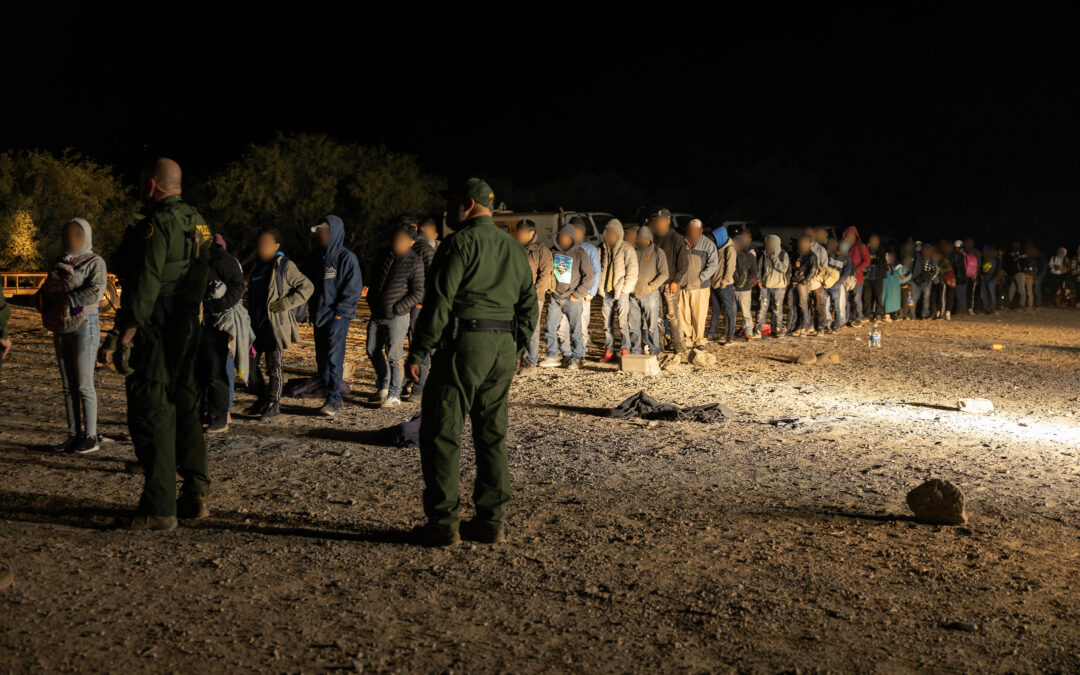
Human trafficking and smuggling into the United States is a booming multi-billion dollar business for Mexican cartels. We must end this crisis now. When comparing the fiscal impacts to the human toll, money seems secondary and that is true, but understanding the monetary effects is important to solving the larger problem.
The CBO report should be seen as deficient and, overall, as a liability since it does not give Congress the information it needs to take action. The future of our nation depends on getting this right.
With an honest and complete assessment, we can get good legislation like the Secure the Border Act signed into law, force strong executive actions from future presidents, and keep Americans safe. These policies will ensure our nation knows who is coming in, and what the impacts of that are to U.S. citizens. But we need the CBO and Washington to stop playing politics with vital information.
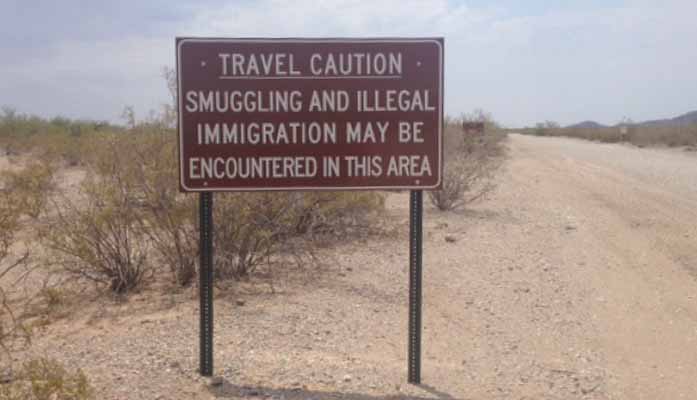
A bill to enhance punishment for human smuggling in Arizona is advancing through the state legislature.
Late last month, SB 1608 passed the Arizona Senate. The bill, which was sponsored by Senator Justine Wadsack, “classifies the unlawful use of an electronic device to smuggle human beings as a class 2 felony and prohibits a person from being released from confinement, if convicted” – according to the purpose provided by the chamber.
The bill passed with a 16-13 vote (with one member not voting). All Republicans voted in favor of the bill.
In a statement after the vote, Wadsack said, “Human smuggling is at an all-time high. Cartels are recruiting people, often our children, to participate in smuggling operations using various apps such as Snapchat and WhatsApp. The use of social media platforms to carry out these crimes has grown exponentially and contributes to the humanitarian crisis caused by Biden’s open border policies. Our children, our law enforcement, and our communities are being targeted, and it won’t be tolerated.”
According to the fact sheet from the Arizona Senate, a class 2 felony carries presumptive prison sentence of 5 years, and a sentence to pay a fine for a felony must be a sentence to pay an amount fixed by the court of up to $150,000. With some exceptions, a “general” human smuggling violation and conviction carries a class 4 felony, which comes with a presumptive prison sentence of 2.5 years.
On the Arizona Legislature’s Request to Speak system, a representative from the American Civil Liberties Union of Arizona signed in to oppose the bill, while former state legislator Nancy Barto indicated her approval of the measure.
Earlier in February, the proposal was approved by the Senate Committee on Transportation, Technology and Missing Children with a partisan 4-3 vote. The bill also passed narrowly out of the Senate Rules Committee.
SB 1608 now resides in the Arizona House of Representatives for consideration. If passed by that chamber, it will most certainly be vetoed by Democrat Governor Katie Hobbs, who has opposed most – if not all – of Republicans’ solutions to help the state combat the border crisis at hand.
Daniel Stefanski is a reporter for AZ Free News. You can send him news tips using this link.