by Staff Reporter | Mar 6, 2026 | News
By Staff Reporter |
Arizonans are among the top three in the country when it comes to spending the highest proportion of their income on housing and utilities.
Arizonans spend nearly 18 percent of their income on housing and utilities according to a new study. That makes Arizona rank second in the nation, after Florida and before Hawaii.
Although Arizona had lower per capita spending on housing, Arizonans were found to spend more when considering their lower average personal income (about $65,800).
The ranking came from a study conducted by What Are The Best, a product comparison platform. The study relied on per capita housing and utility expenditure data from the Bureau of Economic Analysis.
After Hawaii, the states with the highest percent of income spent on housing were, in order: South Carolina, Delaware, Maine, Colorado, Idaho, Nevada, and Vermont.
What Are The Best founder Albert Richer said in a press release that Arizona lacked the high incomes to offset the higher housing costs, unlike certain other states.
“For residents in states like Florida and Arizona, nearly a fifth of their income goes toward keeping a roof over their heads,” said Richer. “Some states with high housing costs, like Colorado, have high enough incomes to offset the impact, while other states with more modest housing costs still see residents struggling because of lower incomes.”
Arizona’s neighbors all rank far lower in terms of percent of income spent on housing. Colorado ranked 7th (16.3 percent), Nevada ranked 9th (15.7 percent) New Mexico ranked 12th (15.2 percent), California ranked 15th (14.8 percent of income), and Utah ranked 17th (14.7 percent).
Housing costs in Arizona hit record highs last year. An analysis by Redfin Real Estate of median sale prices earlier this year found that prices ranged from $218,500 for bottom tier, to $463,500 for mid-tier, and $2.5 million for luxury tier. These price ranges were higher than housing costs nationwide: $125,300 for bottom tier, $375,000 for mid-tier, and $1.3 million for luxury tier.
Redfin’s estimate of the median household income for home buyers in Arizona was $96,300 — higher than the median household income nationwide of around $88,000.
Data from real estate marketplace company Zillow, compiled by Stacker, found that homes in the many of the main cities concentrated in the Phoenix-Mesa-Chandler metro area often run higher than those medians provided by Redfin. This dataset covered 30 cities, towns, and communities across areas within or near Phoenix-Mesa-Chandler area, Flagstaff, Tucson, Prescott Valley and Prescott, Nogales, and Show Low.
The town of Paradise Valley, which sits in the Phoenix-Mesa-Chandler metro area, ranks as having the highest typical home value in the state: over $3.3 million. The lowest typical home value in the Phoenix-Mesa-Chandler metro area was Wickenburg, with a typical home value of $508,400.
The lowest-ranking town on that list overall was in the Flagstaff area, Happy Jack, which had a typical home value of over $493,000.
Lawmakers have proposed several approaches to mitigating housing availability and affordability.
A bill to cap corporate ownership of homes (HB 2325) in the state died on Monday after Republican leadership tabled it instead of giving it a committee hearing.
AZ Free News is your #1 source for Arizona news and politics. You can send us news tips using this link.
by Ethan Faverino | Jan 18, 2026 | Economy, News
By Ethan Faverino |
State Representative Nick Kupper (R-LD25) introduced House Bill 2325, also known as the Own Something and Be Happy Act. This legislative measure is designed to reduce the growing influence of large institutional investors in Arizona’s single-family housing market and restore ownership opportunities for working families.
The bill, which amends Title 44 of the Arizona Revised Statutes by adding Chapter 42, targets corporate dominance that has driven up home prices and made it harder for Arizona residents—particularly first-time buyers—to purchase homes in their communities.
Key provisions include:
- Capping institutional ownership at no more than 50 single-family homes statewide.
- Prohibiting bulk purchases, defined as acquiring two or more single-family homes in a single transaction or within a rolling 12-month period by the same entity.
- Imposing a 60-day waiting period, during which institutional investors are prohibited from bidding on or purchasing newly listed single-family homes, giving individual buyers priority.
Institutional investors—defined as entities owning or managing 10 or more single-family homes in Arizona—exceeding the cap on the bill’s effective date would be prohibited from new acquisitions and encouraged to voluntarily reduce holdings to achieve compliance.
The legislation includes targeted exemptions to avoid unintended impacts on housing efforts, such as:
- Nonprofit organizations focused on affordable housing
- Government housing agencies
- Community land trusts
- Small property owners (fewer than 50 homes)
- Pension funds of fiduciary entities with assets under $5 million
- Homebuilders whose primary business is constructing new homes for individual sale
To ensure transparency and accountability, HB 2325 requires institutional investors to file annual disclosures with the Arizona Department of Housing by March 15, detailing the single-family homes they own, purchase, or sell, along with their compliance with applicable laws.
Enforcement authority rests with the Arizona Attorney General, who may investigate violations, seek injunctive relief, or pursue other remedies. If the Attorney General declines action, county or city attorneys in the relevant jurisdiction are empowered to step in.
Representative Kupper emphasized the bill’s alignment with broader national concerns over housing affordability. “President Trump is right to call this out,” Kupper stated. “Homeownership has long been central to the American Dream and the reward for hard work. When large investment firms buy up neighborhoods, families lose, and prices climb. HB 2325 puts Arizona on the side of working people who want to own a home, raise a family, and stay rooted where they live.”
“Housing costs have climbed nationwide as institutional investors expanded their residential footprint, while homeownership rates for younger Americans have stalled,” continued Kupper. “In Arizona, population growth and limited housing supply have intensified the squeeze on first-time buyers. This bill draws a clear line. Arizona homes should be owned by Arizona families, not treated like financial instruments by distant corporations.”
Ethan Faverino is a reporter for AZ Free News. You can send him news tips using this link.
by Daniel Stefanski | Apr 2, 2023 | News
By Daniel Stefanski |
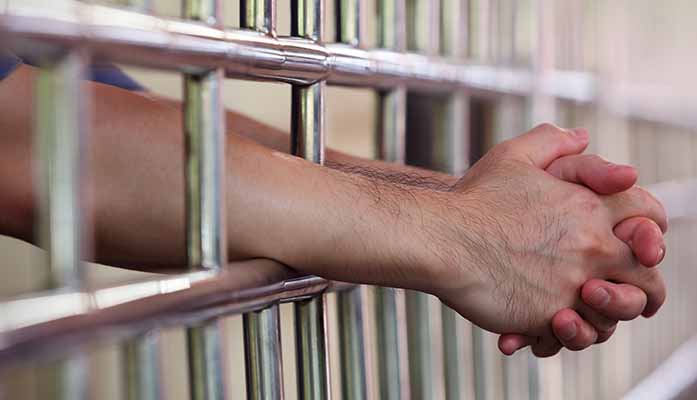
A bill that would expand voting access to those in Arizona detention facilities cleared a major hurdle this week, though it may need some help to get past the finish line.
HB 2325, sponsored by Representative Alex Kolodin, deals with voting procedures for electors in detention. According to the purpose of the legislation provided by the Arizona Senate, HB 2325 “allows a qualified elector in pretrial detention to make a written request to have a ballot personally delivered to a jail for voting and prescribes requirements and procedures for a qualified elector voting from jail.”
On Monday, the Senate Elections Committee took up the bill for consideration before giving it a “do pass” recommendation with a party-line 5-3 vote. Although the Democrats on the committee did not appear opposed to the overarching concept of the bill, they refused to support the legislation even after a significant amount of time asking questions of the bill’s sponsor.
Not all Republicans on the committee, however, were 100% sold on the bill. Senator T.J. Shope encouraged Representative Kolodin to sit down with Arizona counties and other entities responsible for implementing the provisions of the legislation to work through outstanding issues and concerns. He did express appreciation for the bill sponsor’s willingness to address this issue and bring this proposal forward in the Arizona Legislature. Fellow Republican Senator Ken Bennett was a little more direct with his comments, though he voted “aye” on the bill, telling his fellow members that he “was informed his amendments weren’t welcome in committee.” He voted to pass the bill “for now,” but he opined that HB 2325 needed more work – possibly implying that the improvements were needed before it gained enough votes for final passage in the Senate.
At the start of consideration over the bill, Jen Marson with the Arizona Association of Counties shared that there were “a lot of issues” with HB 2325. Some of those concerns included that counties already have a method for people voting from jail, that the bill only addresses people with pre-trial adjudication, that most people are booked into jail without an identification or that detainees are not allowed to keep their identification with them in jail, and that phones could be brought into Arizona jails by those helping to facilitate the voting.
Committee Chair, Senator Wendy Rogers, asked Marson if there was anything about the bill she (or the association she represents) liked, to which Marson explained that “the umbrella statement (that people eligible to vote in a jail environment could vote) we’re on board with” – but the details presented lots of challenges.
Answering a question from Senator Borelli, Marson admitted that her association did not offer an amendment to the legislation because “they (the counties and the bill sponsor) were too far apart” on resolving their differences.
Senator Anna Hernandez was one of three Democrats to vote against the bill in committee but expressed a sense of regret that she couldn’t get to a yes on the legislation. She highlighted her perception that there wasn’t “a lot of willingness to amend this bill,” mentioning the issues of identification and federal detention centers as starting points for changes in a hypothetical new draft that she might be comfortable with. Hernandez did state that she was very supportive of the overall issue addressed by Kolodin’s bill, but because of her outstanding concerns, she would not be on board with the current version.
Daniel Stefanski is a reporter for AZ Free News. You can send him news tips using this link.