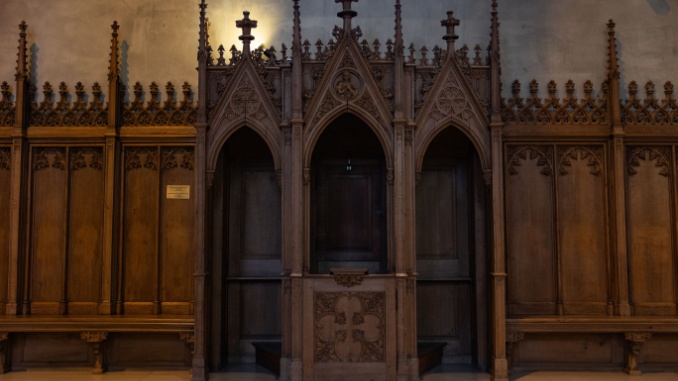
Arizona Bill Targets Clergy Who Refuse To Break The Seal Of Confession
By Staff Reporter |
A proposed bill in the Arizona legislature would require members of the clergy to report any crimes admitted to them in confession.
The bill by Minority House Whip Stacey Travers, HB 2039, would expand the duty to report to religious leaders, specifically naming clergymen, priests, and Christian Science practitioners. Travers attempted to run the bill, without success, for every legislative session since coming into office in 2023.
Religious leaders would be held liable in a civil action should they fail to report not only ongoing but any potential future abuse of minors that has yet to occur. This failure to report would kick in if “reasonable suspicion” exists that “dependency, physical injury, abuse, child abuse, or abandonment is ongoing or that dependency, physical injury, abuse, child abuse, or abandonment may occur in the future.”
The bill would also remove the requirement for religious leaders to obtain consent from the individual making their confession before reporting to authorities.
“A member of the clergy, a Christian Science practitioner or a priest who has knowledge or a reasonable suspicion that a person is committing or may commit child abuse or neglect shall immediately report or cause reports to be made of this information to a peace officer, to the Department of Child Safety or to a tribal law enforcement or social services agency for any Indian minor who resides on an Indian reservation, except if the report concerns a person who does not have care, custody or control of the minor, the report shall be made to a peace officer only. This subsection does not apply to a confidential or penitential communication unless the member of the clergy, a Christian Science practitioner or a priest determines that the abuse or neglect is still occurring or will occur in the future.”
Punishments would vary depending on the proposed violations.
Those who fail to report a reportable offense (sexual offenses outlined within 13-1401 through 13-1430 of Arizona Code; obscenity; furnishing harmful items; surreptitious photographing, videotaping, filming, or digitally recording or viewing a minor; child sex trafficking; incest; or unlawful mutilation) would be charged with a class six felony.
All other violations of the bill would qualify as a misdemeanor.
Congressman Andy Biggs, a Mormon, said he was not shocked that a Democratic lawmaker was behind the bill.
“A terrible attack on Catholics in Arizona by, of course, a Democrat,” said Biggs. “This bill should never see the light of day.”
When Travers first introduced the proposed bill in 2023, she said it was Mormons (members of the Church of Jesus Christ of Latter-day Saints, or LDS) who asked her to file it following the case of a Bisbee man, Paul Adams, who continued to rape his daughters for years after confessing his crimes to a Mormon bishop. Adams’ suicide brought his crimes to light.
“I picked up the mantle because I had LDS constituents come to me,” said Travers in an interview with Capitol Media Services.
AZ Free News is your #1 source for Arizona news and politics. You can send us news tips using this link.