by Jonathan Eberle | Jul 10, 2025 | News
By Jonathan Eberle |
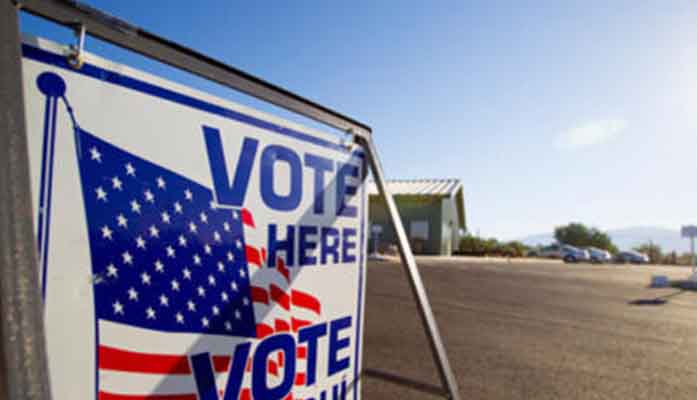
Sixteen months before the 2026 General Election, Arizona voters already know at least three ballot measures they’ll be weighing come November. Referred to the ballot by state lawmakers during the most recent legislative session, the proposals span issues of taxation, public safety, and individual privacy.
If passed, each measure would amend the Arizona Constitution — changes that can only be undone by future statewide votes. And these early additions may just be the beginning of what’s shaping up to be another crowded ballot.
In 2024, the number of voter questions was so high that some Arizona counties resorted to printing two-sheet ballots, prompting widespread voter complaints about ballot length. With dozens of potential referrals still under consideration, the 2026 ballot may once again test voters’ patience and attention spans.
Here’s a closer look at the three measures already set for the 2026 ballot:
1. Local Food Taxes Face New Restrictions
Sponsored by Rep. Leo Biasiucci (R–LD30), House Concurrent Resolution 2021 seeks to limit the ability of local governments to impose taxes on groceries.
If approved, the measure would require cities, towns, or counties to obtain voter approval before creating or increasing a tax on food. Currently, local governments can make that decision without direct input from the electorate.
The measure would also impose a temporary moratorium on any food tax hikes until June 30, 2027.
Proponents argue the change would make groceries more affordable during a time of rising costs. Local officials, however, warn it could impact critical revenue for municipal services.
The proposal passed with bipartisan support.
2. Ban on Mileage-Based Vehicle Taxes
Senate Concurrent Resolution 1004, sponsored by Sen. Jake Hoffman (R–LD15), would preemptively ban any tax or fee based on the number of miles a vehicle travels on Arizona roadways.
While Arizona does not currently impose such a tax, Hoffman and supporters argue the measure is necessary to protect personal freedom and prevent government overreach.
“There is nothing more insidious than the government trying to limit or control their citizens’ freedom,” Hoffman said earlier this year.
Mileage-based taxes have been explored in other states, like Oregon and Utah, as a way to replace declining fuel tax revenues and reduce pollution. Environmental advocates in Arizona, including the Sierra Club, support such measures as a means of curbing emissions and promoting sustainable transportation.
The resolution passed along party lines, with Republicans in favor and most Democrats opposed or absent.
3. Designating Cartels as Terrorist Organizations
In one of the final acts of the 2025 legislative session, lawmakers approved House Concurrent Resolution 2055, which seeks to classify drug cartels as terrorist organizations under Arizona law.
Introduced by House Speaker Steve Montenegro (R–LD29), the measure would direct the state’s Department of Homeland Security to take all possible actions within its authority to counteract cartel activity.
Supporters say it complements Proposition 314, a 2024 ballot measure that authorized Arizona to enforce its own border security measures — though that law remains on hold pending the outcome of a related Texas lawsuit.
These early measures may just scratch the surface. Dozens of proposed ballot referrals were introduced during this year’s session, and lawmakers still have the 2026 legislative calendar to revive stalled proposals or introduce new ones.
As Arizona continues its tradition of robust direct democracy, election officials may once again find themselves preparing for a complex and lengthy ballot — and voters will need to prepare for an equally complex decision-making process at the polls.
Jonathan Eberle is a reporter for AZ Free News. You can send him news tips using this link.
by Matthew Holloway | May 16, 2025 | Education, News
By Matthew Holloway |
Governor Katie Hobbs vetoed HB 2700 on Monday which would have compelled the Arizona State Board of Education to include Geography in its prescribed competency requirements for graduation from high school and defined that instruction to include instruction accurately referring to the Gulf of America.
In her veto letter to Arizona House Speaker Steve Montenegro, Hobbs chose to adopt an adversarial, scolding tone toward Republican leaders.
Hobbs wrote, “Today, I vetoed House Bill 2700. Arizonans want us to work together to lower costs, secure the border, create jobs, and protect public education. Instead of joining with me to do that, this Legislature has chosen to attempt to dictate how teachers refer to geographic features. I encourage you to refocus your time and energy on solving real problems for Arizonans.”
State Rep. Teresa Martinez (R-LD16) held a different view however and emphasized the importance of accurate and patriotic instruction for Arizona students: “It’s important to start teaching pro-America to our students. What better way to promote a patriotic country and teach children about patriotism than to start calling it Gulf of America and taking pride in that?”
While making her disapproval of the bill clear, Hobbs called upon Republican legislators to “work together to lower costs, secure the border, create jobs, and protect public education,” despite her recent vetoes, which have thrown aside meaningful reforms in all four policies.
In 2023, Hobbs infamously vetoed SB 1184 which would have eliminated rental taxes that drive up the monthly rent of millions of Arizonans, and SB 1063 which would have banned sales taxes on groceries. The sponsor of SB 1063, Senator Sonny Borrelli, said that Hobbs “would rather have windfall taxes go to cities on the backs of people that need to survive on essential items like groceries consumed at home.”
On Border Security, Hobbs vetoed the Arizona Immigration Cooperation and Enforcement (ICE) Act, SB 1164 this April, and SB 1610 earlier this month, which would have required county detention facilities to cooperate with U.S. Immigration and Customs Enforcement (ICE) by providing access to data on illegal aliens arrested for serious crimes.
On the subject of Jobs, Hobbs drew severe criticism from Senate Majority Leader Janae Shamp (R-LD29) when she vetoed SB 1584.
“The Governor despicably vetoing this bill demonstrates her support for discrimination and a lack of leadership for refusing to push back against fellow Democrats who support these unethical hiring practices,” Shamp said at the time. ” I am extremely disappointed, yet not surprised, that Hobbs continues to appeal to the radical left with her tone-deaf veto decisions, rather than support legislation to reform workplace policies that prioritize anything other than talent and hard work. It’s truly petrifying that we have a governor who can, without shame, prioritize discrimination and favoritism, over unity and respect for every Arizonan.”
Hobbs also vetoed another school related bill, SB 1050, sponsored by Senator Vince Leach (R-LD17) in April. The bipartisan measure would have directed tax dollars from Government Property Lease Excise Tax (GPLET) to schools by prohibiting the abatement of school district-designated tax revenues. “This was a missed opportunity by the Governor,” Leach told AZ Free News. “She says she supports education funding, but her veto suggests otherwise.”
Matthew Holloway is a senior reporter for AZ Free News. Follow him on X for his latest stories, or email tips to Matthew@azfreenews.com.
by Matthew Holloway | Mar 31, 2025 | Economy, News
By Matthew Holloway |
Arizona’s Republican lawmakers are looking to take on the cost of groceries by sending a referendum to the voters that would cap the transaction privilege taxes in municipalities on the sale of food items for home consumption at 2 percent.
The effort has been led by Republican State Representative Leo Biasiucci. It initially began as an outright ban, which proved to be a non-starter with State House Democrats and Governor Katie Hobbs. A bill to accomplish this was already dead on the table with the prospect of a veto from Hobbs, but this has been sidestepped through a compromise, HCR 2021.
“These are things that families need to survive,” Biasiucci told AZ Capitol Times. “This is the right thing to do. The fact that we are taxing people on eggs and milk and bread is insane.”
In a post to X Biasiucci wrote, “My bill to remove taxes from all essential food items like milk, eggs, butter, vegetables, fruit, baby food, beef and chicken passed committee 4-2. My bill also removes taxes from diapers. Taxing our food is regressive and it needs to end.”
A previous version of the measure passed both chambers of the legislature in 2023 only to suffer a prompt veto from Hobbs after the leaders of several municipalities claimed city services, including police and fire departments, would need to be reduced without tax revenue from food sales. In her veto letter, Hobbs claimed, “It’s clear that this bill doesn’t actually eliminate costs for our residents. It simply moves those costs around.”
Rep. Neal Carter, a Republican from San Tan Valley told the Times that there have been significant increases in municipal sales tax revenue from online sales after the SCOTUS ruling in South Dakota v. Wayfair. The outlet reported that from 2019-2024, cities and towns have enjoyed a 60% increase in sales tax revenue, but city expenses have also increased in that time period as well, leaving the local governments reticent to cut spending.
“This is a terribly regressive tax. This is the most regressive tax I could possibly dream up,” Carter told the outlet. “If I was going to dream up a regressive tax, I would tax the one thing that you literally have to have to live. You don’t even, in a sense, have to have a home to live, but you have to have food.”
“I don’t know a single person in Arizona, a voter or a constituent, who’s going to say, ‘Yes, continue to tax me on these things that I have to put on the table for my family,’” Biasiucci told his colleagues. “At a time when inflation is through the roof, these taxes are going higher. You’re paying more.”
Under the compromise passed in the House, a city or town with a tax rate below 2% could elect to increase it up to the limit with voter approval. However, with approximately 70 of the 91 municipalities charging taxes on groceries ranging from 1.5% to 4%, some municipalities would be required to reduce their taxes and either reduce spending or increase taxes in other areas such as property tax.
After passing the House with limited Democrat votes and near total Republican support, the resolution was read in the Senate on March 10th and 11th and is pending review by both caucuses and a final vote.
Matthew Holloway is a senior reporter for AZ Free News. Follow him on X for his latest stories, or email tips to Matthew@azfreenews.com.
by Daniel Stefanski | Oct 3, 2024 | Economy, News
By Daniel Stefanski |
Last week, Arizona State Senator Shawnna Bolick issued a statement about economic calamities affecting families around her state.
Bolick said, “Since Kamala Harris and Joe Biden entered office, Arizona families have felt the weight of crippling inflation caused by their bad policies. In 2022, inflation hit its highest level in 40 years at 9%, and the price of every basic necessity skyrocketed. While the Federal Reserve reports inflation has since eased to near the target 2% threshold, and despite this month’s interest rate cut of 0.5%, conditions are not improving for hardworking Arizonans. Grocery store prices are 25% higher now than just before the pandemic. Homes are no longer affordable for our working class. Eviction filings have hit record highs in the Valley.”
Bolick added, “Republicans at the Legislature have made it our mission to lessen these burdens. We eliminated the tax renters pay on housing. We passed a ban on grocery taxes that sadly every Democrat voted against and the Governor vetoed. I vow to continue fighting for policies that will allow you to keep more of your money next legislative session.”
Last year, Arizona Governor Katie Hobbs signed SB 1131, which Republicans led through the state legislature. This legislation eliminated the rental tax for Arizona tenants.
According to Arizona Senate Republicans, “There are approximately 70 municipalities within our state charging this tax, while cities and towns continue to collect record revenues. From fiscal years 2019 to 2023, state-shared revenues from both sales and income taxes combined grew $733 million, or 59%. This increase is on top of any sales taxes or property taxes individually levied by each city. Between FY 2024 and FY 2025, those shared revenues are expected to grow by an additional $389 million.”
Senate President Warren Petersen issued the following statement in conjunction with the announcement: “Charging a rental tax is bad tax policy. In fact, Arizona is one of only two states in the nation currently allowing this. While our first attempt at eliminating the tax passed out of the Legislature with solely Republican support and was eventually vetoed by the Governor, we’re grateful our Democrat colleagues came to the table with us and realized the real tangible relief this reform will provide.”
Earlier that session, Hobbs vetoed SB 1063, which would have repealed the food municipal tax across the state.
After the governor’s action against the Republican proposal, Senate Majority Leader Sonny Borrelli said, “This veto is a disgraceful windfall for cities and an absolute gouge for families. We’re not only paying inflated prices to feed our families, but we’re also paying more in taxes as the cost of food rises. Food is not a luxury; it is a necessity. A tax on our groceries is regressive and hurts everyone. Over the next four fiscal years, cities and towns are estimated to receive an average of $2.3 billion per year in state-shared revenues, which is an increase of $844 million more than the average for the last four fiscal years. And yet the governor vetoed this bill, only padding cities’ bloated budgets instead of leaving more money in the wallets of hardworking taxpayers.”
Senator Bolick faces a tough General Election fight in November for her bid to return to the Arizona Legislature for another two years. Arizona Legislative District 2 is one of the most competitive in the state, with a 3.8% vote spread in the past nine statewide elections. It is very winnable for Republicans, however, as the party has emerged victorious in six out of those nine elections.
Daniel Stefanski is a reporter for AZ Free News. You can send him news tips using this link.
by Staff Reporter | Sep 1, 2024 | Economy, Education, News
By Staff Reporter |
A progressive Democrat incumbent legislator is key to her party’s hopes of flipping both chambers in Arizona.
Mariana Sandoval is running for reelection to the Arizona House of Representatives in Legislative District 23. She was first elected in November 2022 and has served alongside Republican Michele Peña in the state House over the past two legislative sessions. In the House, Sandoval is a member of the Land, Agriculture & Rural Affairs Committee and the Ways & Means Committee.
On her campaign website, Sandoval proudly promotes endorsements from left-leaning organizations, including, Human Rights Campaign PAC, Save Our Schools Arizona, Living United for Change in Arizona, National Organization for Women Arizona Political Action Committee, Sierra Club, Arizona Education Association, Climate Cabinet, Moms Demand Action, and others.
Over her first term in office, Sandoval has proven that she does not share the values of many of the men and women who she represents. In 2023, she voted no on SB 1063, which would have “prohibit[ed] a city, town or other taxing jurisdiction from levying a transaction privilege tax, sales, use, franchise or other similar tax or fee on the sale of food and certain beverage items intended for home consumption.” After Republicans passed the bill out of both chambers, Democrat Governor Katie Hobbs vetoed it, writing, “From potential cuts to service – including public safety – to increased property taxes, it’s clear that this bill doesn’t actually eliminate costs for our residents.”
When Hobbs rejected the proposal, Arizona Senate President Warren Petersen blasted her decision in a statement. He said, Senate Republicans have been working toward introducing legislation necessary to provide financial relief to all Arizonans, especially low-income families who are feeling the tremendous burden of inflation. It’s very clear the governor has no interest in helping with that financial burden.”
Sandoval also opposed legislation that protected Arizona’s children. In February, she voted against HB 2586, which would have “add[ed] a new section of statute regulating the publishing and distribution of material harmful to minors on the internet.” Hobbs vetoed this bill, claiming that it went “against settled case law.” Other advocates for the proposal disagreed with Hobbs and her Democrat allies, including Arizona Women of Action. Amid the legislative process, the organization posted, “This nonpartisan bill needs SUPPORT. It would effectively protect AZ kids from accessing pornography. Age verification is a must.”
Terry Schilling, the president of the American Principles Project, also weighed in on the governor’s action. She said, “Up until now, protecting kids from online porn had been a cause with nearly unanimous, bipartisan support. Polls have shown the vast majority of American voters, across the political spectrum, back these laws. Both Democrat and Republican governors in a dozen states from Louisiana to Utah to Virginia have signed this legislation. And many more are on track to join this list shortly.”
Additionally, Sandoval opposed efforts to enhance safeguards for law-abiding Arizonans who have increasingly fallen prey to the rising tide of criminal activity across the state. This year, she voted against SCR 1021, which would “statutorily require an adult who is convicted of a class 2 felony for any child sex trafficking offense to be sentenced to natural life imprisonment.” The measure was passed by the Arizona Legislature and transmitted to the Secretary of State for inclusion on the November General Election ballot.
When the legislation was introduced, Senator Shawnna Bolick, the Republican sponsor of the effort, said, “We believe in holding traffickers accountable for their heinous crimes, and that’s why we’ve filed legislation for a ballot referral to put convicted child sex traffickers behind bars for life. Our message is clear: our children are not for sale, and we will not tolerate heinous crimes against them. Join us in this fight to protect our most precious resource – our children. Perpetrators, not here, not now, not never.”
According to the Arizona Independent Redistricting Commission, Legislative District 23 has a competitive vote spread of 16.9% between Democrats and Republicans over the past nine state elections. Out of those elections, Democrats have won all nine contests.
Sandoval will run in November’s General Election alongside Matias Rosales, who emerged from the July 30 Primary Election for the Democrat Party. She obtained 9,194 votes, and Rosales acquired 6,811 votes. James Holmes finished third in the primary, garnering 2,919 votes.
Both Sandoval and Rosales will face off against Peña. In November 2022, Peña had more votes than either of her Democrat opponents with 12,850, compared to 10,101 for Sandoval and 8,030 for Jesus Lugo Jr.
AZ Free News is your #1 source for Arizona news and politics. You can send us news tips using this link.