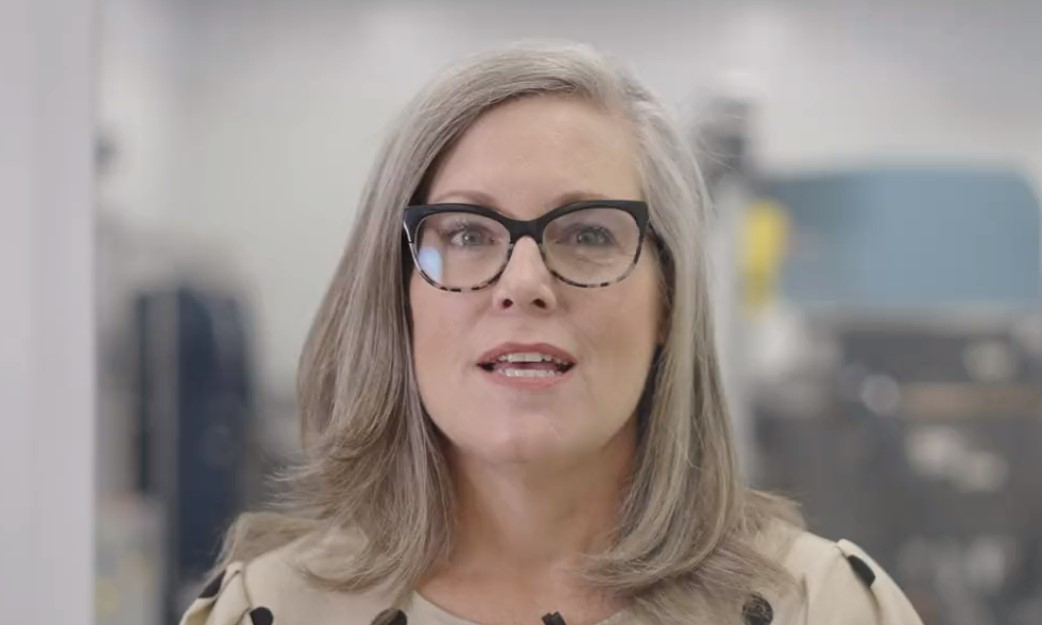
Arizona Governor Katie Hobbs recently released her executive budget proposal for the 2026-2027 fiscal year, totaling $17.7 billion in general funding expenditures. The plan represents a $100 million increase over the $17.6 billion budget approval by the Arizona Legislature for the prior year. According to Glenn Farley, Research and Policy Director at Common Sense Institute Arizona (CSI), the proposal extends a pattern of substantial growth in state spending observed in recent years.
In a recent article, Farley told The Center Square, “This budget continues the trend of massive increases, really historically unprecedented increases in the state’s Medicaid-funded disability program run out of the Department of Economic Security (DES).”
Farley highlighted that the most significant expansions in the proposal stem from Arizona’s Medicaid program, K-12 education, and other health care-related initiatives.
A standout element is the marked growth in the state’s Medicaid-funded disability services program operated by DES, which supports home-based care for Arizonans with disabilities. Farley described these increases as “historically unprecedented,” noting a shift where the largest caseload surge now occurs in the DES disability program rather than traditional drivers like the Arizona Department of Education.
The budget addresses the needs of approximately 62,000 qualified Arizonans by expanding access to home-based services through adjusted subsidy structures for home-based providers. For FY26, the proposal allocates an additional $128.1 million from the general fund to DES, supplemented by $271.9 million in the Department Long Term Care System Fund (DLTCSF).
In FY27, ongoing funding increases include $298.8 million from the general fund and $673 million in the DLTCSF.
Farley noted that Governor Hobbs’ budgets have frequently relied on one-time funding sources rather than sustainable ongoing commitments, a pattern that limits long-term fiscal stability.
At the same time, the proposal conforms to recent federal adjustments under HR 1, which aim to restrain cost growth in Medicaid and SNAP by shifting greater responsibilities onto states.
While this alignment addresses federal requirements, it adds operational complexity without resolving underlying sustainability concerns in Arizona’s expanding health and disability services.
In contrast to the administration’s spending approach, Arizona Republicans introduced a tax relief plan earlier this year, projected to save Arizonans $1.1 billion over the next three years, which Governor Hobbs vetoed.
Farley, who served eight years under the prior administration, observed that budget finalization timelines have shifted under Hobbs from the typical time of March or April to May or June.
He further noted an unusually high volume of significant tax code changes this year, driven by federal updates to adjusted gross income calculations, including the addition of new deductions and exceptions.
Ethan Faverino is a reporter for AZ Free News. You can send him news tips using this link.
Arizona Senate Republicans released their 2026 Majority Plan on Monday, outlining policy priorities aimed at reducing the cost of living, strengthening public safety, supporting economic growth, and increasing oversight of state government.
The plan follows several years of divided government at the Capitol and builds on what Republicans describe as recent legislative accomplishments, including balanced budgets and multiple tax cuts passed without raising overall taxes. Caucus leaders say the 2026 agenda is intended to address challenges facing Arizona families, particularly rising housing costs, inflation, and concerns about government accountability.
“Arizonans want affordable living, safe neighborhoods, and a government that strengthens — not weakens — our economy,” Senate President Warren Petersen said in a statement. “While the Governor’s vetoes stall progress, Senate Republicans remain focused on protecting taxpayers, upholding Arizona’s freedoms, and preventing the radical left from turning our state into California.”
A central component of the plan is a proposed tax and budget framework aimed at providing relief from rising prices. Senate Republicans say they are pursuing reductions in state taxes on tips and overtime, expanded deductions for seniors, and policies to support small businesses. Caucus leaders estimate the proposals would return more than $1 billion to taxpayers over three years while pairing tax relief with restrained government spending.
Housing affordability is another major focus. The plan cites regulatory barriers, slow permitting processes, and executive-level actions as factors contributing to Arizona’s housing shortage. Republicans say they support reforms to speed up construction, reduce fees, and limit local restrictions on new housing, while aligning development decisions with water availability data.
“Arizonans can’t afford policies that stall development, inflate housing prices, or jeopardize our water security,” Senate President Pro Tempore T.J. Shope said. “Senate Republicans are advancing practical, data-driven solutions that support responsible growth and keep Arizona livable for the next generation.”
Water policy is addressed alongside housing, particularly as negotiations over the Colorado River continue. The plan emphasizes the Legislature’s statutory role in those talks and calls for shared conservation efforts among basin states to avoid placing disproportionate burdens on Arizona.
Public safety proposals include addressing staffing shortages in correctional facilities, increasing oversight of state agencies, and strengthening accountability for violent offenders and probation violators. The plan also reiterates support for Second Amendment protections and public safety pension stability.
Senate Majority Leader John Kavanagh criticized the current administration’s record, saying, “Arizonans deserve leadership that solves problems, not a wolf in sheep’s clothing who blocks solutions and hopes voters won’t notice.”
Additional priorities outlined in the plan include border security enforcement, election integrity measures, education policy, transportation and infrastructure investment, emergency preparedness, artificial intelligence safeguards, family court reform, veterans’ services, and oversight of agencies such as AHCCCS and the Department of Child Safety. Opening day of the second regular session of the 57th Legislature is scheduled for January 12, when many of the proposals are expected to be introduced.
Jonathan Eberle is a reporter for AZ Free News. You can send him news tips using this link.
A new report from the Common Sense Institute (CSI) revealed a crisis in Arizona’s district public school system, marked by declining enrollment, expanding infrastructure, and misallocated resources that fail to serve students effectively.
Despite a 5% drop in district school enrollment since 2019, Arizona’s public-school districts have continued to expand facilities, increase capital spending by 67% to $8.9 billion, and boost transportation costs by 11.3% to $561.2 million, even as eligible bus riders plummeted by 45%.
As Arizona’s population surged, districts expanded, constructing thousands of school buildings, hiring teachers, and extending bus routes to accommodate a growing student body.
Since peaking in 2008 with 931,000 students, district school enrollment has steadily declined, dropping to 859,519 students by 2024—a 5% decline since 2019 alone.
According to the report, this trend is accelerating, driven by demographic shifts and changing parental preferences.
Arizona’s school-aged population (ages 5–17) shrank for the first time in 2022, with a loss of 30,000 children by 2023.
Meanwhile, school choice has reshaped the educational landscape with 40% of incoming kindergarteners now opting for charter or private schools, which operate with leaner facilities and no formal transportation systems.
In the meantime, Arizona’s district schools have doubled down on expansion. Since 2019, districts added 499 new buildings, increasing gross square footage by 3% to 148.6 million square feet—78 million square feet more than needed, enough to accommodate 630,000 additional students.
The fastest-shrinking districts have increased capital spending the most, with 20% of districts (serving 73% of students) receiving 81% of capital funding.
Math proficiency in Arizona’s district schools fell 25% since 2019, and English proficiency dropped 5%, according to NAEP assessments.
Staffing has grown by 1.5% to 108,330 employees, with teacher salaries rising 24.1% to $65,113, yet class sizes remain stable at 17.7 students per teacher.
Administrative staffing has surged 6.7% since 2019, outpacing classroom staff growth, but these investments have not translated into academic gains.
Ethan Faverino is a reporter for AZ Free News. You can send him news tips using this link.
One of President Trump’s most important campaign promises was to bring accountability and transparency to federal government spending. Under the newly created Department of Government Efficiency (DOGE), his administration didn’t waste any time getting to work.
Within weeks of Trump’s inauguration, DOGE had uncovered billions of dollars in waste and abuse of taxpayer funds under the United States Agency for International Development (USAID). Here are just a few of the ways the Trump administration discovered USAID was spending your tax dollars:
$1.5 million to “advance diversity, equity, and inclusion in Serbia’s workplaces and business communities.”
$2 million for sex changes and “LGBT activism” in Guatemala.
Millions to EcoHealth Alliance — which was involved in research at the Wuhan lab.
$1 million to boost French-speaking LGBTQ groups in West and Central Africa through the State Department.
$15 million for condoms to the Taliban through USAID.
This list barely scratches the surface of the waste and abuse that was discovered. But now, it appears it’s not just the federal government that’s been throwing your money around to outlandish woke initiatives. Arizona may have its very own USAID scandal…
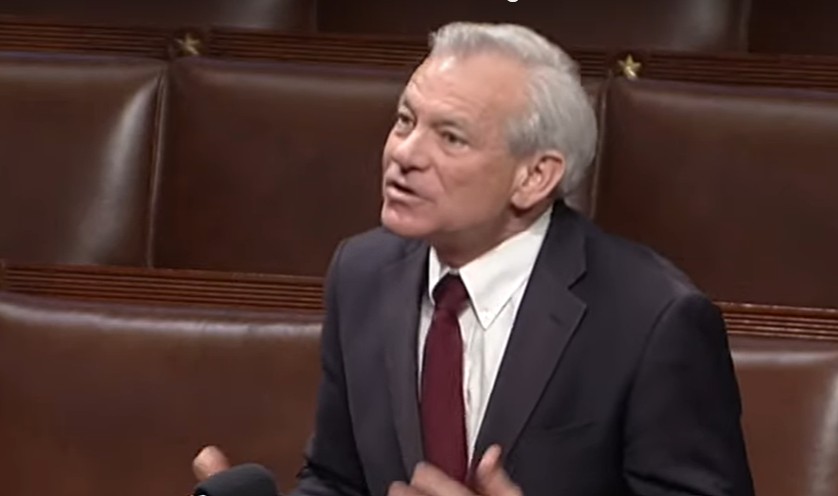
In a speech on the House floor earlier this week, Arizona Republican Congressman David Schweikert (R-AZ-01) blasted leftist activists and vandals who allegedly affixed a swastika to his wife’s Tesla.
Schweikert expressed exasperation speaking to the House saying, “It’s not, ‘Hey David, we’re concerned about Medicaid. Here are ideas for how you could deal with debt and deficits so we have the resources.’ No, because [instead], it’s this really high-brow intellectual conversation from our brothers and sisters on the other side: Stick Nazi things on people’s cars. This is what you’ve come down to? This is what’s going on?”
The congressman reflected that when his wife bought a Tesla a few years back, they were teased by fellow conservatives. Then, he excoriated the leftists resorting to “stick[ing] Nazi signs on people’s cars.”
“The wheels are coming off, and instead, the brain trust of some of these folks… okay, I accept that the tonal quality from some of the folks out of the White House isn’t warm and cuddly, but [is the answer really to] go around neighborhoods and offices and stick Nazi signs on people’s cars?“
The congressman, a well known critic of out-of-control government spending, explained, “Over the next 10 years, we’re going to spend $86 trillion. We’re talking about at best on the house budget resolution cutting $2 trillion over those 10 years. That’s 2.3%. Oh, god, dear heaven, you’re butchering government. 2.3%. You’re telling me if we didn’t grind through government, look at our programs, look at all the reports the GAO gives us of waste and fraud and programs that haven’t been authorized in decades, you couldn’t find 2.3%? But it’s easier to stick this sort of crap on my wife’s windshield than to do the intellectual work of saying, ‘I think we have more elegant ways to spend and make it better, faster, cheaper for the American people.’ No, we’d rather burn things down. Are we all proud of ourselves?”
As reported by the Fountain Hills Times, protesters marched on Schweikert’s Scottsdale District Office as recently as Sunday. Ten days prior, protesters delivered a petition to the Congressman’s office demanding he conduct a townhall meeting with 30 protesters holding signs outside of the building at Northsight Boulevard and Raintree Drive.