by Daniel Stefanski | Dec 15, 2023 | Economy, News
By Daniel Stefanski |
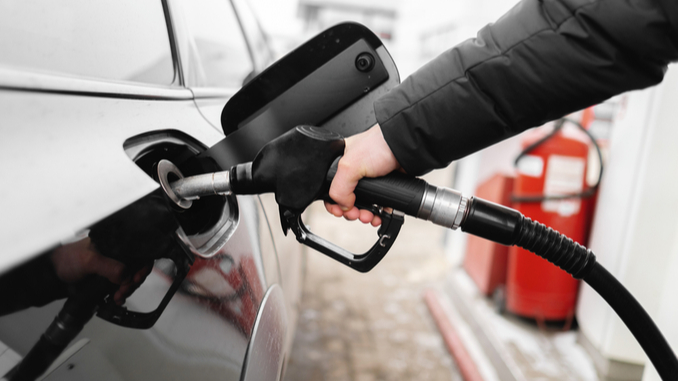
On Wednesday, Republican lawmakers held a press conference to announce their plan to “ease the financial burden hitting hardworking Arizonans when they fill their gas tanks…by addressing fuel blend requirements in Arizona.”
The fuel blend issue at Arizona pumps has long been a point of contention between legislative Republicans and the Hobbs’ administration, leading to this proactive attempt at a solution on the lawmakers’ side. According to the press release issued by the State Senate Republican Caucus, “Arizona is required to provide drivers in Maricopa County a specific fuel blend for cooler season months and a different fuel blend specific for warmer season months.” The blend employed by the state during spring and summer is “Cleaner Burning Gas” (CBG) – a boutique blend dictated by statute and procured from outside the state, which can lead to shortages and higher prices for consumers filling up their tanks at critical times of the year.
Faced with this issue of a very limited set of approved fuel blends, Arizona legislative Republicans announced that they had “identified eight comparable blends” in their free-market proposal to allow “as many fuel blends as possible.”
“We believe the EPA can and should approve those blends for use, as they provide nearly identical clean air benefits as CBG,” said Senate President Warren Petersen. “Providing multiple fuel options allows the market to compete during unexpected shortages and helps keep gas prices low for Arizona drivers.”
Senator Justine Wadsack, the bill’s sponsor, added, “The Legislature was not made aware of the shortage until after it had happened. As part of our plan, we’re proposing the Legislature be immediately notified if a waiver is requested by refineries, and that the Senate President and House Speaker are provided the authority to file a waiver request directly with the EPA. Hardworking Arizonans are struggling in this economy. Turning a blind eye to crippling gas prices is like throwing salt on their wounds. As lawmakers, we should do everything in our power to improve the lives of our citizens who elected us to represent them.”
The issues raised by Wadsack refer to previously induced information this year that the Governor’s Office was convinced by the EPA not to submit a waiver for an “alternative fuel type to provide an adequate supply for drivers and preventing a hike in gas prices,” despite oil companies warning state officials of significant refinery shutdowns and past Arizona Governors applying for and receiving that opportunity. According to Senate Republicans, “this catastrophe reduced the supply of the CBG (fuel blend).”
In an exclusive statement to AZ Free News, Representative Austin Smith said, “I applaud my fellow freedom caucus colleagues, Kolodin and Wadsack, for being the leaders on this issue. Every Arizonan, specifically in Maricopa County, has felt the pain at the pump under the Biden administration. Katie Hobbs could have led on this issue with requesting a waiver from the EPA, but failed to do so. As Vice Chairman of the House Energy committee, I look forward to seeing the proposals come forward this upcoming session. It’s the upmost importance to deliver real solutions to working Arizona families where we can.”
Earlier this year, Senator Jake Hoffman unleashed a blistering rebuke of Hobbs’ reported failure “to do the right thing by requesting this waiver to allow prices at the pump to drop.” Hoffman’s statement followed the aforementioned accounts of a letter that had been sent to Hobbs in March by independent petroleum refiner HF Sinclair, warning the state’s chief executive “of a critical supply shortage in Arizona due to an unexpected equipment failure stopping the production of CBG required by the Biden Administration in Maricopa County, as well as parts of Pinal and Yavapai Counties.”
At the time, Hoffman said, “Katie Hobbs’ incompetence as Arizona’s Governor continues to take center stage, and hardworking Arizonans are paying the price for it. The average price for a gallon of gas right now in Maricopa County is a full $1 higher than the national average. This is extra money that could help with groceries, medications and other necessities many of our taxpayers are having a difficult time affording because of the Biden Administration’s reckless policies leading to historic inflation.”
Senator Shawnna Bolick, who also attended the Wednesday press conference, told AZ Free News that “earlier this year, a proposed waiver that would have helped Arizonans save millions at the pump was rejected by an unelected government bureaucracy. During the critical supply shortage of CBG this spring it would have been invaluable to have this legislation to increase the availability of multiple gas blends instead of the current monopoly. It is time to remove unnecessary excessive red tape and open the market to competition to help Arizonans counter the Biden inflationary economy.”
Daniel Stefanski is a reporter for AZ Free News. You can send him news tips using this link.
by Daniel Stefanski | Oct 20, 2023 | Economy, News
By Daniel Stefanski |
As Arizonans continue to pay high prices at the gas pumps, a recent revelation exposes a possible contributing factor from the state’s chief executive.
On Monday, the Joint Legislative Ad Hoc Study Committee on Air Quality and Energy issued a press release after a hearing with Michelle Wilson, the Regulatory Compliance Administrator for the Arizona Department of Weights and Measures, publicizing that Wilson “admitted the Hobbs Administration was passive when oil companies in March warned of refinery shutdowns.” The Committee added that “according to Wilson, for the first time in five years, the Governor’s office received a request from refineries to ask the EPA for a waiver, allowing for an alternative fuel type to provide an adequate supply for drivers and preventing a hike in gas prices” – yet after the Governor’s Office “had conversations with the EPA about submitting a request for a waiver,…the EPA convinced Hobbs to not submit one.”
According to Senate Republicans, “this catastrophe reduced the supply of the type of gasoline drivers in Maricopa County are required to fill their tanks with, known as ‘Cleaner Burn Gas’ (CBG), in order for Arizona to comply with the U.S. Environmental Protection Agency’s Clean Air Act requirements.”
“Rather than making a case on behalf of Arizonans struggling to fill their tanks with prices hitting $5 per gallon, Governor Hobbs chose to not push back against the EPA and was complicit with the Biden Administration’s pro-inflation, radical environmentalist agenda,” said Senator Sine Kerr, the Committee’s co-chair. “As a result of Hobbs’ inaction, Maricopa County drivers were forced to shell out an extra several hundred million dollars just to get to their destinations during this supply disruption.”
“It’s clear Governor Hobbs is taking her marching orders from the federal government, instead of serving the best interests of our citizens,” said Senator Frank Carroll, a member of the committee. “While Republicans were securing a tax rebate to give $260 million dollars back to Arizona families hurting from historic price hikes, the Governor sat on her hands and cost families at least half that amount at the pump. We plan to analyze potential changes to policy to protect Arizonans from these irresponsible actions by the Executive Branch and reckless big government overreach.”
In the leadup to the hearing, legislative Republicans signaled they sought to investigate “the driving force behind (Arizonans’) pain at the pump and how to provide relief to motorists.” They promised to “analyze one of the contributing factors pushing Arizona’s gas prices to level higher than the national average, which is the unique blend of gasoline required by state law since 1997 called ‘Cleaner Burning Gasoline.’”
This isn’t the first time Hobbs has taken political heat for her actions (or lack thereof) on this issue. Earlier this year, Senator Jake Hoffman unleashed a blistering rebuke of Hobbs’ reported failure “to do the right thing by requesting this waiver to allow prices at the pump to drop.” Hoffman’s statement followed accounts of a letter that had been sent to Hobbs in March by independent petroleum refiner HF Sinclair, warning the state’s chief executive “of a critical supply shortage in Arizona due to an unexpected equipment failure stopping the production of ‘Cleaner Burning Gasoline’ (CBG) required by the Biden Administration in Maricopa County, as well as parts of Pinal and Yavapai Counties.”
Per Senator Hoffman’s release, HF Sinclair had argued that Hobbs would be within her right to seek the waiver from the EPA, writing, “Pursuant to 42 U.S.C. § 7545(c)(4)(C)(ii), EPA may temporarily waive a control or prohibition respecting the use of a fuel when extreme and unusual fuel supply circumstances prevent the distribution of an adequate supply to consumers. EPA may grant such a waiver where such circumstances are the result of a natural disaster, Act of God, refinery equipment failure, or another event that could not reasonably have been foreseen or prevented, and where doing so would be in the public interest (e.g., when a waiver is necessary to meet projected temporary shortfalls in fuel supply in a state or region). Such circumstances presently exist in Arizona.”
In his June release, Hoffman said, “Katie Hobbs’ incompetence as Arizona’s Governor continues to take center stage, and hardworking Arizonans are paying the price for it. The average price for a gallon of gas right now in Maricopa County is a full $1 higher than the national average. This is extra money that could help with groceries, medications and other necessities many of our taxpayers are having a difficult time affording because of the Biden Administration’s reckless policies leading to historic inflation.”
Daniel Stefanski is a reporter for AZ Free News. You can send him news tips using this link.
by Daniel Stefanski | Oct 9, 2023 | Economy, News
By Daniel Stefanski |
A state representative is expressing disgust with the rising gas prices in Arizona.
Last week, Arizona State Representative Teresa Martinez posted a picture of the price of gas at a pump, showing the cost to be $4.899 per gallon. The total cost for whomever was filling up a tank (almost 13 gallons) was just under $64.00.
Martinez posted, “This is not Build Back Better! It’s more like BAD, BUSTED AND BROKE!”
The Republican lawmaker isn’t alone with her observation or feelings about the increasing costs at the pump. Heritage Action shared that gas prices have skyrocketed 59% since President Joe Biden took office on January 20, 2021.
And the financial sticker shock hasn’t just hit conservative politicians or organizations – let alone everyday Americans. Jimmy Butler, a professional basketball superstar, filmed a short video, where he reacts to the final cost of filling up his vehicle. Butler exclaimed, “This is highway…robbery! This is crazy. I’m going electric.”
As of October 5, AAA reports that the national average for gas is $3.768, but the Arizona average is almost a dollar more expensive at $4.594. One year ago, the average price per gallon of regular gas in Arizona was $4.512, meaning that while costs have fluctuated throughout the year, consumers haven’t received many – if any – breaks when filling up their tanks. According to AAA, the highest recorded average price of regular gasoline in the Grand Canyon State was $5.388 on June 17, 2022.
Daniel Stefanski is a reporter for AZ Free News. You can send him news tips using this link.
by Daniel Stefanski | Jun 19, 2023 | Economy, News
By Daniel Stefanski |
An Arizona lawmaker is calling out Governor Katie Hobbs for rising gas prices.
On Friday, Senator Jake Hoffman issued a press release, which highlighted “disturbing details…over what Katie Hobbs knew about Arizona’s fuel supply, and the fallout of crippling gas prices from her inaction, after concerns were raised over a major shortage.”
Hoffman’s release originated from reports that a letter had been sent to Hobbs in March by independent petroleum refiner HF Sinclair, warning the state’s chief executive “of a critical supply shortage in Arizona due to an unexpected equipment failure stopping the production of ‘Cleaner Burning Gasoline’ (CBG) required by the Biden Administration in Maricopa County, as well as parts of Pinal and Yavapai Counties.” Hoffman revealed that HF Sinclair had “asked Hobbs to seek a waiver on that requirement from the U.S. Environmental Protection Agency, but the Hobbs Administration denied that request, baselessly claiming the EPA wouldn’t approve it.”
The state senator put Governor Hobbs on blast for this inaction, asserting that her constituents would pay a literal price for this decision: “Katie Hobbs’ incompetence as Arizona’s Governor continues to take center stage, and hardworking Arizonans are paying the price for it. The average price for a gallon of gas right now in Maricopa County is a full $1 higher than the national average. This is extra money that could help with groceries, medications and other necessities many of our taxpayers are having a difficult time affording because of the Biden Administration’s reckless policies leading to historic inflation. Hobbs had an opportunity to do the right thing by requesting this waiver to allow prices at the pump to drop, but she instead chose to selfishly play political games with the livelihoods of our citizens by refusing to back down from her woke ‘green’ agenda to appeal to her far-Left base. Katie, this is not California. In Arizona, we put families first.”
Senator Hoffman’s release shared part of the letter from HF Sinclair, where the refiner argued that Hobbs would be within her right to seek the waiver from the EPA, writing, “Pursuant to 42 U.S.C. § 7545(c)(4)(C)(ii), EPA may temporarily waive a control or prohibition respecting the use of a fuel when extreme and unusual fuel supply circumstances prevent the distribution of an adequate supply to consumers. EPA may grant such a waiver where such circumstances are the result of a natural disaster, Act of God, refinery equipment failure, or another event that could not reasonably have been foreseen or prevented, and where doing so would be in the public interest (e.g., when a waiver is necessary to meet projected temporary shortfalls in fuel supply in a state or region). Such circumstances presently exist in Arizona.”
The Hobbs’ Administration may not have been willing to pursue this waiver to help Arizonans at the gas pumps – something that can’t be said about the Biden Administration, which had another opportunity to lower fuel prices earlier this year. Last month, the EPA issued “an emergency fuel waiver to allow E15 gasoline – gasoline blended with 15% ethanol – to be sold during the summer driving season.” According to the EPA, “the waiver will help protect Americans from fuel supply crises by reducing our reliance on imported fossil fuels, building U.S. energy independence, and supporting American agriculture and manufacturing.”
Daniel Stefanski is a reporter for AZ Free News. You can send him news tips using this link.
by John Huppenthal | May 13, 2023 | Opinion
By John Huppenthal |
Dr. Thomas Patterson’s “Climate Change Alarmism Is Not Supported by the Facts” on April 28 was very well done, accurately summarizing the Climate Change movement as an issue distracting us with predictions of catastrophe.
Citing published experts, the column rebutted critical points of the climate movement’s argument: forest fires, hurricanes, malnutrition from agricultural damage, the threat to polar bears, and the economic impact. Patterson pointed out that forest fire losses are much lower now than in the past, hurricane landfalls are fewer, not more; polar bear populations are at their highest levels in 60 years, and the economic damage predicted from global warming is tiny.
That’s all we need to know—the essence of the argument proving the entire premise of doom false. You can get lost in the weeds focusing on too much. But no matter how powerful, a single column doesn’t do this subject justice. The climate movement is massive and dangerous. Composed of four different strands:
- Some in the movement see climate as the tool to advance our journey to a communist state.
- Some, like Ted Turner, exemplify a “biocentric” strand with his desire to reduce the world population by 7.5 billion.
- Another group sees the movement as an opportunity to gain power and money.
- A final group genuinely believes the global warming crisis will destroy humanity.
We’re in a four-front war. All intend to impoverish our families if we take their words at face value. Others want to see us and our children dead or at least gone.
The climate movement has endless stories to fuel its “narrative.” For example, in 2012, drought hit Missouri hard, with corn production down 42 percent. Stories like this happen every year. It’s the nature of the weather. So, we must relentlessly supply the counter-narrative, one based on facts. Geological records show that, long before the industrial CO2 era, the Sahel region in Africa suffered a drought that lasted for hundreds of years. Climate change and weather have always been with us. In this instance, we can also point to United Nations data showing that current world cereal crop production (corn, wheat, soybeans, barley, oats, rye) is at a record. Fewer people are starving than ever before.
Further, it’s possible that not even a shred of the Green House Gas theory is correct. The idea: added Carbon Dioxide traps more solar radiation, further warming the oceans. Added ocean warming then releases more water vapor which also traps heat, amplifying the Green House Gas effect of CO2. NASA is testing this theory. At a cost of over $8 billion, we have put seven highly sophisticated measurement devices into orbit around the earth, devices called CERES. These devices began measuring solar radiation and the earth’s reflected radiation in 2000. We have over twenty years of measuring incoming and outgoing radiation to determine the theory’s correctness. Result? Not as the climate movement predicted and believes. Outgoing radiation is not only ever so slightly higher than incoming radiation, but the trend is also further negative at a time when CO2 emissions have been increasing rapidly and significantly. We are cooling—slightly. At least that’s what the $8 billion CERES instruments say.
Those instruments say we are losing heat, not gaining heat. Outgoing radiation is higher than incoming radiation, and the difference is trending even more negatively. The opposite of what the Green House Gas theory predicts. Based on these measurements, we need more CO2, not less.
So, where is the heat coming from? We know where it comes from in Maricopa County. With a population of over 1.7 million households and over 2 million tons of asphalt and 40 million tons of concrete, we have effectively eliminated winter by creating an urban heat island—an island that has made us the number one population growth county out of over 3,000 counties in the U.S. Urban heat islands have also rendered temperature measurements worldwide questionable. But, even with this huge effect, our record temperature remains 1990: 122 degrees—33 years ago. And March 2023 was our coldest March in 30 years.
Another big issue: is CO2 a pollutant? We know from experience and experiments that CO2 is not toxic to human beings. Crews live in submarines and the International Space Station for many months, with CO2 levels above 4,000 ppm CO2. By comparison, we won’t be up to 1,200 ppm for 300 years at current trends. They’ve even done experiments with CO2 at 40,000 ppm for weeks. They saw no ill effects in their measurements. The OSHA standard is 5,000 ppm. From a health standpoint, CO2 is not a pollutant, even though the climate movement would like us to confuse it with deadly carbon monoxide.
Just how completely wrong is the climate movement? Numerous research studies show the benefit of higher levels of CO2 for crops and forest growth. Because CO2 is essential for photosynthesis, below 150 ppm, all plant and human life would end. CO2 accelerates plant growth as it increases from 150 ppm until it hits 1,200 ppm, a level our atmosphere won’t see for 300 years at current trends. These benefits are immense. The CO2 growth dividend at 1,200 parts per million is an extra 150% over preindustrial levels of 280 ppm. That’s a lot of corn, wheat, barley, oats, and rye.
The climate movement is not going to quit without a fight. An estimated $630 billion is now being devoted worldwide to climate change spending on an annual basis—$60 billion for research alone. Not satisfied, the climate movement is looking at a bigger pot of loot, the so-called carbon tax. But it’s not a carbon tax. That always was a falsehood. It’s a tax on gasoline and electricity. They call it a carbon tax because they don’t want the middle class to know that they intend to increase taxes on them, a lot. The U.S. average price of gasoline stands at $3.71. But the average price in Europe is $7.67 per gallon. That difference of $3.96 per gallon applied to U.S. sales is a wallet-busting $500 billion per year out of the pockets of people making less than $40 per hour and into the pockets of people making more than $50 per hour.
This is going to be the proverbial fight to the death.
John Huppenthal was the Arizona Superinterndent of Public Instruction from 2011-2015. Prior to this role, John served as a member of the Arizona State Senate and the Arizona House of Representatives. You can follow him on Twitter here.