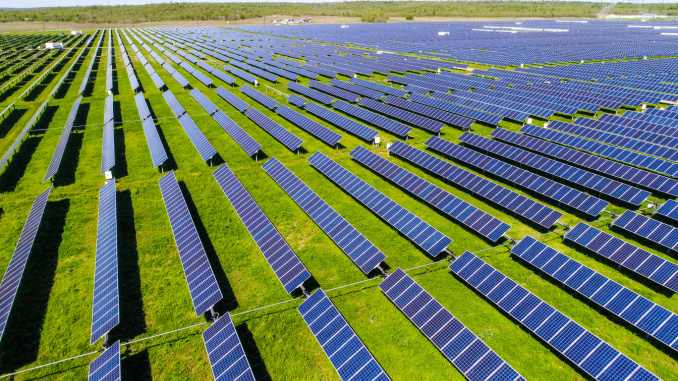
In the first five months of 2025, solar and wind dominated new U.S. electricity generation. Of the 15 gigawatts (GW) added, solar was 11.5, wind was 2.3, and gas was just 1.3, according to the Federal Energy Regulatory Commission (FERC). Industry voices like Stephanie Bosh of the Solar Energy Industries Association hail this as proof that solar delivers power “faster and cheaper than any other source.” Is this true?
As we accelerate toward a grid increasingly reliant on wind and solar, a closer look reveals a troubling reality: these intermittent sources are driving up electricity costs, not slashing them, through a web of hidden expenses that threaten reliability and affordability.
Solar and wind’s part-time nature is the root issue. Solar generates nothing at night, little in the first and last hours of daylight, and falters under clouds, rain, or snow. Wind generation varies unpredictably. This intermittency doesn’t just displace fossil fuels like natural gas and coal—it forces them into inefficient backup roles.
Calling fossil fuels backups is a misuse of the English language that only serves the wind and solar industrial complex. It’s equivalent to calling the starting pitcher a backup in favor of a pitcher who can only play when the wind blows or the sun shines.
Hydrocarbon, coal and natural gas plants, with fixed costs (capital, maintenance, and employees) comprising 60-75% of operational costs, must raise prices on reduced sales volumes to break even. As renewables flood the market during peak production, they suppress wholesale prices temporarily, where subsidized low-bid renewables set the prices for all. In other grids, they get windfall profits, getting the highest price paid for electricity.
Yet, in the “pay-as-clear” system, evening ramps or scarcity periods spike prices, as expensive peaker plants — needed more frequently for renewable gaps caused by the addition of wind and solar — set the highest price, which is paid to all.
Consider the evidence from high wind and solar regions. California’s residential rates are 30-35 cents/kWh—nearly double the U.S. average of 17 cents — despite 50% wind and solar. Germany’s prices top 36-41 cents/kWh with 55% from wind and solar; Denmark and the UK follow suit at 37 and 29-32 cents, respectively.
These ambitious transitions expose the myth: wholesale dips from renewables are overshadowed by retail hikes from taxes, subsidies, grid upgrades, peakers, and using full-time coal and natural gas part-time.
In California, demand from EVs and data centers exacerbates this, and intermittency demands more peakers. These peaker plants run inefficiently, emit more when ramping up, and charge more because they are only used some of the time, causing costly price spikes. They set the price all generators are paid with the take-and-pay system.
In a grid of only hydro, nuclear, gas, and coal — dispatchable sources—peaker needs plummet. These can load-follow predictably, handling demand peaks without the supply volatility renewables cause. Hydro ramps quickly; nuclear provides steady baseload, natural gas and coal are dispatched to match demand. The system worked and was cost effective.
Pre-renewable grids used peakers sparingly, at 4-10%, versus 20% or more in solar-heavy systems like California, where the solar “duck curve” (charting solar generation creates a graph that looks like a duck, no production at night, the belly of the duck, ramp up during the day, the neck of the duck, with a sharp drop as the sun sets, the downward beak of the duck) requires rapid evening ramps of 10-20 GW.
Adding renewables means building more costly, underutilized peaker plants, inflating bills. Cancelling out much of the CO2 emission reductions that are the stated reason for adding costly disruptive wind and solar.
Transmission costs compound the problem. Wind thrives in remote plains or offshore; solar thrives in distant deserts. Connecting these to cities demands expensive high-voltage lines that cost $1-3 million per mile. Thousands of more miles than are needed for nearby hydrocarbon or nuclear plants.
U.S. estimates peg a price tag of $450 billion by 2035 for renewable integration, adding at least 2 cents/kWh to rates. In Germany, €70 billion in upgrades add 3 cents/kWh. Claims of renewables being “cheaper” rely on levelized cost of electricity (LCOE), ignoring transmission and peaker costs. Solar’s $30-50/MWh jumps 30% or more when transmission and backups are factored in.
FERC projects 84% of 133 GW additions by 2028 will come from wind and solar, making our grids less reliable and more expensive.
Policies like the One Big Beautiful Bill Act, which stripped tax subsidies and credits may slow growth, but the trend persists. We need honest accounting. We cannot ignore the wind and solar reality: more blackouts and ever higher prices.
When they first announced their original Clean Energy Commitment in 2020, APS boasted about their plans to decarbonize. According to their own release, they weren’t doing what they described as the “easy thing” other utilities were doing–developing resource plans that still allow you to produce some carbon emissions, so long as you offset them elsewhere. No, they were committing to go “carbon free,” which means shutting down every single source of baseload power beside nuclear and replacing it entirely with solar, wind, and battery storage.
But late last week, APS announced a modification to their climate commitment. Instead of going carbon free, APS is switching to carbon neutral by 2050.
How is the new commitment different than the old one? For ratepayers worried about skyrocketing utility bills, it doesn’t change much…
As Americans enjoy their freedom — as they have a God-given right to do — they drive where they want in privately owned cars (gas powered, hybrid, or electric), live comfortably in heated-and-air-conditioned homes, and spend their evenings cooking dinner on gas (or electric stoves), and watching whatever television program or sporting event they choose. All of it brought to them by virtue of abundant and affordable energy.
According to 2024 data published by the U.S. Department of Energy, 82.16 percent of the energy consumed in the United States came from fossil fuels, including coal, petroleum and natural gas. Another 8.67 percent came from nuclear power plants.
In other words, more than 90 percent of the energy used in this country last year came from these sources.
Only 1.64% came from windmills; and only 1.17 percent came from solar panels.
As this nation’s economy and population has grown, so too has its power needs. Since 1960, in fact, the consumption of energy produced by fossil fuels and nuclear power has more than doubled.
But the consumption of nuclear energy peaked in 2019 — and has stagnated since then — while facing a campaign of opposition from liberal environmental groups.
This is ironic, however, because as the use of fossil fuels and nuclear power increased in recent decades, greenhouse gas emissions declined. From 1990 to 2022, for example, fossil fuel consumption increased by 8.64 percent, according to the Department of Energy. But during that same period, according to the Environmental Protection Agency, greenhouse gas emissions declined by three percent.
Nonetheless, groups including the Sierra Club, 350.org, and the National Resources Defense Council have sought not merely to stop the growth of this type of energy production, but to roll it back. In theory, they would replace the production lost from nuclear power and fossil fuels with energy produced from “renewable sources,” including windmills and solar panels.
They are particularly opposed to the development of nuclear power — even though nuclear plants don’t emit greenhouse gases.
“The Sierra Club,” says its website, “continues to oppose construction of any new commercial nuclear fission power plants.”
350.org also opposes the construction of new nuclear plants. “New nuclear,” its website says, “is a dangerous distraction in the race to solve climate change.”
The Natural Resources Defense Council (NRDC) argues that “expanding nuclear power is not a sound strategy for diversifying America’s energy portfolio and reducing carbon pollution.”
However, some progress has been made recently in resisting this campaign to foist renewable energy development upon the United States. In 2021, some of this nation’s largest banks — including Wells Fargo, Citi, Goldman Sachs, JP Morgan, Morgan Stanley and Bank of America — joined the Net Zero Banking Alliance. This alliance, said the Sierra Club’s magazine, “signaled a commitment by member institutions to develop voluntary targets that support a climate goal of 1.5C above preindustrial levels.” Since then, however, each of these banks has dropped out of the alliance.
Unfortunately, the ”renewables only” advocates have also achieved some victories in recent years.
Since 2001, the Sierra Club’s “Beyond Coal” campaign has supported the closing of more than 300 coal-fired power plants in this country. In 2021, construction of a liquid natural gas export terminal in Oregon was also canceled. Then, in 2023, a proposed gas-fired power plant in Connecticut was canceled, too. These groups also pressured California into nearly shutting down the Diablo Canyon nuclear plant, which provides 9% of the state’s electricity, before state energy commissioners voted to extend its operation to 2030.
The relentless campaign to force America away from fossil fuels and nuclear power and towards wind and solar is also driving America toward energy dependence on the People’s Republic of China.
The Heritage Foundation published a report last year by Diana Furchtgott-Roth and Miles Pollard that showed how this is happening. “China has succeeded in dominating the world’s supply chains in green energy products and components,” it said. “If America continues to require the use of these green energy products, it will cede economic power to China, giving China control of American energy security.”
Limiting how we produce energy in the United States will, as a matter of course, impose limitations on our freedom. Reliance on China for our energy supply chain will make our country susceptible to economic coercion. Limiting how we produce energy, means less of it and fewer choices about how to use it. This is of course baked into the climate activists’ view of world, one where experts tell us we must drive EVs, use electric stoves, and eat less meat, so that even the smallest of life’s details are predecided.
To preserve freedom, we must unfetter ourselves from ideologically driven restrictions on fossil fuels and overcome decades of naysaying about nuclear power. In so doing we can ensure a future where abundant affordable energy gives every American real choice, which is the heart of freedom.
The Trump administration is gearing up to try to revoke one of the most overreaching, unscientific regulatory edifices ever erected: the EPA’s 2009 “endangerment finding.” News broke this week that the Environmental Protection Agency has drafted a plan to rescind this cornerstone of federal climate policy, which declared that greenhouse gases like carbon dioxide and methane pose a danger to human health and welfare.
If this move succeeds, it would limit the federal government’s ability to regulate carbon dioxide emissions from cars, power plants, and industries—a prospect that has the climate alarmist crowd clutching their pearls. And frankly, it’s about time someone challenged this rank absurdity.
Let’s take a walk down memory lane to 2009, when the Obama-era EPA, emboldened by the 2007 Supreme Court ruling in Massachusetts v. EPA, decided to anoint itself the arbiter of America’s energy future. The endangerment finding was born, asserting that CO2 – literally plant food, and the fundamental building block for all life on planet Earth – is actually a “pollutant” that “endangers public health” as defined under the Clean Air Act.
This vast expansion of the regulatory state wasn’t based on some groundbreaking scientific discovery but rather on a political agenda dressed up in green rhetoric. The finding has since provided the legal foundation for a slew of regulations, from tailpipe emissions standards to power plant rules, all designed to choke the fossil fuel industry and push the U.S. toward a so-called “clean energy” utopia that exists only in the fever dreams of climate activists.
Now, the Trump EPA, led by Administrator Lee Zeldin, appears poised to dismantle this house of cards. Zeldin’s draft proposal argues that the EPA overstepped its authority by issuing such a sweeping determination.
The plan focuses on a legal argument that the EPA’s administrator lacks the power to make broad proclamations about greenhouse gases without specific congressional authorization. This is a direct jab at the 2007 Supreme Court decision, a judicial overreach that gave unelected bureaucrats a blank check to regulate the economy. It is key to also remember that that decision came at a time when the Chevron Deference, which the Court did away with a year ago, was still in effect.
Adopted in 1984, the Chevron Deference held that courts must defer to the judgment of regulators when interpreting the congressional intent of federal statutes. But the Clean Air Act was never designed to regulate CO2, a point even the late Rep. John Dingell, a co-author of the law, made clear.
Of course, the climate alarm lobby will drag this fight into the courts, so overturning the finding will not be easy. The EPA must navigate a minefield of procedural requirements under the Administrative Procedure Act, and the alarmists will try to overwhelm the courts with claims that climate change has only grown since 2009, asserting that every extreme weather event somehow proves their case.
But the Trump administration isn’t denying climate change outright; it’s questioning whether the EPA has the legal authority to act as America’s climate czar. This is a fight worth having, because if the agency can regulate CO2 without clear congressional approval, what’s stopping it from declaring water vapor a pollutant next?
The bigger picture here illustrates the absurdity of the energy transition itself. The endangerment finding has been a cudgel to force a shift away from reliable, affordable fossil fuels toward a fantasy of windmills and solar panels that can’t power a modern economy. The U.S. is the second-largest emitter of greenhouse gases globally, but even if we zeroed out emissions tomorrow, global temperatures would barely budge without similar action from China and India.
Meanwhile, Americans bear the brunt of higher energy costs and a less reliable grid. Rescinding the endangerment finding could free up the economy to innovate without the EPA’s heavy hand, letting market forces—not bureaucrats—drive energy and climate solutions.
This move is a bold step toward dismantling the regulatory state’s stranglehold on American energy. It won’t be quick or easy, and the climate zealots will fight tooth and nail. But if the Trump administration can pull it off, it’ll be a victory for common sense over green dogma, a win for innovation over regulation. A long, hard fight lies ahead, but it is one worth having, and which is long overdue.
David Blackmon is a contributor to The Daily Caller News Foundation, an energy writer, and consultant based in Texas. He spent 40 years in the oil and gas business, where he specialized in public policy and communications.
This past November was a good time to be a Republican, especially here in Arizona. Not only did President Donald Trump win our state in a landslide victory, but Republicans expanded their majorities in both the Arizona House and Senate—despite being outspent in every single race.
While this turn of events shocked many in the corporate media who were convinced that Arizona was on its way from being a purple state to a blue state, we knew that voter registration trends told a different story.
Over the last couple of years, the gap between registered Republicans and Democrats in Arizona widened from 3.04% in 2020 to 4.03% in 2022. By April of last year, it had increased to 5.77%. And by November, it had expanded to 6.77%, a registration increase that proved decisive in President Trump’s overwhelming victory.
Now, 5 months removed from their electoral wipeout in November, there has been a lot of discussion about whether the Democrats’ political fortunes in Arizona would be reversing after their blowout loss to Trump.
Unfortunately for them, the latest voter registration numbers poured plenty of cold water on those dreams…