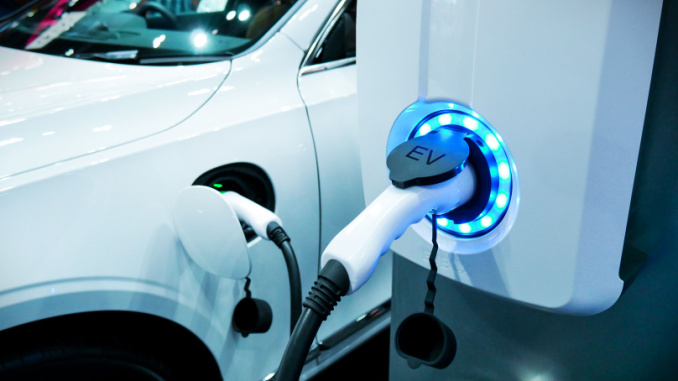
The Great Climate Change Revolution is headed for failure. You can tell because it was already in big trouble before the ultimate heavy lifting even started.
International accords, (i.e. Paris Agreement) passed with great fanfare to ensure cooperation on emissions reductions, are ignored by most of the signers, notably China. Consumers worldwide are balking at increased energy prices. Unsold EVs are piling up.
All this resistance is occurring well before the full rollout of the regulations and restrictions needed to achieve zero net carbon emissions by 2050, the agreed-upon goal of climate activists worldwide.
It may not seem at first glance like the climate change movement is struggling. After all, mainstream dogma still holds that man-made warming has us careening toward disaster, possibly an uninhabitable planet. The only solution is to “just stop oil” along with coal and gas.
As John Kerry explains, there is no alternative. Biden’s proposals have nothing to do with politics nor ideology. “It’s entirely a reaction to the science, to the mathematics and physics that explain what is happening.”
It was no surprise, then, when Biden officials recently rolled out new CO2 emissions requirements, maintaining the same endpoint by 2032. The only way for auto makers to comply would be for gas-powered cars to comprise only 30% of new car sales.
But there’s a telling detail. The 2030 requirements have been relaxed, which means that they’re still going to put the squeeze on to force more EV sales, just not right now. But what’s going to change to make regulations more palatable in 2032 than in 2030? There’s no evidence that the demand for EVs will be greater or that consumers will be more interested in purchasing them.
EVs were envisioned as the cutting edge of the “zero by fifty” campaign. If we could replace the outmoded, smoke-belching anachronisms on the roads with sleek new vehicles lacking tailpipe emissions, the new atmospheric standards would be a piece of cake.
But there are problems. Consumers aren’t wild about EVs. After years of the feds promoting them and subsidizing them in every way thinkable, they still account for just 8% of new car sales.
They are still too expensive, refueling can be difficult and they have poor resale value. Moreover the giant batteries are a disposal nightmare. EVs increase soot pollution. Depending on the fuel source used to produce the electricity, they may produce no net carbon reduction anyway!
Yet the Biden administration soldiers on, insisting EVs can capture 70% of all sales within eight years. Hint: they can’t. Look for other accommodations to reality to be made. Meanwhile they are doing a lot of economic damage, for no possible benefit.
Americans are less caught up in climate panic than ever. Surveys revealed that of all the issues in this year’s election, voters rank climate change 10th in importance. “We’re number 10” may not make an inspiring campaign slogan, but the massive media, academic, and governmental infrastructure dedicated to its promotion means the climate change industry won’t disappear anytime soon.
As Swedish economist Björn Lomborg points out, climate change is a problem but only one of several mankind must grapple with. Meta-analysis of all scientific estimates shows climate change costs will likely average one percent of GDP across the century, a figure sure to be dwarfed by anticipated economic growth. Meanwhile, the proposed solutions insisted upon by the panic advocates will average $27 trillion annually or seven times more than the problem itself.
Costs aside, we lead better lives because of fossil fuels. Abundant energy has more than doubled lifespans, dramatically reduced hunger, and increased personal income tenfold. Climate related deaths from droughts, storms, floods, and fires have declined an astonishing 97% over the last century.
The worst thing we could do is to drive ourselves into poverty by “following the (false) science.” We need to stay economically and technically strong to be able to accommodate change as needed. Human beings do that, you know.
Dr. Thomas Patterson, former Chairman of the Goldwater Institute, is a retired emergency physician. He served as an Arizona State senator for 10 years in the 1990s, and as Majority Leader from 93-96. He is the author of Arizona’s original charter schools bill.
Imagine this: You invest a couple of hours towards watching “Juice: Power, Politics, and the Grid,” the excellent new documentary produced by Robert Bryce and Tyson Culver.
It’s a documentary that advocates for greater use of nuclear energy, but also has positive things to say about the need to continue using natural gas and coal to maintain stability in our energy grids. Or, you read the outstanding book by author Alex Epstein, “Fossil Future,” which advocates for the proposition that oil, natural gas, and coal will play significant roles in the global energy mix well into the future.
But then, you wake up the next morning only to find that these three men have been arrested and charged with the crime of, well, of saying nice things about fossil fuels.
Don’t laugh: If one Canadian member of parliament has his way, that will become law up in the Great White North. That MP, Charlie Angus of Timmins-James Bay, Ontario, introduced a bill Monday that would invoke criminal penalties for saying positive things about oil, natural gas, and coal, even when those things are manifestly true. The bill reads, in part, “It is prohibited for a person to promote a fossil fuel, a fossil fuel-related brand element or the production of a fossil fuel.”
The Toronto Sun reported this week that Angus made repeated promises to treat the oil, gas, and coal industries in the same way western governments went after the big tobacco companies in the 1990s. The liberal member of Justin Trudeau’s New Democrat Party claimed his bill was about stopping the spread of falsehoods about these fossil fuels, which the climate alarmist movement has done its best to turn into global boogeymen to which every environmental and weather ill is to be ascribed.
“The Big Tobacco moment has finally arrived for Big Oil. We need to put human health ahead of the lies of the oil sector,” Angus told the House on Monday.
So, Angus says the bill is about “stopping the spread of falsehoods by the oil industry,” but the bill actually says it is about making it a crime to “promote a fossil fuel, a fossil fuel-related brand element or the production of a fossil fuel.” The actual language in the law would make it a crime to advertise the price of gasoline on gas station billboards or for Chevron to run TV ads bragging about the additive it calls “Techron.”
The language in the bill would make it a crime for advocates like Bryce and Culver to produce their documentaries and for Epstein to publish his books. All these would be deemed illegal and indeed heretical to the doctrines of the climate alarm religion under Angus’s bill.
The actual language, in other words, has nothing to do with objective truth. It has to do with banning speech this Canadian MP doesn’t like.
For several years, the great standup comic Jeff Foxworthy hosted a TV show called, “Are You Smarter Than a 5th-Grader?” Obviously, MP Angus would flunk that show since every 5th-grader who ever appeared on it would immediately notice the logical conflict between the bill’s language and the promotion of it by its author.
The simple truth is that Bryce, Culver, Epstein and many other advocates who try to bring some level of sanity to our energy and climate debate are right about the future for fossil fuels and nuclear generation. Those energy sources currently supply roughly 85% of the primary energy mix, a level that has been intractably consistent for the past quarter century despite the spending of trillions of dollars on subsidies and tax breaks for wind, solar and electric vehicles.
Indeed, the nuclear renaissance advocated for by Bryce and Culver could even cause that percentage to rise in the coming decades.
Here’s a thought: Perhaps a better approach here would be for Canada’s Parliament and America’s congress to enact laws making it a crime for MPs or members of congress to spread falsehoods about the bills they’re trying to pass.
That would be a real public service, which of course means it can never happen.
David Blackmon is a contributor to The Daily Caller News Foundation, an energy writer, and consultant based in Texas. He spent 40 years in the oil and gas business, where he specialized in public policy and communications.
As host of the Sept. 9 G20 summit, India is ready to defend its use of fossil fuels despite the hostility of some of its guests toward the energy source.
Speaking at a pre-summit conclave organized by local media, Union Power Minister R.K. Singh answered criticism that his country is a large emitter of carbon dioxide from its use of fossil fuels, particularly coal. Calling the criticism ridiculous, he said that “you don’t decide on the emissions depending on the size of the country. A small island will be consuming huge quantities of energy per capita, yet its total emissions will be less. You have to talk about it in per capita terms … The narrative has to change.”
India’s per capita emissions are lowest among the top users of fossil fuels and much lower than the global average. This means many Indians continue to consume energy at a rate well below levels reached decades ago in the developed West.
G20 attendees will include the U.S., U.K., Canada, Germany and others, whose leaders seek to eliminate the use of fossil fuels in developing nations even though coal and oil helped to produce western wealth in the Industrial Revolution.
“If you have an economy that is growing at 7%, electricity from coal will also grow,” the minister said. “We will meet the energy requirement for our growth because we have a right to grow. The hypocrisy of developed countries is amazing.”
Mr. Singh pointed out the inconvenient fact that renewables are not a realistic alternative to fossil fuels for generating large amounts of electricity. The requirement to back up wind and solar with batteries increases their cost by nearly fivefold, he said.
The cost of renewables is not just an issue in developing economies. Even in the wealthiest countries, wind and solar are notorious for increasing the overall cost of power.
Writer Michael Shellenberger argues that consumers have been bearing much of these costs. For example, he says that “renewables had contributed to electricity prices rising 50% in Germany and five times more in California than in the rest of the U.S. despite generating just 17% of the state’s electricity.”
Availability and affordability of raw materials for batteries are also a growing concern. Contrary to popular claims that the prices of storage systems have declined, data show that their raw materials are becoming more expensive.
According to Energy Storage News, “Lithium-ion battery pack prices have gone up 7% in 2022, marking the first time that prices have risen since BloombergNEF began its surveys in 2010. The finding that average pack prices for electric vehicles and battery energy storage systems have increased globally in real terms … confirms the consequences of what the industry has been confronted with in recent months.”
Given these uncertainties, countries like India will not commit to any ambitious renewable transition goals. This is evident, given how India has been increasing its dependency on fossil fuels while simultaneously increasing its renewable capacity.
While India may give outward signs of interest in renewable energy installations, it will not risk the cost of risking blackouts or stunted economic growth by overreliance on high-cost wind and solar energy.
Vijay Jayaraj is a contributor to The Daily Caller News Foundation and Research Associate at the CO2 Coalition, Arlington, Virginia. He holds a master’s degree in environmental sciences from the University of East Anglia, UK.
The world of finance is turning bullish on ESG, an investment strategy directing funds to corporations with woke environmental, social, and governance policies. Trillions of dollars have already flowed into ESG funds, projected to hit $50 trillion in two years.
ESG boosters claim the funds enable investors to do well by doing good. You can make good money while simultaneously bettering the world.
Wish it were so. In fact, ESG funds do neither.
Investing goals that compete with shareholder profitability have predictable results. A recent NYU study compared investment results created by firms with high versus low ESG scores, which are generated by professional ratings agencies. Over the past five years, high ESG funds have returned 6.3% compared with 8.9% for others. Over time, that’s a chunk of change.
Thus, Kentucky AG Daniel Cameron warned his state’s pension fund managers to avoid funds that “put ancillary interests before investment returns,” which would “violate statutory and contractual fiduciary duties” to the pensioners depending on them. Seniors deserve better than to have their retirements hijacked by an ideology they might not share.
The basic tenants of ESG are radical environmental policy (primarily the elimination of fossil fuels), woke social policies promoted by the company, and corporate governance that replaces merit with preferences based on race or gender.
The driving forces behind the growth of ESG are three very powerful financial firms. BlackRock, Vanguard, and State Street are, between them, the largest shareholders in 80% of the companies in the S&P 500. Their financial heft gives them the ability to force companies to implement ESG, making them, in effect, upstream controllers of these companies.
ESG is based on the foundational principle of progressivism—the notion that the most beneficial governance comes from giving experts, the best and the brightest, control over our lives. Personal freedoms and democratic processes must yield to a governing elite that knows best.
No goal is pursued more tenaciously than the elimination of carbon-based fuels. Consumers must be pushed into using renewables, principally by regulating fossil fuels into being scarce and expensive.
Green New Dealers may be thrilled to have the backing of the ESG behemoths, but the problem is that Europe is already experiencing a full-blown energy crisis, with America not far behind. For a year now, a post-COVID demand surge, combined with nuclear plant closures worldwide, long-standing over-investment in impractical renewables, and a global drop of over 50% in oil and gas investment since 2014, have combined to put serious pressure on economies worldwide.
Aluminum smelters, glass factories, and other EU manufacturers have had to shutter plants for lack of affordable energy. In the UK, the number of people behind on their energy bills ballooned from 3 million to 11 million earlier this year. Even in relatively secure Germany, there is deep concern over looming shortages of heating oil this winter after being shut off by Russia.
The hard fact is that, in our current state of technology, fossil fuels are the mainstay economic resource, whether we like it or not. We need more oil, natural gas, and nuclear energy, not less.
The hard-core environmental left, now joined by ESG interests, has worked itself into a lather insisting we can only avoid global catastrophe by achieving zero carbon emissions by 2050. Environmental alarmists achieve about the same accuracy with their predictions as the apocalyptic preachers of yesteryear. But even in the early stages of the project, it’s becoming obvious that it simply can’t be done.
Even if eliminating all emissions of carbon would significantly reduce atmospheric temperatures, and even if humans are the main villains of global warming, and even if we could somehow convince China and India to not sabotage the effort, it doesn’t matter. It’s neither economically nor politically possible to deprive humankind of the benefits of carbon fuels.
The financial titans pushing ESG are blowing an opportunity to do some real good. We need respected leaders who can stand up to the hysteria and exaggerations to propose practical, feasible solutions that would protect humanity from the worst effects of atmospheric warming.
Instead, the self-appointed experts are using other peoples’ trillions to push us down the road to dystopian government and perpetual poverty.
Dr. Thomas Patterson, former Chairman of the Goldwater Institute, is a retired emergency physician. He served as an Arizona State senator for 10 years in the 1990s, and as Majority Leader from 93-96. He is the author of Arizona’s original charter schools bill.
Even though I was raised in a loving, conservative home, and first registered to vote as a Republican, I switched to Democrat. Why? Partly out of pressure (basically bullied by my husband), but also, like many others, I had heard liberals were the compassionate ones, concerned about protecting the rights of others.
I justified that my husband was one of those liberals, and I could help the Party by sharing my conservative ideas. But he turned out to be a Leftist—insisting that we were “entitled to state benefits,” always angry about supposed racism (but without evidence), and always in fear of COVID or global warming. This was not the compassion I expected from liberals but instead a lot of ‘righteous’ anger. Eventually I woke up tired and worn out from the anger of the Far Left. I still have dear liberal friends, but I had to escape the mindset that took away my sanity and hope. Here’s what I learned.
1 – Democrats are no longer “the compassionate ones.” They’re either old school liberals (like John F. Kennedy or even Bill Clinton) OR they’re Leftists. The true liberals still care, but they don’t realize that their party has been taken over by socialists, and it’s demolishing what they believe in—what our forefathers created in our Constitutional Republic. The Democrat platform no longer cares about the rights and freedoms of the people; only about taking control.
2 – The Democrat media is NOT fact-based. When I registered as a Democrat, I noticed the videos posted to my Facebook made AOC look like the American Joan of Arc, standing up to Big Pharma and Big Tech. Nowhere was I shown the full sound bites where she makes no sense: ‘the Green New deal is going to save us from certain death in a decade!’ They use terms like fossil fuels, but have no idea what it really means. They say renewable energy is a great innovation that will keep improving, but it’s nowhere close to beating petroleum or nuclear power—both of which help most people in poorer countries.
3 – Democrat activists are kind of shady. Whenever someone found out that I was a registered Democrat, and they were too, the conversation turned SUPER secretive. They lowered their voice and looked around making sure no one else was listening, like we were part of a spy network. No joke. Every time! Once I was part of an activist group talking about staging a protest in front of a local GOP office—again it felt shady, rather than doing good work…. Eventually, I thought to myself: if what the Republicans (my family) are standing for is so bad, why is there a need to always be looking behind your shoulder? Why is everything in the Democrat party secretive?
After four years of living like this, I was obese, SUPER in debt, angry, and impatient with people: things I never wanted to be or have my son see. It hit me one day that my parents’ “normal” life was healthy. It had schedules, hard work, gratitude, and hope. Conservative values actually made happiness possible.
Leftist thinking had derailed my life. I had to make some tough choices, but now I’m free! Today, with my family’s support, I’ve lost and kept off over 20 pounds, paid off debts, been at peace with who I am, and become strong in my faith. Now, I have the ability to be fully present for my son. (He goes to the gym with me, and we even go to Republican meetings together!) Honestly, I can say it’s when I embraced conservative thinking that we started getting healthy.
Now I’m part of Chandler/Gilbert Republican Women, I’ve worked on campaigns, and contribute research and admin support for Arizona Women of Action. I’m excited to be an activist for freedom! I hope my story encourages others to think about their beliefs, and remember WHY we’re fighting—for a healthy, happy country.
Sarah is a part of the Chandler/Gilbert Republican Women and contributes research and administrative support for Arizona Women of Action.