For several years, Arizonans have faced a threat of radical renewable energy mandates being imposed on our grid. In 2018, the voters overwhelmingly rejected a measure that would have required utilities to generate 50% of their energy with “renewables” by 2030. Then, in 2021, the Arizona Corporation Commission considered, and rejected, a 100% renewable mandate completely banning fossil fuel generation by 2050. But now, the utilities have voluntarily committed themselves to these goals, known as “Net Zero by 2050”, under the broader requirements of their Environmental, Social, and Governance (ESG) commitments.
Arizona State University President Michael Crow believes we are in such danger that we should amend the U.S. Constitution to empower the government to deal more expansively with climate change. Dr. Crow’s view that constitutional protections of our liberties should be eliminated when they become inconvenient wouldn’t square with the founders’, but his estimate of the dangers and required remedies for our changing climate are quite mainstream.
“Net-zero by 2050” has become an article of faith among our corporate and academic elites, no longer requiring proof or intellectual defense. The notion that we must eliminate all carbon emissions by mid-century if we want to save the planet is the organizing principle for environmental, social, and corporate governance (ESG) investing. In 2022, it was mentioned more than 6,000 times in filings with the Securities and Exchange Commission (SEC).
The SEC has helpfully proposed climate disclosure rules to help investors “evaluate the progress in meeting net-zero emissions and assessing any associated risk.” Skeptics are sidelined as “climate deniers.”
But mounting scientific evidence suggests that net-zero is wildly impractical and probably not even achievable. In September, the Electric Power Research Institute, the research arm of the U.S. electric power industry (which would seem to be naturally inclined to support proposals which increase reliance on electricity), released a sober report on the practicality of net-zero.
Their study concluded that “clean electricity plus direct electrification and efficiency…are not sufficient by themselves to achieve net-zero economy-wide emissions.” Translation: it can’t be done. No amount of wind turbines, solar panels, battery power, fossil fuel, or other available technologies will achieve net-zero by 2050.
Furthermore, even “deep carbonization”– drastic reductions in atmospheric carbon levels – is an impossible dream. With natural gas and nuclear generation forced to the sidelines, that would require options like carbon removal technologies, which would cost a quadrillion (million billion) dollars, which would…well, you get the picture.
Finally, the report concludes that living in a net-zero world may not be all that great. Supply chains operating only on electricity and the reliability and resiliency of a net-zero electricity grid could be highly problematic.
The response to this nonpartisan and obviously consequential report was silence. There has been essentially no media coverage. No climate activists rushed to dispute the methodology nor challenge the conclusions.
This is a significant tell. You could assume if the eco-activists were genuinely concerned about our climate future, they would have some interest in responding to this major challenge to their assumptions. But they ignored it to cling to their groupthink.
Yet other indications that the transition to renewable fuels is already off the tracks keep coming. The government-certified North American Electric Reliability Corp recently issued its 2022 Long-Term Reliability Assessment. NERC concluded that fossil fuel plants were being removed from the grid too quickly to meet electricity demand, putting us at risk for energy shortages and even blackouts during extreme weather.
But wait, there’s more. PJM Interconnection, a large grid operator in the Northeast, recently released projections indicating it will soon lose 40,000 MW, 21% of its generation capacity. The looming plant closures are mostly “policy driven” by onerous EPA regulations and mandatory ESG commitments.
Renewables, although lavishly subsidized to replace the lost electricity, consistently underperform and will be able to produce, at most, half of the electricity lost. Meanwhile the government is perversely mandating electric vehicles, appliances, and whatever.
Finally, the repeated assertions of settled science were unsettled by 1,609 scientists and professors worldwide signing a “No Climate Emergency” declaration. The document was issued by Climate Intelligence or Clintel, a nonpartisan self-funded, independent organization of scholars whose only agenda is “to generate knowledge and understanding of the causes and effects of climate change and climate policy.”
They point out that there is no basis for claiming an upcoming existential crisis. Carbon dioxide is not primarily a pollutant but a necessary basis for life. Moreover, there is no statistical evidence that global warming is intensifying natural disasters. Panic is dangerous, with the potential to plunge us into perpetual poverty.
They charge that climate science has degenerated into a discussion based on beliefs, not on “self-critical science.” Historians of the future, reflecting on our era of hyper-politicized science, will undoubtedly agree.
Dr. Thomas Patterson, former Chairman of the Goldwater Institute, is a retired emergency physician. He served as an Arizona State senator for 10 years in the 1990s, and as Majority Leader from 93-96. He is the author of Arizona’s original charter schools bill.
The Arizona Corporation Commission (ACC) is refusing to ban the implementation of Environmental, Social, and Governance (ESG) policies in monopoly utilities operating in the state, claiming that they lack the authority to do so.
The ACC issued its declaration in response to several letters petitioning a prohibition against ESG implementation by utilities under its purview. Two of those letters came from the Arizona Free Enterprise Club (AFEC), and one came from former ACC commissioner Justin Olson.
In AFEC’s first letter, issued in late August, AFEC President Scot Mussi made the case that ESG goals and initiatives would result in unreliable services and increased costs for ratepayers. The Arizona Constitution requires the ACC to ensure utilities have “just and reasonable rates” as well as practices that result in the “convenience, comfort, and safety, and the preservation of the health” of users.
“The truth is that a forced ‘transition’ to these resources, as required by ESG, would cost ratepayers $6 billion,” stated Mussi. “This fact alone should require the Commission to prohibit it, as this body is constitutionally obligated to ensure just and reasonable rates.”
In 2021, the ACC rejected a proposed mandate for utilities to generate their resources entirely from renewables such as wind and solar following an independent study estimating the cost to ratepayers at $6 billion. Even without the ACC mandate, the state’s utilities have committed to realizing Net Zero by 2050: a goal to eliminate all carbon emissions by 2050 by transitioning entirely to renewables.
In addition to the Environmental aspect of ESG, Mussi contended that the Social and Governance policies enacted by the monopoly utilities would impact the affordability and reliability of their services. Specifically, Mussi expressed concerns with the unforetold consequences of utilities’ deprioritization of merit and cost in decision-making and prioritization of diversity, equity, and inclusion (DEI) in contracts, corporate structure, board leadership, and hiring.
“Just as corporations have a fiduciary duty to their investors and stakeholders, so too do utilities have a duty to ratepayers to provide cost effective and reliable energy. That is the lens through which RFPs should be evaluated, not ideological commitments such as DEI,” stated Mussi. “[T]his potentially unconstitutional discrimination in the workforce could subject them to litigation, the costs for which utilities will try to recover from ratepayers in subsequent rate cases.”
With no response given to the first letter, AFEC issued a follow-up letter earlier this month. Mussi reiterated that utility resource portfolios based primarily on ESG goals rather than affordability and reliability triggered ACC’s regulatory authority. Mussi claimed that ESG bans wouldn’t impair utilities’ ability to obtain investments, arguing that lenders prefer the reliability of grids based on gas and oil rather than renewables. He cited famed venture capitalist Kevin O’Leary, best known for his role on the “Shark Tank” reality show.
“The Commission should not allow foreign banks and investors to hold Arizona’s ratepayers hostage, undermining our energy independence which threatens our state’s security,” said Mussi. “[W]ell-known investors are willing to spend $14 billion to open a new oil refinery, despite the growing ‘green’ political agenda […] because ultimately it makes good policy sense and it makes good financial sense.”
Former commissioner Olson’s letter echoed those sentiments, and noted that the ACC had set a regulatory precedent by prohibiting COVID-19 vaccine mandates for utility employees.
“The Commission’s constitutional obligation is to protect ratepayers by ensuring just and reasonable rates, but the adoption of ESG is incompatible with this requirement,” said Olson. “If the Commission does not proactively prohibit the utilities from pursuing these initiatives, utilities will continue to come back to recover the costs associated with them. It will impact resource planning, every future rate case, and the reliability of our power grid.”
Yet, in the ACC response letter issued Tuesday, Commissioner Nick Myers said that the ACC couldn’t regulate the internal affairs of parent companies from which the public service corporations receive their ESG goals and initiatives. Myers agreed that clean energy mandates resulting in higher rates and unreliability of services were problematic.
“Generally, the Commission has the authority to control rates but not the authority to control the utility itself, particularly its internal affairs,” said Myers. “This is especially the case when regulated utilities implement goals and initiatives handed down from parent companies, which are not public service corporations and which the Commission does not regulate. That being said, I agree that clean energy mandates or self-imposed clean energy goals that unreasonably drive up rates for customers or jeopardize reliability are problematic.”
Myers noted in his letter that the ACC could only address ESG policy impact on rates and reliability through the Integrated Resource Plan (IRP) process. The IRP process allows parties to intervene and introduce evidence proposing the implementation or discontinuation of utility programs, especially those impacting rates and reliability. Myers encouraged AFEC to intervene in future rate cases by engaging in the IRP process.
“The IRP process and rate cases are therefore the best venues to address utility goals and initiatives that may be driving up costs for ratepayers and jeopardizing safe and reliable service,” said Myers.
Myers declined to address the social and governance issues presented by AFEC, declaring that these were outside of ACC purview.
AFEC President Scott Mussi replied to Myers in a response letter on Thursday. He noted that AFEC has been involved in the IRP process, which he contended was “controlled by the utilities” and lacking the ability to counter ESG impact.
“[U]nless ESG is prohibited by the Commission upstream, every downstream policy and ratemaking decision at the Commission will be shaped by it,” said Mussi. “The failure with [Myers’] approach is that it guarantees that all future resource plans will be ESG resource plans and all future rate hikes will be ESG rate hikes.”
Corinne Murdock is a reporter for AZ Free News. Follow her latest on Twitter, or email tips to corinne@azfreenews.com.
By cutting off oil and gas exploration as part of a global campaign to achieve net zero emissions by 2050, policymakers aligned with climate activists are “misdirecting scarce innovation resources,” according to an analysis of energy transition efforts.
While proponents of Environmental, Social, and Governance investing continue to seize upon the International Energy Agency’s (IEAs) “roadmap” for reaching net zero as a plug for their ambitions, the authors of a new study probing into the agency’s projections find that they are based on faulty assumptions.
The net zero initiatives that IEA foresees can only materialize if demand for coal, oil, and natural gas plummet while consumers gravitate toward so-called renewable energy in the form of wind and solar. But as the report from the RealClearFoundation and the Energy Policy Research Foundation makes clear, this is a dubious proposition.
“Rather than being a plausible description of the future, demand for hydrocarbons withering away is best thought of as an expression of a political or an ideological aspiration, as opposed to an objective assessment of the future,” the report says. “The failure to invest in increased supply is far more likely to result in upwardly spiraling prices as demand increasingly exceeds supply, as the Biden administration understood when it used the Strategic Petroleum Reserve for the nonstrategic purpose of tamping down gasoline prices.”
The foundation is a nonprofit group founded to examine energy economics and policy with an emphasis on energy security. The geopolitical implications of net zero policies and ESG investing figures into its analysis of IEA’s roadmap. A big part of the problem lies with the Organization of Petroleum Exporting Countries, widely known as OPEC, and the leverage it could gain over western nations including the U.S.
If the demand for petroleum is higher than what is projected in IEA’s roadmap, which is highly likely, the foundation estimates that OPEC’s share of global oil market could rise to an astonishing 82 percent by 2050. OPEC includes Iran, Iraq, Kuwait, Saudi Arabia, and Venezuela.
“Wittingly or otherwise, ESG investors are undermining the security interests of the West during a period of rising geopolitical tensions,” the foundation warns in its analysis. The upshot is that the west is well positioned to maintain a healthy level of independence from OPEC with the right mix of policies. The foundation points out that IEA was initially established in response to the “first oil price shock” in the early 1970s “to act as a buyers’ group of western nations in an attempt to counteract OPEC market power.” But given how politically fashionable “net zero” efforts have become, the agency has clearly strayed from its mission.
“The IEA could have chosen to remain faithful to its original mandate, but as the Energy Policy Research Foundation report shows, in seeking to become a cheerleader for net zero, the IEA has allowed itself to be used as a tool for climate extremism, has misled policymakers, and has endangered the world’s economy and Western security, all while forsaking the purpose for which it was created.”
A key part of the foundation’s report focuses on the negative consequences that would flow from halting investment in new oil and gas fields based on the idea that a seamless transition can be made to renewables. American energy consumers can expect to take it on the chin.
In the first decade under net zero emissions, the foundation estimates that global oil and gas fuel receipts will be between $12.2 trillion and $52.6 more than what IEA envisions under its policy scenarios. Put simply, consumers will have to pay more for less oil and gas along with all the costs associated with making the energy transition.
The foundation’s analysis also highlights the environmental degradation that could result from a headlong rush toward net zero that does account for financial and technological realities.
“Reducing oil and gas supply will contribute to various environmental and health effects around the world. First, it will likely lead to a resurgence of coal consumption, as many low- and middle-income countries may struggle to afford higher-priced natural gas for heating, cooking, and electricity generation,” the report warns. “As a result, coal-to-gas switching in many countries may regress, increasing local air pollution and exacerbating health crises in many urban areas.”
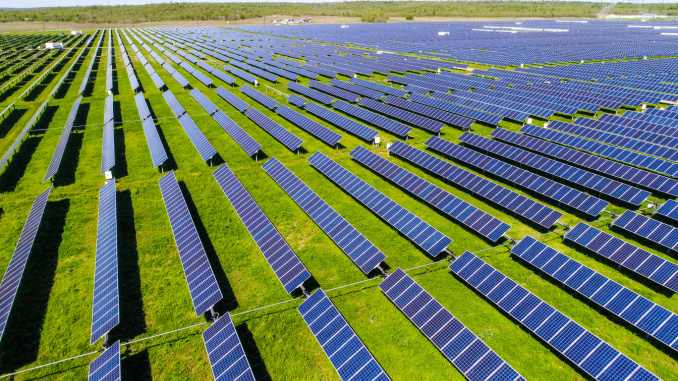
Self-described environmentalists might also want to take a hard look at the amount of land wind and solar could gobble up. The foundation calculates that solar and wind generation capacity needed to achieve net zero requires an area equivalent to the combined size of California and Texas while the bioenergy needed for electricity production would be about the size of France and Mexico combined.
Apparently, there’s more than just raw economics at stake. What environmental advocacy groups typically describe as clean, and green is neither.
The geopolitical, economic, and environmental costs of net zero call out for a political course correction.
Kevin Mooney is a contributor to The Daily Caller News Foundation and the Senior Investigative Journalist at the Commonwealth Foundation, Pennsylvania’s free-market think tank. He writes for several national publications. Twitter: @KevinMooneyDC
Another Arizona Republican-led effort to scale back the ESG movement in the state has been rejected by Democrat Governor Katie Hobbs.
On Monday, Senator Anthony Kern issued a press release, announcing that Governor Hobbs vetoed SB 1611, which he sponsored and which would have “countered the rapidly increasing use of environmental, social, or governance standards (ESG) scores to compel the business practices of private companies.”
In a statement, Kern expressed disappointment with the governor’s action, saying, “This bill would have ensured our state contracts do not push the goals of ESG in Arizona. If an organization supports ESG, we simply should not offer them a state contract. Tax dollars should not go to partisan organizations and organizations that implement politically driven policies. The Governor had the opportunity to put a stop to this clear form of discrimination, and instead, chose to support it.”
Senator Kern’s release elaborated on the purpose of his legislation and the importance of this proposal for the Grand Canyon State: “This bill specified a public entity may not implement an ESG policy as a condition of entering or renewing a contract with a company. ESG describes a set of standards imposed on companies to manipulate businesses and investors into compliance with Leftist political ideologies at the expense of free-market capitalism and investor returns. This system is similar to the concept of a credit score. If you don’t score high enough on their liberal meter, you could be rejected from doing business with these groups.”
Hobbs didn’t have much to say in her customary veto letter to Senate President Warren Petersen, writing, “I do not believe that tying the hands of the State’s procurement and investment professionals is in the best interests of the people of Arizona.”
After being introduced, SB 1611 was assigned to the Senate Government Committee, where it passed 4-3 – before clearing the full chamber 16-12 (with two members not voting). The legislation was transmitted to the House of Representatives and designated to the Government Committee, where it was approved with a 5-4 vote. The House then gave the green light for the bill 31-27 (with one member not voting and one seat vacant).
The governor’s veto of SB 1611 occurred on the same day she turned aside another, similar bill, which was SB 1500, sponsored by Senator Frank Carroll. That legislation would have “empowered (the) Arizona State Treasurer to eliminate ESG consideration from all state investments by requiring investments be made in the sole interest of the taxpayer.” Carroll pushed back in a statement this week, writing, “My interest is in protecting taxpayer dollars and protecting pensions. I sponsored this bill to get politics out of the pensions of public employees and public officials who have earned the right to financial stability after dedicating their lives to public service.”
Arizona Republicans and Democrats are unlikely to come together on the ESG issue as Hobbs has proven with her vetoes of bills from the legislature. Democrat Attorney General Kris Mayes has also taken her office in a different direction than that of her predecessor, stopping an ongoing investigation into the ESG movement soon after she took her post. Mayes said at the time, “The state of Arizona is not going to stand in the way of corporations’ efforts to move in the right direction.”
Daniel Stefanski is a reporter for AZ Free News. You can send him news tips using this link.