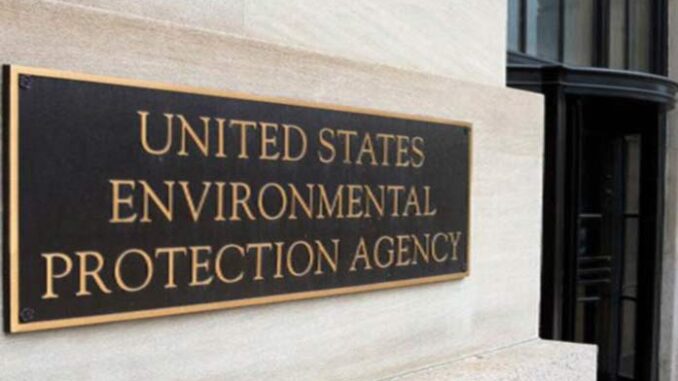
On a crisp, sun-drenched afternoon in the spring of 2023, I found myself walking down Constitution Avenue in Washington, D.C., in front of the William Jefferson Clinton Building, headquarters of the U.S. Environmental Protection Agency (EPA).
Standing in its shadow, I wondered when, or if, sanity would ever return to the building. My mind drifted to the regulatory malfeasance that gave this agency power to treat carbon dioxide (CO2) as a pollutant, the 2009 Endangerment Finding.
For years, this bureaucratic decree masqueraded as settled science. Climate zealots claimed CO2 and other greenhouse gases threatened public health as agents of planetary overheating, ignoring both a paucity of supporting data and contradictory evidence that inexorably accumulated.
Now, three years after my visit, EPA has rescinded the regulation as it applies to motor vehicles. The basis of its action is twofold: First, the agency has concluded that by attempting to regulate greenhouse gases, EPA exceeded its authority under the 1970 Clean Air Act. Second, the environmental effect of regulating tailpipe emissions of greenhouse gases is negligible.
There is more to be done. Reason and good sense would have the EPA remove the Endangerment Finding’s hold over industrial emissions of greenhouse gases, like those coming from power plants, and would undertake to dismantle the rule’s flimsy scientific justifications.
Nevertheless, EPA’s action undermines an ideological foundation for the broad attacks on fossil fuels that have constrained American prosperity and choked the developing world’s aspirations for modern lifestyles.
The 2009 regulation was used to justify the Obama administration’s Clean Power Plan – part of the so-called War on Coal – and tailpipe emissions standards that forced unwanted electric vehicles onto dealership lots. The rule has contributed to the closing of power plants, energy shortages, high electricity prices, and multiple billion-dollar losses for car manufacturers whose customers mostly prefer internal combustion engines. It has also fueled endless litigation against producers of hydrocarbon fuels.
Because CO2 is necessary for all life, beginning with its role in plant photosynthesis, regulation of the gas gave EPA jurisdiction over the entire U.S. economy. Climate crusaders abroad followed EPA’s lead.
Worldwide, the economic waste resulting from the rule is staggering. The Climate Policy Initiative estimates that between 2011 and 2020 that climate spending totaled $4.8 trillion. Estimates for “energy transition investment” – money dumped into the wind, solar and EV rat hole – was $2.3 trillion in 2025 alone.
That is trillions diverted from healthcare, infrastructure, education and genuine alleviation of suffering and advancement of human flourishing. Imagine those resources being directed to improving carbon-intensive energy sectors that have produced the wealthiest and healthiest civilizations in all of history.
Since the dawn of the industrial age, we have witnessed an unprecedented increase in global life expectancy. We have seen a drastic reduction in deaths from natural disasters – not because the weather is milder, but because people are better protected by modern infrastructure and technology made possible by fossil fuels. We have achieved historic highs in agricultural production, feeding a population of 8 billion.
CO2 has played a pivotal role in the greening of the Earth, acting as an atmospheric fertilizer that boosts crop yields and expands forests. Even methane, demonized alongside CO2, is merely a byproduct of a livestock industry essential for providing protein to a ballooning global population. Emissions of neither gas contribute significantly to global temperatures.
Once the EPA designated CO2 a legal hazard, U.S. diplomats, aid agencies and technical experts carried that framing into global climate negotiations, development programs and financing arrangements.
Over time, the EPA’s stance became a de facto reference point for regulators elsewhere. If the U.S. “gold standard” for environmental protection treated CO2 as an endangerment, ministries from Europe to Asia would use similar language in national climate laws.
With the EPA backing away from its regulation of greenhouse gases, developing countries should waste no time in severing whatever restrictions Western climate overseers have placed on their use of fossil fuels. For too long, climate policies have impeded economic growth and denied access to reliable supplies of electricity, to safer indoor fuels for cooking and heating, to refrigeration and to clean water. The result has been higher rates of morbidity and mortality among the world’s poor.
CO2 is not the enemy of humankind. Misguided attempts to criminalize its emissions are!
Vijay Jayaraj is a contributor to The Daily Caller News Foundationand Science and Research Associate at the CO2 Coalition, Fairfax, Va.He holds an M.S. in environmental sciences from the University of East Anglia and a postgraduate degree in energy management from Robert Gordon University, both in the U.K., and a bachelor’s in engineering from Anna University, India. He served as a research associate with the Changing Oceans Research Unit at University of British Columbia, Canada.
Arizona Senate Majority Whip Frank Carroll (R-LD28) introduced a measure on Tuesday, urging the U.S. Congress to clearly define and limit the Environmental Protection Agency’s (EPA) regulatory authority. Carroll and his cosponsors argue that ambiguous federal power threatens jobs and economic growth in Arizona. The proposal, SCM 1004, was advanced by the Arizona Senate Republican Caucus earlier this week.
Carroll’s measure calls on Congress to affirm its role in setting national environmental policy and to draw explicit boundaries around the EPA’s authority under federal law. The memorial highlights that, under the Clean Air Act, the EPA is charged with setting and reviewing National Ambient Air Quality Standards (NAAQS) every five years to protect public health and welfare, but argues that compliance requirements have grown burdensome for businesses and workers.
“Americans deserve clean air, land, and water, but they also deserve an economy that can grow without unnecessary federal interference,” Carroll said in a statement distributed by the Arizona Senate Republican Caucus. He added that the measure urges Congress to ensure EPA regulations are “grounded in law and sound science” and do not impose undue economic restrictions.
In additional remarks included in the memorial, Carroll said he is seeking to define the limits of EPA authority to prevent what he described as regulatory overreach.
“I am working to clearly define the EPA’s powers to prevent regulatory overreach that negatively impacts Arizona’s economy,” Carroll said. “While the Clean Air Act allows for specific emissions regulations, the EPA must not exceed its authority or violate fundamental principles of separation of powers. By preventing bureaucratic overreach, we can protect both the environment and the economic opportunities Arizona families and businesses rely on.”
SCM 1004 directs the Arizona Secretary of State to transmit copies of the memorial to leadership in both chambers of Congress and all members of Arizona’s federal delegation. The measure notes that while the EPA’s mission is to enforce environmental laws as intended by Congress, concerns over overreach have prompted states to call for clearer statutory limits on the agency’s powers.
Carroll’s push reflects broader national debates over the scope of federal environmental regulation. Critics of recent EPA proposals have warned that aggressive regulatory action could affect industries including agriculture, energy production, and water resources. Such debates have included congressional hearings examining the consequences of EPA actions on sectors like American agriculture and rural economies.
The memorial challenges key assumptions underlying EPA policies formulated under Democratic administrations and proponents of policy such as the ‘Green New Deal’, stating:
“Greenhouse gases like CO2 and methane are not acutely toxic like other hazardous pollutants and have no direct impact on human health;”
“There is no consensus as to whether global warming is a problem or a benefit or how current temperatures fit into the broader climate context;”
“Global temperatures, droughts, floods and hurricanes have not increased with increasing global CO2 emissions;”
The memorial further refutes the EPA’s authority regarding greenhouse gas emissions, stating directly: “The EPA has no explicit statutory authority to regulate greenhouse gases.”
The memorial comes amid ongoing statewide discussions about the balance between environmental protection and economic growth, with Arizona lawmakers questioning the appropriate reach of federal agencies in areas ranging from air and water quality to land use and energy development.
SCM 1004 was co-sponsored by a group of Republican Arizona Senators, including Hildy Angius (R-LD30), David Gowan (R-LD19), Kevin Payne (R-LD27), Janae Shamp (R-LD29), and Thomas “T.J.” Shope (R-LD16).
The U.S. Environmental Protection Agency (EPA) has filed a motion in a federal appeals court to vacate a Biden-era rule on fine particulate matter air quality standards, which was set to affect air quality regulations in Arizona.
In the motion filed in the U.S. Court of Appeals for the D.C. Circuit, Department of Justice attorneys representing the EPA told the D.C. Circuit that the agency’s 2024 rule change on fine particulate pollution standards is both legally and scientifically flawed and must be vacated. The motion noted that the “supplement” to the EPA’s 2019 Assessment of the NAAQS, or National Ambient Air Quality Standards, for particulate matter, “did not represent [a] full multidisciplinary evaluation of evidence’ for the underlying air quality criteria.” It added that the agency “lacks statutory authority to revise standards absent a thorough review.”
The PM 2.5 rule, finalized on December 15, 2024, was purported to strengthen protections against fine particulate matter pollution, which the EPA stated was linked to respiratory and cardiovascular health risks. Implementation was set to begin in 2025, with full compliance deadlines extending to 2031. The final rule revising the NAAQS lowered the annual primary PM 2.5 standard from 12.0 micrograms per cubic meter to 9.0 micrograms per cubic meter. The rule also established a new 24-hour PM 2.5 standard of 35 micrograms per cubic meter. The rule remains in effect until the court comes to a decision.
The consolidated lawsuits involved petitioners including the Commonwealth of Kentucky, et al., the Arizona Legislature, and the Arizona Chamber of Commerce, along with 21 other states and business groups against the U.S. Environmental Protection Agency, et al. The states and business groups challenged the rule, arguing it would impose billions in compliance costs on states like Arizona, potentially halting construction projects and job growth in areas struggling to meet the stricter standards.
The petitioners contended that the new limits would classify more areas as being in a state of nonattainment, leading to economic restrictions under the Clean Air Act. Oral arguments in the case were heard on December 16, 2024.
Arizona Senate President Warren Petersen hailed the EPA’s motion on X on November 26, 2025, crediting EPA Administrator Lee Zeldin with what he called a “BIG WIN FOR ARIZONA!” He added that the EPA, “just filed a motion in federal court to throw out Biden’s unlawful PM 2.5 rule that made it nearly impossible for parts of Arizona to ever meet clean-air standards — a rule that would have crushed jobs, construction, and our economy with billions in costs. The AZ Legislature & the AZ Chamber sued the Biden admin to stop this job-killing regulation. Our lawsuit helped bring about this reversal. Thank you, President Trump, for keeping your promise to cut red tape and protect Arizona families!”
BIG WIN FOR ARIZONA!
The Trump EPA, under Secretary Zeldin, just filed a motion in federal court to throw out Biden’s unlawful PM 2.5 rule that made it nearly impossible for parts of Arizona to ever meet clean-air standards — a rule that would have crushed jobs, construction,… pic.twitter.com/pa7rIDKRVt
Adam R.F. Gustafson, Principal Deputy Assistant Attorney General, and Sarah I. Zafar, Trial Attorney in the DOJ Environment and Natural Resources Division, filed the EPA’s motion for vacatur. They wrote in part, “Implementation of the NAAQS is a complex process, which generates significant costs and reliance interests among States, local governments, and regulated parties.”
The DOJ attorneys also argued that the EPA, “should at least have considered the distinct costs associated with revising the NAAQS mid-cycle. EPA’s disregard of this relevant factor was arbitrary and capricious because it was unreasonable for EPA to read an exercise of discretionary authority as an invitation to ignore a relevant factor like cost.”
The case remains ongoing in the U.S. Court of Appeals for the D.C. Circuit.
In a decision advancing American energy dominance, the U.S. Environmental Protection Agency (EPA) announced a final rule granting the State of Arizona full primacy to control all classes of underground injection wells under the Safe Drinking Water Act (SDWA).
This approval positions Arizona as the primary regulator for protecting its underground sources of drinking water, while developing economic growth and innovation in clean energy technologies.
The move aligns with the EPA’s Powering the Great American Comeback Initiative, which emphasizes delivering clean and safe water to every American, restoring U.S. energy leadership, and empowering states to manage their own resources with local expertise.
By delegating authority to Arizona, the federal government recognizes the state’s unparalleled understanding of its unique water challenges and business landscape.
“Efficient and effective permitting is essential to bolstering American industry and unleashing energy dominance while protecting our nation’s water resources,“ said EPA Administrator Lee Zeldin. “States know their water resources best and understand the needs of their business community; entrusting them to take on permitting makes common sense. I am excited to see the economic growth that will be spurred by granting Arizona primacy to regulate underground injection under the Safe Drinking Water Act.”
The approval enables the Arizona Department of Environmental Quality (ADEQ) to oversee permitting and enforcement for all underground injection wells, including Class I wells for hazardous waste storage— ensuring these operations occur far below drinking water aquifers—and Class VI wells, critical for carbon capture and storage.
Following technical and legal review, the EPA confirmed that Arizona’s Underground Injection Control (UIC) program fully complies with SDWA standards. ADEQ will now handle authorizations and compliance monitoring with the EPA retaining oversight and permitting authority for wells on Indian Lands, except for Class II wells on Navajo Nation lands, because the Nation already holds primacy.
The move got the support from Arizona’s congressional delegation, emphasizing the significance of federalism and local priorities.
“Our Founding Fathers were clear in their commitment to states’ rights and a small federal government. Individual states must have the power to govern in the best interests of their own people. This ruling affirms that Arizona—not Washington bureaucrats—is best equipped to protect our water, foster economic growth, and ensure the well-being of our citizens. It is a key step in ensuring access to safe drinking water for Arizona communities for years to come. No one understands Arizona’s communities and resources better than Arizonans ourselves,” said Congressman Andy Biggs (AZ-05). “I am grateful to President Trump and EPA Administrator Zeldin for their commitment to slashing needless regulations and restoring authority to the states. This is a victory for federalism, for common sense, and for the people of Arizona.”
“Arizona understands our land, our water, and our energy needs better than anyone in Washington ever could. Granting primacy to our state of the Underground Injection Control program is a recognition that local expertise and innovation should lead the way,” said Congressman Juan Ciscomani (AZ-06). “It means that Arizona will now oversee the permitting for all underground injection wells, including Class VI wells essential for carbon capture and storage—a critical part of a secure and cleaner energy future, and Class I wells, which store hazardous waste far below drinking water resources critical for the health of all Arizonans. This step is a win for clean water, a win for responsible energy development, and a win for our economy.”
“I want to thank Administrator Zeldin and the Trump administration for recognizing that Arizona is best positioned to protect its underground sources of drinking water. This rule will allow us to provide clean and safe water for every Arizonan while bringing more and exciting economic opportunities to our great state,” said Congressman Abe Hamadeh (AZ-08). “This rule will strengthen Arizona’s ability to manage our future for our families.”
Arizona Governor Katie Hobbs also praised the decision as a pivotal achievement for the state saying, “Today’s decision is a major milestone for Arizona. By granting our state primacy over underground injection wells, the EPA is once again recognizing that Arizona is best positioned to protect its water and natural resources. This authority allows us to safeguard the integrity of our groundwater, while also supporting responsible economic growth and clean energy development. With this step, Arizona gains the tools to lead on sustainable environmental management and innovation for years to come.”
Ethan Faverino is a reporter for AZ Free News. You can send him news tips using this link.
Since taking office in January, President Trump has worked hard to restore sanity in America. While the wins have been stacking up in many areas, perhaps his administration’s most notable efforts have been in its pushback against the junk science driving the climate agenda.
Along with executive orders in January and April to unleash American energy, Trump’s Environmental Protection Agency (EPA) announced that it would be reversing a Biden administration regulation that held Arizona accountable for the eighty percent of emissions in the Maricopa County nonattainment area that emanated from outside of the state—primarily from China and Mexico.
While all that is good news, the Trump administration delivered quite possibly the best news yet for American energy last month when the EPA released its plan on rescinding the Endangerment Finding. And it has the climate cult drowning in their tears.
What is the Endangerment Finding?
Back in 2009, the Obama administration declared carbon dioxide (CO2) as a pollutant that threatens public health and welfare under the Clean Air Act. Of course, this ignored the fact that CO2 is one of the most important ingredients for building and sustaining life on Earth. But the Obama administration was never known for exercising commonsense, so it gave birth to this controversial policy by relying on cherry-picked scientific data to justify a vast expansion of regulatory power at the EPA.
Since its inception, the Endangerment Finding has been used as the basis for many of the green scam regulations impacting Arizona’s economy. During both the Obama administration and the Biden administration, the EPA passed new regulations on vehicles, factories, power plants, and other mobile sources all based on the alleged dangers of CO2. These mandates have cost the U.S. economy over a trillion dollars, and here in Arizona, they have been responsible for higher energy prices and higher utility bills.
But if the climate cult gets its way, it wouldn’t stop there…