Texas is once again proving why it stands as America’s unrivaled energy powerhouse.
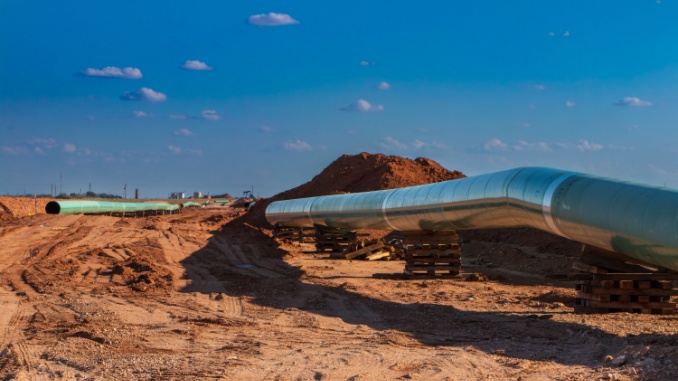
According to the U.S. Energy Information Administration (EIA), more than 66% of planned U.S. natural gas pipeline capacity additions for 2026 and 2027 — roughly 29.7 billion cubic feet per day (Bcf/d) out of a national total of 44.9 Bcf/d — originate in the Lone Star State.
This marks a second major pipeline expansion boom in just over a decade, far outpacing other regions like Louisiana (19%). While the Marcellus/Utica shale in the Northeast remains hobbled by partisan politics in New York that have blocked critical takeaway capacity for years, Texas and its booming economy moves inexorably ahead.
This infrastructure surge is a direct response to exploding demand across multiple sectors. Permian Basin producers, sitting atop the nation’s most prolific oil and gas play, have long grappled with stranded associated gas from thousands of oil wells. Gross natural gas withdrawals in the Permian hit record levels, exceeding 21 Bcf/d in recent years, but pipeline constraints have periodically led to flaring or negative prices at the Waha Hub in the southwest Texas panhandle. New pipelines are needed to unlock this resource, turning waste into wealth and boosting economic output.
The global LNG export market provides another powerful driver. U.S. LNG exports have surged, with Texas facilities playing a starring role, exporting billions in value and supplying allies worldwide. Projects like NextDecade’s Rio Grande LNG and others along the Gulf of America coast require big volumes of reliable feedgas.
Permian supplies complement output from the Haynesville, Cotton Valley, and Bossier plays, feeding terminals that position America as far and away the world’s top LNG exporter. Without expanded pipelines, these export ambitions, and the jobs, tax revenue, and geopolitical leverage they deliver, could struggle to meet rising global demand.
Domestically, Texas power providers are racing to add natural gas-fired generation to the ERCOT grid. Over 130 proposed gas power plant projects could add up to 58 GW of capacity, driven by surging electricity demand.
Governor Greg Abbott’s Texas Energy Fund has already greenlit major facilities, such as a 1,350 MW plant in Ward County. These plants provide reliable, dispatchable power essential for a grid that has been overloaded with intermittent wind and solar capacity.
The AI and data center boom adds yet more urgency. Hyperscale facilities in Texas are increasingly turning to behind-the-meter natural gas generation — on-site power plants dedicated to the facility. Companies like VoltaGrid, Energy Transfer, and others are deploying gigawatts of gas-fired capacity for Oracle, Vantage, and other clients. In the Permian Basin region, developers pair associated gas with microgrids to power AI campuses directly. This approach not only meets explosive demand but also monetizes stranded gas while shielding local ratepayers.
These myriad converging demand drivers — Permian takeaway, LNG exports, ERCOT reliability, and AI infrastructure — have combined to create a compelling case for rapid pipeline expansion. Projects like the Blackcomb Pipeline (2.5 Bcf/d from Waha to Agua Dulce), Hugh Brinson, and Rio Bravo exemplify the momentum. This rapid buildout echoes the shale revolution’s earlier infrastructure wave but on an even grander scale, with tens of billions in investment flowing into the Texas economy.
What it all boils down to is the enduring reality that, despite a half-decade of incessant narratives about the supposed death of fossil fuels and a mythical energy transition, the world wants and need more natural gas. This second major, Texas-based pipeline boom in just the past decade also highlights the reality that, more than any other state, Texas is set to fuel America’s energy future.
While Texas is blessed with the geology and geography needed to step into this role, a state government which values the industry is equally critical to success. Governor Greg Abbott isn’t Kathy Hochul or Gavin Newsom: If he were, all these demand drivers would be forced to search elsewhere to fill their natural gas needs and the pipelines needed to deliver it. It’s a lesson that voters in other states should take to heart.
David Blackmon is a contributor to The Daily Caller News Foundation, an energy writer, and consultant based in Texas. He spent 40 years in the oil and gas business, where he specialized in public policy and communications.
The Consumer Price Index rose to 3.81 percent year-over-year in April, marking the highest annual inflation rate in nearly three years, according to the latest Monthly Inflation Update released Tuesday by Republicans on the Joint Economic Committee (JEC).
According to the report, headline Consumer Price Index for All Urban Consumers (CPI-U) increased from 3.26 percent in March to 3.81 percent in April. Core CPI, which excludes food and energy prices, rose to 2.75 percent year-over-year in April, up from 2.60 percent in March.
April’s increase marked the highest annual headline inflation rate reported since mid-2023, reversing several months of comparatively slower price growth.
CPI surged to 3.81% in April, the highest rate in nearly 3 years & up from 3.26% in March. Core CPI, which excludes food & energy, was 2.75% y/y, compared to 2.60% in March. Y/y, energy inflation was 17.87%, a 21.61pp change while food inflation was 3.18%, a 0.42pp increase.…
— Joint Economic Committee Republicans (@JECRepublicans) May 12, 2026
The JEC reported that energy prices experienced the sharpest annual increase among major categories, with energy inflation reaching 17.87 percent year-over-year in April, representing a 21.61 percentage point increase compared to April 2025.
Food prices also increased year-over-year. According to the report, food inflation reached 3.18 percent in April, 0.42 percentage points higher than the same period last year.
Regionally, inflation rose across all major areas of the country between March and April. The Northeast recorded the highest inflation rate at 4.4 percent, followed by the Midwest at 4.1 percent and the South at 3.6 percent. The West recorded the lowest regional inflation rate at 3.5 percent.
While the West recorded the nation’s lowest regional inflation rate, the 3.5 percent increase still remained above the Federal Reserve’s long-term two percent inflation target. Declining real wages indicate that inflation continued to outpace earnings growth for many workers during the month, reducing purchasing power despite nominal wage increases.
The JEC’s Monthly Inflation Update compiles and analyzes federal inflation data released by the U.S. Bureau of Labor Statistics. The report also found that inflation-adjusted earnings declined during the month.
According to the JEC, real average weekly earnings for all employees decreased by 0.19 percent from March to April. Real average hourly earnings declined by 0.53 percent year-over-year, representing a 0.44 percentage point decrease compared to April 2025.
Arizona House Republicans are raising concerns about Governor Katie Hobbs’ recently released state energy plan, arguing it prioritizes solar development and government programs over housing availability and energy affordability.
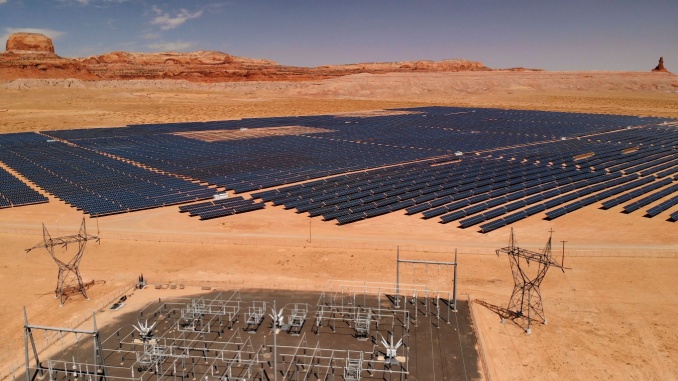
In a press release, the Arizona House Republican Caucus said the plan advances policies that emphasize utility-scale solar projects, expanded renewable energy deployment, and the use of state-owned land for energy infrastructure.
The criticism follows the rollout of the governor’s broader energy strategy, which includes 31 recommendations developed by the Arizona Energy Promise Task Force to address rising energy demand, data center growth, and utility costs across the state.
According to House Republicans, the plan promotes solar development on state land, including areas near existing communities, rooftop solar installations on government buildings, and participation in virtual power plant programs.
Republican lawmakers cautioned that these proposals could affect the availability of land for residential development. Citing data from the Common Sense Institute, they noted that the Hobbs administration has “identified land closest to existing residential areas as ‘best’ for solar development,” adding that approximately 276,000 acres of state land within 10 miles of incorporated cities and towns could support up to 200,000 housing units.
House Majority Leader Michael Carbone (R-LD25) said the administration’s plan emphasizes renewable energy projects and related investments while raising concerns about impacts on housing supply and costs to taxpayers.
He explained in a statement, “Hobbs is calling this an all-of-the-above energy plan. It’s not. It’s a solar-heavy political plan that puts green industry insiders ahead of taxpayers, pushes utility-scale solar onto state land that could support badly needed housing, and says nothing about lowering gas prices for Arizona families. When Hobbs says ‘all of the above,’ what she means is more wind and solar.”
The governor’s office has described the energy plan as part of a broader effort to address affordability and reliability while bringing together stakeholders from utilities, industry, and government.
In separate announcements, the Hobbs administration has highlighted programs focused on lowering energy costs, including efficiency upgrades and rebate initiatives designed to reduce utility bills for Arizona households.
Carbone criticized Hobbs’ energy plan, stating, “You cannot claim to have an energy plan for Arizona while ignoring gasoline prices, fuel supply, and the infrastructure needed to keep this state moving. This report does not confront boutique fuel problems, does not address refinery or pipeline capacity, and does not even include the industry that supplies the fuel Arizona families and businesses rely on every day. That is not all of the above. That is selective politics dressed up as policy.”
He added, “Her report is long on politics and short on answers. It does not lower costs. It does not increase housing supply. It does not put taxpayers first. House Republicans are focused on affordability, reliability, and policies that serve Arizona families, not a narrow political agenda.”
Climate activists, frustrated by unsuccessful climate lawsuits, have increasingly turned to “climate superfund” legislation as a new tool to make oil and gas companies pay for climate damages.
Notably, these state-level bills seek to impose hefty fees or fines on energy producers for the costs of climate change, a punitive measure for energy producers for decades-old, lawful activities. But this punishing dynamic backfired when confronted with reality. In multiple states, climate superfund proposals have run ashore amid bipartisan concern that they would do more harm than good, particularly by driving up energy costs for consumers.
As of early 2026, only Vermont and New York have actually enacted climate superfund laws, both in 2024, with a dozen other states introducing similar bills, including California, New Jersey, Massachusetts, Connecticut, Hawaii, Maryland, Virginia, to name a few. However, about half of these attempts have stalled or died in state legislatures.
New Jersey’s experience is a prime example. Lawmakers there introduced an ambitious Climate Superfund Act in 2025, but even some initial supporters grew uneasy once they considered the practical impacts.
In a Senate Budget Committee hearing on the bill in January 2026, legislators from both parties openly questioned the premise of punishing companies for past legal emissions and warned the costs would simply be passed on to New Jersey residents . “Each and every one of us… [is] relying on [fossil fuels] in one way or another in your everyday life,” noted Democratic Sen. Paul Sarlo, highlighting the irony that the state itself remains dependent on the very fuels it was seeking to penalize.
Sarlo, the committee chair, reluctantly advanced the bill out of committee but bluntly warned he would vote “no” on final passage unless major changes were made. Republican Sen. Declan O’Scanlon was even more direct, blasting the retroactive fines as “unfair” and cautioning that “New Jerseyans themselves would end up paying the price at the pump or for their utility bills” if the state tries to punish energy producers.
In the end, New Jersey’s proposal never made it to a floor vote before the legislative session ended in January 2026, effectively killing the bill (for now).
New Jersey is hardly alone. In California, two “Polluters Pay Climate Superfund” bills (SB 684 and AB 1243) garnered significant attention in early 2025 but were quietly shelved after initial committee hearings, as lawmakers grew wary of the potential economic fallout. Connecticut’s climate superfund bill got a public hearing in March 2025 but then died in committee without a vote. In Hawaii, a proposed superfund never advanced at all before the 2025 session ended. Virginia’s attempt was “immediately rejected” after a bipartisan subcommittee vote to table the bill, effectively killing it. And in Maryland, lawmakers introduced an ambitious Climate Superfund-style bill (the RENEW Act) only to strip it down to a mere study of climate costs, with all polluter-pays provisions removed.
Taken together, these failures underscore how even in climate-conscious states, many policymakers got cold feet when confronted with the legal risks, economic trade-offs, and voter backlash potentially involved.
If this is the case, are climate superfund schemes really aligned with what the public wants policymakers to focus on?
Activists insist that making Big Oil pay billions is a matter of justice and necessary to fund climate resilience. But for most Americans, the more immediate priority is relief from high energy prices, not new climate-linked taxes that could raise those costs further.
A national poll of likely voters in late 2025 showed 83% reported that their energy bills had gone up in recent years, with a majority saying costs had increased “a lot.” Affordability is clearly top of mind. This doesn’t mean Americans don’t care about climate change at all; it means they aren’t willing to bear exorbitant direct costs for symbolic climate policies, especially when those policies won’t tangibly improve their day-to-day lives or might simply shuffle money to government coffers with little accountability.
Ultimately, the failure of these climate superfund proposals underscores a reality that many in the energy industry have long argued: energy policy must be grounded in economic and energy reality, as well as the needs of everyday Americans.
David Blackmon is a contributor to The Daily Caller News Foundation, an energy writer, and consultant based in Texas. He spent 40 years in the oil and gas business, where he specialized in public policy and communications.
Arizona House Republicans on the Natural Resources, Energy, and Water Committee have taken action to address skyrocketing gas prices and utility bills, passing a sweeping package of bills designed to lower fuel costs, enhance energy reliability, and defend ratepayers.
✅House Republicans Advance Energy Affordability Package to Lower Costs for Arizona Families
“The cost of living for Arizona families, including gas and electricity, continues to increase, and Republicans are acting. This package puts affordability first by lowering fuel costs,… pic.twitter.com/4a3T1JOIPo
Under the leadership of Chairman Gail Griffin (R-LD19), the measures align with the House Republican Majority Plan’s core priorities of unleashing economic prosperity, promoting government efficiency, and protecting individual rights and liberties.
The legislation, which advanced on a party-line vote with Democrats in opposition, targets the challenges faced by Arizona families, particularly in Maricopa and Pinal Counties, where severe summer fuel blend requirements have driven up prices at the pump. By prioritizing affordability and reliable power, these bills aim to ease the financial burden on households amid rising energy demand.
“The cost of living for Arizona families, including gas and electricity, continues to increase, and Republicans are acting,” stated Chairman Griffin. “This package puts affordability first by lowering fuel costs, protecting ratepayers from higher utility bills, and making sure Arizona has dependable power as demand grows. The Majority Plan is clear: government should work to ease the cost burden on families, not make them worse.”
Bills Tackling High Gas Prices
HB 2145 (Rep. Griffin): Amends motor fuel statutes to empower the President of the Senate and Speaker of the House to jointly request EPA fuel waivers during shortages if the Governor does not act, providing a defense against price surges.
HB 2400 (Reps. Willoughby, R-LD13, and Biasiucci, R-LD30): Implements a seasonal suspension of the state’s 18-cent gas tax from May through September in Maricopa and Pinal Counties. The bill ensures local governments are reimbursed for lost highway revenue through allocations from the Arizona Highway User Revenue Fund, including $27.588 million to counties, $39.93 million to cities and towns, and $5.082 million to larger municipalities. It also includes an emergency clause for immediate implementation and exempts the Department of Transportation from rulemaking for one year.
HB 2696 (Rep. Willoughby): Directs the Arizona Commerce Authority to prioritize reducing fuel and gas prices as its primary objective for two years, expiring December 31, 2029. The authority must collaborate with the oil and gas industry to study repealing the cleaner-burning gasoline blend, building new pipelines, establishing a strategic reserve, and exploring in-state refineries, including reviving a proposed facility in Yuma County. Status updates will be provided to legislative committees, with a final report due by October 1, 2026.
HB 2955 (Rep. Willoughby): Amends motor fuel standards to end the expensive summer fuel blend in populous counties, subject to EPA waiver under the Clean Air Act. It allows for gasoline compliant with ASTM D4814 and vapor pressure limits, addressing supply shortages and enabling lower-cost alternatives.
HCM 2008 (Rep. Willoughby): A concurrent memorial urging Congress and the EPA to eliminate the federal gas tax on Arizona’s cleaner-burning gasoline in Maricopa and Pinal Counties from May to September or grant the EPA administrator emergency waiver authority for costlier blends. This recognizes Arizona’s progress toward National Ambient Air Quality Standards while highlighting the undue tax burden on specialized fuels.
Supporting these efforts are additional bills to promote long-term solutions:
HB 2014 (Rep. Fink, R-LD27): Requires the Department of Environmental Quality (ADEQ) and Arizona Department of Agriculture to conduct air emissions modeling and feasibility studies on alternative gasoline blends, including federal reformulated, California phase 3, and conventional options. Reports must be published by September 30, 2027, with $100,000 appropriations each for modeling and studies.
HB 2401 (Willoughby and Biasiucci): Mandates biennial reviews by ADEQ of fuel formulations available under federal standards, assessing air quality impacts in regulated areas, and submitting recommendations to the Department of Agriculture, the Governor, the President of the Senate, the Speaker of the House, and the Secretary of State by December 31 of each review year.
HB 2428 (Griffin): Authorizes voluntary mobile emissions reduction credit programs, permitting emissions credits for nonroad engines under Clean Air Act guidelines, with permits issued by ADEQ for up to 20 years, supported by chambers of commerce, utilities, and Maricopa County.
“Today we heard from organizations with the time and resources to lobby against affordable prices for Arizona families, but not from the families paying more at the pump,” explained Majority Whip Julie Willoughby. “Working families cannot take time off to come to the Capitol and ask for relief; that is why we are here to help be their voices.”
“Eighteen cents a gallon may sound small to some, but it matters to families trying to make ends meet,” Willoughby added. “I will do everything in my power to deliver relief now while we continue working to fix the fuel blend and supply problems. Families need lower prices, not excuses.”
Bills Ensuring Energy Reliability and Ratepayer Protections
HB 2331 (Reps. Marshall, R-LD7 and Heap, R-LD10): Renames and expands energy reliability statutes to require public power entities and service corporations to prioritize domestically produced fuels, minimize foreign reliance, and evaluate resources for affordability, reliability, and cleanliness. Defines “clean energy” to include low-emission sources like nuclear and natural gas, with reliable sources needing at least 50% capacity factor and rapid ramp-up capabilities. The bill emphasizes hydrocarbons and finds domestic sourcing essential for public health and safety.
HB 2756 (Reps. Griffin and Blackman, R-LD7): Adds provisions for public power entities and electric corporations to report quarterly on new extra-high load factor customers, including interconnection requests and completions. These customers must be factored into load growth projections. The Arizona Corporation Commission (ACC) is directed to adopt rules on contracts, minimum billing, and pre-execution reviews to protect other ratepayers, excluding member-owned cooperatives. Requires cost-of-service studies within 180 days and an ACC workshop within 90 days to assess impacts on residential bills and potential new customer classes.
These bills now advance for further legislative consideration.
Ethan Faverino is a reporter for AZ Free News. You can send him news tips using this link.