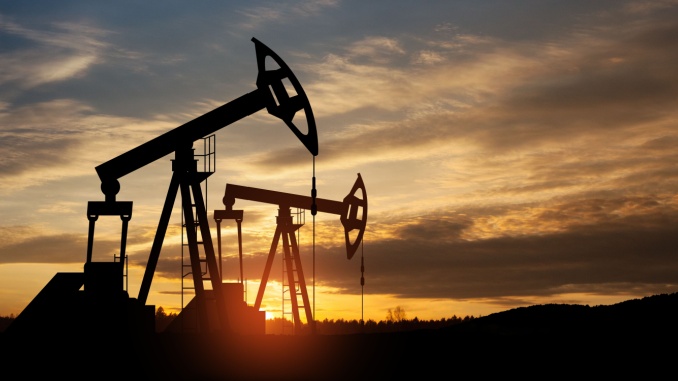
As the end of 2025 nears, the question arises: What can Americans expect in the world of energy policy in 2026?
Predicting future events where energy is concerned is always a risky enterprise. After all, if anyone could accurately foresee where, say, the Brent price for crude oil would sit a week from today, that person would soon become fabulously wealthy and never have to work another day in his or her life. But no one can actually do that because too many widely disparate factors impact where prices will head on a daily basis. This overarching theme holds true in most areas of the widely diverse energy space.
Still, just as energy details like exact future oil prices or rig count levels are impossible to know with certainty, some overarching trends are entirely foreseeable. As an example, it was entirely predictable a year ago that 2025 would become a year in which an energy policy revolution would take place. Donald Trump had been elected to a second term and was in the process of naming cabinet nominees who would lead an effort to reverse the onerous regulations and economically ruinous subsidy spending of the Biden years.
A policy revolution was entirely predictable, even though, as I wrote at the time, it would take a somewhat different form than many were expecting. There would be no replay of the “Drill, Baby, Drill” agenda of Trump’s first term mainly due to a series of intractable economic factors. Instead, we’d have a “Build, Baby, Build” revolution in which policy changes have focused on setting the conditions for a boom in energy infrastructure like pipelines, LNG export facilities, baseload power generation, major transmission projects, new and expanded mining operations, and more into place.
With business-oriented cabinet officials like Chris Wright at the Energy Department and Doug Burgum at Interior leading the way, it was easy to predict that the second Trumpian energy revolution would focus on measures that allow markets, not the dictates of central government planners, to lead the charge. The command-and-control schemes, crony capitalism, and green subsidies would be repealed or phased away. Banks and investment houses would be put on notice that their discriminatory, ESG-focused lending practices would be policed. Rather than focus their personal energy on finding ways to punish disfavored energy players, administration officials would spend their days finding ways to speed up permitting processes.
Those things and more all came about in Year One of this second Trump presidency. It has been a true policy-driven revolution.
Now, as the dawn of 2026 nears, the direction of the administration’s Year Two agenda becomes equally predictable: Consolidation of the gains made in 2025.
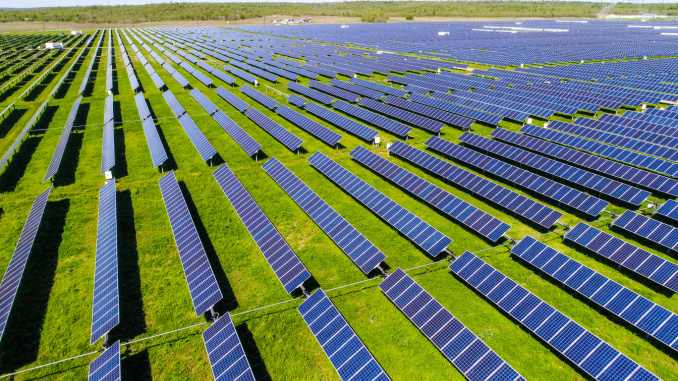
The ending/phasing out of the green subsidies must be maintained since they distort markets by encouraging irrational allocations of capital. The capital thrown at wind and solar will be more productively allocated to building new natural gas and nuclear baseload plants and ensuring existing coal plants stay up and running to keep America’s lights on. The capital misallocated by legacy carmakers – like Ford and GM – to their foundering EV dreams must be reallocated to making cars American consumers can afford and actually desire to own.
With global markets creating rapidly rising demand for U.S. LNG, it’s time to “Build, Baby, Build” those needed new export facilities and the pipelines needed to feed the gas into them. Those energy gains can’t be consolidated without driving into action the streamlined processes to issue the needed permits.
And then there are the mines. Regardless of how quickly their permits can be issued, America can’t have any of the pipelines, LNG facilities, power plants, AI datacenters, or transmission lines without the raw mineral materials that make them work. America can no longer afford to be held hostage to supply chains for these materials dominated by China. That means more mines, and lots of them.
The President and his people have worked overtime throughout 2025 to ensure the executive branch’s side of this policy revolution is in place. Now, Congress must act to enshrine it permanently in law. Getting that done, consolidating the gains made in 2025 into action and statutes, will dominate the energy policy agenda throughout 2026. It’s all very predictable.
David Blackmon is a contributor to The Daily Caller News Foundation, an energy writer, and consultant based in Texas. He spent 40 years in the oil and gas business, where he specialized in public policy and communications.
Our country is facing an energy crisis. No, not because of new demand from data centers or AI. Instead, it’s because utilities in nearly every state, due to government imposed “renewable” mandates, self-imposed mandates, and the supercharging of the Green New Scam under the so-called “Inflation Reduction Act,” have been shutting down vital coal resources and building out almost exclusively intermittent and costly resources like solar, wind, and battery storage.
For years, Arizona has been an emerging bastion of conservative leadership. Recently the AZ Republic called the Legislature the “most conservative” ever. Over the last decade it has passed landmark policies and defended critical laws around the country, setting an example for the rest of the nation to emulate.
This conservative advantage was threatened a few short years ago, when Katie Hobbs and Kris Mayes assumed their positions as Arizona governor and attorney general, respectively, after an extremely volatile election cycle. These two have stopped at nothing to insert their radical agenda as they seek to transform our state into a liberal utopia to please their friends in California and New York.
While Hobbs has sought to remake Arizona’s policies from her perch as the state’s chief executive, Mayes has been busy on the legal side. Throughout her tenure in office, Mayes has either done the bare minimum or nothing at all to defend key Arizona or national laws. Instead, she has spearheaded the left’s efforts to undermine President Trump’s work to make America great again.
Thankfully, however, the Arizona Legislature, under my leadership as Senate President, has stepped in the gap to uphold laws of great importance to our citizens. Despite our state’s top prosecutor missing in action as she seeks affirmation from her colleagues in New York and California, we have led or joined dozens of lawsuits and legal briefs to preserve conservative laws across our state and nation. These efforts have largely been unprecedented, as legislatures typically defer to their state attorneys general or other government prosecutors on the legal fronts. From early on, though, in Arizona’s divided government, I determined that our state could not afford to sit on the sidelines as Mayes hijacked our legal apparatus for her extremist ways. As a result, Arizona has again asserted itself as a national example, showing other states how to maintain the rule of law in the face of divided governments.
Here are some of the highlights of the cases:
Protecting Election Integrity
In the absence of the state’s attorney general taking action, the Arizona Legislature has been engaged in a prolonged legal battle to protect the integrity of our state’s elections, defending two laws that restrict voters who do not provide documentation that confirm their American citizenship. After I filed an emergency stay application at the U.S. Supreme Court, the Justices affirmed Arizona’s right to reject state form registrations that do not include proof of citizenship. This case is ongoing because of activist judges on the Ninth Circuit Court of Appeals who are attempting to circumvent the Supreme Court’s ruling. Arizona will continue to defend our own law, and we will come to the aid of any state working to require proof of citizenship.
Protecting the Integrity of Women’s Sports
Over half the states in America have enacted legislation to preserve fairness in sports, including Arizona, which passed the Save Women’s Sports Act, to ensure that girls’ athletic events at public schools are reserved for biological females. Arizona’s law, like most other states, remains tied up in federal litigation, with the Legislature itself stepping in to defend the statute after Mayes declined to do so. We defended Arizona’s law up to the U.S. Supreme Court, in addition to filing briefs of support for other states’ fights. We cannot allow activist judges and radical groups to erase protections that women and girls have fought for generations to secure.
Protecting Children
The Arizona Legislature defended the state’s lifetime registration and reporting requirements for convicted sex offenders, giving families and law enforcement greater abilities to track high-risk offenders. Despite the importance of the protections, Mayes failed to defend the law, abandoning the state’s responsibility to safeguard communities. However, we refused to allow the safety of our children to be jeopardized, and we recently won in federal court. The judge’s ruling in this case was a victory for every parent in Arizona.
Protecting the Second Amendment
The Arizona Legislature joined a national coalition to urge the U.S. Supreme Court to end Mexico’s frivolous lawsuit against U.S. firearm manufacturers for crimes committed by Mexican cartels in that country. Earlier this year, the Court agreed with our position, ruling that the lawsuit infringes on U.S. sovereignty by trying to impose restrictions on Second Amendment rights and to control how the American firearms industry is regulated. We were proud to work with other states to uphold our nation’s sovereignty, protect Americans’ right to bear arms, and safeguard lawful gun manufacturers from those attempting to destroy this industry. I will always engage in legal battles to protect our Second Amendment rights when Mayes refuses to do so.
Protecting Against Federal Land Grabs
Two years ago, the Biden-Harris administration confiscated nearly a million acres of land in northern Arizona, designating this space as a “national monument.” This unlawful designation will result in fewer jobs, diminished state trust land values, and billions in lost tax revenues. I sought to overturn this action in federal court to free our state from the grasp radical environmentalists had over the previous administration. As we argued throughout this case, Biden’s maneuver had nothing to do with protecting actual artifacts, but halting all mining, ranching, and other local uses of federal lands that are critical to our independence from adversary foreign nations, our food supply, and the strength of our economy.
Protecting America’s Energy
After the Arizona Legislature joined a national coalition to challenge a radical and costly rule imposed by California requiring trucking companies to retire their diesel-fueled models, the state agreed to repeal its ‘Advanced Clean Fleets’ mandate. This rule would have created dire impacts to the supply chain, raising costs for local trucking companies and their customers. For years, California has operated with near impunity as its leaders passed unconstitutional regulations that brought great harms to Arizona consumers. In the absence of our attorney general holding California accountable to the rule of law, the state Legislature gladly stepped up to protect our citizens from this egregious abuse of power and emerged victorious.
Warren Petersen is the President of the Arizona State Senate and represents Legislative District 14.
During the latest marathon cabinet meeting on Dec. 2, Energy Secretary Chris Wright made news when he told President Donald Trump that “The biggest determinant of the price of energy is politicians, political leaders, and polices — that’s what drives energy prices.”
He’s right about that, and it is why the back-and-forth struggle over federal energy and climate policy plays such a key role in America’s economy and society. Just 10 months into this second Trump presidency, the administration’s policies are already having a profound impact, both at home and abroad.
While the rapid expansion of AI datacenters over the past year is currently being blamed by many for driving up electric costs, power bills were skyrocketing long before that big tech boom began, driven in large part by the policies of the Obama and Biden administration designed to regulate and subsidize an energy transition into reality. As I’ve pointed out here in the past, driving up the costs of all forms of energy to encourage conservation is a central objective of the climate alarm-driven transition, and that part of the green agenda has been highly effective.
President Trump, Wright, and other key appointees like Interior Secretary Doug Burgum and EPA Administrator Lee Zeldin have moved aggressively throughout 2025 to repeal much of that onerous regulatory agenda. The GOP congressional majorities succeeded in phasing out Biden’s costly green energy subsidies as part of the One Big Beautiful Bill Act, which Trump signed into law on July 4. As the federal regulatory structure eases and subsidy costs diminish, it is reasonable to expect a gradual easing of electricity and other energy prices.
This year’s fading out of public fear over climate change and its attendant fright narrative spells bad news for the climate alarm movement. The resulting cracks in the green facade have manifested rapidly in recent weeks.
Climate-focused conflict groups that rely on public fears to drive donations have fallen on hard times. According to a report in the New York Times, the Sierra Club has lost 60 percent of the membership it reported in 2019 and the group’s management team has fallen into infighting over elements of the group’s agenda. Greenpeace is struggling just to stay afloat after losing a huge court judgment for defaming pipeline company Energy Transfer during its efforts to stop the building of the Dakota Access Pipeline.
350.org, an advocacy group founded by Bill McKibben, shut down its U.S. operations in November amid funding woes that had forced planned 25 percent budget cuts for 2025 and 2026. Employees at EDF voted to form their own union after the group went through several rounds of budget cuts and layoffs in recent months.
The fading of climate fears in turn caused the ESG management and investing fad to also fall out of favor, leading to a flood of companies backtracking on green investments and climate commitments. The Net Zero Banking Alliance disbanded after most of America’s big banks – Goldman Sachs, J.P. Morgan Chase, Citigroup, Wells Fargo and others – chose to drop out of its membership.
The EV industry is also struggling. As the Trump White House moves to repeal Biden-era auto mileage requirements, Ford Motor Company is preparing to shut down production of its vaunted F-150 Lightning electric pickup, and Stellantis cancelled plans to roll out a full-size EV truck of its own. Overall EV sales in the U.S. collapsed in October and November following the repeal of the $7,500 per car IRA subsidy effective Sept 30.
The administration’s policy actions have already ended any new leasing for costly and unneeded offshore wind projects in federal waters and have forced the suspension or abandonment of several projects that were already moving ahead. Capital has continued to flow into the solar industry, but even that industry’s ability to expand seems likely to fade once the federal subsidies are fully repealed at the end of 2027.
Truly, public policy matters where energy is concerned. It drives corporate strategies, capital investments, resource development and movement, and ultimately influences the cost of energy in all its forms and products. The speed at which Trump and his key appointees have driven this principle home since Jan. 20 has been truly stunning.
David Blackmon is a contributor to The Daily Caller News Foundation, an energy writer, and consultant based in Texas. He spent 40 years in the oil and gas business, where he specialized in public policy and communications.
Two months ago, Arizona’s monopoly utilities and their political allies were patting themselves on the back about the expansion and development of a couple of new natural gas projects that they claim will help the Grand Canyon state keep up with growing energy demand.
On the surface, an announcement of new projects like the Transwestern Expansion should have been great news for Arizona ratepayers. Our state is in desperate need of more reliable, dispatchable power; especially after years of reckless green new deal investments that have raised costs and reduced reliability.
But sadly, it turns out that SRP’s enthusiasm for gas isn’t about expanding baseload power on the grid after all. The new gas capacity is instead being used to replace existing coal power generation that SRP has pledged to shut down in Arizona. All to meet ridiculous self-imposed carbon reduction goals and climate commitments that should have been junked a long time ago…