Another one of Arizona’s middle-of-the-road legislative districts may be represented by a liberal after November’s General Election if enough Democrats and left-leaning independents have their say.
Judy Schwiebert, a Democrat, is running for the Arizona State Senate in Legislative District 2. Schwiebert currently serves as a State Representative for the district. She announced for the seat in June 2023, saying that “we need people who will work together to focus on the toughest challenges facing Arizonans including our teacher, affordable housing, and water shortage crises.”
Schwiebert posted more than 1,600 signatures at the Arizona Secretary of State’s Office earlier this spring to qualify for the ballot.
The Democrat legislator has been endorsed by several left-leaning organizations, including National Organization for Women Arizona PAC, Arizona Education Association, Moms Demand Action, Save Our Schools Arizona, Arizona List, Jane Fonda Climate PAC, the Grand Canyon Chapter of the Sierra Club, Emily’s List, Moms Fed Up, and Human Rights Campaign PAC.
Schwiebert has been a vote for her party’s efforts to stand against border security measures. In 2021, she voted against HCR 2029, which commended the courage of the United States Border Patrol and recognized the role they play in safeguarding Arizona and the U.S. She also co-sponsored HB 2604 in 2023, which would permit the Arizona Department of Transportation to issue a driver’s license or nonoperating ID to a person without legal status in the United States.
This year, she voted against SCR 1042, which proclaimed the legislature’s support for the people and government of Texas in its effort to secure our nation’s southern border.” More recently, Schwiebert refused to support a legislative effort to refer a border security measure to the ballot in this November’s General Election – HCR 2060, voting against the bill when it was considered by her chamber. The proposal, if passed by voters in the fall, would empower local law enforcement to better secure their communities from the increasing calamities from the border crisis.
It’s not just border issues where Schwiebert is showing her true, liberal colors; it’s also the economy where she is demonstrating an inability to moderate to her district’s desires. In 2021, Schwiebert voted no on HB 2113, which would have increased the 25% of allowed charitable deductions in accordance with the average annual change in the metropolitan Phoenix CPI. In 2022, she voted against HCM 2004, which urged Congress to oppose the reporting requirements included in the Biden administration tax increase proposal.
Also in 2022, Schwiebert opposed HB 2389 as one of nine members to vote against changing the time period from one year to six months for an agency that the legislature has granted a one-time rulemaking exemption to review a rule adopted by an agency to determine whether the rule should be amended or repealed. That same year, she voted against creating a TPT exemption for the sale of all machinery and equipment, including off-highway vehicles, utilized for commercial agricultural purposes.
This year, Schwiebert opposed SB 1370, which was coined “the lemonade stand bill.” This legislation exempted a minor or a person who has not graduated from high school from the requirement to obtain a TPT license and pay TPT, use tax, and local excise taxes, if the person’s business gross proceeds of sales or gross income is less than $10,000 per calendar year.
Schwiebert’s leftist leanings didn’t stop with the border and economy. She has a number of votes and bill sponsorships that show her being in lockstep with the Democrats on some of their most radical ideas. In 2023, she co-sponsored HB 2653, which would have established that “restaurants and other food service establishments in the state may only serve water and disposable straws to customers on request.” She also co-sponsored HB 2068, which would have repealed the designation of school sports by biological sex.
Additionally in 2023, Schwiebert voted no on SB 1028, which would have prohibited a person or business from engaging in an adult cabaret performance on public property or in a location where the performance could be viewed by a minor. In this most-recent legislative session (2024), she voted against HB 2591, which would have prohibited a public power entity or public service corporation from entering into contract with a person or company that uses forced labor or oppressive child labor.
Arizona Legislative District 2 is one of the most competitive in the state, with a 3.8% vote spread in the past nine statewide elections. It is very winnable for Republicans, however, as the party has emerged victorious in six out of those nine elections. The district covers a large portion of northcentral Phoenix.
Schwiebert ran unopposed in the July primary election for Democrats. She is facing off against the winner of the district’s Republican primary contest for state senator, incumbent Shawnna Bolick.
AZ Free News is your #1 source for Arizona news and politics. You can send us news tips using this link.
A radical Democrat state representative is attempting to return to her middle-of-the-road legislative district for a new term in office.
State Representative Lorena Austin is running for reelection in Arizona Legislative District 9, which covers the city of Mesa. According to the Arizona Independent Redistricting Commission, the district is likely one of the most competitive in the state, with a 2.6% vote spread in the Commission’s nine focus elections. Democrats are slightly favored in the district, having won in five of those nine focus elections.
Despite her district being more moderate in its political makeup, Austin has demonstrated a propensity to become one of the most extreme leftist members of the Arizona Legislature on almost every issue.
In a struggling state and national economy, where many families are struggling to get by in life, keep their jobs, and save for their children’s futures, Austin showed no mercy with her votes. This year, she was one of a handful of members to vote against HCR 2002, which stated that the legislature recognizes, encourages, and continues to support Arizona’s beef producing farmers, ranchers, and families. Last year (2023), she voted no on SB 1131, which would have prohibited a county, city, or town from levying a tax on rental property.
Austin is also opposed to individual property rights, as her votes have indicated. In 2023, she was one of 14 members to vote against final passage of a bill prohibiting protestors from targeting people in their own homes by protesting on their residential property (SB 1023).
This latest legislative session (2024), Austin voted no on SB 1129, which would have allowed a property owner or the owners’ agent to request from law enforcement the immediate removal of a person who is unlawfully occupying a residential dwelling. She also opposed SB 1073, which would have established a new form of the existing offense of obstructing a highway or other public thoroughfare and classified this new form of the offense as a class 6 felony (which was introduced in response to protestors blocking traffic).
Austin’s legislative record extends, too, into bouts of radical socialism. In 2023, she co-sponsored HB 2610, which would have created a state-owned bank. Additionally, she co-sponsored HB 2653, which would have established that “restaurants and other food service establishments in this state may only serve water and disposable straws to customers on request.” Earlier this year, Austin voted no on HB 2629, which would have established November 7 of each year as Victims of Communism Day and required the State Board of Education to create a list of recommended resources for mandatory instruction on the topic in certain public school courses.
The Democrat lawmaker has refused to support solutions to help her state end the border crisis affecting almost every community in Arizona – not to mention elsewhere in the nation. In 2023, Austin co-sponsored HB 2604, which would have permitted the Arizona Department of Transportation to issue a driver’s license or nonoperating ID to a person without legal status in the United States. And in this most recent legislative session, she voted no on HB 2621, which would have deemed that the trafficking of fentanyl across Arizona’s border is a public health crisis and directed the Arizona Department of Health Services to do everything within its power to address the crisis. She also opposed SCR 1042, which proclaimed the legislature’s support for the people and government of the state of Texas in its efforts to secure our nation’s southern border.
Austin has an awful record in office on crimes against children. In 2023, she voted against SB 1028, which would have prohibited a person or business from engaging in an adult cabaret performance on public property or in a location where the performance could be viewed by a minor. She also voted no on SB 1583, which would have mandated that a level one sex offender who commits specified sexual offenses is required to register on the internet sex offender website if the offender was sentenced for a dangerous crime against children.
This most recent legislative session (2024), Austin continued her spree of opposing legislation that would have protected more Arizona children from horrific crimes committed against them. She voted no on SB 1236, which would have specified that any offender who was convicted of or adjudicated guilty except insane for sexual crimes against children, whether completed or preparatory, and was 18 years of age or older at the time of the offense, must be included on the internet sex offender website. She also opposed HB 2835, which would have established knowingly observing a nude minor for the purpose of engaging in sexual conduct for a person’s sexual gratification as a form of criminal sexual exploitation of a minor. And Austin voted no on a ballot referral (SCR 1021), which would statutorily require an adult who is convicted of a class 2 felony for any child sex trafficking offense to be sentenced to natural life imprisonment.
As with many of her fellow Democrats running for the state legislature, Austin promotes endorsements from left-leaning organizations for her campaign for the Arizona House of Representatives, including Moms Demand Action, Planned Parenthood Advocates of Arizona, Save Our Schools Arizona, Progressive Turnout Project, HRC in Arizona, AEA Fund for Public Education, NARAL Pro-Choice Arizona, Stonewall Democrats of Arizona, Arizona Education Association, Progressive Change Campaign Committee, Emily’s List, and Human Rights Campaign PAC.
There is one endorsement for Austin that appears to be absent from her website, from the Jane Fonda Climate PAC. Austin’s support from this PAC may be one of the most concerning for voters researching her record and determining which direction they want to see for their district. This PAC asserts that “major solutions are stopped cold: the Green New Deal, Build Back Better, clean energy investments, ending billions in tax subsidies to the fossil fuel industry – all because of politicians backed by Big Oil.”
The Green New Deal pushed by the Jane Fonda Climate PAC is the same championed by New York Congresswoman Alexandria Ocasio-Cortez, who is one of the most progressive lawmakers in the U.S. House of Representatives.
The district is currently represented by two Democrats in the state House of Representatives. Austin and her fellow Democrat incumbent, Seth Blattman, ran unopposed in the recent primary election. Austin received 10,353 votes, and Blattman obtained 8,741 votes. They will face off against Republicans Mary Ann Mendoza and Kylie Barber, who also ran unopposed in the primary election. Mendoza garnered 10,429 votes, and Barber received 10,136 votes.
November’s General Election will be the second time that Mendoza has been pitted against Austin and Blattman. In 2022, Austin and Blattman defeated Mendoza and her running mate, Kathy Pearce, to assume their offices for the 2023 Arizona legislative session.
Correction: A previous version of this article listed the incorrect vote totals for the candidates. The totals have now been updated with the latest results from the Arizona Secretary of State website.
AZ Free News is your #1 source for Arizona news and politics. You can send us news tips using this link.
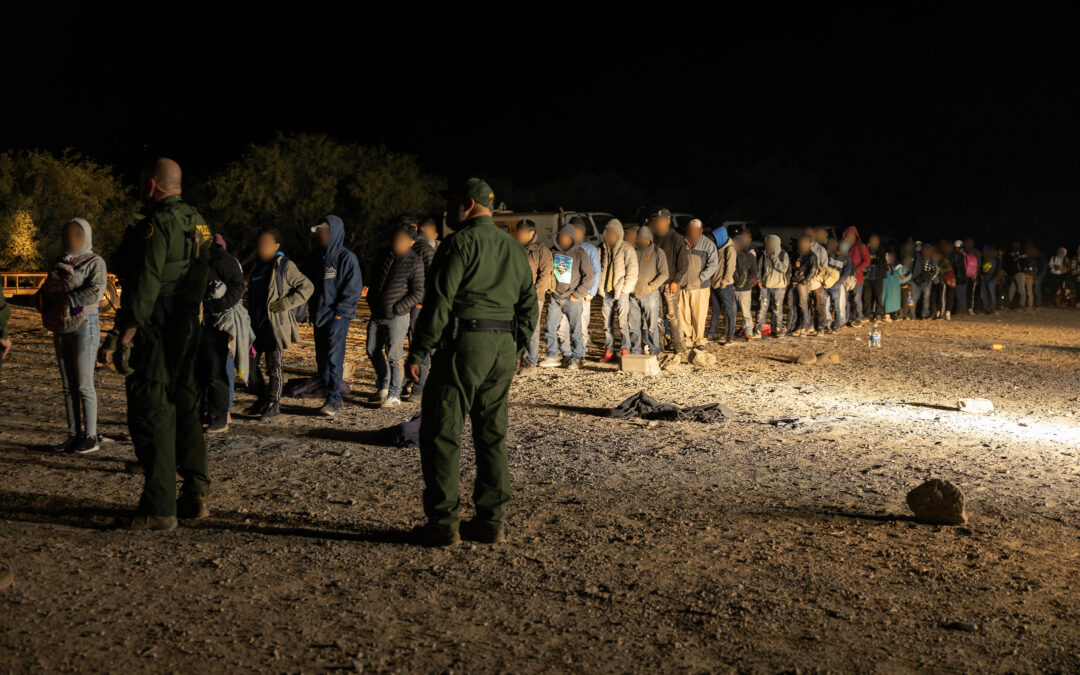
A recent report from the Congressional Budget Office (CBO) suggests that the ongoing illegal immigration surge at the southern border will reduce the federal deficit by a staggering $897 billion over the next decade.
At first glance, this figure might seem like a silver lining to this national crisis. However, a closer examination reveals a more complex and concerning picture and reveals this report to be another example of the government trying to conceal the truth from American citizens.
While the CBO projects an increase in revenues of $1.175 trillion and an increase in mandatory spending and spending on net interest of $278 billion over the next 10 years, these numbers fail to capture the full scope of the situation. The report’s limitations and glaring omissions paint an incomplete picture that may lead to misguided policy decisions if Congress does not understand the actual fiscal impacts of the border crisis. By publishing such an incomplete report, CBO is playing a role in covering up the Biden-Harris border crisis and not giving Congress the information it needs to fix the problem.
One glaring omission is the exclusion of discretionary spending impacts. The CBO acknowledges that the immigration surge will likely put pressure on many programs funded through discretionary appropriations. In fact, CBO estimates that increased discretionary funding as a result of the border surge could total around $200 billion over the 2024-2034 period. This substantial sum is mentioned but not factored into the deficit reduction calculation because, as CBO says, “no clear basis exists for projecting how the immigration surge will affect [congressional] funding decisions.”
Moreover, the report “does not include estimates of the surge’s effects on state and local budgets.” The CBO itself admits that “[r]esearch has generally found that increases in immigration raise state and local governments’ costs more than their revenues, and CBO expects that finding to hold in the case of the current immigration surge.” New York City alone spent $4.3 billion from July 2022 to March 2024 to accommodate immigrants and comply with existing housing policies. Extrapolating this to other cities over a decade paints a sobering picture of the financial burden on local communities.
The state of Texas was forced to take action on its own. First with Operation Lone Star (OLS), a response to the border crisis triggered by the Biden-Harris administration’s failure to enforce federal laws along the border. OLS has cost Texans about $11 billion and that’s just to secure the border. That does not include costs to the state’s health care, education, and criminal justice systems — which increase with the addition of aliens who have been let in by the Biden-Harris administration. The CBO report does not adequately assess or include these costs and they can be found in every state.
The revenue calculations assume lower tax compliance rates among the population who entered the nation via the border crisis. This raises questions about the accuracy of the projected $1.2 trillion in additional revenue.
Beyond the fiscal impacts, the report hints at broader economic consequences. The illegal immigration surge is expected to lead to lower productivity, reduce average wage growth (particularly for non-college educated workers), higher interest rates, and increased medical and food prices. These factors could have far-reaching effects on the American economy and the well-being of citizens.
Perhaps most concerning is the CBO’s own admission that its “estimates of the budgetary effects of the immigration surge are highly uncertain.” The report lists numerous “[m]ajor sources of uncertainty,” including the number of aliens who have entered the country, the duration of the border crisis itself, the changing immigration status of individuals, and their impact on productivity. Essentially, many metrics crucial to the estimate are shrouded in uncertainty and the authors of the report knew it and still published these estimates that claim mass illegal immigration is good for the deficit.
Making policy decisions based on such questionable projections, where the political left has clearly put its thumb on the scale, could have disastrous consequences and exacerbate existing problems. We must demand a more comprehensive analysis that accounts for all costs — both seen and unseen. Not a report that is politically appealing to the left’s narrative on illegal immigration.
The border crisis is not just about numbers on a balance sheet. As we debate immigration policy, we must consider not just the potential fiscal benefits but also the hidden costs and societal impacts. The Centers for Disease Control and Prevention estimated there were 74,702 fentanyl overdose deaths in the United States last year — a drug we know flows in through our open southern border.
Human trafficking and smuggling into the United States is a booming multi-billion dollar business for Mexican cartels. We must end this crisis now. When comparing the fiscal impacts to the human toll, money seems secondary and that is true, but understanding the monetary effects is important to solving the larger problem.
The CBO report should be seen as deficient and, overall, as a liability since it does not give Congress the information it needs to take action. The future of our nation depends on getting this right.
With an honest and complete assessment, we can get good legislation like the Secure the Border Act signed into law, force strong executive actions from future presidents, and keep Americans safe. These policies will ensure our nation knows who is coming in, and what the impacts of that are to U.S. citizens. But we need the CBO and Washington to stop playing politics with vital information.
Congress’s Joint Economic Committee (JEC) warned that the Biden administration’s economic policies have caused an unsustainable debt crisis and historic inflation.
This assessment was announced formally earlier this week by JEC Vice Chairman and Congressman for Arizona’s first district, David Schweikert, through the 160-page Republican Response to the Council of Economic Advisers’ 2024 Economic Report of the President.
Schweikert stated in a press release that 2024 serves as a “critical juncture” for the nation’s fiscal health, one that transcends political parties.
“The challenge before us is neither Republican nor Democrat — it is our moral obligation to ensure American families aren’t left behind. Congress holds the keys to determine which path we choose,” said Schweikert. “We can either behave like adults and choose the path of fiscal responsibility or continue our partisan gamesmanship that will put the American dream further out of reach for future generations.”
Schweikert said that the problems and proposed solutions put forth by the JEC report were inherently bipartisan, focusing on common-ground economy boosters like a healthier population and secure social safety net programs.
“Those of us on the Republican side, we built a report that offered actual moral, great economic solutions instead of the election year rhetoric.”
— Joint Economic Committee Republicans (@JECRepublicans) June 21, 2024
The JEC assessed that the Biden administration’s demand-side policies financed by increased borrowing have placed unsustainable pressure on constrained supply. As a result, JEC predicted that debt-to-GDP would grow from 99 percent to 116 percent by 2034, with interest costs rising. JEC noted that the labor force participation rates haven’t recovered to prepandemic levels; historic mortgage payments for new homebuyers, the highest in 30 years; constraints on budding American industries due to new restrictions on trade; and the cost of clean energy subsidies amounting to $1.2 trillion over 10 years, despite emissions from electricity production declining.
Further exacerbation of the economy comes from an aging population, declining fertility rates, and decreased prime-age labor force participation among men, per the JEC. The aging population is anticipated to drive Social Security spending to 6 percent of GDP by 2035, an increase from the present 5.2 percent and the 1970s at 3.1 percent, though no major expansions have occurred in over 20 years. The JEC reported that one in nine prime-age men remain out of the labor force; if just 25 percent of those entered, the economy would grow by $215 billion.
JEC disputed the Biden administration’s belief that increased taxes of wealthier individuals would amount to their desired revenue, a dwarfed amount of around 1.1 to 2 percent of GDP compared to future deficits. JEC stressed that only reduction in spending would improve fiscal consolidation.
Another demographic with an outsized impact on the economy, according to the JEC, is the rapid increase in obesity. Excess medical expenditures are anticipated to amount to over $9 trillion, as well as federal government spending of over $4 trillion within the next decade. Labor productivity and supply reductions impacted by obesity are projected to cost nearly $3 trillion and $12 trillion, respectively.
As for a positive solution to the nation’s current and looming fiscal woes, JEC indicated that artificial intelligence could grow the economy and improve government efficiency.
JEC also issued a lengthy assessment of the Congressional Budget Office’s revised budget and economic projections for the next decade. This included a $400 billion increase in projected FY2024 deficit, with about 80 percent of the increase coming from President Joe Biden’s student loan forgiveness, the Federal Deposit Insurance Corporation failing to recover payments from 2023 bank failures quickly, new legislation, and higher than expected Medicaid outlays.
CBO recently released its updated budget and economic projections for 2024-2034 from the original forecast in February 2024. Below are some key takeaways from the revised estimates 🧵
— Joint Economic Committee Republicans (@JECRepublicans) June 19, 2024
AZ Free News is your #1 source for Arizona news and politics. You can send us news tips using this link.
Americans consistently voice their disapproval on the state of the economy in recent polls, largely because of the stratosphericcost of living. But apologists for the Biden administration point to the low unemployment rate of 3.9% in April as proof of the economy’s strength.
Yet this is a hollow talking point since the real unemployment rate is likely between 6.5 and 7.7%.
The unemployment rate is the percentage of people in the labor force who don’t have a job. That means the unemployment rate can change if either the number of people unemployed or the total size of the labor force changes.
The shocking reality is that somewhere between 4.7 million and 7 million people who aren’t working today are not included when calculating the unemployment rate. That artificially reduces the figure.
The reason these millions of Americans are uncounted began with the events of 2020.
When the government instituted draconian lockdowns across most of the economy in response to the COVID-19 outbreak, over 17 million people became unemployed, and another 8 million people immediately left the labor force.
As the economy slowly reopened across the country, millions of people began returning to work. That, of course, drove down the unemployment rate by reducing the number of unemployed people. Some of those who left the labor force also returned and eventually found jobs, further reducing the unemployment rate.
But there were also millions who left the labor market entirely and never returned. As such, they were no longer counted among the unemployed nor in the labor force. This pushed the unemployment rate down even more.
If those millions of people were to suddenly look for work again, it would greatly increase the labor force, but it would also increase the unemployment rate, at least until those job-seekers found work.
Official government data point to just how many workers are missing from the labor market today. Several metrics show a large gap between their current reading and their pre-pandemic trends. These include the employment level, the number of non-farm payrolls, the employment-to-population ratio and those not in the labor force.
The gap is between 4.7 million and 7 million people, all of whom are not working but are excluded from the unemployment rolls. If they were still counted as jobless members of the labor force, the unemployment rate would jump to between 6.5% and 7.7%.
The latter figure is almost twice the official unemployment rate. Even 6.5% would represent a significant spike.
Looking only at the unemployment rate can give a distorted view of the labor market. If unemployed people are looking for work and then get jobs, that causes the unemployment rate to fall. But, if those same people give up looking for work and leave the labor force, it has precisely the same effect on this metric.
Using additional data provides a better gauge of the labor market’s health and workers’ jobs satisfaction. Real, or inflation-adjusted, earnings are a good example—and they have plummeted.
While the average American worker’s weekly paycheck has increased $147 from January 2021 through April 2024, those earnings buy $47 less because prices have risen so much faster than incomes.
This has caused many Americans to work extra hours or pick up a second job. Among renters, more than one-fifth of them have taken on another job in order to pay their rent on time in the last few months.
That’s noteworthy because whenever someone is hired, whether it’s that person’s first or fourth job, it’s still counted as an additional payroll in the government’s monthly job statistics. With millions of Americans picking up additional work to try and make ends meet for their families, the number of jobs has risen much faster than the number of people employed.
Simply touting a low unemployment rate provides a view of the labor market that is at best incomplete and at worst deceptive. A comprehensive view of economic conditions for the working class shows why they are so unhappy: inflation has made it impossible for them to get ahead, no matter how many jobs they work.
E.J. Antoni is a contributor to the Daily Caller News Foundation, public finance economist and the Richard F. Aster Fellow at The Heritage Foundation, and a senior fellow at the Committee to Unleash Prosperity.