by Matthew Holloway | Dec 17, 2024 | News
By Matthew Holloway |
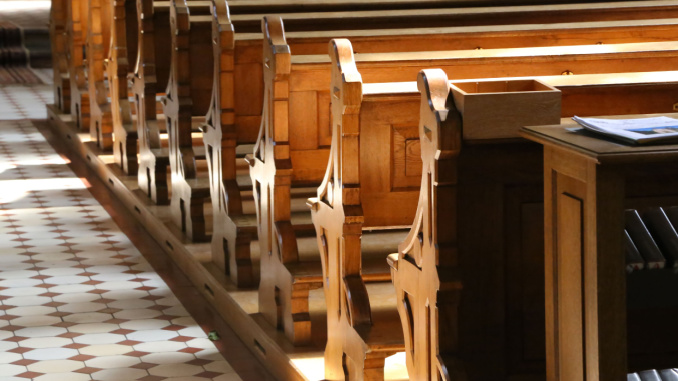
A new report from the Center for American Institutions (CAI) at Arizona State University (ASU) has revealed that faith-based organizations are playing an “integral role” in addressing housing and food insecurity, addiction, at-risk youth, and more.
The report on “Religion, Charity and American Life,” is entitled A Thousand Points of Light Still Shine and was compiled with survey and research data from the CAI with feedback from faith leaders Raymond Leo Cardinal Burke, Dr. R. Albert Mohler, Jr., and Rabbi Pinchas Allouche.
In a press release, CAI wrote, “While often overlooked, volunteers from congregations of many faiths feed, clothe, and support our communities, according to the report. They collect and distribute food. They help with rent and utilities and point people to additional organizations that can assist. The authors of the study said it can be seen as a call to action and a reminder of the necessity to affirm the religious liberty necessary to make way for these institutions to do this life-sustaining support and outreach.”
The report noted that in the metro Phoenix area, Jewish Family and Children’s Services is known for providing treatment for illnesses, mental health problems, and drug abuse. It also assists people with food insecurity, offering nutritional assistance and even dental referrals. The Living Streams Church’s food pantry of Central Phoenix feeds approximately 5,000 people per year working Mondays through Thursdays. The Catholic St. Vincent de Paul conferences, small groups of volunteers within local parishes, conduct food deliveries to needy people within their parish boundaries.
A Jewish temple located in Phoenix doesn’t operate a food pantry but rather its members contribute their time and money to two nearby pre-existing food pantries. The CAI observed that other congregations, such as a Disciples of Christ Church in Phoenix, also contributed to nearby pantries.
Looking further, the report found that 86% of food pantries in Detroit, Michigan, that are found on findhelp.org are faith-based with many housed-on church property and run by volunteer staff. CAI also found that four of the seven “best” drug addiction treatment centers in the Detroit metro area, as reported by Addiction Resource, are also faith-based.
The report notes that the role played by faith-based groups in combating food insecurity is crucial.
“Since the COVID-19 pandemic, a growing number of Americans are caught in a squeeze. As food prices skyrocketed, along with other basic needs like transportation, housing, and energy, SNAP (Supplemental Nutrition Assistance Program, or food stamps) did not keep up. In a 2023 survey conducted by Feeding America, the largest American charity focused on food insecurity, 65 percent of food banks reported increasing demand. Food pantries, meanwhile, found that food inflation meant their contributions did not go as far as they did pre-pandemic, even as lines at their doors grew longer.”
The study also drew attention to the dangers of the heat to the homeless during Arizona summer finding, “Summer in Phoenix can be deadly without access to water and cooling. Alongside public hydration and cooling stations, faith-based groups go to homeless camps and distribute water and necessities. For example, St. Vincent de Paul has trucks that make the rounds to places where homeless people congregate to hand out water, food, and supplies. On a smaller scale, Sunnyslope Ministries of Hope distributes water in central Phoenix most every summer evening, along with personal care items and shoes. Also, in Phoenix, Young Single Adult groups from The Church of Jesus Christ of Latter-day Saints (LDS) congregations take part in distributing aid to the homeless.”
Rabbi Pinchas Allouche, Founding Rabbi of Congregation Beth Tefillah, also contributed to the report writing, “Faith-based organizations are the lifeblood of America’s moral fabric, calling each of us to fulfill our God-given responsibility to heal the world. Through acts of goodness and kindness, we can restore faith in humanity and remind the world that light can dispel even the thickest darkness. This call to action can propel readers to reflect on how they, too, can contribute to making the world more divine through small yet powerful acts of goodness and kindness. It will also highlight the importance of treating each other with respect, as God’s children who are all part of God’s human family.”
The commission made four key recommendations based upon the collected data:
- Faith-based organizations need to do a better job of informing the general public of these programs. On a community level, faith-based organizations should consider creating a collective website to report on their activities.
- Greater media attention needs to be driven by individual churches, synagogues, temples, and faith-based charities to newspapers, the media, and social media about the stories of individuals who have benefited from their programs. Americans love success stories.
- Media itself should give more attention to the importance of faith-based charities and programs in their communities.
- Americans need a better understanding of religious liberty, as embodied in the First Amendment. This should begin in the classroom. State legislators and school boards should require that time be given in the classroom to the foundational concept of religious liberty in American life.
Professor Donald Critchlow, Director of the Center for American Institutions at ASU, explained, “Religion is under unprecedented attack on multiple fronts, with growing secularization, declining attendance, and hate-filled attacks on people of faith. And yet, as this report illustrates in vivid detail, volunteers from various religious congregations are still showing up for those most in need in their local communities.”
He added, “The irony is that while faith-based organizations are more active in our communities today than at any time in modern American history, these good works coincide with a rise in hate crimes.”
Matthew Holloway is a senior reporter for AZ Free News. Follow him on X for his latest stories, or email tips to Matthew@azfreenews.com.
by Elizabeth Troutman | Apr 15, 2024 | News
By Elizabeth Troutman |
Legislation to strengthen border security against illicit drugs passed out of committee on Wednesday.
The House Committee on Homeland Security passed the Subterranean Border Defense Act, which was introduced by Rep. Eli Crane, R-Ariz., and Rep. Lou Correa, D-Calif. The bill awaits further action on the House Floor.
The bill would require annual reports to Congress on counter illicit cross-border tunnel operations.
“Effective border security is created by overlapping deterrents. My legislation would help ensure that Congress has the necessary data to forge another much-needed layer of defense—especially when the Biden Administration’s policies have left our country inexcusably vulnerable,” Crane said. “I’m grateful to Chairman Green for his support of this bill and for his distinguished leadership on the Committee.”
Illicit cross-border tunnels along the southwest border of the United States represent a significant and growing threat to national security, according to a news release from the congressman.
Law enforcement officials have discovered more than 140 tunnels that have breached the U.S. border since 1990. There has been an 80% increase in tunnel activity occurring since 2008.
House Committee on Homeland Security Chairman Mark Green said the committee is committed to protecting America from cartels.
“Illicit cross-border tunnel operations are more evidence that vicious criminal cartels will stop at nothing to smuggle weapons, drugs, and illegal aliens into this country to our detriment, and for their profit,” Green said. “DHS must provide Congress with reporting on these operations annually, as well as the Border Patrol’s efforts to stop them, as these operations are a threat to all Americans.”
Elizabeth Troutman is a reporter for AZ Free News. You can send her news tips using this link.
by John Huppenthal | Jul 17, 2022 | Opinion
By John Huppenthal |
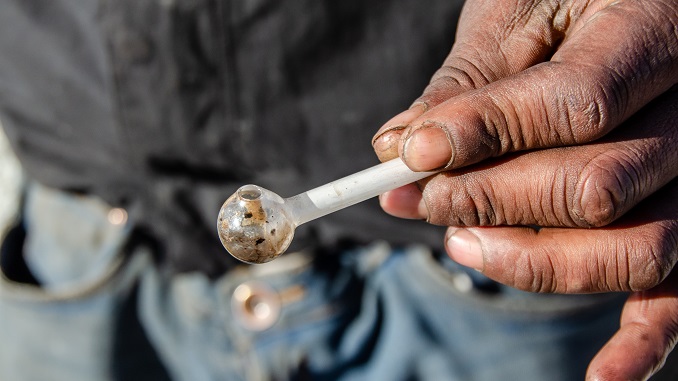
I recently observed a tent camouflaged behind freeway road bushes in Chandler. Curious, I looked around the corner. I caught a man heating the bowl of a meth pipe in the act taking a deep drag. There were two men there. The second man looked in terrible shape, like a character out of Breaking Bad. It was 2:30 in the afternoon. I called 911.
Catching him in the criminal act was pivotal. Court decisions have given meth addicts a constitutional right to occupy our right of ways, defecate on our streets, and urinate on our sidewalks.
But these court decisions don’t protect criminal behavior.
I volunteered for two years at the school for the homeless. I never found one of the students to be homeless. They were sleeping on couches, in a spare bedroom, on someone’s carpet. Their families found someone, a relative, a friend, willing to be helpful. In my opinion, most people on the street don’t want to be in someone’s house. They are giving in to their drug addiction. Each one of them, willing to abide by the rules, can immediately enter a shelter. Rules are the key: shelters don’t allow drugs. Most of these people we describe as homeless are really meth addicts and should be described as such, not as homeless.
Meth addiction is a horror beyond all description. Read the case studies. One woman, after three days of smoking meth, cut off her boyfriend’s head and took it to his mother in a bucket.
Meth culture is now everywhere. Several months ago, a friend and I drove to hike Peralta Canyon. Leaving the paved roads, we noticed a man running, flapping his arms. Then, further on, we encountered 50-foot-long skid marks on a dirt road leading to a snapped barbed wire fence. Beyond the fence, in the distance, we could see a truck with an attached travel trailer.
Over the next hour, we put together the story. The man flapping his arms had been smoking meth for several days when he suffered a full-blown psychotic break. Somehow, convinced the cartel had arrived to assassinate him, he threw his cards and driver’s license down into the dirt so that the cartel could not use the magnetic strips to track him. He took off in his truck at an incredible rate of speed along with the attached trailer and another trailer behind it with his motorcycle. Driving in tight circles so that he could dodge the cartel’s bullets, his vehicles were bouncing a half foot into the air as he crossed the berms of the dirt road. His rate of speed was such that he was hitting five-inch palo verde trees, snapping them off without slowing. Losing control, he ran full blast into the barbed wire fence, snapping all three strands. He continued out into the desert hitting so many cholla that the cactus limbs piled up on the hood of his truck more than half-way to the top of the windshield. Finally, the sand of a desert wash trapped him but not before he had destroyed the economic value of all the assets he could claim in this world. As the fire fighters checked him out and the police took him away, he proclaimed to the world “I’m having a bad day.”
That’s the abyss addicts slide toward as they take communities with them.
Meth culture spreads. I encountered a gentleman taking pictures of the water retention basin a little further north. His mother, whose home and fence backs up to the water retention basin, had become fearful upon hearing noises that they were setting up camp in that retention basin. I told him to have her call police. The retention basin is completely fenced but there is plentiful evidence of addicts in discarded clothing and bedding.
All totaled, there were seven of these meth camps along Price Road, both on the Chandler side and the Tempe side.
I interviewed one of their residents. Waking him up at 10 in the morning, I offered him $30 for a 15-minute interview. He couldn’t find his glasses. Mentally fatigued from a stroke (a side-effect of meth addiction), he couldn’t last beyond a few questions. However, he did mention that both his father and his sister had died from drug addiction. His mother lives in Mesa. His age appeared to be late 40s. He couldn’t remember when he was born. This man was living in a makeshift tent in the 2 feet between the freeway sound wall and the bushes on the side of Price Road.
One of the camps was behind an SRP power transformer at the edge of Price Road. I got a garbage bag and just started cleaning it up. I took out 40 pounds of garbage. I didn’t have it in my heart to take out their foam mattress bed, their new running shoes, or their clothes.
I also posted my observations on a neighborhood social media platform. It attracted considerable attention and alarm as people realized how close they were to children.
All seven of these meth camps are now gone.
Unfortunately, according to an article in the Arizona Republic and their sources, there are over 3,500 of these encampments in Phoenix, destroying neighborhoods.
Be disciplined in your thinking. These are meth addicts. You can be sympathetic, empathetic and because of your sympathy and empathy, demand that they not be allowed to slide into a meth culture. They must get off the street. At least they must get off our streets. They are learning to beg and where to steal. They are engaging more people in meth culture. Somewhere, they have a friend, a father, a sister, a relative who will help them get clean. Keep them moving toward a better future.