by Terri Jo Neff | Jul 13, 2021 | News
By Terri Jo Neff |
When Gov. Doug Ducey signed Senate Bill 1820 last month, general contractors, construction companies, and construction-industry support businesses had a lot to be happy about given the more than $80 million appropriated for capital projects by several state agencies.
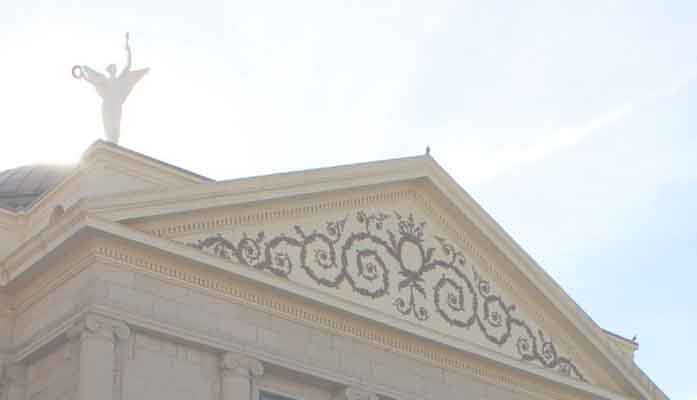
Among the most expensive projects funded by SB1820 are $5 million to Yuma County for military installation preservation and enhancement by relocating the Yuma Fairgrounds, nearly $12 million to restore and renovate the historical capitol building, and $25 million for the Arizona Department of Veterans’ Services to construction a veterans’ home in northwest Arizona.
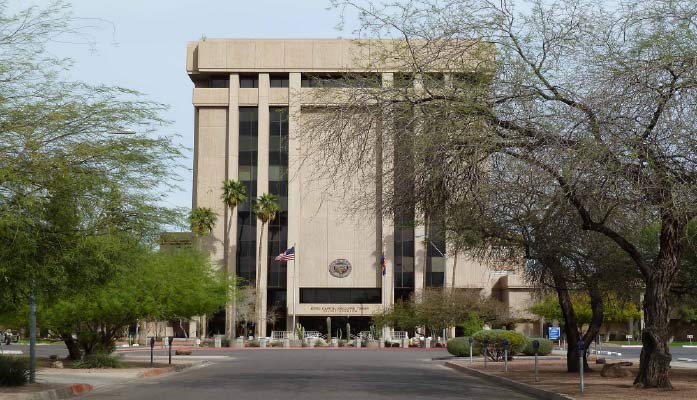
Other capital project appropriations are $4 million for maintenance to the Attorney General building on 15th Avenue, $3.5 million for repairs to the House of Representatives and Senate buildings, $3.1 million for construction of a new Arizona Department of Transportation (ADOT) maintenance facility in Wickenburg, $3 million for construction of a wellness and training center for the Arizona Department of Public Safety, and $2.8 million for demolition or conversion of state-owned buildings on West Jefferson Street.
There is also $2.5 million allotted for a nonprofit organization to construct an international dark sky discovery center, $2.5 million for new doors at the Arizona Department of Juvenile Corrections’ Adobe Mountain School Facility, and $2 million to demolish unused buildings on the Arizona State Hospital campus.
Many smaller capital projects are included, such as improvements at the Town of Taylor rodeo arena, replacement of the fire alarm system in the Arizona Veterans Memorial Coliseum, construction of brine tanks for ADOT in Globe, Keams Canyon, Prescott Valley, and Show Low, and replacement of ADOT vehicle fueling facilities in Flagstaff, Holbrook, and Kingman.
The appropriations also included money to fund several projects for the Arizona State Parks Board, including construction of an amphitheater building at Dead Horse Ranch State Park in Cottonwood, replacement of discovery center roof at Kartchner Caverns State Park in Benson, replacement of the fire suppression system and a maintenance building at Red Rock State Park in Sedona, as well as construction of a new park at the Rockin’ River Ranch Park in Camp Verde.
Funding for a major fire safety upgrades at the Arizona State Prison Complex – Eyman in Florence was also included in the new budget. The more than $25.5 million project will receive monies from the state’s General Fund, the Arizona Correctional Industries Revolving Fund, the Special Services Fund, the Inmate Store Proceeds Fund, and the Prison Construction and Operations Fund.
The FY 2022 budget also includes appropriations for several building renewal projects, including more than $22 million from the state’s General Fund for the Arizona Department of Corrections (ADC), which is on top of nearly $6 million from ADC’s own Building Renewal Fund.
Another $6.2 million of state General Fund monies was appropriated for the Arizona Department of Administration (ADOA) to be spent on major maintenance and repair activities for state buildings. That will be added to $18 million from the Capital Outlay Stabilization Fund.
Among other building renewal appropriation include $1.2 million to Arizona Game and Fish Department and $15.4 million from the State Highway Fund for use by ADOT.
In most instances, the monies come with restrictions or requirements. ADOA is required to provide two reports -in November 2021 and May 2022- to the Joint Legislative Budget Committee (JLBC) on the status of all capital projects and expenditures. The same requirement applies to ADC, AZGFD, and ADOT.
And in a use it or lose it provision, any unexpended building renewal appropriations as of June 30, 2023 revert back to the fund from which they were appropriated.
by Terri Jo Neff | Jul 10, 2021 | News
By Terri Jo Neff |
Gov. Doug Ducey described bipartisan legislation which sought to strengthen the State Emergency Council “well intentioned,” but he vetoed the bill anyway on Friday.
Senate Bill 1719 was one of 24 bills transmitted to the governor’s desk June 30, the last day of the legislative session. It was the only one vetoed by Ducey, who believed changing the law related to the State Emergency Council “would add unneeded bureaucracy to the management of emergencies, especially wildfires.”
There are 12 voting members of the State Emergency Council which recommends rules, orders, policies, and procedures to the governor during a declared state of emergency. State law requires the Council to “monitor each emergency declared by the governor” as well as the activities and responses to the emergency.
The Council is also required to recommend to the governor or the legislature when it believes emergency conditions have stabilized and the emergency “is substantially contained.”
Currently, the Council can be convened by the director of the Arizona Division of Emergency Management if the governor “is inaccessible.” It can then issue a state of emergency proclamation if approved at by at least three members of the Council, at least one of whom must be an elected official.
However, the law makes no mention of what happens if an accessible governor fails to convene the Council.
SB1719 was introduced in January by Senate President Karen Fann and Senate Minority Leader Rebecca Rios to bipartisan support. It would have required a governor to convene the Council “on or before the fourteenth day after proclaiming a statewide state of emergency…and shall continue to convene the council at least once every fourteen days for the duration of the statewide state of emergency.”
Under the bill, a statewide state of emergency would terminate if the governor failed to convene the Council according to the ongoing 14-day timeline.
The House passed SB1719 on a 44 to 14 vote margin and the Senate unanimously passed it on a 29 to 0 vote. But Ducey vetoed the bill.
In a July 9 letter explaining his action, the governor wrote such a law was “unnecessary given the good and thoughtful reformed developed this session between my office and the legislature to ensure guard rails during future health emergencies, preventing the potential for the kind of extreme and job destroying measures that we saw in other placed around the country last year.”
The members of the State Emergency Council are: the governor, the secretary of state, the state attorney general, the Arizona Adjutant General, the director of the division of emergency management, the director of the department of transportation, the director of the department of health services, the director of environmental quality, the director of the Arizona Department of Public Safety, the director of the state’s department of agriculture, the director of the department of administration, and the director of water resources.
There are also two advisory members -the Senate President and the Speaker of the House- who may give advice to the other members of the State Emergency Council but who is not eligible to vote. SB1719 included a provision to add several other legislative leaders as advisory members.
by AZ Free News | Jul 10, 2021 | Economy, News
Senate Bill 1783, legislation that further reduces and streamlines taxes, was signed by Governor Doug Ducey on Friday. Sen. JD Mesnard and Rep. Ben Toma led the fight for the bill in order to protect small businesses from the threat of a 77 percent tax increase.
“This tax cut will keep Arizona competitive for small businesses already operating here and new businesses flocking here every day,” Ducey said in a press release. “After a year as tough as the last, we should not be raising taxes on our small businesses — we should be cutting their taxes. That’s exactly what Senate Bill 1783 does. Arizona has now passed the largest tax cut in state history and will have the lowest flat tax in the country. My thanks go out to Senator J.D. Mesnard and Representative Ben Toma for their leadership on this issue.”
Senate Bill 1783 establishes a new and lower alternative small business income tax structure. Under the plan, “small business income” is defined as interest, dividends, profits and certain capital gains.
“Small businesses are the backbone of our economy and integral to the future success of our state,” Mesnard said. “Small businesses should be able to grow and reinvest in themselves without being forced to pay astronomical taxes. Rather, government should get out of the way so that they can thrive. That’s why I’m so grateful for the support of Governor Ducey and my colleagues in the Legislature.”
This tax relief will ensure small businesses continue to choose Arizona to start, expand or relocate operations. Small businesses are a core component of our state’s economy, making up more than 99 percent of Arizona’s businesses and employing more than one million people. Because of the structure of the 3.5 percent surcharge on individual income tax under Proposition 208, small businesses will not be subject to this crippling tax hike.
“It’s a no-brainer to have a separate tax structure for small businesses,” said Toma. “It should be our goal as public servants to make filing taxes easier for Arizonans. This session has been a massive win for Arizona taxpayers. Thank you to the governor and the many who supported this bill.”
The bill allows taxpayers to exclude small business income from their total individual income. Instead, small business income will be subject to an alternate small business income tax. A flat tax on small business income will phase in over time:
- 3.5 percent in 2021
- 3.0 percent in 2022
- 2.8 percent in 2023 and 2024
- 2.5 percent in and after 2025
Governor Ducey signed this year’s budget on June 30, which fulfills his commitment to ensuring working families, small businesses, veterans and all Arizona taxpayers get to keep more of their hard-earned money.
The budget implements the largest tax cut in state history. Arizona taxpayers will see a 2.5 percent flat tax phased in over three years and subject to certain revenue thresholds being met beginning on January 1, 2022. The tax plan saves money for every Arizona taxpayer no matter their income, eliminates income taxes on veterans’ military pensions, and increases the optional charitable contribution deduction over time to 100 percent.
The Washington Post and the Wall Street Journal’s editorial board published columns about the tax plan and the positive effects it will have on Arizona. Additionally, Governor Ducey, Senate President Karen Fann and House Speaker Rusty Bowers authored a joint op-ed about the historic tax reform in the Phoenix Business Journal.
by B. Hamilton | Jul 9, 2021 | News
By B. Hamilton |
PHOENIX — On Friday, Governor Doug Ducey signed legislation sponsored by Rep. Jake Hoffman, HB2906, which prohibits the state and any local governments from requiring their employees to engage in orientation, training or therapy that suggest an employee is inherently racist, sexist or oppressive, whether consciously or unconsciously.
“Critical Race Theory and it’s divisive, bigoted ideas have become a growing problem within Arizona governments,” said Rep Hoffman. “Often times disguised by innocuous sounding terms like “equity,” this Marxism-based movement has crept up in cities and school districts throughout our state including the cities of Phoenix, Tucson, and Flagstaff, among many others. Arizonans rightfully refuse to support racism and this legislation ensures that remains the commitment of our state.”
“I applaud Jake Hoffman and our legislature for taking strong action to stop the insidious, racist ideology packaged under CRT from infecting our government any more than it already has,” said Phoenix City Councilman Sal DiCiccio.
“Phoenix currently has multiple CRT-based programs employees are being subjected to – they won’t call them CRT, they’re smart enough to use generic “equity” language – but that’s exactly what they are,” explained DiCiccio. “Worse, it’s not just employees being indoctrinated with this garbage, multiple programs like our recently passed Climate Action Plan and the Office of Arts and Culture’s Racial Equity Learning Cohort are actively pushing CRT on the public.”
“As educators and citizens concerned with the future of our state, our goal should be to achieve unity and diversity,” said Kathleen Winn Maricopa Community College Governing Board member. “Unity as people with shared dignity, but diversity of thought and beliefs. When you create conflict and try to transform society through bias and hatred you only perpetuate hatred. I am grateful for this legislation crafted and passed in response to the public outcry to end Critical Race Theory.”
Governor Ducey’s signing of HB 2906 follows the signing of HB 2898 last week. That law ensures that students cannot be taught that one race, ethnic group or sex is in any way superior to another, or that anyone should be discriminated against on the basis of these characteristics. The law allows a fine of up to $5,000 for schools that violate the law.
“As a school board member,” said EVIT School Board Member Shelli Boggs. “I have seen firsthand taxpayer funds being spent to train hundreds of board members and staff from across the state on the disgusting racist ideology called Critical Race Theory. I’m glad the legislature put an end to this pervasive abuse of taxpayer money.”
by B. Hamilton | Jul 8, 2021 | News
By B. Hamilton |
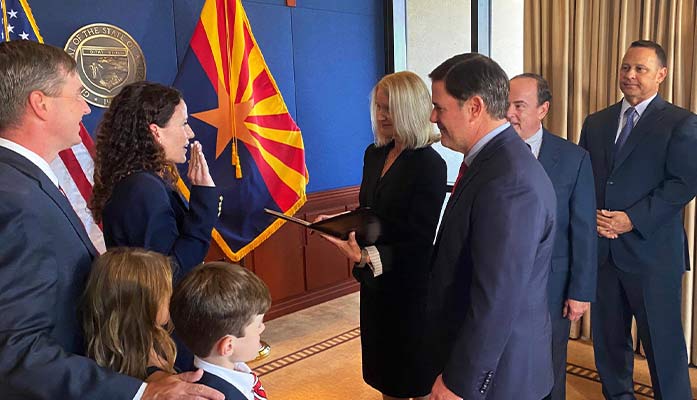
On Friday, Kathryn Hackett King, a member of the Arizona Board of Regents and University of Arizona College of Law graduate, was appointed to the Arizona Supreme Court.
Kin’s appointment by Governor Doug Ducey fills the vacancy created by the resignation of Justice Andrew Gould.
Gould is currently running in the Arizona Attorney General’s race.
King’s appointment to the court now leaves a vacancy on the Arizona Board of Regents
King is the fifth woman in Arizona history to serve on the Supreme Court.
King is currently a partner at Burns Barton PLC. The focus of her practice is the representation of private and public employers in employment litigation and related civil matters. King is a member of the Arizona Women Lawyers Association and a mentor for the Latina Mentoring Project.
King began her private practice career at Snell & Wilmer LLP, where she practiced in the areas of employment law and commercial and business litigation.
From 2015 to 2017, King served as Deputy General Counsel to Ducey, according to the Governor’s Office. King clerked for Arizona Supreme Court Justice Michael D. Ryan from 2007 to 2008.
King graduated from Duke University with a Bachelor of Arts, majoring in Political Science and minoring in History. She obtained her law degree from the University of Arizona James E. Rogers College of Law.
“Kate’s strong belief in the separation of powers and experience serving in all three branches of government will serve the people of Arizona well,” Ducey said in a released statement. “I have witnessed her intelligence and wisdom firsthand, and I know she is well-respected in the legal field.”