by Corinne Murdock | Oct 6, 2021 | Education, News
By Corinne Murdock |
Governor Doug Ducey refused to heed the Biden Administration’s warning that two of his programs rewarding mask-free schooling couldn’t be using federal COVID-19 relief funds. Almost immediately after receiving the Department of Treasury’s (USDT) request to pull back his programs, Ducey issued a public statement that he would continue to defend parents’ choice. He also questioned why President Joe Biden opposes programs designed to help children who fell behind due to COVID-19 measures such as school shutdowns, mask mandates, forced quarantines, and distanced learning.
“Here in Arizona, we trust families to make decisions that are best for their children. It’s clear that President Biden doesn’t feel the same. He’s focused on taking power away from American families by issuing restrictive and dictatorial mandates for his own political gain. After the many challenges of last year, it should be our top priority to get our kids caught up. That’s exactly what this program does — it gives families in need the opportunity to access critical educational resources. Why is the president against that?”
American Federation for Children’s Arizona State Director, Steve Smith, asserted that he stood by Ducey’s response. He pointed out that public schools with mask mandates have access to an overwhelming majority of the federal relief funds; essentially, Ducey’s two programs are a drop in the funds bucket.
“I applaud Governor Ducey for doing all he can to provide more education options for Arizona families through this unprecedented time. It is alarming that anyone, especially elected officials whose responsibility it is to advocate for Arizonans, would not only oppose these options but then actively lobby the federal government to take these resources away from families,” said Smith. “It’s all the more frustrating considering the fact that 97 percent of the $190 billion in federal relief funds have gone to public schools that in many cases, are still sitting on it.”
Ducey’s response addressed a letter issued Tuesday by USDT Deputy Secretary Adewale Adeyemo. He told Ducey it wasn’t permissible to use federal relief funds for either the $10 million school voucher program that covers $7,000 of tuition or other educational costs at schools without mask mandates, or the $163 million grant program in which only schools without mask mandates are applicable for the grant funds.
“The purpose of the [Coronavirus State and Local Fiscal Recovery Funds] SLFRF funds is to mitigate the fiscal effects stemming from the COVID-19 public health emergency, including by supporting efforts to stop the spread of the virus. A program or service that imposes conditions on participation or acceptance of the service that would undermine efforts to stop the spread of COVID-19 or discourage compliance with evidence-based solutions for stopping the spread of COVID-19 is not a permissible use of SLFRF funds.”
Adeyemo warned Ducey that he had a 30-day deadline to respond with proposals for remediation. Otherwise, USDT said it would recoup the funds.
Prior to his appointment, Adeyemo worked within the high ranks of BlackRock: the world’s largest and arguably most powerful multinational investment management corporation. Adeyemo served as senior advisor and chief of staff to CEO Larry Fink.
USDT began investigating Ducey’s programs at the request of Representative Greg Stanton (D-AZ-09) in mid-August. Stanton wrote to USDT Secretary Janet Yellen to issue an opinion on the programs.
Corinne Murdock is a reporter for AZ Free News. Follow her latest on Twitter, or email tips to corinne@azfreenews.com.
by Terri Jo Neff | Oct 6, 2021 | News
By Terri Jo Neff |
Gov. Doug Ducey has secured the funding necessary to launch Arizona’s new Cyber Command Center, and during a ceremony at the Arizona Department of Public Safety’s Arizona Counter Terrorism Information Center (ACTIC) on Monday he equated cybersecurity with homeland security.
“Our society is becoming increasingly interconnected through technology, and cybersecurity has become one of the most important issues facing Arizona,” Ducey said Monday. “This new command center will be critical in protecting Arizonans and ensuring our cyber infrastructure remains safe and secure.”
According to the governor, the state has spent nearly $15 million in the last year to address cyber threats and implement best practices. The results are impressive, with the Arizona Department of Homeland Security detecting and alerting on about 68 million threats and protected state websites from over 800,000 attacks in September.
The new Cyber Command Center will be Arizona’s headquarters for coordinating statewide cybersecurity operations, and will serve as a central location for cybersecurity professionals and local, state and federal agencies to prevent and respond to cyberattacks. Several programs will be run out of the command center, including the Arizona Counter Terrorism Information Center, a joint effort created in 2004 among DPS, AZ DHS, the FBI, and other agencies to support Arizona’s homeland security efforts.
Ducey has been successful the last few years in securing funding to address cybersecurity threats which impact not only state agencies, but also local governments, the private sector, educational institutions, and citizens.
In Fiscal Year 2020, the governor secured legislative approval to add $2.9 million to the Arizona Department of Administration’s Statewide Information Security and Privacy Office. The money was earmarked to enhance the operations of the office and purchase additional cybersecurity controls to combat cyberthreats on state IT assets, according to Ducey’s office.
He has also tapped $9 million in FY2020 and FY2022 to improve the Department of Education’s school finance system which distributes billions in state and federal funding to Arizona’s public schools. In addition, nearly $500,000 of funding will be available to the Arizona Department of Emergency and Military Affairs (DEMA) in FY2022 to establish a cyber task force to perform cybersecurity prevention and response activities on behalf of the state, according to the governor’s office.
That is on top of a one-time $300,000 credit to the National Guard Cyber Response Revolving Fund to allow the National Guard to engage in cyberattack prevention, response, and support activities for the state and other public entities.
Arizona is not the only state making cybersecurity a priority, and public records show many of the projects across the country are being paid for by federal funds under the CARES Act.
According to the Center for Digital Government, the CARES Act provided more than $150 billion in March 2020 to state and local governments to address cybersecurity issues brought about by IT budget constraints, modernization issues, and new challenges such as remote work and distance learning. In December, Congress later extended the deadline for utilizing the funding after some states complained of not being able to get projects quickly operational due to time and staff constraints.
“This extension is critical because our research indicates state, local and county governments still have billions of federal dollars left to spend,” according to a briefing by the Center for Digital Government, a national research and advisory institute on information technology policies and best practices in state and local government. “Doing so will increase their resilience, streamline constituents’ access to critical services, and safeguard critical government systems and all the valuable public data they collect.”
In North Carolina, $4.5 million of CARES funding was allocated to create a shared cybersecurity infrastructure for its Department of Public Instruction. The project also facilitates district cybersecurity monitoring and support,, which according to the briefing “has become even more essential as the schools in the state experience a surge in ransomware attacks.”
Meanwhile, the briefing notes Oklahoma has used its federal aid for a secondary data center with higher availability and advanced disaster recovery capabilities. State officials call the investment “critical” to ensuring the capability to deliver core public services in an emergency.
Idaho, Montana, and Texas are examples of other western states utilizing CARES funds for cybersecurity projects.
by AZ Free News | Oct 2, 2021 | News
By AZ Free News |
On Friday, Governor Doug Ducey announced the appointments of James Drake, Ashley Villaverde Halvorson and Keith Miller to the Maricopa County Superior Court. These appointments are to fill vacancies created by the retirement of Judges Roger E. Brodman, Connie Coin Contes and Karen A. Mullins.
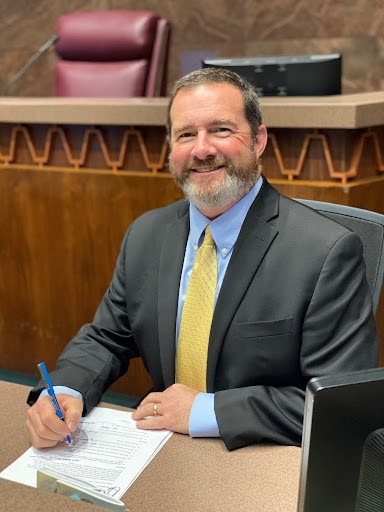
James “Jim” Drake has been serving as the nonpartisan, elected Chief Clerk and Counsel for the Arizona House of Representatives since 2015. In addition to overseeing 14 staff members, he works on questions of law regarding public records, parliamentary advice, constitutional issues, financial disclosure, and election law matters. Jim also works as of-counsel for Shannon and Fleming, P.C. in civil matters, particularly evidentiary hearings with self-represented litigants.
Prior to being elected Chief Clerk, Jim was the Assistant Secretary of State in the Secretary of State’s Office from 2009 to 2015. He oversaw approximately 140 employees under the State Law Library, State Elections, Business Services, and Archives and Public Records Divisions.
From 1996 to 2009, Jim held several positions in the Arizona House of Representatives, including Rules Attorney, Counsel to the Ethics Committee, Judiciary Committee Analyst, and Banking Committee Analyst/Staff Attorney. During his tenure as the nonpartisan Rules Attorney, Jim’s work was devoted almost exclusively to constitutional analysis under the Arizona and United States Constitutions. In addition, he has recommended and crafted amendments to cure constitutional infirmities on bills, consistently rendering nonpartisan opinions.
Jim also volunteers in the community, including as an active supporter of the Foundation for Blind Children. He has regularly participated with and guided blind and visually impaired children in a sailing expedition, Rim-to-Rim Grand Canyon hike, and swimming challenge from Alcatraz.
“Jim’s devotion to serving the public will serve the bench well. I am delighted to appoint him to the Maricopa County Superior Court,” said Governor Ducey.
Jim received his law degree from the California Western School of Law and his bachelor’s degree in Economics from the University of Arizona.
Ashley Villaverde Halvorson has spent her career at Jones Skelton & Hochuli, where she currently is a Partner. She primarily defends insurance companies in complex breach of contract and bad faith litigation. She also defends persons and businesses in personal injury/wrongful death litigation, including auto, premises, and dram shop liability. Additionally, Ashley was appointed as a Maricopa County Superior Court judge pro tem in 2018.
Ashley has been named a Southwest Super Lawyers Rising Star from 2013 to the present. In 2017, she was named one of the Top Lawyers Under 40 by the Hispanic National Bar Association.
Ashley has been a leader in improving diversity in the legal profession. She has been significantly involved with the Los Abogados Hispanic Bar Association, including serving as its President. Ashley has been a part of the Latina Mentoring Project since she was in law school and was its very first judicial pipeline candidate. She has also been an active member of the Hispanic National Bar Association and the State Bar of Arizona Committee on Minorities and Women in the Law. In 2020, she received the State Bar of Arizona’s Diversity and Inclusion Leadership Award, which annually recognizes an attorney, judge, employer, organization or bar association that significantly advances diversity and inclusion in the Arizona legal community through creative, strategic, or innovative efforts.
“Ashley’s civil litigation experience and involvement in the community will allow her to be a strong contributor, and I am pleased to appoint her to the Maricopa County Superior Court,” said Governor Ducey.
Ashley received her bachelor’s degree cum laude in Political Science and her law degree from Arizona State University.
Keith Miller has been serving as an Associate Attorney at Fennemore since January 2020, where he primarily practices in business litigation representing a variety of clients in matters pending in state and federal courts, as well as in mediation. Additionally, he has represented clients in matters pending before state and local administrative agencies.
From 2015 to 2019, Keith was an Assistant Attorney General at the Arizona Attorney General’s Office. He initially was part of the Federalism Unit in the Solicitor General’s Office, where he was involved with several pieces of high profile litigation involving constitutional issues. In addition, he served on the Opinions Review Committee and Ethics Review Committee. He then worked in the Environmental Enforcement Section as counsel to the Arizona Department of Environmental Quality.
Keith also worked as an Assistant Legal Counsel and Assistant Director of Career Services for Hillsdale College in Michigan from 2011 to 2015. During this time, he also coached the college’s mock trial team for 2 seasons, finishing a season with the college’s highest ranking ever.
Prior to that, Keith was a law clerk for U.S. District Court Judge James Teilborg in Phoenix from 2009 to 2011. Upon graduating from law school, Keith was an Associate Attorney at O’Melveny in Newport Beach, California from 2008 to 2009.
“Keith has a broad amount of legal experience from the private to public sectors, and I am thrilled to appoint him to the Maricopa County Superior Court,” said Governor Ducey.
Keith received his law degree from Columbia Law School and his bachelor’s degree magna cum laude in Mathematics and History from Hillsdale College.
by Corinne Murdock | Sep 21, 2021 | News
By Corinne Murdock |
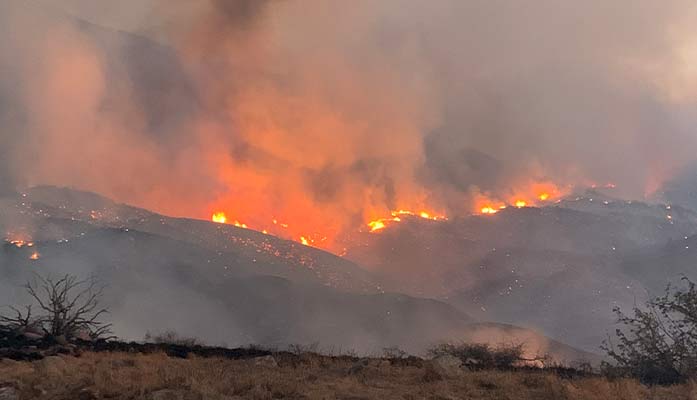
Following Governor Doug Ducey’s announcement last week that the Biden Administration failed to award bids for forest and wildfire management, the Arizona House announced Monday a new ad hoc committee to undertake that task themselves. Members of the committee include State Representatives Gail Griffin (R-Hereford), Tim Dunn (R-Yuma), Andres Cano (D-Tucson), and Stephanie Stahl Hamilton (D-Tucson), with House Speaker Rusty Bowers (R-Mesa) serving as the chairman.
Ducey’s statement came a day after the Biden Administration suddenly canceled solicitations for the Four Forest Restoration Initiative (4FRI). The 4FRI aimed to restore fire-adaptive ecosystems in the Southwestern Region. The Biden Administration decided that the requirement for the restoration objectives weren’t “reasonably aligned to industry needs.”
In response, Ducey said that the Biden Administration’s decision put Arizonans at risk.
“The federal government’s lack of action is frustrating. The federal mismanagement of our forests poses an ongoing risk,” stated Ducey. “But Arizonans should know that we remain proactive in our pursuit of forest health and disaster prevention. We will continue to work with federal and community partners and safety personnel to protect people, pets and property.”
With this new ad hoc committee, the state government will be able to take action where the federal government won’t at present.
Wildfires have long been a plague for the Grand Canyon State. Arizona contains the key elements for one of these natural disasters to begin: high temperatures and drought that dry out vegetation, combined with low humidity and high winds. With those conditions in place, many things can ignite a wildfire: the sun’s heat, lightning strikes, discarded cigarettes or matches, unattended campfires, or fireworks, for example.
The worst wildfire in recent memory was the 2013 Yarnell Hill Fire, which claimed the lives of 19 firefighters. The high winds caused the fire to shift suddenly, intensifying the fire and cutting off the firefighters’ only escape route.
The tragedy of those Granite Mountain Hotshot firefighters inspired “Hotshots 19,” an annual memorial workout completed nationwide in May consisting of 6 rounds of 30 air squats, 19 power cleans at either 135 pounds for men or 95 pounds for women, 7 strict pull-ups, and a 400 meter run. The firefighters were known as “hotshots” because they were part of a “hotshot crew”: a team of 20 individuals assigned to handle the hottest part of wildfires.
This year, wildfires have occurred near the Juniper Mountains, the Verde River, and the Bradshaw Mountains in Yavapai County (Rock Butte Fires, Rafael Fire, and Tiger Fire); the Gila River and Pinal Mountains in Graham County (Bottom Fire and Pinnacle Fire, respectively); the Santa Rita Mountains in Pima County (Heavy Fire); and the southern border in Pima County (Alamo Fire).
Corinne Murdock is a reporter for AZ Free News. Follow her latest on Twitter, or email tips to corinne@azfreenews.com.
by AZ Free News | Sep 18, 2021 | News
Less than a year and a half after the initial economic disruption of the COVID-19 pandemic, Arizona has already recovered more than 100 percent of private sector jobs, representing one of the fastest jobs recoveries in the nation.
The Arizona seasonally adjusted unemployment rate decreased to 6.2% in August 2021 from 6.6% in July 2021. The U.S. seasonally adjusted unemployment rate decreased to 5.2% in August 2021 from 5.4% in July 2021.
Month over month, Arizona’s seasonally adjusted labor force increased by 6,169 individuals or 0.2%. Year over year, the labor force increased by 119,257 individuals or 3.4%. Month over month, Arizona total non-farm employment increased by 53,600 jobs or 1.8%. Year over year, total non-farm employment increased by 162,400 jobs or 5.8%.
“The last year and a half have challenged Arizonans like never before,” said Governor Doug Ducey. “But thanks to the ingenuity and perseverance of our hard-working employees and business community, Arizona’s recovery is in full swing, with a real momentum headed in the right direction. This isn’t the case for every state, and we will continue to work hard to make sure Arizonans have ample opportunity to reenter the workforce, access new skills, and get back to work.”