by Matthew Holloway | Mar 6, 2026 | News
By Matthew Holloway |
The U.S. House of Representatives passed bipartisan legislation led by U.S. Rep. Juan Ciscomani (R-AZ-06) to strengthen domestic supply chains for critical minerals, including copper, on Tuesday.
The measure, the Critical Mineral Consistency Act (H.R. 755), would align federal definitions used by the U.S. Department of Energy and the Department of the Interior for materials considered critical to national security, manufacturing, and energy infrastructure. The legislation passed the House unanimously.
Currently, the Department of Energy maintains a list of “critical materials,” while the U.S. Geological Survey within the Department of the Interior maintains a separate list of “critical minerals.” Because the lists differ, certain materials do not qualify for federal incentives, financing opportunities, or streamlined permitting available to resources designated as critical minerals.
The legislation would align the two federal lists, allowing materials identified by the Department of Energy to receive the same recognition and benefits granted to those listed by the U.S. Geological Survey.
According to Ciscomani’s office, the policy change is intended to provide greater clarity for federal agencies and industry while accelerating domestic mining and processing projects.
“America should never have to depend on adversaries for the materials that power our economy and national defense,” Ciscomani said in a statement announcing the bill’s passage. “With today’s passage of the Critical Mineral Consistency Act, we are streamlining permitting, attracting investment, and unlocking Arizona’s vast mineral resources — especially copper — to strengthen our supply chains and our security.”
The legislation was introduced with bipartisan support and has backing from industry groups, including the Copper Development Association, National Mining Association, National Electric Manufacturers Association, and the Business Council for Sustainable Energy.
“Accessing critical minerals and materials is essential for our national security and energy grid. Government red tape should not be a barrier to development and innovation,” said Rep. Susie Lee (D-NV-03), a co-sponsor of the bill. “Whether something is a ‘critical mineral’ according to the Interior Department or a ‘critical material’ according to the Energy Department, the federal government should treat all as critical resources. I’m glad my commonsense, bipartisan bill is one step closer to providing the clarity that both industry and federal agencies need.”
The bill now moves to the U.S. Senate for consideration.
The National Republican Congressional Committee also issued a statement following the vote, saying the legislation would reduce regulatory barriers affecting critical minerals important to the U.S. energy grid, national security, and Arizona’s economy.
NRCC Spokesman Ben Petersen credited Rep. Ciscomani, stating, “Representative Juan Ciscomani continues working to grow Arizona’s economy, create good-paying jobs, and lower energy costs. Getting things done has made Representative Ciscomani the most-effective and most-bipartisan Member of Congress from Arizona.”
Matthew Holloway is a senior reporter for AZ Free News. Follow him on X for his latest stories, or email tips to Matthew@azfreenews.com.
by Ethan Faverino | Jun 28, 2025 | News
By Ethan Faverino |
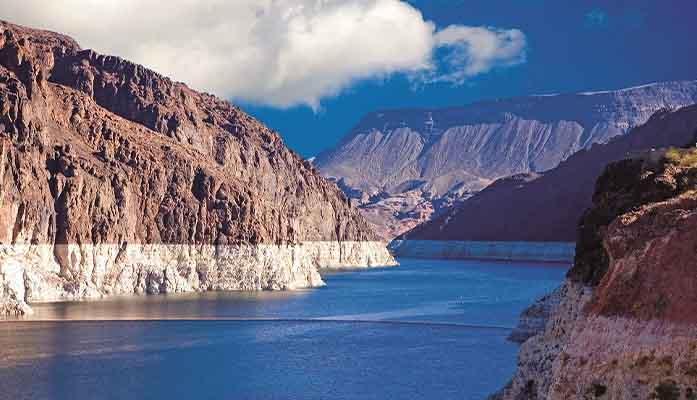
Dr. Theodore Cooke, former General Manager for the Central Arizona Project (CAP), has been nominated as Commissioner of Reclamation for the Department of Interior under the Trump administration.
Senate Republicans across the state are applauding Dr. Cooke’s nomination.
Dr. Cooke brings over two decades of experience from his career with the CAP, where he played a crucial role in managing Arizona’s water delivery systems to meet the state’s critical agricultural and municipal needs.
In 2022, Dr. Cooke was nominated by Senate Republicans to serve as a Board Member of Arizona’s Water Infrastructure Finance Authority (WIFA). In this role, he contributed to the strategic financing and development of water infrastructure projects, enhancing Arizona’s defense against water shortages.
“Not only does Arizona provide national benefits from our economy, but we also have a pool of talent in water management professionals,” said Senate President Pro Tempore T.J. Shope, Chairman of the Senate Natural Resources, Energy & Water Committee. “Dr. Cooke is thoughtful, has a history of collaboration, thinks outside the box to formulate solutions, and has a track record of finding a consensus among all parties at the table. This is why he was appointed by the Arizona Senate to serve on WIFA. Dr. Cooke is exactly who the Department of Interior needs and will be more aggressive in facilitating an agreement among the seven Colorado River Basin States on water allocations, as he did with negotiating Arizona’s entrance into the Drought Contingency Plan.”
If the nomination is confirmed, Dr. Cooke will be the main federal official overseeing the seven Colorado River states through negotiations over the shrinking river’s water supply. His leadership will be crucial as these states face a 2026 deadline to agree on water cutbacks. If there is no consensus between the states, the federal government is ready to intervene and make those decisions.
As Commissioner, Dr. Cooke is set to drive transformative water management solutions, securing sustainable supplies for future generations and reinforcing economic strength through the Colorado River Basin.
Ethan Faverino is a reporter for AZ Free News. You can send him news tips using this link.
by AZ Free News | May 25, 2021 | News
The U.S. Department of Interior has given its approval to the amended tribal-state gaming compact, finalizing an agreement to modernize gaming in Arizona that was signed in April by Governor Doug Ducey and the state’s tribal leaders.
“Gaming creates thousands of jobs for Arizonans, it generates tax revenue that benefits key areas of our communities, and it draws visitors to our state,” said Governor Ducey. “The tribal-state gaming compact amendment, along with its associated legislation, was the culmination of a multi-year process and I was proud to work with all the stakeholders on this historic accomplishment.”
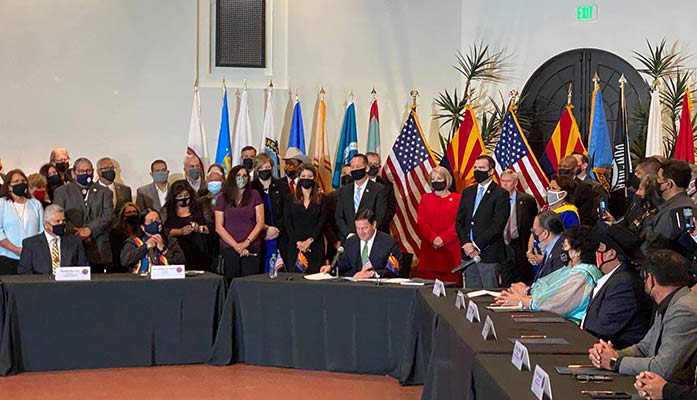
On April 15, Governor Ducey joined state lawmakers and tribal leaders to sign House Bill 2772, and the amended tribal-state gaming compact. The legislation is part of a compromise that was negotiated in the amended gaming compact, which underwent the most significant modernization in almost two decades.
The compact amendment and the associated legislation took more than five years to negotiate, and it ensures gaming in Arizona remains limited and regulated while providing certainty for the future of the state and tribes.