Charter school students are making a name for Arizona schools nationwide: two BASIS Charter School students were named presidential scholars by the Department of Education.
The department selected only 161 high school seniors for the honor, and two of the three came out of Arizona charter schools: Matteo Huish from BASIS Mesa, and Sruti Peddi, from BASIS Scottsdale. The third student, Vivian Saavedra, attends Chaparral High School.
There are an estimated 3.7 million students expected to graduate from high school this year. Out of that total, over 5,700 candidates qualified for the scholars recognition.
The three Arizona students were selected out of 144 Arizona candidates total, and 19 semifinalists from the state. This year’s presidential scholars announcement marks the program’s 60th anniversary.
In a press release, BASIS Charter Schools CEO Carolyn McGarvey said she was proud of Huish and Peddi for their hard work and talent.
“Their achievements reflect the rigorous academic standards and commitment to excellence that define BASIS Charter School campuses nationwide, and particularly here in our home state of Arizona,” said McGarvey.
11 of BASIS Charter Schools were recently ranked in the top 100 public schools out of 24,000 schools in America by U.S. News & World Report, including the number-one school in the country overall: the BASIS Peoria campus. Both Huish and Peddi’s campuses were among the 11 ranked.
Semifinalists represented Bell Academy Homeschool, BASIS Scottsdale (three students), Brophy College Preparatory, Primavera Online High School, Paradise Valley High School (two students), BASIS Mesa (two students), Desert Mountain High School, University High School, BASIS Phoenix, BASIS Chandler (two students), Chaparral High School, The Jones-Gordon School, Arcadia High School, and Northland Preparatory Academy.
Presidential scholars are not selected on an application basis; the recognition comes through invitation only.
Eligible students must have scored exceptionally well on either the SAT or ACT. The Department of Education takes the top 20 male and female scorers in each state, and reaches out to them to submit candidacy materials such as essays, self-assessments, secondary school reports, and transcripts. The department evaluates the candidate materials on academic achievement, personal characteristics, leadership and service activities, and essay content.
Each Chief State School Officer — in Arizona, the superintendent — may also nominate 10 male and 10 female candidates, and partner programs may nominate up to 40 candidates.
Semifinalists were selected by an independent national committee of educators convened by the Commission on Presidential Scholars.
The Department of Education also recognized three Arizona teachers for distinguished teaching paired with their respective 2024 Presidential Scholars: Sadie Puerner, a chemistry teacher out of Chaparral High School nominated by Saavedra; Charity Taylor-Antal, an English teacher out of BASIS Scottsdale nominated by Peddi; and Greg Thorson, an economics teacher out of BASIS Mesa nominated by Huish.
The department also recognizes presidential scholars in the arts as well as career and technical education. This year, however, Arizona didn’t have any scholars listed in those categories.
BASIS Charter Schools has had one or more Presidential Scholars in seven years since its inception in 1998: 2023, 2021, 2020, 2019, 2018, and 2013.
The network of charter schools has 40 campuses serving over 24,000 students in Arizona, as well as Louisiana, Texas, and Washington, D.C.
AZ Free News is your #1 source for Arizona news and politics. You can send us news tips using this link.
Imagine a world where your child becomes the child of the state, effectively no longer under your care or influence. Their heart, soul, mind, and body are captured by the state’s dictates, philosophy, and immorality.
Sadly, if your child attends a K-12 public school, this nightmare is becoming a reality and worsening daily. Through entities like the US Department of Education, the CDC, and influential non-governmental organizations, your role as your child’s primary influence and caretaker is being stripped away.
Like the proverbial frog in the pot, hardly noticing as the heat rises until it’s too late, our children are being indoctrinated to align with the state’s norms, leaving parents behind as mere spectators in their upbringing.
One avenue for this process is via school counselors. School counselors, formerly called “guidance counselors,” are no longer solely focused on college and career guidance; they’re now delving into academic and career concerns and social, emotional, and behavioral issues while potentially crossing legal boundaries when discussing sensitive topics without parental knowledge or involvement.
The delineation between certified and licensed professionals is critical. Certification by the Department of Education in Arizona, for example, does not equate to a license to practice behavioral health; it merely designates an employee classification. Unlicensed practitioners need to have the same standards of practice and ethics as their licensed counterparts, raising serious concerns about the well-being of children.
Unlicensed individuals engaging in behavioral health practices within schools in Arizona are not held to the same standards as licensed professionals, raising severe ethical and legal concerns. The unauthorized practice of behavioral health is unethical and a felony offense.
Parents must be vigilant. Arizona law enacted in 2022 aimed to bolster parental rights, requiring teachers and school counselors to disclose any information divulged by students, particularly regarding their physical, emotional, or mental health. Parents are entitled to access all educational records and counselor notes, with legal recourse available if information is withheld.
Despite these safeguards, oversight is lax, leaving parents in the dark about school counselors’ activities and the protection of their rights. Parents must demand transparency and accountability from school administrators regarding counseling practices and records. For example, every parent should demand to review their child’s counselor and teacher notes, including preferred names and gender identities.
The influence of external organizations, such as the American School Counselor Association, raises questions about the ideological underpinnings of counseling practices in Arizona schools. Are counselors truly prioritizing the well-being of our children, or are they advancing agendas that undermine parental authority?
The lack of oversight also raises questions about how school counselors are monitored to ensure compliance with these laws and ethical standards. It’s imperative to inquire about the credentials of school counselors and therapists and ensure they hold proper licensure from the Arizona Board of Behavioral Health Examiners.
A school counselor in Arizona is facing allegations of maintaining a covert spreadsheet documenting transgender students’ preferred names and pronouns. Mesa Unified School District (MUSD) is currently embroiled in a lawsuit brought forth by America First Legal (AFL) over accusations of aiding a student’s gender transition without parental consent. According to the lawsuit the student’s mother filed, school district officials permitted her daughter to use a name and pronouns inconsistent with her birth certificate.
The mother asserts that her daughter was referred to using these names and pronouns for six months before she accidentally discovered it. Upon confrontation, the school principal purportedly confirmed the practice. An amended complaint now highlights the involvement of an additional MUSD employee. The complaint reveals that, based on a public records request, a counselor at Kino Junior High School was maintaining a clandestine spreadsheet to track which transgender students’ parents were informed about their preferred names and pronouns.
We cannot ignore this encroachment on parental rights and the well-being of our children. It’s time to take action to safeguard our children’s futures and protect our rights as parents. If you suspect your child has received unauthorized behavioral health services, report it to the Arizona Board of Behavioral Health Examiners.
Together, we can ensure that our children receive the education and support they deserve, guided by parental wisdom and consent, not state interference. Join us in advocating for the rights of parents and the well-being of our children in Arizona and every state. Parents, check out your state’s laws and administrative rules that govern school counselors and parental rights.
Tamra Farah has twenty years of experience in public policy and politics, focusing on protecting individual liberty and promoting limited government. She’s served at the director level at Americans for Prosperity-Colorado, FreedomWorks, and is currently the Director of SMART Families Network with Arizona Women of Action.
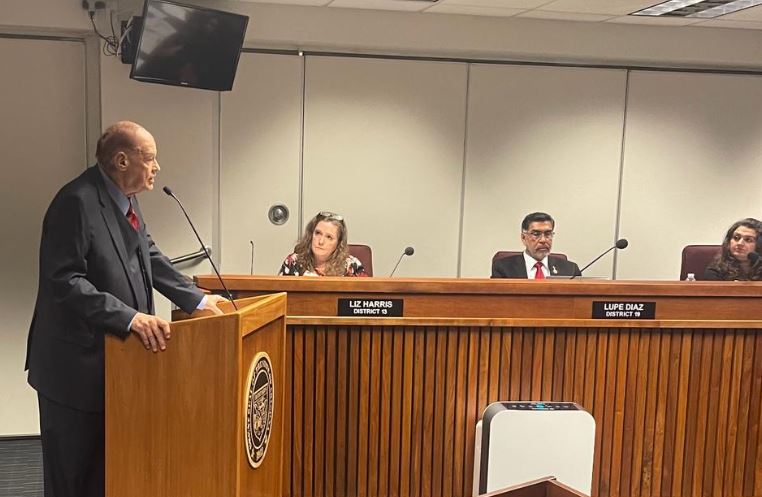
Arizona’s only Jewish statewide elected official, Department of Education Superintendent Tom Horne, will testify on Tuesday morning at a House meeting concerning antisemitism in education.
Horne’s testimony will be heard by the House Ad Hoc Committee on Antisemitism in Education. Tuesday’s meeting will consist of public testimony. Chairing the committee is Rep. Neal Carter (R-LD15). The other committee members are Reps. Seth Blattman (D-LD09), Michael Carbone (R-LD25), Alma Hernandez (D-LD20), Consuelo Hernandez (D-LD21), Alexander Kolodin (R-LD03), Teresa Martinez (R-LD16), Barbara Parker (R-LD10), Jennifer Pawlik (D-LD13), Marcelino Quiñonez (D-LD11), and Julie Willoughby (R-LD13).
Horne warned last month that antisemitism is a burgeoning issue in the U.S.
“Antisemitism is rising across the country and especially on college campuses,” said Horne.
Following the escalation of the Israel-Hamas conflict with the Hamas terrorist attack in October, reports of antisemitic speech and activism in schools have became more frequent.
Last month, Horne addressed one widely publicized incident of a Desert Mountain High School club using materials from UNICEF and Amnesty International to encourage students to side with Hamas. Horne debunked various claims of pro-Palestine materials distributed by the club and its affiliates as propaganda, such as that Israel is an apartheid state and that Jewish peoples illegally obtained land in the Middle East following World War II.
“In none of this propaganda is there any reference to what happened on October 7, not a single reference. All of these kids have an obsession with libels against Israel and the Jewish people,” said Horne. “The actions of Hamas are a repetition of what happened during World War II, yet the materials that are presented by UNICEF and Amnesty International and used as propaganda in our schools make no mention of it at all.”
Hamas murdered over 1,400 innocent civilians on October 7, sparking an escalation in the Israel-Hamas conflict.
According to Horne, his parents fled Poland in September 1938, exactly one year before World War II broke out, because his father, an avid history reader, predicted that the Nazis would invade Poland. Horne shared that his father had warned his Jewish community at the time of the looming Nazi threat, but that not many listened. The remainder of the Hornes’ extended family abroad reportedly perished in the Holocaust.
“I’ve been a big advocate of teaching our students history because our immediate family survived because of my father’s knowledge of history and ability to interpret current events, and I believe that our next generation’s survival depends on their knowledge of history and their ability to interpret current events,” said Horne.
About a week later at the Arizona Board of Regents meeting, Horne turned his back on pro-Palestine protesters attempting to obtain the attention of him and other members.
Superintendent Horne will not tolerate antisemitism. When protestors started speaking in support of a terrorist organization at the Arizona Board of Regents meeting, he turned his back to hatred. pic.twitter.com/s2DTM6DSF5
The Arizona Department of Education (ADE) responded to the protest with condemnation for growing opposition to Jewish people and the defense of Hamas.
“The rise of antisemitism is alarming in our schools, and support for the terrorist group Hamas across the country can’t be accepted,” stated ADE.
Superintendent Horne's parents fled Poland in 1938. His entire extended family was murdered in the Holocaust. The rise of antisemitism is alarming in our schools, and the support for the terrorist group Hamas across the country can't be accepted. https://t.co/Sy6AOrlqYY
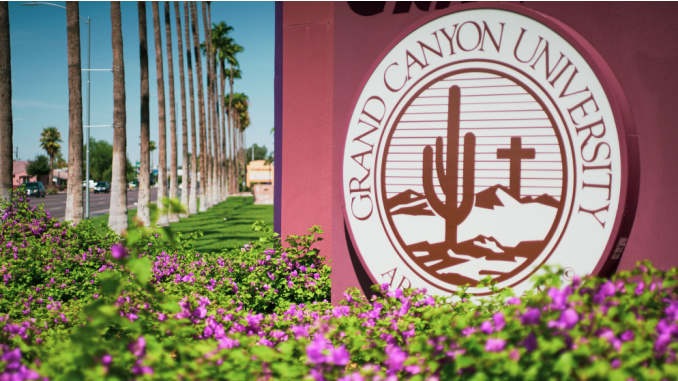
Grand Canyon University (GCU) is appealing the $37.7 million fine issued by the Department of Education (ED) for allegedly advertising false degree costs.
GCU maintains ED targeted their institution over ideological differences, not the public allegations of misrepresented doctoral program costs. GCU is a private Christian university.
In a press release on Thursday, GCU President Brian Mueller said that thousands of students, parents, employees, alumni, and community stakeholders felt ED was behaving tyrannically and had been weaponized against them.
“American people are losing confidence in the federal government to be fair and objective in their operations and there are clearly no checks and balances to prevent this type of behavior from the Department of Education, which is out of control and continues to broaden its authority and selective enforcement powers,” said Mueller.
ED announced its fine against GCU on Halloween. The agency accused the institution of deceiving over 7,500 doctoral students since 2017 — 98 percent of students reviewed — into paying more than advertised. ED said that GCU’s advertised cost of $40,000 to $49,000 amounted to false claims that violated the Higher Education Act, federal regulations on substantial misrepresentations, and Title IV’s fiduciary standard.
ED said that 78 percent of GCU’s doctoral program graduates paid $10,000 to $12,000 more in tuition costs for continuation courses to complete their dissertation requirements. The agency declared that GCU’s various fine print disclosures given to students were “insufficient to cure the substantial misrepresentations regarding cost.”
In addition to the fine, ED issued five conditions for GCU to meet: give prospective or current doctoral students the average total tuition and fees paid by graduates and the maximum number of credits that a student can take that are eligible for Title IV funds, and engage a monitor to oversee compliance; issue quarterly reports to ED about investigations, actions, or other legal proceedings by its accrediting agency or any government agency, as well as pending litigation in which a plaintiff seeks class certification; send a notice to all currently enrolled doctoral students informing them how to use ED’s feedback center to submit a complaint to ED; and send a notice to all current employees who provide recruiting, admissions, and other services to doctoral students about how to use the Federal Student Aid Tips line to submit information about misconduct or violations.
As AZ Free News reported previously, the ED investigation began after GCU challenged ED’s rejection of GCU’s nonprofit status by the Internal Revenue Service (IRS) in 2019. After several years of attempting to overcome ED’s denial, GCU sued in 2021. Following that, ED announced a coordinated effort with the Federal Trade Commission and Department of Veterans Affairs to investigate GCU for unfair or deceptive practices.
As part of GCU’s appeal, Mueller maintained that GCU doesn’t mislead or deceive its students. Mueller cited his institution’s favorable federal court rulings in Young v. GCU, in which two courts rejected claims of misrepresentation regarding the time or cost for doctoral program completion.
Mueller also cited a Government Accountability Office (GAO) report from last November, which determined that 91 percent of colleges mislead or understate the net price of financial aid to prospective students.
Additionally, GCU noted that it has undertaken its own preliminary internal study of doctoral program costs at 100 other universities. The university claimed that only two percent of those universities disclose full costs, 51 percent failed to clearly or fully disclose anything about the need for additional courses to complete a dissertation, and 45 percent made statements that a doctoral degree could be earned in a set number of years despite the varying length of time needed to complete a dissertation.
Mueller said that there was little incentive for their university to deceive doctoral program students, since it was their smallest degree program containing less than five percent of students. He pointed out that GCU hasn’t raised its tuition in 15 years.
“If our goal was to generate more revenue, rather than allegedly deceive students we could simply increase tuition three to four percent a year for a few years — as most universities have done — and no one would bat an eye,” said Mueller. “We haven’t done that. In fact, we have frozen tuition on our ground campus for 15 straight years because our innovative approach to managing this university, which the Department objects to, has allowed us to do that for the benefit of our students.”
Corinne Murdock is a reporter for AZ Free News. Follow her latest on Twitter, or email tips to corinne@azfreenews.com.
Arizonans are eligible to receive $1.03 billion in student debt relief, according to the latest estimates from the Biden administration.
Arizona’s cut accounts for about 2.6 percent of the $39 billion issued for 804,000 total borrowers (an average of over $48,500 per borrower). In a press release, the Department of Education (ED) clarified that the billion-odd in funds applied to over 20,500 borrowers in Arizona.
$1.03 billion for 20,500 borrowers averages about $50,200 per borrower: about $2,000 short of four years of in-state tuition at Arizona State University, $2,600 short of four years of in-state tuition at the University of Arizona, and $4,500 more than four years’ tuition at Northern Arizona University.
The relief constitutes the 12th-highest award from the Biden administration. The 11 other states above Arizona, in order from highest to lowest award amount, were: Texas, Florida, California, Georgia, New York, Ohio, Illinois, Michigan, North Carolina, Pennsylvania, and Virginia.
In a statement, President Joe Biden said that the past mistakes of the federal government were to blame for individuals not paying their debts. Biden also said that Republican lawmakers were hypocritical and dismissive for rejecting his sweeping student loan forgiveness.
“I have long said that college should be a ticket to the middle class — not a burden that weighs down on families for decades,” stated Biden.
The federal relief comes from the Income-Driven Repayment (IDR) plans launched by the Biden administration. The IDR plans slash undergraduate loan payments in half and abolish payments for low-income borrowers. The Biden administration determines IDR plans based on discretionary income: the difference between annual income and 150 percent of the poverty guideline based on the borrower’s family size and state of residence.
There are four possible IDR plans: Revised Pay As You Earn Repayment Plan (REPAYE) lasting 20 years for undergraduate loans only or 25 years for any graduate or professional loans, requiring 10 percent of discretionary income; Pay As You Earn Repayment Plan (PAYE) lasting 20 years, requiring 10 percent of discretionary income or a maximum based on the 10-year Standard Repayment Plan amount; Income-Based Repayment Plan (IBR), requiring 10 percent of discretionary income for new borrowers on or after July 1, 2014 and lasting 20 years, or 15 percent of discretionary income for older borrowers on or after July 1, 2014 and lasting 25 years, with both contingencies capped by the 10-year Standard Repayment Plan; and the Income-Contingent Repayment Plan (ICR) lasting 25 years, requiring 20 percent of discretionary income or projected payment on a repayment plan with a 12-year fixed payment adjusted to income.
Even if borrowers don’t fully pay off their loan balance under their IDR plan, the federal government will forgive the remaining loan balance. ED will also count months of nonpayment based on certain criteria toward the total repayment period: economic hardship deferment, repayment under other plans, and required zero amount payment periods. Additionally, ED offers borrowers total forgiveness of any remaining balance after 10 years of payments, rather than 20 or 25 years, should the borrower participate in both an IDR plan and the Public Service Loan Forgiveness (PSLF) Program.
ED began notifying eligible borrowers of the relief earlier this month. The Biden administration has issued over $116 billion in student loan relief for three million borrowers: an average of $38,600 per borrower.
That average is roughly several hundred dollars less than the average national total for four years of in-state tuition at a public college, and about equivalent to the average national total for just over one year of out-of-state tuition at a public college.
Corinne Murdock is a reporter for AZ Free News. Follow her latest on Twitter, or email tips to corinne@azfreenews.com.