Rep. Paul Gosar (R-AZ-09) said that “a better society” would hang General Mark Milley for his role in the Jan. 6 invasion of the Capitol.
Gosar issued the remarks in a newsletter over the weekend. The congressman pointed out that Milley delayed the deployment of the National Guard, criticizing Milley as a “homosexual-promoting-BLM-activist.”
“In a better society, quislings like the strange sodomy-promoting General Milley would be hung,” stated Gosar. “How this traitor remains in office is a question we need answered.”
Gosar also condemned Milley for his secretive 2020 calls to the Chinese government assuring that then-President Donald Trump wouldn’t launch a nuclear strike.
Although multiple media outlets reported on Gosar’s latest comments as novel, Gosar has called for Milley’s hanging before. In 2021, Gosar said that Milley’s collaboration with the Chinese government constituted “a hanging offense in most civilized societies.”
Add: Gen. Milley collaborated with Chinese military to undermine commander in chief. A hanging offense in most civilized societies.
Over 2 million illegal aliens, 10% Covid infected, prancing into the country.
The Gen. “I’m such a silly” Milley promised to give China the inside information. He may not be true to the US but he keeps his word to China. #AmericaLasthttps://t.co/KkTcaKjxDZ
Earlier this year, a day after the two-year anniversary of the Jan. 6 invasion, Gosar called for an investigation into Milley as well as former House Speaker Nancy Pelosi (D-CA-11). Gosar declared Milley a traitor, and accused the pair of attempting a coup.
“Milley’s treasonous sellout to China will be investigated,” said Gosar. “Pelosi not warning members about intel of impending violence will be exposed.”
Remember – we will conduct a real investigation into J6. The effort to attempt a coup between traitor Gen. Mark Milley and Pelosi will be reviewed and exposed. https://t.co/miu5SZaZCo
Milley’s spokesman at the time, Dave Butler, said in a statement that the calls were routine practices vital to national security interests.
“The Chairman of the Joint Chiefs regularly communicates with Chiefs of Defense across the world, including with China and Russia,” said Butler. “His calls with the Chinese and others in October and January were in keeping with these duties.”
Yet, Trump and other Republicans have repeatedly argued that warning adversaries of an attack without executive approval constituted treason. This past week, Trump called for Milley to be tried for treason.
“This is an act so egregious that, in times gone by, the punishment would have been DEATH!” said Trump. “A war between China and the United States could have been the result of this treasonous act”
In August, the Capitol Police Chief on Jan. 6, Steven Sund, told Tucker Carlson that there was a coordinated effort of intentional neglect by federal intelligence, Congress, and military leadership to properly secure the Capitol.
Sund shared that he never received any requests concerning permit revocation or a citywide lockdown as reportedly discussed ahead of the invasion by Joint Chiefs of Staff Chairman Mark Milley and Acting Secretary of Defense Christopher Miller.
Instead, Miller issued a memo restricting the National Guard from carrying various weapons or civil disobedience equipment.
Sund also shared that Pelosi was the ultimate authority in a chain of command that stalled the provision of additional military assistance.
Corinne Murdock is a reporter for AZ Free News. Follow her latest on Twitter, or email tips to corinne@azfreenews.com.
A professor hailing from China with a World Economic Forum (WEF) background is behind critical race and gender theory research on children at two of Arizona’s taxpayer-funded universities.
Sonya Xinyue Xiao teaches psychological science and performs developmental research on moral and gender development at Northern Arizona University (NAU). Xiao was a postdoctoral scholar at the Arizona State University (ASU) T. Denny Sanford School of Social and Family Dynamics (SSFD) from 2020 to 2022, where she taught until last year. NAU has Xiao on a tenure track.
Presently, Xiao is also an affiliated research fellow for the Cultural Resilience and Learning Center (CRLC) in California and a member of the Diversity Scholars Network in the National Center for Institutional Diversity at the University of Michigan (UM). Xiao’s UM profile declares her social priority on children, youth, and families, with her specific focus pertaining to that priority on gender, sexuality, sexual orientation, race, ethnicity, social class, and socioeconomic status.
“[Xiao] is investigating how early adolescents’ multiple intersecting identities in gender and race/ethnicity are related to their prosocial behavior toward diverse others over time, with youth from diverse ethnic racial backgrounds,” stated her UM profile.
Additionally, Xiao has served as the programming committee member for the Sexual Orientation, Gender Identity and Expression (SOGIE) Caucus of the Society for Research in Child Development (SRCD) since 2021. The SRCD has repeatedly opposed efforts to restrict or ban gender transitions for minors.
Xiao’s published research papers have declared the need for parents to raise their children to embrace gender theory in themselves and their peers, under the claim that rejection results in poor social and emotional outcomes later in life, as well as to engage their children in diverse friendships, under the claim that those as young as preschoolers can be racist.
Characteristics aligning with progressive critical race and gender theories are what Xiao defines as “prosocial behaviors” throughout her research.
Finally, the last paper I started in grad school class on #gender is out in time for #PrideMonth! I was auditing carol's gender class, and that was the semester when covid hit….The paper has been in submission for 14months! Nonpaywalled version here: https://t.co/VEHUH7WEtN
— Sonya Xinyue Xiao, Ph.D. (@SonyaXinyueXiao) May 30, 2023
Last year, Xiao contributed to a chapter entry in a book, “Gender and Sexuality Development.” The chapter expanded the understanding of gender to many gender identities.
Check out this new meta-analysis on understanding predictors of prejudice toward trans individuals 👏 The authors tested 15 predictors, all but one are important (e.g.,political orientation, social dominance orientation, religiosity, gender essentialism) https://t.co/Q16biGeq2m
Xiao’s work includes “gender integration,” which studies the differences between genders with the ultimate goal of total integration. Xiao’s team with the T. Denny Sanford School of Social and Family Dynamics (SSSFD) holds the belief that gender is fluid and not binary; they receive federal funding through the Institute of Education Sciences (IES).
Xiao’s research has also relied on participants’ self-reported gender identities. Elsewhere, her current research team’s most recent release of preliminary findings asked children “how much they think they look like girls and how much they think they look like boys,” and reported that 10 percent thought they looked like both genders, and nearly one percent believing they didn’t look like either gender.
we are doing school-based research in AZ now and ask an open-ended question "what's your gender?” and the reader/experimenter says "for example, I am a girl."
In May, Xiao’s work on gender integration was featured in an IES blog series focusing on “research conducted through an equity lens.” SSSFD professor Carol Martin said that their work aims to achieve diversity, equity, and inclusion in education. Martin further insisted that teachers need to break up naturally-occuring gender segregation in their students to encourage diversity.
“We study the importance of having diverse classrooms (mixed-gender in our case) and breaking down barriers that separate people from each other but stress that this diversity matters only when it is perceived as inclusive and fosters a sense of belonging,” said Martin. “For some students, additional supports might be needed to feel included, and we hope to identify which students may need these additional supports and what types of support they need to promote equity in classrooms around issues of social belongingness.”
— Sonya Xinyue Xiao, Ph.D. (@SonyaXinyueXiao) May 6, 2023
According to her LinkedIn, Xiao attended Tianjin University of Science and Technology before beginning her career as a teacher at Zhenguang Primary School in Shanghai, China. While at Tianjin, Xiao had two notable back-to-back volunteering stints in 2010: first, a two-month gig at the Shanghai World EXPO 2010, then a month-long gig at the World Economic Forum (WEF) Summer Davos. For the latter gig with the WEF, Xiao reported providing document and verbal translation at the Lishunde Hotel, as well as assistance to conference attendees.
China’s practice of its cultural subversion tactics on U.S. soil, especially involving children, have been widely reported over the years, most recently concerning TikTok. While the Beijing-based company behind the app pushes content ranging from the mind-numbing to dangerous to foreigners, it restricts Chinese youth to a domestic version, Douyin, which contains only educational and inspirational content. In its short existence, TikTok has become a major influence in American children’s development.
Papers published while at ASU or NAU where Xiao was the principal author are listed below:
Xiao has also contributed in over a dozen other research papers uplifting critical race and gender theories, as well as promoting “nurturant parenting,” described as inductive discipline and punishment avoidance, versus the disciplinary model of “restrictive parenting,” described as punitiveness, corporal punishment, and strictness. That paper on nurturant versus restrictive parenting further advised that white parents should avoid restrictive parenting to ensure their children behaved better toward non-white peers.
Other papers to which Xiao contributed argued that white parents who claimed to be color-blind or were displaying evidence of “implicit racial bias” caused their children to have less empathy toward Black children.
Is the much-hyped “energy transition” starting to crumble at its foundations now? In recent weeks we have seen the following:
Ford Motor Company warns investors its electric vehicle division will lose $4.5 billion in 2023;
Reports that China has commissioned another 50 GW of new coal-fired electricity generation capacity;
The British government led by Prime Minister Rishi Sunak beginning to back away from absurdly aggressive transition timelines amid public outcry over rising energy bills and other deprivations;
The German government continuing to reactivate mothballed coal plants and facilitating new mining for coal;
The Scottish government forced to admit it has facilitated the felling of 16 million trees in this century to make way for new wind farms;
The Japanese government moving to reinvigorate its own coal-fired power sector;
Global demand for crude oil rapidly growing and outpacing supply growth, surprising all the supposed experts;
The U.S. Department of Energy forced to admit its initial estimate of consumer “savings” from converting from gas stoves to more expensive electric models was grossly overstated.
This list could go on and on, but the macro view is clear: Everywhere one looks, the aggressive timelines and heavily subsidized plans for a rapid transition are falling apart. Nowhere is the dynamic becoming clearer than in the wind industry.
In an Aug. 7 report titled “Wind Industry in Crisis as Problems Mount,” the Wall Street Journal catalogues $30 billion in planned investments in new wind projects in the U.S. and elsewhere that have now been delayed due to an expanding variety of factors. “After months of warnings about rising prices and logistical hiccups, developers and would-be buyers of wind power are scrapping contracts, putting off projects and postponing investment decisions,” the story says, emphasizing that the problems are becoming especially severe in the offshore wind business that has been so heavily promoted by the Biden administration.
I wrote a story in July detailing the fact that some of the so-called “Big Oil” companies have recently made big inroads into the offshore wind business, winning bids in the U.S. and Germany for licenses to develop large projects. But the Journal’s story quotes Anders Opedal, CEO of Norwegian oil giant Equinor, saying, “At the moment, we are seeing the industry’s first crisis.”
Along with British oil major BP, Equinor has plans in place to develop three wind farms off the Atlantic coast of New York, but recently warned state officials they would need to renegotiate power prices or the projects would not be able to obtain the needed financing. This demand by the two oil companies echoed a call by traditional wind developer Orsted in June for more subsidies from the U.K. government if its planned projects in the North Sea are to remain viable.
Make no mistake about it: Developing these offshore wind projects doesn’t come cheap. Orsted pulled out of a competitive bidding auction in Germany last month for government licenses to develop 7 GW of new offshore wind capacity when BP and French oil major TotalEnergies ran the final bids up to almost $14 billion.
“Orsted very deliberately chose not to pay record high concession prices for new offshore projects in Germany,” Orsted CEO Mads Nipper said in a post on LinkedIn. Orsted objected to the process that awarded the licenses based on the willingness of developers to pay the government for the right to develop — the same process used in oil and gas leasing all over the world — rather than the government offering more and more subsidies to incentivize development.
Therein lies the central conundrum for this subsidized transition: At some point, wind, like solar, electric vehicles and all the other rent-seeking solutions being promoted in this energy transition will have to become viable without an expectation of permanently rising subsidies, since governments already seeing their credit ratings downgraded due to overwhelming debt won’t be able to just keep printing money forever.
But, at the present moment, the business models in play do not appear to be headed for that outcome. And that’s why this energy transition seems to be falling off the rails.
David Blackmon is a contributor to The Daily Caller News Foundation, an energy writer, and consultant based in Texas. He spent 40 years in the oil and gas business, where he specialized in public policy and communications.
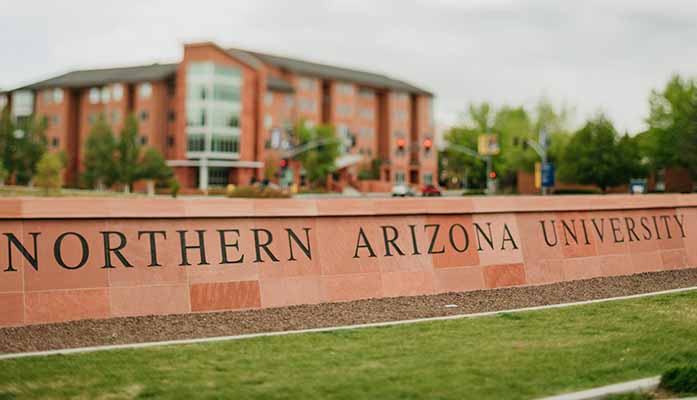
A Northern Arizona University (NAU) study declared that America needs to cooperate with China more for climate change.
The lead author of the study, Hubert Cheung, advocated for greater cooperation with the communist country. In addition to being adjunct faculty in NAU’s School of Earth and Sustainability, Cheung is part of the University of Tokyo in Japan as well as the University of Queensland in Australia. Cheung grew up in Hong Kong, China.
“We need to cooperate with China if we are to find effective solutions to climate change, for illegal wildlife trade, for sustainability transitions,” stated Cheung. “Understanding the Chinese leadership’s core strategic interests—and where political will already exists in Beijing to deliver on these strategic interests—will help conservation scientists and practitioners find opportunities and manage challenges.”
The paper’s abstract advocated for increasing China’s political power in order to advance sustainability and conservation. The paper went on to issue a defense of the Chinese government’s core interests, such as maintaining its current level of authority over its citizens and expanding its power onto the global stage.
“‘[A]n environmentally healthy and secure China can benefit the world, and this will only become more apparent over the course of the 21st century,’” stated the paper. “The scale and reach of China’s environmental footprint — and global geopolitical influence — is such that an exploration of its leadership’s political agenda and political will is valuable and timely for conservation.”
The other NAU researcher involved in the study, Duan Biggs, is also part of the same school as Cheung. Biggs indicated that sustainability efforts were the way to brokering a unified front between governments.
“The environment and conservation represent an opportunity for soft-diplomacy and for countries and societies to maintain dialogue and collaboration despite growing tension,” stated Biggs.
The only researcher hailing from a Chinese university was Tien Ming Lee. He’s a professor at the State Key Laboratory of Biological Control and Schools of Life Sciences and Ecology at Sun Yat-sen University in Guangzhou, China.
The other researchers hailed from Japan, Australia, Canada, the United Kingdom, and South Africa.
The World Economic Forum (WEF), the leading organization attempting to create a new world order of global governance, identifies China as a leader in combating climate change on an international level. The WEF Global Future Council is also attempting to increase trust in China as a world leader.
Last year, China’s President Xi Jinping opened up the WEF’s annual meeting in Switzerland by calling on stronger international cooperation in overcoming COVID-19, revitalizing the economy, and addressing climate change. Jinping encouraged more open relations between all nations, not less.
“We should remove barriers, not erect walls. We should open up, not close off. We should seek integration, not de-couple,” said Jinping.
The WEF invented the social credit score system — similar to the one used by the Chinese government currently. China keeps a database on its citizens to ensure compliance with government interests.
CHINA – Staff no longer required this register recognises your face & the food and then deducts the price from your bank account.
But only if your social credit score is acceptable, dissidents wouldn’t be served.
Last month U.N. members met once again to live the good life for a few days and push for the unlikely elimination of climate change. The United Nations Framework Convention on Climate Change convened COP27 in the impressive Egyptian coastal city of Shark El-Sheik. 100 heads of state and 25,000 attendees (carbon footprint alert!) met to advocate for a “giant leap on climate ambition.”
To win “this battle for our lives,” round tables galore were held, coalitions were formed, roles for youth and even children in the crusade were created. Curiously, no actions were taken that would directly limit greenhouse gas emissions, possibly because the much-ballyhooed Paris Agreement had proved worthless, with almost no nations honoring their commitments.
The signal achievement of the meeting was instead a comprehensive agreement on “loss and damage,” which is essentially code for reparations. Rich nations are to pay trillions to poor nations to atone for the doleful effects of industrialization.
China and India, the world’s foremost polluters, took a powder. The U.S., the nation that has reduced pollution the most since 1990, was at the front of the line volunteering to bankroll the effort.
Americans have traditionally contributed generously to international aid efforts. Yet the notion of climate reparations is problematic.
It’s not clear, in spite of the persistent claims in the media, that weather events are related to emission-caused climate change. But we do know that the human cost of disasters is much smaller today than in years past.
In his book Unsettled, Stephen Koonin, formally in the Obama Energy Department, points out that weather related deaths were actually 80 times more frequent a century ago, before the technological improvements in infrastructure and mitigation provided by industrialization.
Much of the insistence on reparations is rooted in resentment over the colonial past. But take Pakistan, a leader in the reparations movement. Pakistan claims its devastating floods are the direct result of climate change.
North America and Europe have seen significant recent reforestation. But since Pakistan left colonial status in 1947, its forests have shrunk from 1/3 to 1/20 of its total area. Water and silt run straight off the mountains causing the massive flooding.
Britain, the former colonizer of Pakistan, has cut its carbon emissions in half since 1990, mostly by closing coal mines at great expense. Meanwhile Pakistan has over 100 operating coal mines and can still afford to develop nuclear weapons. But you can’t go wrong blaming the colonialists.
U.N. climate change proposals in the past were more modest. They mostly financed specific infrastructure programs in poor countries, often bypassing local governments. But COP27 was written in a U.N. now dominated by aggressive socialist dictatorships with appalling human rights records.
As a result, the COP27 plan would call for $1.3 trillion in annual retribution payments that would go not to the practical needs of poor countries, but to the kleptocratic governments which plague foreign aid efforts. The effect would be to further strengthen the petty tyrants and save them from forces of reform.
The notion that the West should pay damages for the Industrial Revolution is poppycock. It was the capitalist democracies that produced the ideas, the economic system, and the innovations that have produced previously unimaginable income growth around the world.
Deadly diseases have been eliminated, infant mortality reduced, and life expectancy extended. Hundreds of millions have been lifted out of hunger and poverty, and for this we should pay?
There’s one more problem with paying reparations: we don’t have the money. The U.S. is the deeply indebted con man living on borrowed funds who continues to make extravagant gifts to adoring friends. And why not? It’s not really his money anyway.
If the socialist autocrats demanding compensation were the least sincere about creating more prosperous nations on their own, the guiding principles are well known: free markets, secure property rights, low and fair taxes, independent courts, and reasonable regulation. But don’t expect the dictators to sacrifice their power and privileges any time soon.
“Loss and damage,” is based on feel-good morality, false history, and imaginary economics. It would do nothing to improve the environment of our planet. We can in good conscience just say no.
Dr. Thomas Patterson, former Chairman of the Goldwater Institute, is a retired emergency physician. He served as an Arizona State senator for 10 years in the 1990s, and as Majority Leader from 93-96. He is the author of Arizona’s original charter schools bill.