Rep. Andy Biggs (R-AZ) says “Bidenomics” is to blame for the surging gas prices in his district, the fifth congressional district.
According to Biggs, “Bidenomics” includes a “war on domestic energy,” meaning the oil and gas industry.
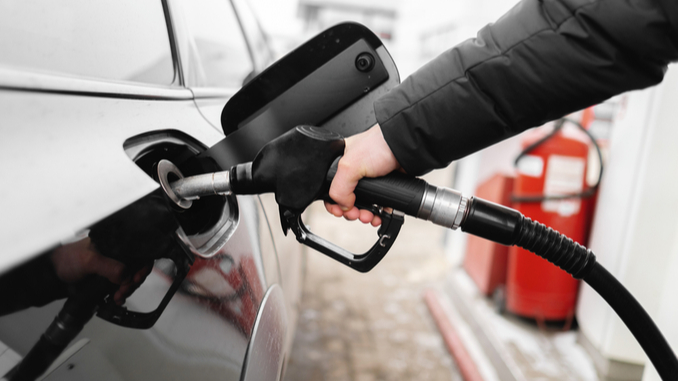
The average gas price in Arizona, per AAA, sits at about $4 per gallon, a steady rise from prices over the last month but a slight decline from the average last year, when prices hit about $4.30 a gallon.
Arizona’s averages have consistently sat higher than the national averages over the past year.
“Biden’s war on domestic energy hits Americans in the pocketbook. Gas is over $4.00/gallon in my district!” said Biggs. “Arizonans are suffering thanks to Bidenomics.”
Biden's war on domestic energy hits Americans in the pocketbook.
The highest-ever recorded average for gas prices in Arizona was nearly $5.40 in the summer of 2022.
AAA has attributed the recent steady rise in gas prices to the increase in oil prices. Crude oil hit over $10 per barrel earlier this year, attributed to Ukrainian attacks on Russian oil infrastructure and increased conflicts in the Middle East.
The Biden administration has reportedly urged Ukraine to cease its attacks on Russian oil refineries, out of concern for rising gas prices. However, Ukraine President Volodymyr Zelensky has dismissed those requests from U.S. officials, telling The Washington Post that the U.S. lacks authority to dictate his military strategy.
“We used our drones. Nobody can say to us you can’t,” said Zelensky.
Mapping of gas prices nationwide reflects a trend for prices to be highest around the West Coast, lowest around the midsection of the country, and slightly higher again around the East Coast.
Another factor for the upward surge in gas prices relates to the Biden administration’s increased pressures on oil and gas production — such as the plan announced last fall to scale back leasing for offshore oil and gas drilling — in an attempt to increase American reliance and support for “clean energy” alternatives.
Biden campaigned on the promise to abolish the oil industry, and “end fossil fuel.” His first executive order laid some of the framework to fulfill that promise, such as imposing a moratorium on certain oil and natural gas leasing activities, and directing agencies to revise fuel and emissions standards for vehicles.
On Thursday, the Biden administration announced $20 billion in grants to private companies for clean energy initiatives.
On Wednesday, the Department of Energy canceled two purchases to refill the Strategic Petroleum Reserve (SPR). Agency officials indicated a desire to avoid buying back oil above its target price of $79 per barrel, since the cost per barrel is around $87.
The Biden administration has depleted the SPR by about 45 percent.
Last month, the Biden administration announced stricter emissions standards for heavy-duty vehicles such as freight trucks and buses. Available technologies to meet their new emissions standards include the advanced internal combustion engine vehicles, hybrid vehicles, plug-in hybrid electric vehicles, battery electric vehicles, and hydrogen fuel cell vehicles.
In January, the White House paused permitting on liquified natural gas (LNG) exports.
AZ Free News is your #1 source for Arizona news and politics. You can send us news tips using this link.
As Christmas approaches, Americans are making a list and checking it twice — not to determine who’s been naughty or nice, but to determine what they can afford this Christmas. For all too many of them, the answer is, not much, and certainly not as much as before Joe Biden became president.
That creates a political problem for the president, because even as he’s spent the better part of the past six months touting the benefits of “Bidenomics” (suggesting the word connotes a rising standard of living for the majority), the American people have come to a different far different conclusion. For them, “Bidenomics” means, “I can’t afford it.”
A recent Bloomberg News analysis shows why: A basket of goods for the average family that cost $100 before the COVID-19 emergency costs $119.27 today. “Since early 2020,” says the piece, “prices have risen about as much as they had in the full 10 years preceding the health emergency.”
Electricity is up 25% since January 2020, and groceries the same. A pound of ground beef is up from $3.29 to $5.23; two pounds of chicken breast have risen from $6.12 to $8.44; and coffee has gone from $4.17 to $6.18.
You won’t save any money going out to eat — restaurant food is up 24%.
And getting there isn’t any less expensive, either. After peaking around $5 per gallon last year, gasoline has dropped somewhat, but gasoline prices today are still 60% higher than they were on the day Joe Biden took office.
Because of Biden’s bad energy policies (read: shutting down pipelines; stricter EV regulations; no leases for drilling; and new taxes on coal, oil, and natural gas, among others), energy prices have gone up overall by 30% in less than three years — electricity is up 25%, propane gas is up 23%, natural gas is up 25%, and diesel fuel is up 47%.
Housing, too, is far more expensive, and nearing unaffordable. In January 2021, the monthly mortgage payment on a median-priced home was $989. Today, that number has more than doubled, to $2,041. Mortgage rates have more than doubled since Biden took office, pricing many families out of the market – and forcing sellers to pull back and sit on properties they’d prefer to sell, but cannot.
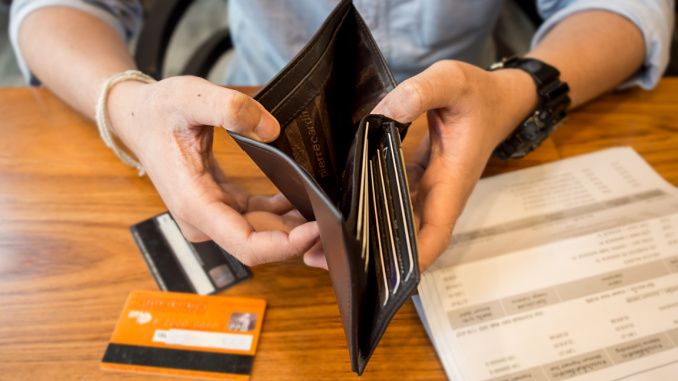
Not surprisingly, American families have turned to their credit cards just to make ends meet. The result: Americans now hold more than $1 trillion in credit card debt. That’s a record high.
It’s no wonder Biden’s approval ratings, and, specifically, his approval rating on his handling of the economy, are down. In this recent survey, he’s at 40% approve, 49% disapprove on his overall job rating, and 36% approve, 61% disapprove on his handling of the economy. A full 76 percent said the economy was either “not so good” or “poor” when asked to rate economic conditions right now. Just 26% of the survey respondents said Biden’s economic policies had helped the economy “a lot” or “somewhat,” while 48 percent said his policies had hurt the economy “somewhat” or “a lot.”
And in this poll’s version of the killer question Ronald Reagan posed in his one debate with Jimmy Carter in October of 1980 – “Are you better off today than you were four years ago?” – just 4% say they are “much better off” and 10 percent say they are “somewhat better off” when asked how they have fared since Joe Biden became president.
Policies have consequences, and Americans are suffering under the real-world consequences of Joe Biden’s policies.
It’s bad enough that Americans have to suffer under the consequences of Biden’s bad policies. What makes it worse is that Biden and his administration are doubling down on their bad policies. They refuse to learn from the real-world experience of seeing the results of their policies; instead, they continue to act as if those consequences are not visible to anyone, let alone everyone.
Biden and his Democrat allies know they want more government spending, more government programs, more government regulation, more government power and control over our lives.
Meanwhile, Rudolph goes hungry, because Santa can’t afford to feed his reindeer.
The current state of the American economy continues to trouble small business owners.
This week, the National Federation of Independent Business (NFIB) released its latest Small Business Optimism Index, showing a drop of a half point during the month of September. The index now stands at 90.8, and it has not risen above the average mark of 98 for 21 consecutive months.
OUT TODAY: @NFIBResearch Released its September #SmallBusiness Economic Trends survey. The Optimism Index fell to 90.8, which marks the September reading as the 21st consecutive month below the 49-year average of 98.
NFIB Arizona State Director Chad Heinrich commented on the latest issuance of the index, saying, “It’s clear that small business owners remain deeply concerned about the economy. The pressure of inflation and the labor shortage are continuing to take a toll on our job creators, with little relief in sight.”
Bill Dunkelberg, NFIB’s Chief Economist, also weighed in on the recent numbers from his organization, writing, “Owners remain pessimistic about future business conditions, which has contributed to the low optimism they have regarding the economy. Sales growth among small businesses have slowed and the bottom line is being squeezed, leaving owners few options beyond raising selling prices for financial relief.”
The announcement from the Arizona arm of the influential business group stated that “twenty-three percent of owners reported that inflation was their single most important problem in operating their business, unchanged from last month and tied with labor quality as the top concern.”
NFIB highlighted some of the areas of emphasis from their index, including:
Small business owners expecting better business conditions over the next six months deteriorated six points from August to a net negative 43% seasonally adjusted, however, 18 percentage points better than last June’s reading of net negative 61% and definitely at recession levels.
Forty-three percent (seasonally adjusted) of owners reported job openings that were hard to fill, up three points from August and remaining historically high as owners can’t hire enough workers due to few qualified applicants.
Seasonally adjusted, a net 23% plan to raise compensation in the next three months, down three points from August.
The net percent of owners raising average selling prices increased two points to a net 29% seasonally adjusted, still a very inflationary level.
The net percent of owners who expect real sales to be higher increased one point from August to a net negative 13% (seasonally adjusted), still a very dismal posture.
Just last week, the Biden Administration boasted of a “record-breaking economy,” noting the increase of jobs, an unemployment rate below 4%, a low unemployment rate for women, and low unemployment for African Americans, Hispanic Americans, and Americans with disabilities.
Others see the economy in an entirely different light. Alfredo Ortiz, the president and CEO of Job Creators Network, recently said, “This accelerating inflation, which is nearly twice the Federal Reserve’s target rate, is another Bidenomics blow to ordinary Americans and small businesses dealing with rapidly rising prices that are lowering their real wages and living standards for two and a half years.”
"The Biden administration’s ongoing pattern of 'reckless spending and anti-energy policy' represents, in Alfredo Ortiz’s view, 'another Bidenomics blow to ordinary Americans and small businesses' grappling with persistently soaring prices." @Gingrich360https://t.co/wxFa9kUj19
On September 19, I testified before a House subcommittee on the impacts of Bidenomics – yet it was clear that half the committee members weren’t even listening. That’s disturbing because our lawmakers have played a huge role in making the typical American family about $7,000 poorer in just two and a half years.
Instead of acknowledging the data I presented, the Democrats on the subcommittee only regurgitated their talking points and resorted to espousing falsehoods about the state of the economy. Even if half our leaders won’t listen to the facts, hopefully the American people will, so here’s the truth about Bidenomics.
Under President Joe Biden, the government has spent, borrowed, and created trillions of dollars, and that caused the highest inflation in four decades. This inflation is a real tax on the American people because it transfers wealth from the people to the government. And the size of that transfer has been staggering.
The average American worker today loses more of his hourly earnings through the hidden tax of inflation than in federal income taxes. That means inflation under Mr. Biden has effectively doubled the average American’s federal income tax liability. Nominal pay keeps going up, but real (inflation-adjusted) pay has gone down.
The typical American family with two parents working and with average weekly earnings has seen their weekly pay increase $230 under Biden, but those larger paychecks buy about $100 less. The result is an annual decrease in purchasing power of about $5,100.
Similarly, net household wealth is at a record high today, but only before adjusting for inflation. In real terms, net household wealth is roughly flat since the end of 2020. That means nearly all the trillions of dollars in additional net household wealth have been confiscated by the government under this president through the hidden tax of inflation.
That’s how the government has been financing its massive deficits for the last three years.
To combat the inflation that it helped cause, the Federal Reserve has increased interest rates which have compounded the pain for Americans. Borrowing costs have risen dramatically and are now about $1,800 higher annually for the typical American family. Coupled with their loss in purchasing power, this leaves a family about $7,000 poorer than when Mr. Biden took office.
Yet many people are even worse off than that. If you’re trying to buy a home today, the monthly mortgage payment on a median price home has more than doubled under Mr. Biden. Homeownership affordability is at one of its lowest levels on record, and less than half of American households can qualify for a mortgage. And many who qualify still can’t afford the payments.
The impact of Bidenomics on federal finances has been just as bad, with interest on the federal debt rising at the fastest pace on record. In less than a decade, interest payments will crowd out more than half of existing government spending.
While the Democrats on the subcommittee refused to listen to any facts I presented, nothing I said was about politics, but policy. President Bill Clinton, a Democrat, signed welfare reform and multiple balanced budgets. And the 12 years of low inflation that preceded Mr. Biden were overseen by both a Republican and a Democrat.
The laws of supply and demand are purely apolitical, with both Democrats and Republicans being subjected to them. The sooner today’s Democrats—and some Republicans—realize this, the sooner they can acknowledge the factual outcomes of Bidenomics and hopefully change course.
But if the conduct of the Democrats on the subcommittee before which I testified is any indication, we shouldn’t hold our breath.
E.J. Antoni is a contributor to The Daily Caller News Foundation, a public finance economist at The Heritage Foundation, and a senior fellow at Committee to Unleash Prosperity.
National Republicans are highlighting the massive decline in housing affordability under a Democrat president.
Last week, the Republican National Committee (RNC) posted about housing prices on “X,” highlighting how the inflation under the Biden Administration has put these costs (and dreams of owning a home) out of reach for many Americans. The RNC wrote, “Housing affordability has fallen to the lowest level on record as interest rates rise in response to Bidenflation. ‘That’s Bidenomics!’”
Housing affordability has fallen to the lowest level on record as interest rates rise in response to Bidenflation. “That’s Bidenomics!” pic.twitter.com/HCJaft5eNu
The Housing Affordability Index, supplied by the National Association of Realtors (NAR), showed that mortgage affordability in the U.S. is below ‘100,’ which means that “a family with the median income has exactly enough income to qualify for a mortgage on a median-priced home.”
In a press release issued in mid-September, NAR Deputy Chief Economist and Vice President of Research, Jessica Lautz, said, “Home buyers face the most difficult affordability conditions in nearly 40 years due to limited inventory and rising mortgage interest rates. The impact is exacerbated among first-time buyers who are more likely to be from underrepresented segments of the population.”
NAR lists three reasons affecting buyers’ reticence to purchase homes: “not enough homes available for purchase in buyers’ budgets (34%), buyers are waiting for mortgage rates to drop as higher prices affect affordability (18%) and buyers are waiting for prices to drop (9%).”
Another social media post, from the Chief Economist of Financial Products at Bloomberg LP, Michael McDonough, showed that the monthly mortgage payment for purchasers of existing homes went from $977 in March 2020 to $2,309 today.
The monthly mortgage payment for purchasers of existing homes, using the 30-year average mortgage rate, stands at $2,309. This is a substantial increase from $977 in March 2020. pic.twitter.com/JQHIJGQp9u
Addressing the increasing housing costs for Arizona was a priority for state lawmakers on both sides of the aisle during the recently completed legislative session, though those efforts produced few results in a very divided government. Republican lawmakers were able to strike a deal with Democrat Governor Katie Hobbs during the final stretch of the extended session to prohibit the rental tax for Arizona tenants. Arizona Senate Republicans claimed that “approximately 70 municipalities within our state charge this tax,” and that “this tax can cost as much as $200 per month.”
Senate Majority Whip Sine Kerr applauded the signing of this bill, explaining how important the removal of rental taxes across the state would be for countless Arizonans. She stated, “Rental prices aren’t going down anytime soon, and Arizona tenants are agonizing over just how much more expensive it is now to rent an apartment or house than ever before. For Metro Phoenix, June of this year saw the second-highest monthly total of evictions since the 2008 Great Recession. According to Maricopa County records, landlords filed to evict nearly 7000 times last month. We needed to act promptly. This bill will provide some help, and I’m proud the Majority Caucus spearheaded this change in tax policy.”
Daniel Stefanski is a reporter for AZ Free News. You can send him news tips using this link.